AI Generated Quiz
A Level H1 Geography Human Geography Quiz
Free A Level H1 Geography Human Geography quiz, HY3 AI version, with questions, answers, and A Level-style practice for Singapore students.
These static practice materials are generated from the site's syllabus and paper-generation workflow, with source and model context shown so students and parents can evaluate the material before use.
Questions

Free quiz and exam paper access
Enter your details to view this paper
Your access is remembered on this device.
Answers
A-Level Geography H1 Quiz - Human Geography (Answer Key)
Topic: Human Geography
Total Marks: 40
Note: Syllabus-first generated content; not past-year derived.
Section A: Short Structured (2 marks each)
Q1. [2 marks]
Answer: Sustainable development is development that meets the needs of the present without compromising the ability of future generations to meet their own needs, applied in cities by balancing economic growth, social inclusion, and environmental protection.
Teaching note: Define using Brundtland concept; in urban context link to resource use and liveability.
Q2. [2 marks]
(i) Lower financial capacity for formal waste collection.
(ii) Rapid rural–urban migration exceeding waste infrastructure.
(Any two valid: also open dumping due to weak governance, high informal sector.)
Teaching note: Less developed cities face capacity and governance gaps.
Q3. [2 marks]
A slum is a densely populated urban area with substandard housing, inadequate access to safe water, sanitation, and secure tenure.
Teaching note: Emphasise multiple deprivations, not just poverty.
Q4. [2 marks]
To attract investment, tourism, or higher-income residents (economic revitalisation).
Teaching note: Reimaging = changing place image to boost economy.
Q5. [2 marks]
Accessibility / transport, social isolation, healthcare proximity, safety. (Any one.)
Teaching note: Liveability is subjective and multi-dimensional.
Q6. [2 marks]
Fear of violence, lack of safe public space, stress from care burden. (Any one.)
Teaching note: Psychological well-being is a liveability pillar.
Q7. [2 marks]
Curbside separation, community composting, waste-to-energy, formal recycling collection. (Any one.)
Teaching note: Strategy must be place-appropriate.
Q8. [2 marks]
Lagos, Mumbai, Jakarta, Nairobi (any large slum city).
Teaching note: Syllabus mentions Lagos as example.
Q9. [2 marks]
Urban reimaging is the deliberate effort to change the perception/image of an area through physical or promotional changes.
Teaching note: Distinct from redevelopment; image matters.
Q10. [2 marks]
Higher demand for healthcare, elder care services, accessible transport. (Any one.)
Teaching note: Age structure shapes service load.
Section B: Data / Source-Based (3 marks each)
Q11. [3 marks]
Mark breakdown: 1 mark per valid explained factor.
Answer: City B likely has (a) stronger formal recycling policy/infrastructure; (b) higher public environmental awareness; (c) possibly producer-responsibility laws. City A relies on landfill due to limited sorting facilities.
Teaching note: Account for = explain why, not just describe. Use Resource X values.
Q12. [3 marks]
Answer: (1) Low piped water access (23%) shows service deprivation; (2) Low secure tenure (18%) indicates vulnerability to eviction; (3) 1.2 rooms/household shows overcrowding. Each links to multiple deprivations of slum life.
Teaching note: Extract from table, explain meaning.
Q13. [3 marks]
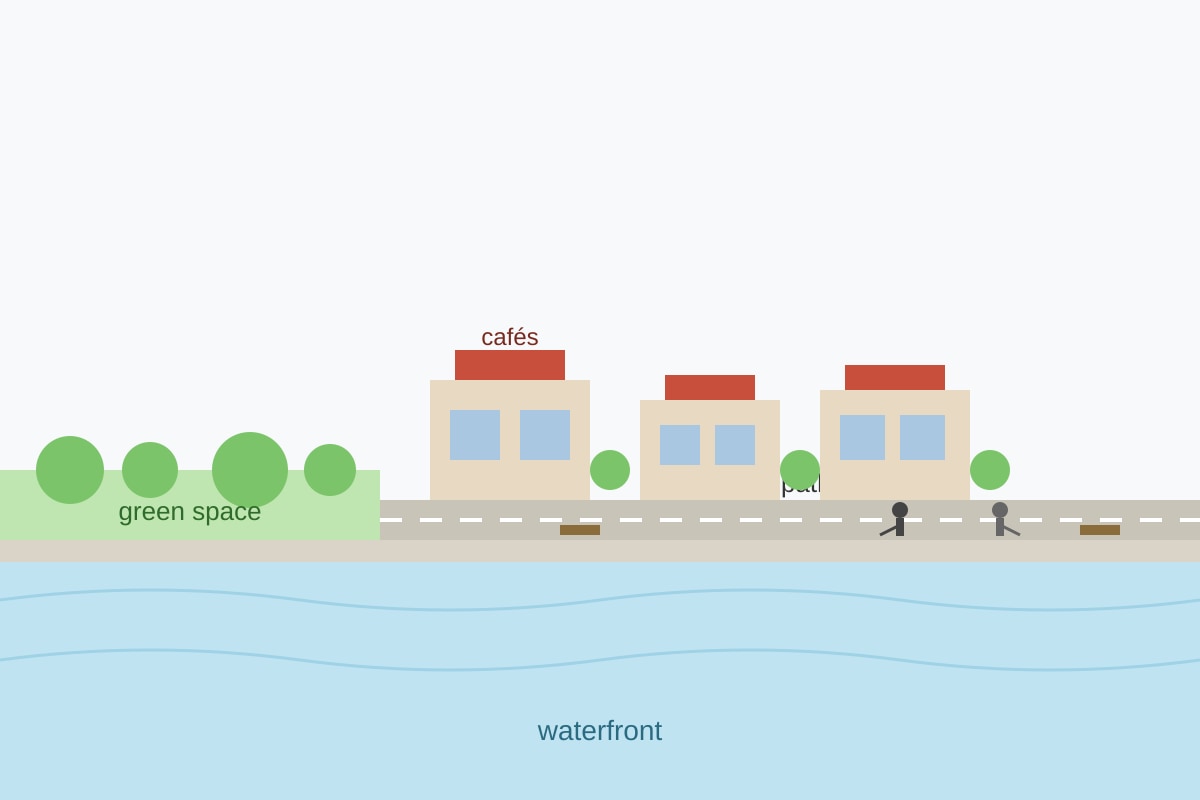
Answer: Cycling paths reduce car use (lower emissions); green space improves air and cooling; mixed leisure increases low-impact social use. Thus environmental sustainability improves if maintained.
Teaching note: Link visible features to sustainability outcomes.
Q14. [3 marks]
Answer: Transport is weakest (4/10) indicating mobility barrier; safety (7) and social (6) relatively better. Pattern = uneven liveability, transport is priority gap for elderly.
Teaching note: Describe then highlight low score.
Q15. [3 marks]
Answer: 90 min care work limits time for paid work → lower income, reduced economic independence and retirement security. Affects well-being via income constraint.
Teaching note: Care burden is unpaid; reduces formal participation.
Q16. [3 marks]
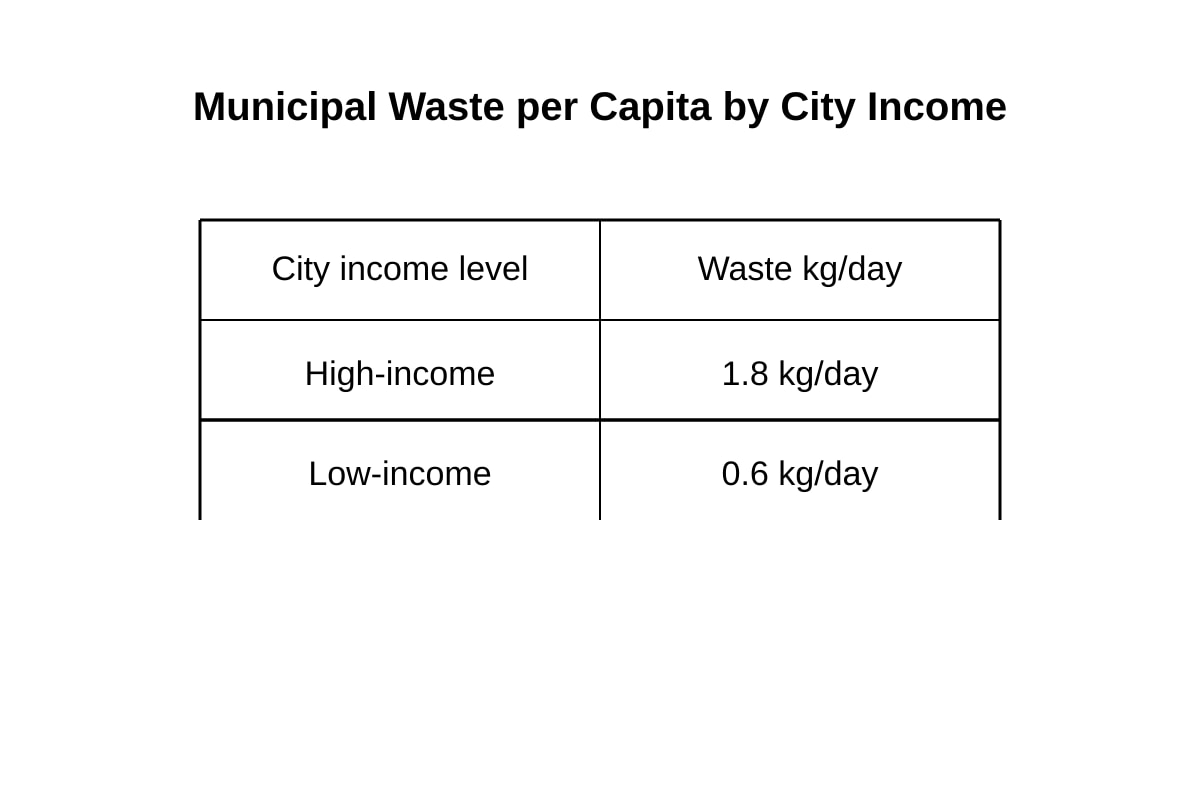
Answer: Low-income city residents consume less material goods, have less packaging and food waste; though management is poor, per capita generation is intrinsically lower. High-income = consumption-driven waste.
Teaching note: Distinguish waste generation from waste management quality.
Section C: Extended Evaluative (5 marks each)
Q17. [5 marks]
Mark descriptors: L1 1–2 describe only; L2 3–4 some evaluation; L3 5 balanced evaluative.
Answer: Relocation removes unsafe housing (positive for health/safety) but breaks social networks, may place dwellers far from jobs (negative livelihood), and if not participatory, fails sustainability. In-situ upgrading often better. Conclusion: relocation best only with integrated support.
Teaching note: Evaluate with impacts on dwellers; use Lagos-type cases.
Q18. [5 marks]
Answer: Strengths: rich qualitative needs data, high response nuance, local context. Limitations: small sample, interviewer bias, mobility issues exclude some elderly. Useful if combined with spatial data. Overall moderately useful for neighbourhood planning.
Teaching note: Evaluate method, not just describe.
Q19. [5 marks]
Answer: Reimaging can add green spaces and transport (liveability) with low carbon (sustainability) → complements. But flagship projects may displace low-income groups (tension). Extent depends on inclusive design. Example: waterfront reimage.
Teaching note: Tension vs complementarity is core syllabus idea.
Q20. [5 marks]
Answer: Gender equality enables women's formal employment (economic), safe transport and public space (social), reducing psychological stress. Liveable city requires equity. Example: childcare support increases participation.
Teaching note: Link equality to both well-being dimensions with examples.