AI Generated Exam Paper
A Level H1 Geography Practice Paper 2
Free A Level H1 Geography Practice Paper 2, HY3 AI version, with questions, answers, and A Level-style practice for Singapore students.
These static practice materials are generated from the site's syllabus and paper-generation workflow, with source and model context shown so students and parents can evaluate the material before use.
Questions
Free quiz and exam paper access
Enter your details to view this paper
Your access is remembered on this device.
Answers
TuitionGoWhere Practice Paper Answer Key — Geography H1 A-Level (Version 2)
Total Marks: 50
Section A (20 marks)
Q1 [5 marks]
Teaching note: Students must explain CAUSES of changes, not just describe.
Mark breakdown: 2 marks for identifying trends from resource, 3 marks for causal explanation.
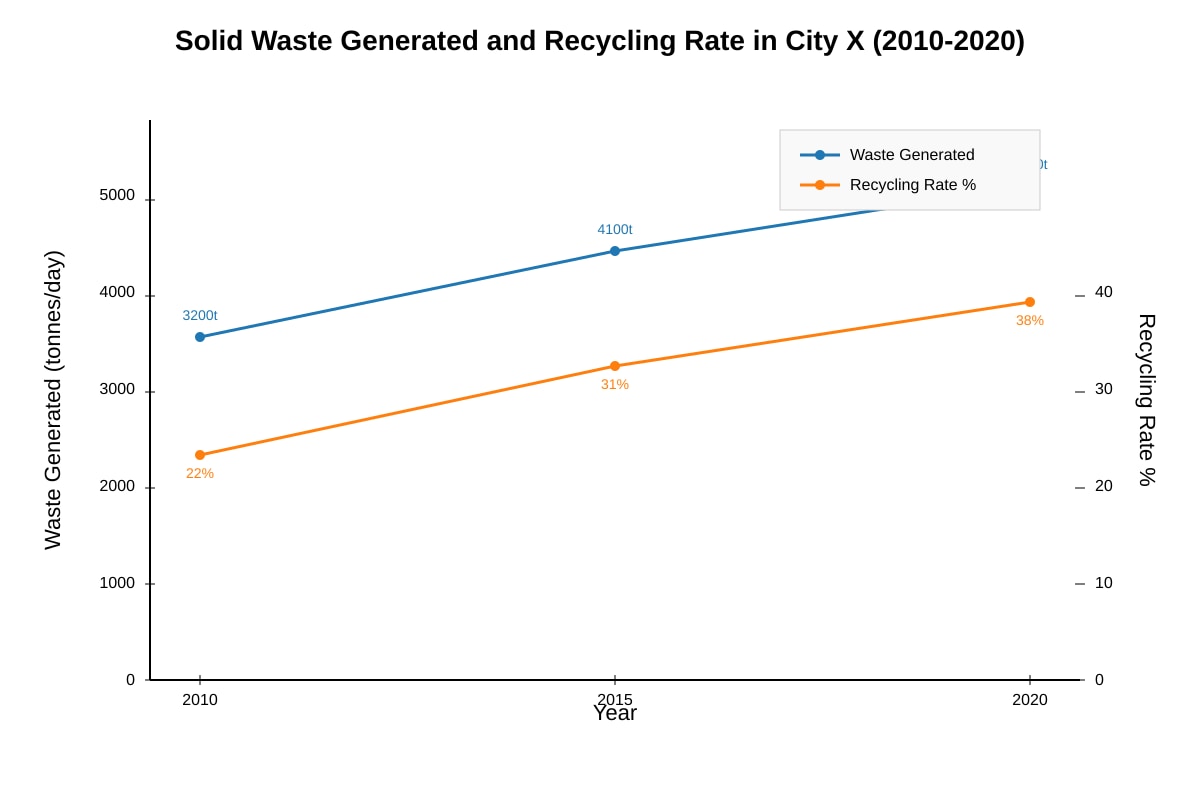
- Trend: Waste generated rose from 3200t (2010) to 4800t (2020); recycling rate increased 22%→38%. [2]
- Cause 1: Population and consumption growth drove higher waste; city invested in recycling infrastructure (e.g., sorting facilities). [1.5]
- Cause 2: Policy incentives (e.g., landfill tax) shifted behaviour; public education improved participation. [1.5]
Common mistake: Only describing lines without "because".
Q2 [5 marks]
Teaching note: Characteristics must link to map evidence.
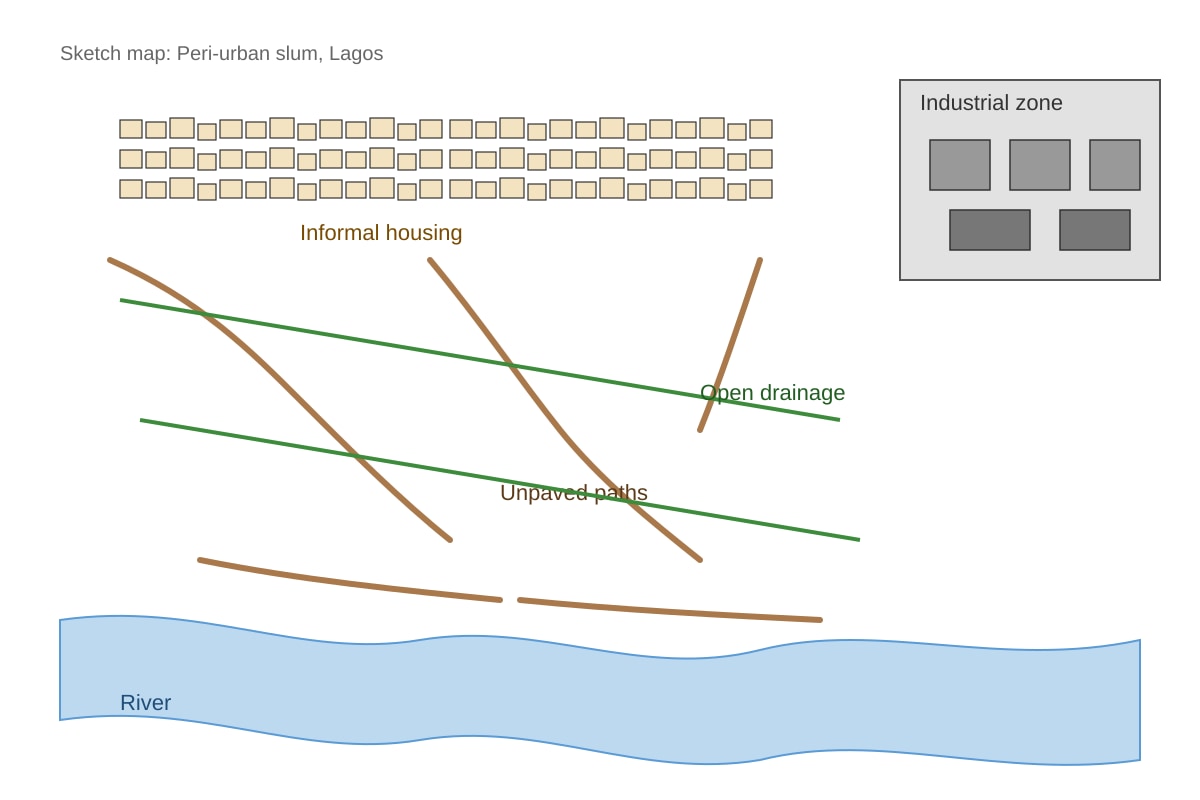
- Char 1: High-density informal housing — map shows tightly packed small structures without planning; reflects rural–urban migration exceeding formal housing. [2.5]
- Char 2: Inadequate drainage/sanitation — open drains and unpaved paths near industrial zone show service deficit and pollution risk. [2.5]
Q3 [4 marks]
(a) Slums concentrate poverty & health risks; managing them reduces disease, aiding social sustainability. [2]
(b) Upgrading slums improves land use efficiency and reduces environmental degradation, supporting urban sustainability. [2]
Q4 [6 marks]
Eval marking: judgment + strengths + limits.
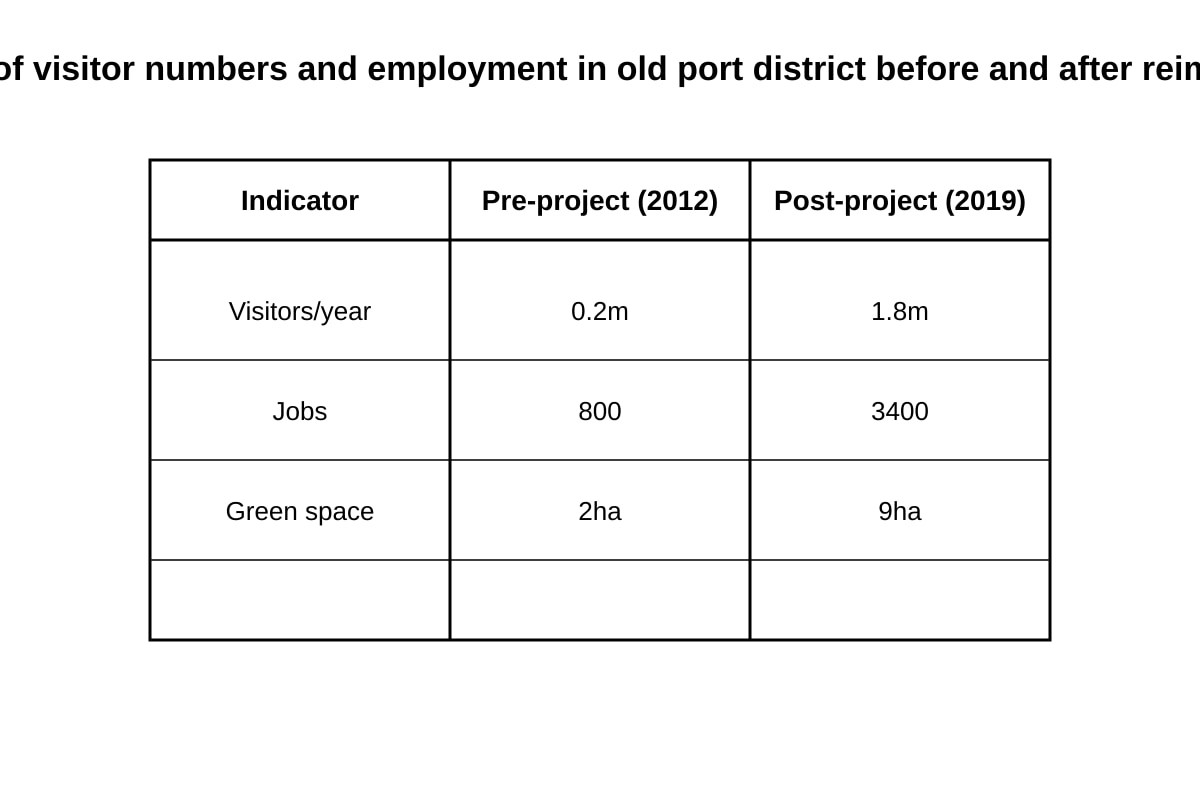
- Resource 3 useful: quantitative proof of reimaging success (visitors 0.2m→1.8m, jobs up). [2]
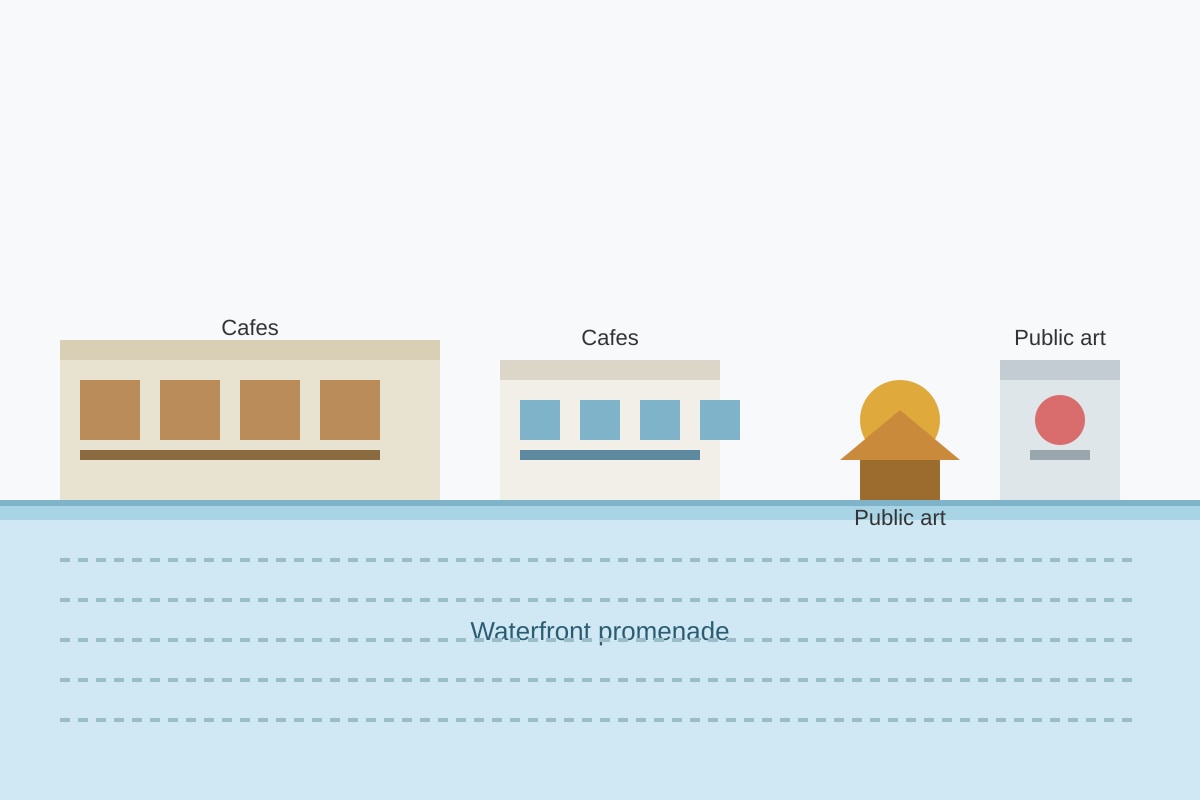
- Resource 4 useful: visual confirms physical transformation. [1]
- Limits: Table lacks social equity data; photo is superficial, no displacement info. [2]
- Judgment: Together moderately useful but need social impact data. [1]
Section B (14 marks)
Q5 [7 marks]
- Diff: Low-income city has more organic (56% vs 28%) and less paper/plastic; high-income more packaged waste. [3]
- Implication: Organic waste compostable → lower landfill if managed; high-income plastic needs recycling tech. [2]
- Sustainability: Low-income cities need decentralised composting; high-income need circular economy. [2]
Q6 [7 marks]
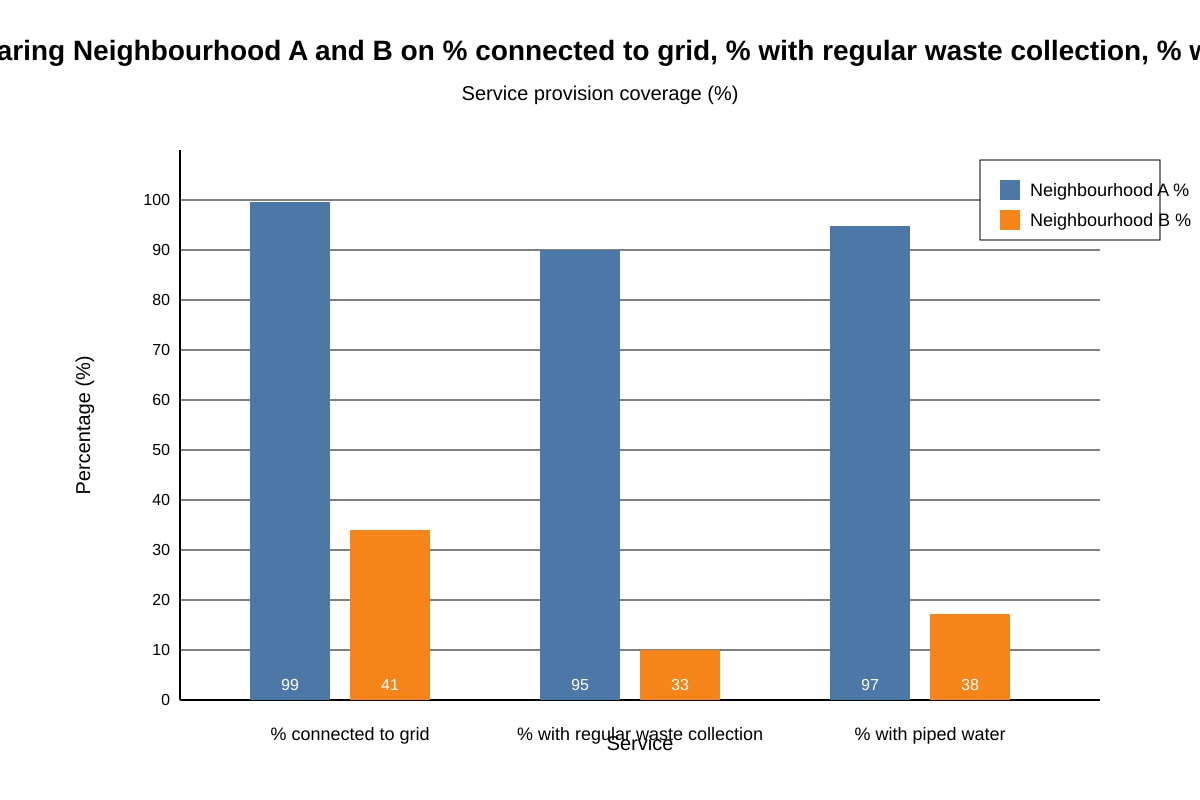
- Gap cause: B is informal, lacks municipal reach & funding (grid 41% vs 99%). [3]
- Hinders sustainability: Poor waste collection causes pollution; no water/grid limits human dev. [4]
Section C (16 marks)
Q7 [16] Level 4 descriptor (11–13+): Evaluative, examples, balanced.
Content: High-income (e.g., Germany dual system) success via funds; low-income (e.g., Lagos) partial due weak institutions. Counter: some LDC community success. Conclusion: economic/institutional key but not sole.
Q8 [16] Similar: Reimaging (e.g., Barcelona) lifts liveability; but gentrification / resource use may hurt sustainability. Eval needed.
Note: Papers generated from syllabus-first templates; not official exam.