AI Generated Exam Paper
A Level H1 Geography Practice Paper 1
Free A Level H1 Geography Practice Paper 1, HY3 AI version, with questions, answers, and A Level-style practice for Singapore students.
These static practice materials are generated from the site's syllabus and paper-generation workflow, with source and model context shown so students and parents can evaluate the material before use.
Questions
Free quiz and exam paper access
Enter your details to view this paper
Your access is remembered on this device.
Answers
TuitionGoWhere Practice Paper Answer Key — Geography H1 A-Level (Version 1)
Total Marks: 50
Section A: Short Structured Questions (10 marks)
1. [1 mark] Sustainable development = meeting present needs without compromising future generations' ability to meet theirs, applied to urban resource use (balanced consumption, waste, liveability).
Teaching note: Core UN definition; in urban context means not depleting resources beyond renewal.
2. [1 mark] e.g., incineration (waste-to-energy), recycling, landfill diversion. Any one acceptable.
Common mistake: Naming hazardous waste only.
3. [1 mark] Rural-urban migration exceeding formal housing supply; poverty; lack of planning.
Marking: One clear reason.
4. [1 mark] e.g., Singapore Marina Bay redevelopment; Seoul Cheonggyecheon restoration.
Note: Asian city required.
5. [1 mark] Environmental (e.g., air quality, recreation) / social (community health).
Accept any dimension.
6. [1 mark] Low retirement income; joblessness; high cost of living.
Economic only.
7. [1 mark] Limited mobility due to safety concerns; unequal pay; care burden.
Social issue.
8. [1 mark] Water, energy, land, minerals.
Any one resource.
9. [1 mark] Pollution, health risks, resource depletion.
Impact on sustainability.
10. [1 mark] Place, time, purpose of assessment, personal identity.
Subjectivity factor.
Section B: Data-Based Questions (25 marks)
11. [5 marks]
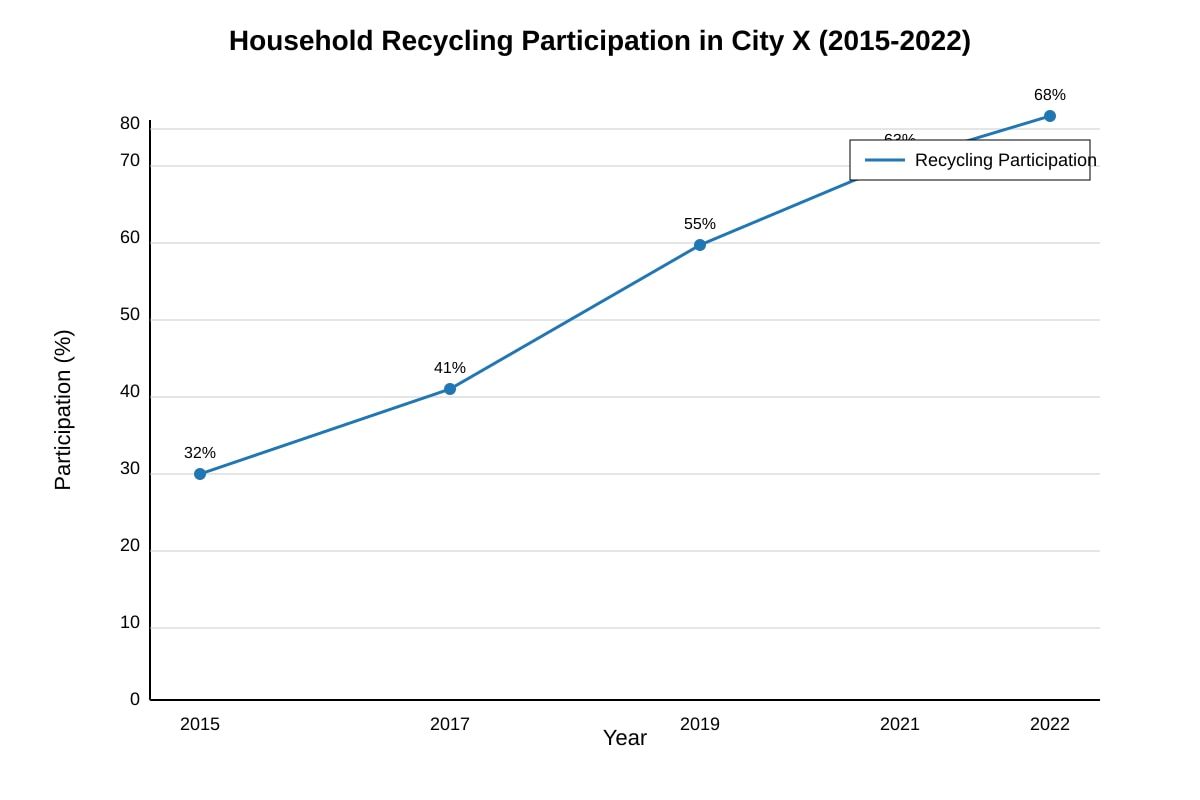
Mark breakdown: 2 changes identified (2m), 3 causal explanations with evidence (3m).
- Participation rose from 32% (2015) to 68% (2022) — a 36-point increase. (1m)
- Steepest gain 2019–2021 (55%→63%). (1m)
- Cause 1: Government education campaigns from 2016 lifted early uptake. (1m, evidence: 2017 jump)
- Cause 2: Door-to-door recycling bin rollout by 2019 expanded access. (1m, evidence: 2019 surge)
- Cause 3: Community incentives (rebates) post-2020 sustained growth. (1m, evidence: 2021–22 rise)
Teaching: Account = explain why using resource data.
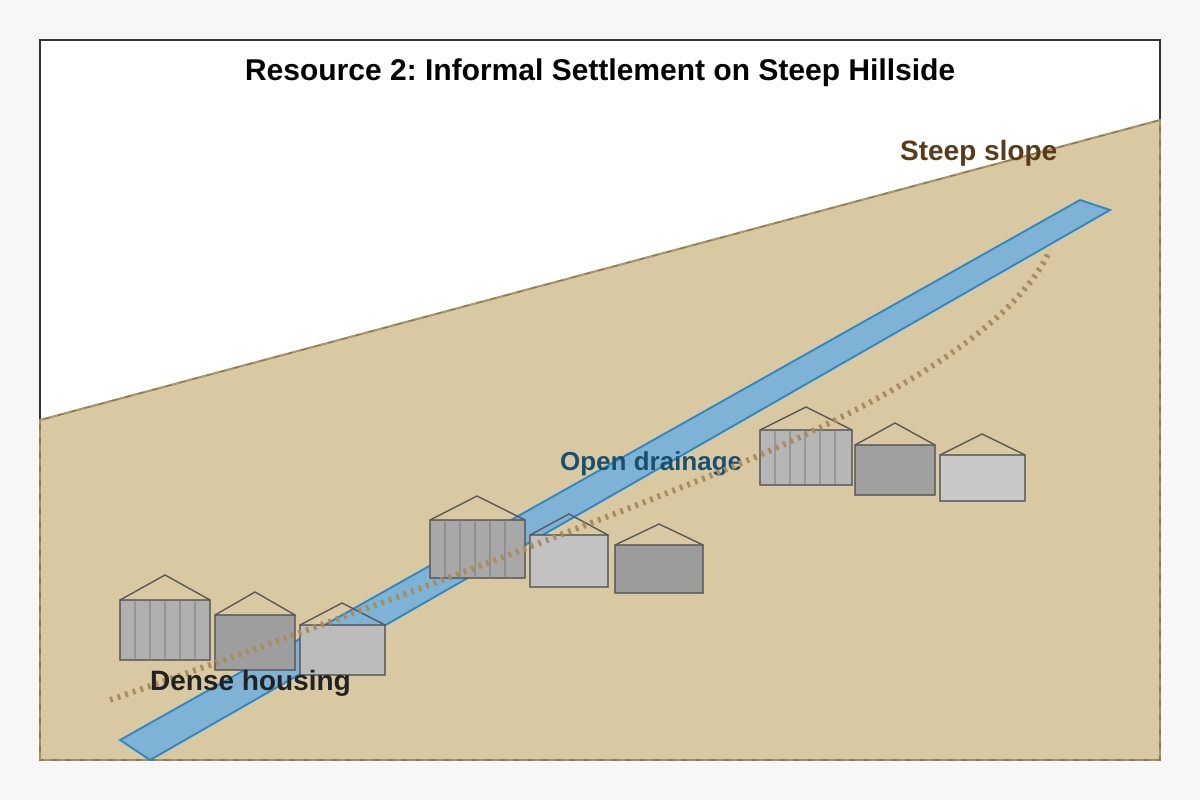
12. [4 marks] 2 characteristics × explanation (2m each).
- Char 1: High density — houses within 1m proximity; explains influx exceeding housing. (2m)
- Char 2: Poor infrastructure — open drainage, steep slope; explains landslide/health risk. (2m)
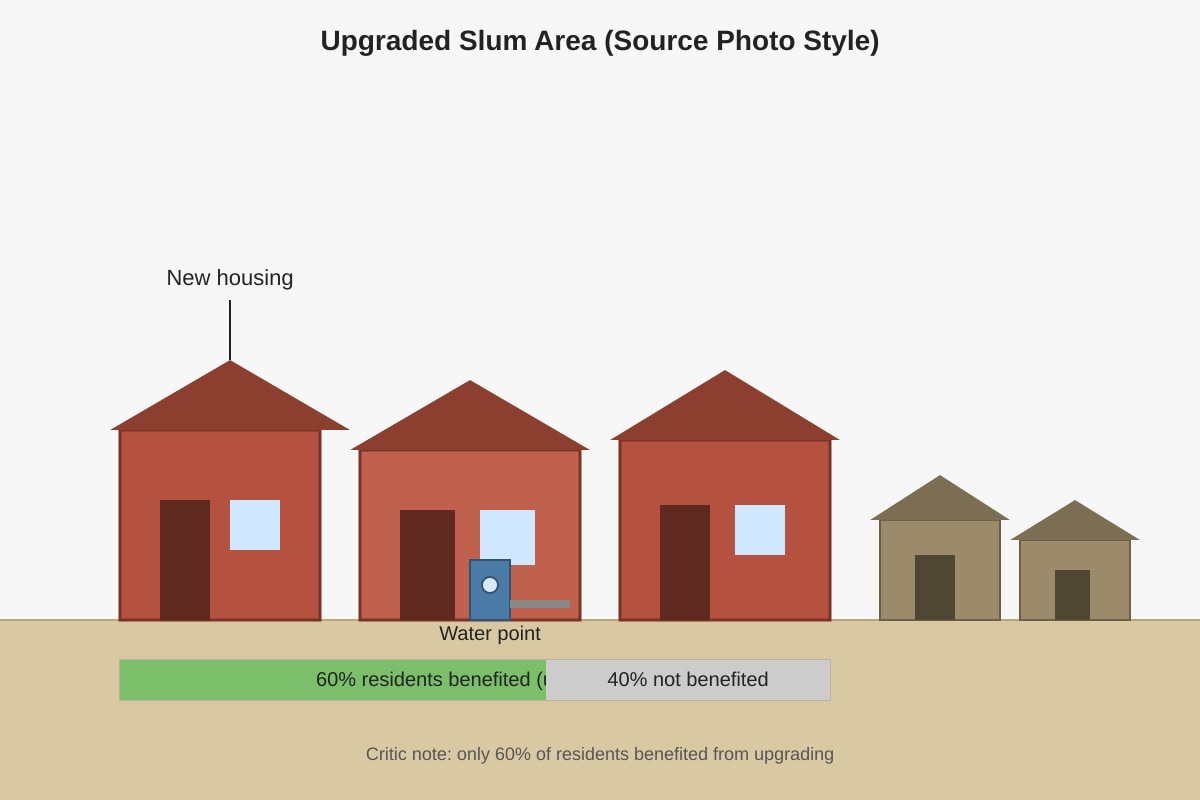
Expected visual: corrugated houses, hillside, open channel.
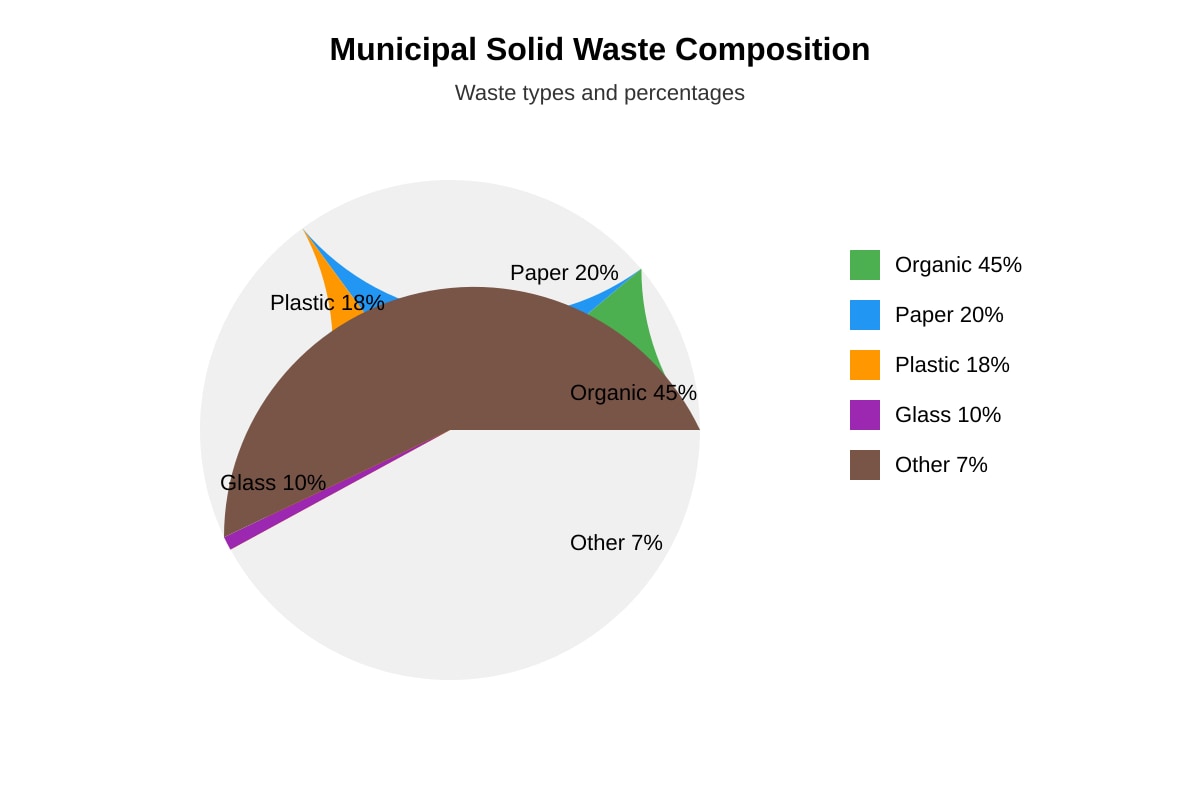
13. [4 marks] Pattern (2m): Organic 45% largest share, then paper/plastic. Reason (2m): Food waste from households/high consumption; climate drives spoilage.
Marking: Describe then suggest.
14. [8 marks]
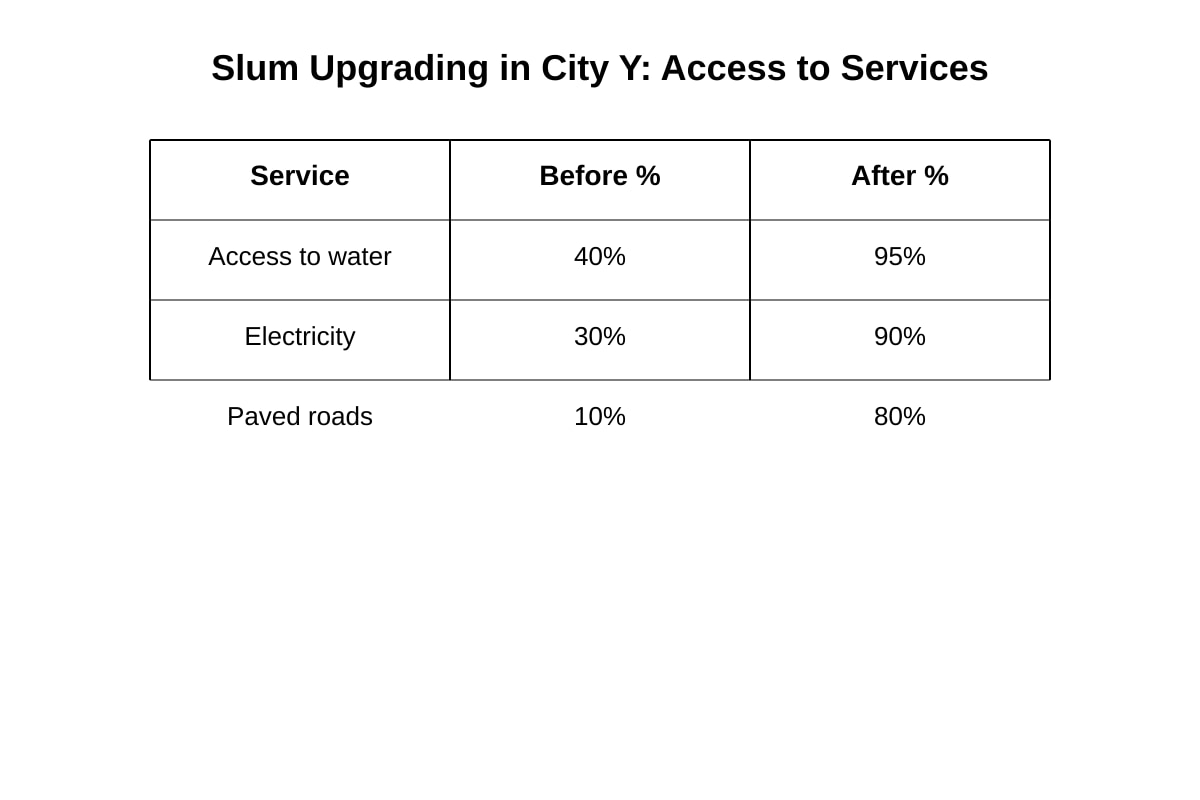
Levels: identify strengths (2m), limitations (2m), compare (2m), judgement (2m).
- R4 useful: quantifies service gains (water 40→95%) showing upgrading success. (2m)
- R4 limit: no cost or social disruption data. (1m)
- R5 useful: visual confirms physical upgrade. (1m)
- R5 limit: shows only 60% covered, selection bias. (1m)
- Compare: R4 better for scale, R5 for reality check. (2m)
- Judgement: Together useful but incomplete for equity. (2m)
15. [4 marks]
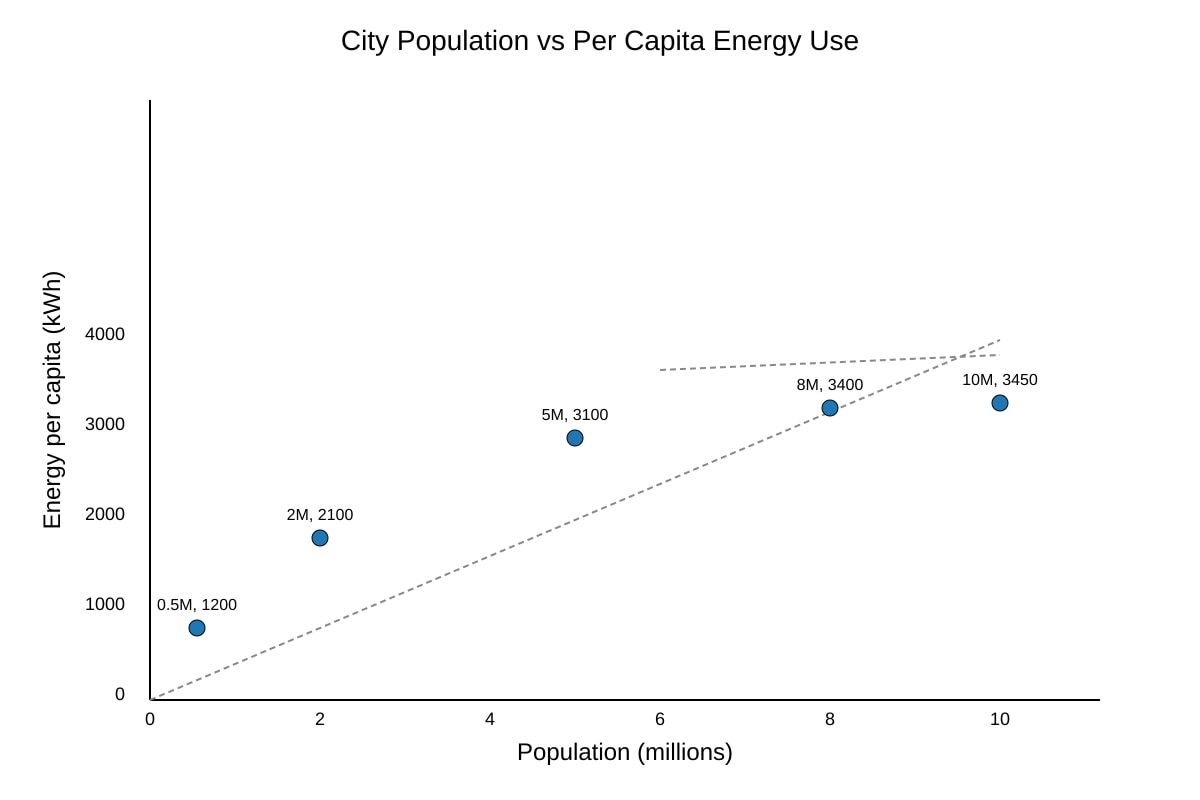
- Relationship: positive up to 8M then plateau. (2m, from scatter)
- Reason: agglomeration efficiency offsets at large size. (2m)
Visual: trend line must show plateau.
Section C: Essay (15 marks)
16. [15 marks] Generic Level Descriptors (Levels 0–4; L4 = 11–13+ for essay scaled to 15).
Structure: Intro define sustainable city; argue waste mgmt critical (cases: Singapore incineration vs Lagos dumps); counter: slum liveability, reimaging also vital; conclude waste necessary but not sufficient.
Content points:
- Developed: high-tech waste-to-energy cuts landfill. (3m)
- Developing: open burning harms health, blocks sustainability. (3m)
- Counter: women's safety, elderly access also core. (3m)
- Eval: integrated approach needed. (3m)
- Coherence/example depth. (3m)
Teaching: Evaluate = weigh, not just describe.