From Real Exams Exam Paper
A Level H1 Geography Practice Paper 1
Free A Level H1 Geography Practice Paper 1, HY3 Exam version, with questions, answers, and A Level-style practice for Singapore students.
These static practice materials are generated from the site's syllabus and paper-generation workflow, with source and model context shown so students and parents can evaluate the material before use.
Questions
Free quiz and exam paper access
Enter your details to view this paper
Your access is remembered on this device.
Answers
Answer Key – TuitionGoWhere Exam Practice (AI) Geography H1 A-Level (Version 1)
Topic: Resources Sustainability
Total Marks: 60
Section A (16 marks)
1. [1] One reason: Effective waste management prevents pollution of land/water/air, reducing health risks and protecting ecosystems needed for sustainable development.
Teaching note: Sustainability requires meeting present needs without compromising future generations; unmanaged waste undermines this.
2. [1] Example: Contamination of groundwater from leachate.
Mark: Any one valid environmental impact.
3. [1] A slum is a densely populated urban area with inadequate housing, lacking basic services (water, sanitation) and insecure tenure.
Definition must include informal/deficient housing.
4. [1] To attract investment/tourism by improving city image.
5. [2] Liveability is subjective because it depends on individual priorities (e.g., a young person values nightlife, elderly value healthcare access). [2 marks: identify subjectivity + example]
6. [1] Mobility limitations due to inadequate pedestrian infrastructure.
7. [1] Safety concerns in public transport at night.
8. [1] Human activities (anthropogenic emissions).
Section B (24 marks)
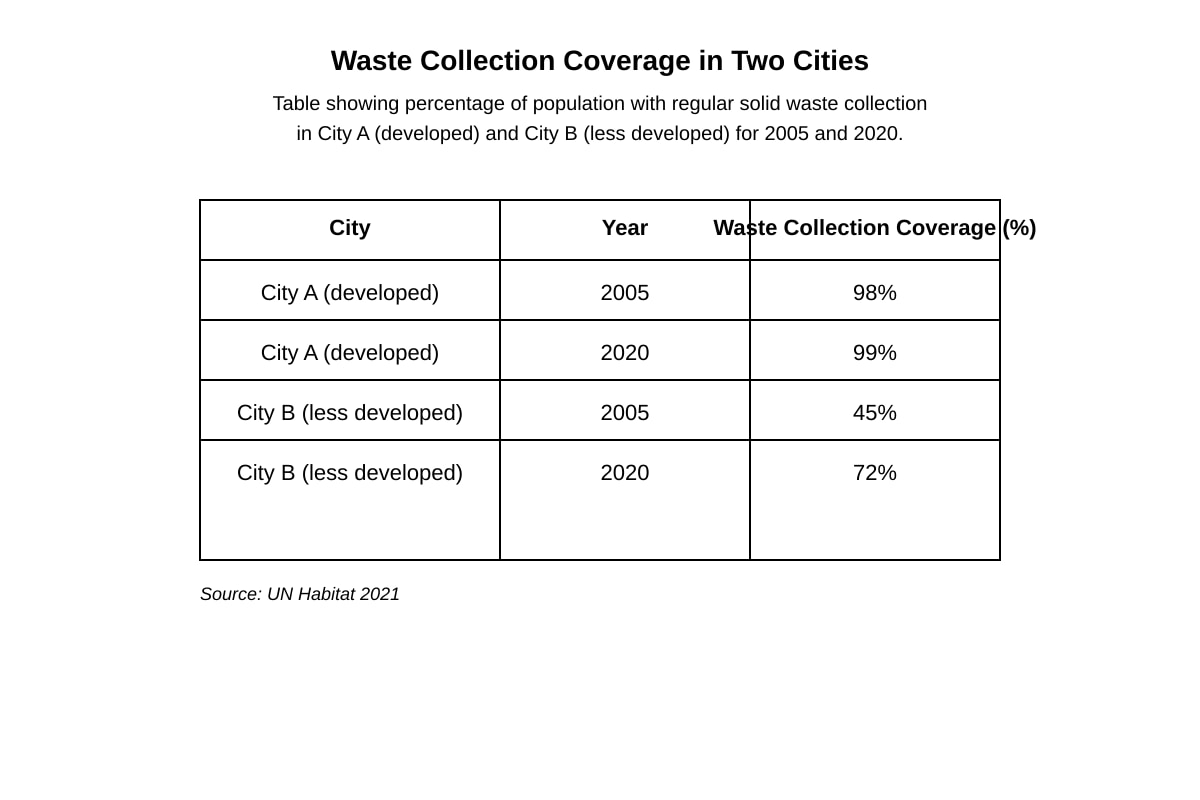
9. [5] Account for changes in City B coverage 45%→72%.
- Increased government investment in collection infrastructure (cause) as data shows rise (evidence). [2]
- International aid/NGO programmes improved services (cause+evidence). [2]
- Population pressure made previous informal dumping unsustainable, prompting formalisation. [1]
Mark breakdown: 2+2+1. Must link to resource.
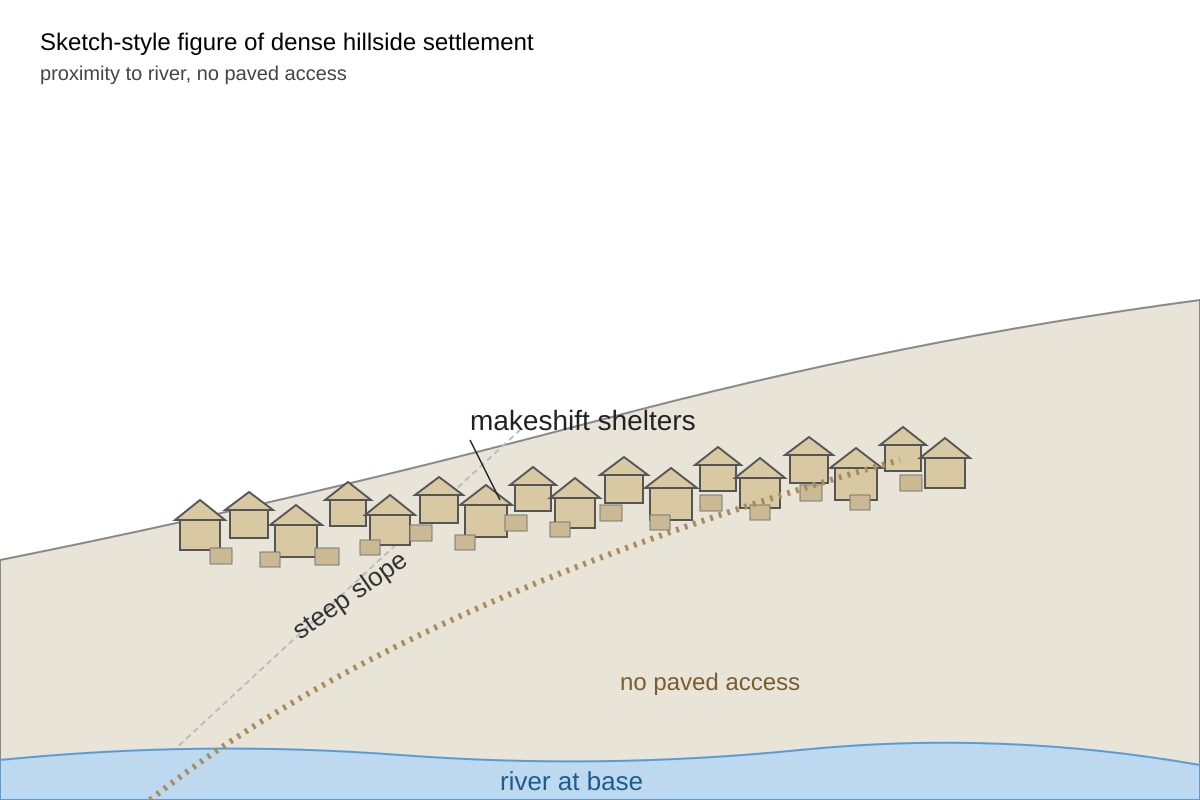
10. [4] From figure: (a) Overcrowding – shelters closely packed indicates high density [2]; (b) Lack of infrastructure – no paved roads shows absent basic services [2].
11. [7] Evaluate usefulness:
- Surveys: strength = direct resident experience; limit = small sample bias. [2]
- Satellite: strength = spatial coverage; limit = cannot show perception. [2]
- Combined useful for triangulating liveability but limited by temporal mismatch. [2]
- Judgement: overall useful with caveats. [1]
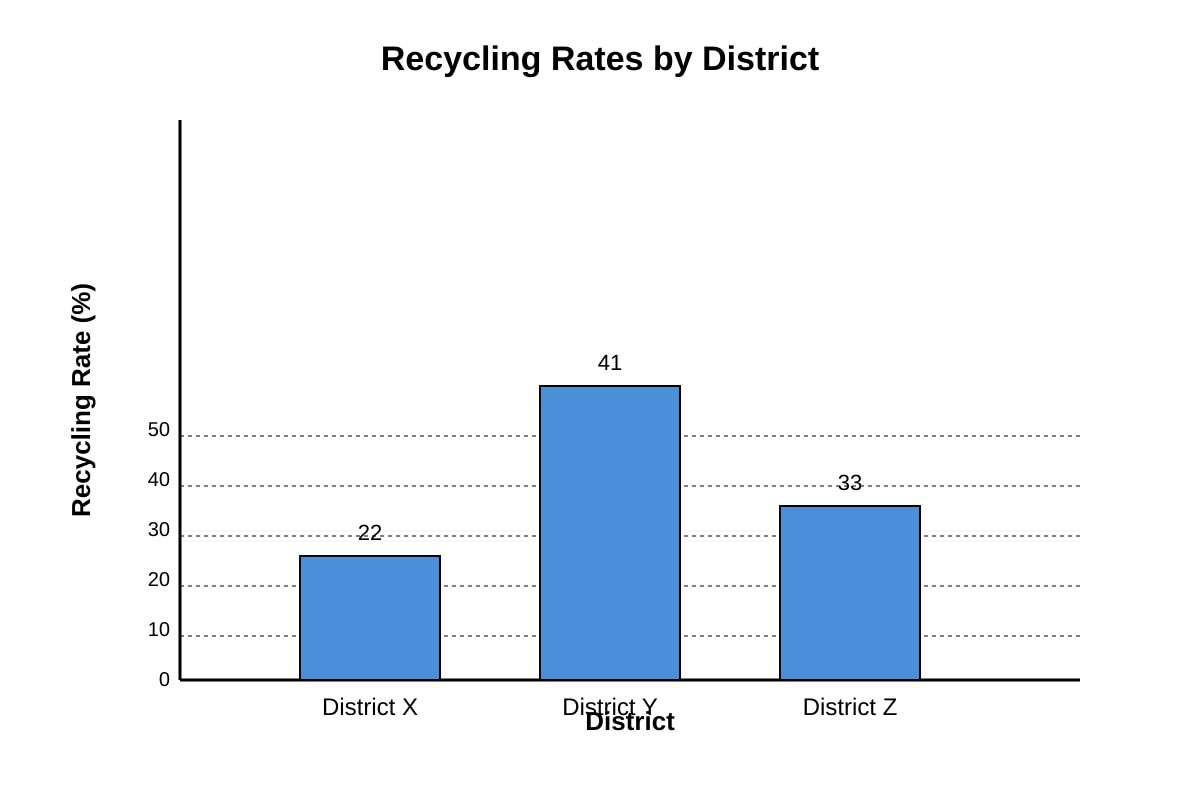
12. [4] District Y highest (41%), Z mid (33%), X lowest (22%); pattern uneven, Y leads. [4: describe all 3 + pattern]
13. [3] % increase = (72−45)/45 × 100 = 60%. Working shown [2], answer [1].
14. [5] Reimaging may prioritise aesthetics over function (e.g., gentrification displaces poor) [2]; consumes resources on branding not sustainability [2]; tension with equity goals [1].
Section C (20 marks)
15. [4] Level descriptor: argues extent with examples (e.g., recycling improves both; incineration may harm liveability). [4: balanced eval]
16. [3] Upgrading retains social fabric, clearance disrupts; give example. [3: compare + concl]
17. [3] Gender equality enables full economic/social participation; cite safety/employment. [3]
18. [3] Burning fossil fuels releases CO₂, enhances greenhouse effect; link to resource consumption. [3]
19. [4] Ice cores show trapped gas composition; useful for past temps but limited spatial coverage. [4: strength+limit]
20. [3] Disagree: examples of cities with green spaces + services. [3: position + reason]