AI Generated Quiz
A Level Economics H3 Data Response Quiz
Free A Level Economics H3 Data Response quiz, HY3 AI version, with questions, answers, and A Level-style practice for Singapore students.
These static practice materials are generated from the site's syllabus and paper-generation workflow, with source and model context shown so students and parents can evaluate the material before use.
Questions
Free quiz and exam paper access
Enter your details to view this paper
Your access is remembered on this device.
Answers
A-Level Economics H3 Quiz - Data Response (Answer Key)
Total Marks: 40
Topic: Data Response (syllabus-first; no past-year claim)
Section A Answers
1. [1 mark]
Answer: Firm / producer decision-making (or corporate agent).
Teaching note: A nudge influences economic agents; here firms are the agents adopting carbon pricing. Common mistake: saying "consumer" when text says firms.
2. [1 mark]
Answer: Nominal values ignore inflation; real comparison needs deflator.
Teaching note: Nominal GDP not adjusted for price changes; cross-year comparison overstates growth if inflation positive.
3. [1 mark]
Answer: Endowment effect.
Teaching note: Owned subsidised item valued more once possessed; keeping longer reflects endowment effect.
4. [1 mark]
Answer: Rate of change of renewable share per year.
Teaching note: Slope = rise/run; here % points per year.
5. [2 marks]
Answer: (Hold, Hold) = (3,3).
Working: For X, if Y Expand: X gets 2 (Expand) vs 1 (Hold) → Expand best; if Y Hold: X gets 5 (Expand) vs 3 (Hold) → Expand best. So Expand dominant for X. For Y symmetric, Expand dominant. But (Expand,Expand)=(2,2) not stable? Wait pure NE: check (Hold,Hold): X deviating to Expand gets 5>3, so not NE. Actually Expand is dominant for both, so NE = (Expand,Expand). Correction: NE = (Expand, Expand) with (2,2).
Marking: 1 mark dominant strategy identified, 1 mark correct cell.
6. [1 mark]
Answer: Lack of clearly defined property rights.
Teaching note: Commons open access leads overuse; property rights internalise.
7. [1 mark]
Answer: Income inequality increased.
Teaching note: Gini 0 to 1; higher = more unequal.
8. [1 mark]
Answer: Losses felt more strongly than equivalent gains, avoiding losses even at net benefit.
Teaching note: Kahneman-Tversky; loss aversion coefficient >1.
Section B Answers
9. [2 marks]
Answer: Low transaction costs / clearly defined property rights.
Teaching note: Coase requires negotiation feasible; 1 mark concept, 1 mark application.
10. [3 marks]
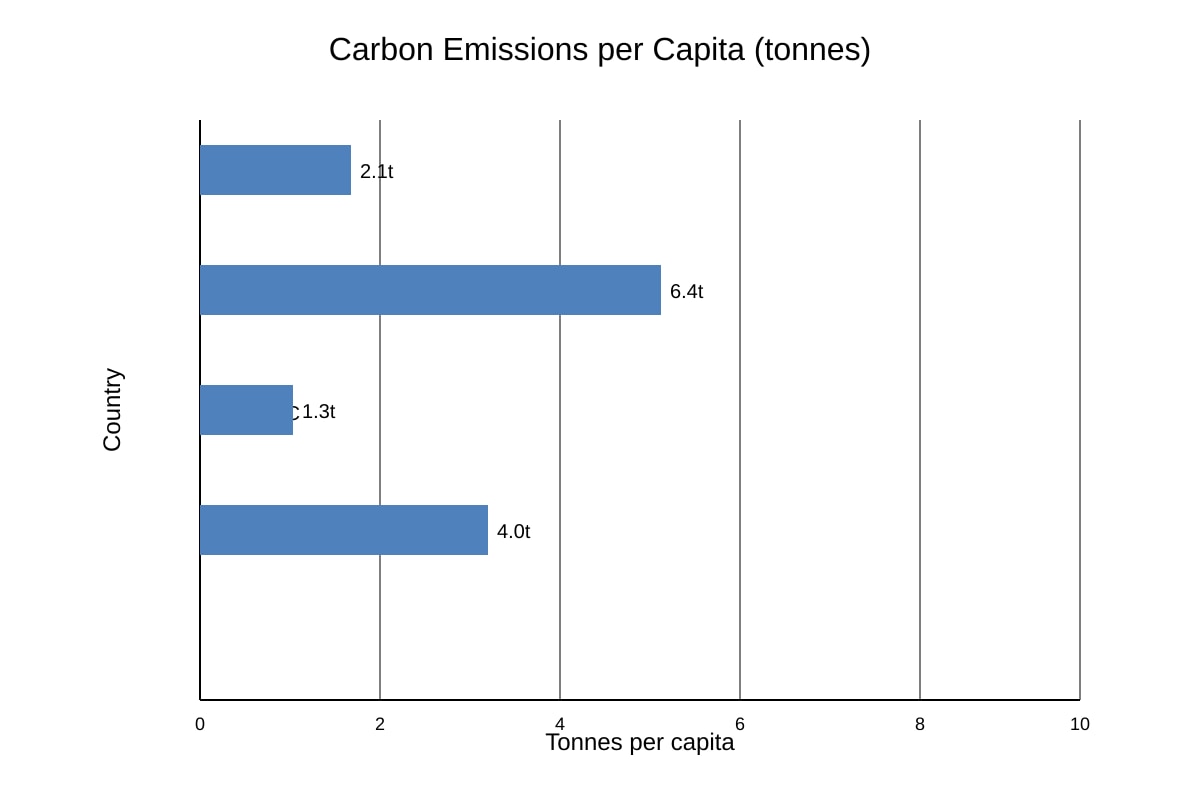
Mean = (2.1+6.4+1.3+4.0)/4 = 13.8/4 = 3.45t. [2 marks]
Limitation: Mean skewed by B (6.4t); hides variation, poor for targeted policy. [1 mark]
Teaching note: Show sum and divide; mention outlier.
11. [2 marks]
Answer: Efficiency wages / monitoring / co-payment. [1] Explain: aligns agent with principal. [1]
12. [3 marks]
Status quo bias: people stick default [1]; default enrolment exploits inertia [1]; bounded will-power/procrastination avoided [1].
13. [2 marks]
Answer: Correlation not causation; omitted variables (e.g., education) [1]; or reverse causality [1].
14. [3 marks]
Advertise dominant for both (3>1, 6>4) [1]; (Advertise,Advertise)=(3,3) but (Not,Not)=(4,4) better [1]; so yes prisoner's dilemma: individual rational leads to worse joint outcome [1].
Section C Answers
15. [3 marks]
Using Capital Approach: produced capital (EVs) up, but natural capital (grid emissions) worsened [1]; unintended: carbon leakage to power sector [1]; sustainability questionable if natural capital depleted [1].
16. [4 marks]
Capital Approach: sustainability if total capital constant [1]; natural -2%, human +1% net -1% absent others [1]; if produced/financial not offset, unsustainable [1]; evaluate trade-off substitutability critically [1].
17. [3 marks]
Post hoc fallacy [1]; correlation not causation [1]; other factors (e.g., global demand) may drive growth [1].
18. [4 marks]
Alternative nudge: default opt-out renewable [1]; evaluate: preserves choice, increases welfare if green preferred [1]; contrast status quo exploitation [1]; consider behavioural liberty [1].
19. [3 marks]
Adverse selection: high-risk disproportionately buy (70%) [1]; insurer pool skewed [1]; premiums rise, low-risk exit [1].
20. [4 marks]
Matrix: (Expand,Expand)=2,2; (Hold,Hold)=3,3. [1] Cooperate via repeated game / tradeable permit [1]; evaluate: joint gain 6 vs 4 [1]; sustainability if resource use cut [1].