AI Generated Quiz
A Level H2 Economics Macroeconomics Quiz
Free A Level H2 Econs Macroeconomics quiz, HY3 AI version, with questions, answers, and A Level-style practice for Singapore students.
These static practice materials are generated from the site's syllabus and paper-generation workflow, with source and model context shown so students and parents can evaluate the material before use.
Questions
Free quiz and exam paper access
Enter your details to view this paper
Your access is remembered on this device.
Answers
A-Level Economics H2 Quiz - Macroeconomics (Answer Key)
Total Marks: 40
Topic: Macroeconomics (Syllabus 9570, Theme 3)
Section A Answers
Q1. [2 marks]
Definition: Full employment is a situation where all available labour resources willing and able to work at current wage rates are employed, except for frictional and structural unemployment.
Teaching note: In H2 syllabus, full employment does NOT mean 0% unemployment; it means no cyclical unemployment. Mark: 1 mark for "all willing labour employed", 1 mark for exclusion of frictional/structural.
Q2. [2 marks]
Any two from: price stability (low inflation), full employment, economic growth, balanced budget/external balance, equitable distribution of income.
Teaching note: Singapore’s typical objectives include price stability and sustainable growth. 1 mark each.
Q3. [3 marks]
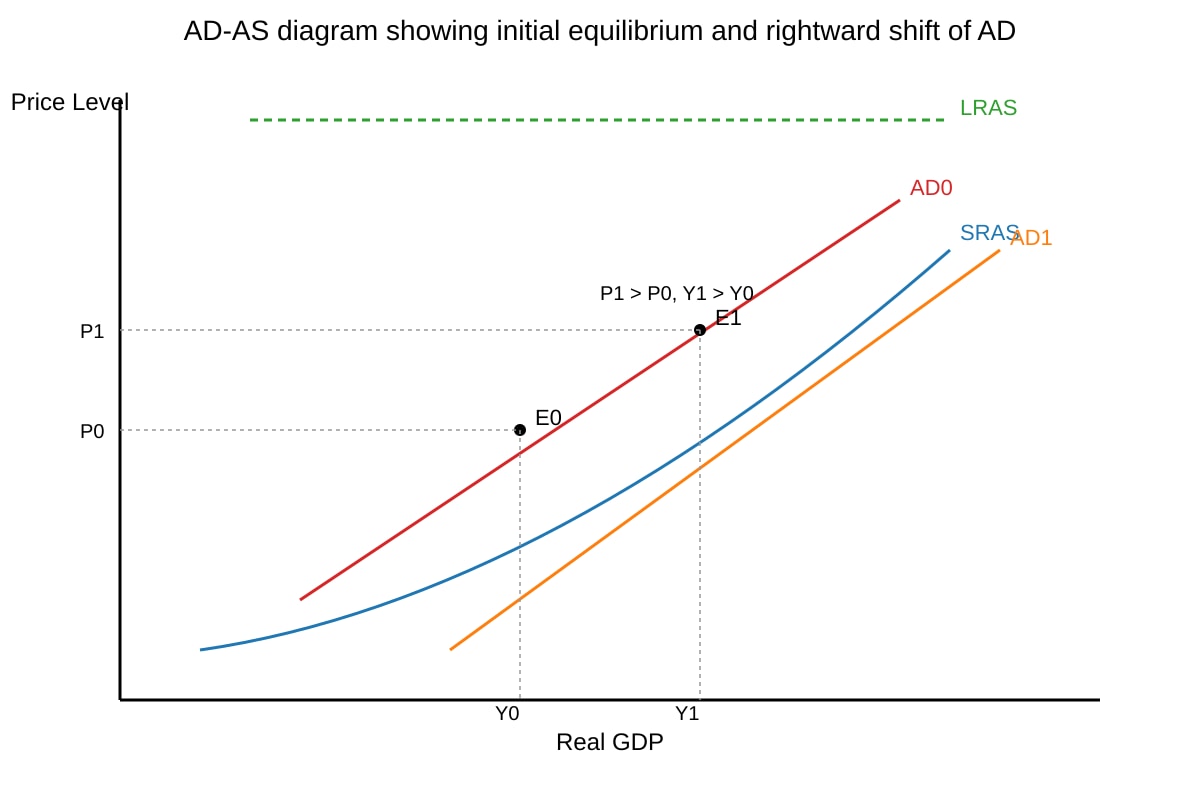
Diagram: AD-AS with rightward AD shift.
- Label axes: Real GDP (x), Price Level (y). [1]
- Show AD0 → AD1 rightward, new equilibrium E1 with higher P and Y. [2]
Teaching note: Short-run SRAS upward sloping; real GDP rises, price level rises. Common mistake: drawing LRAS shift instead.
Q4. [2 marks]
Budget deficit: government expenditure > tax revenue. [1]
Budget surplus: government expenditure < tax revenue. [1]
Teaching note: Define from government budget perspective, not household.
Q5. [2 marks]
Multiplier = 1 / (1 – MPC) = 1 / (1 – 0.8) = 1 / 0.2 = 5. [2]
Teaching note: Formula required. If student writes 5.0 acceptable. Common error: using MPC directly as multiplier.
Section B Answers
Q6. [1 mark]
Change = 206 – 200 = $6 billion increase. [1]
Q7. [4 marks]
Simple multiplier (no leakages): k = 1/(1–MPC) = 1/(1–0.8) = 5. [2]
Adjusted: leakages = MPM 0.1 + tax 0.2 = 0.3; MPC after tax = 0.8×(1–0.2)=0.64; k = 1/(0.1+0.2+0.64?) Actually standard: k = 1 / (MPM + MRT + (1–MPC)(1–MRT)) simpler: k = 1 / (0.1 + 0.2 + 0.2) = 1/0.5 = 2. [2]
Teaching note: Show both steps. Mark: 2 for simple, 2 for adjusted with correct leakages.
Q8. [3 marks]
Govt spending ↑ → AD ↑ (via multiplier) → real GDP ↑ → firms hire more workers → unemployment falls. [3 points, 1 each]
Teaching note: Link mechanism clearly.
Q9. [3 marks]
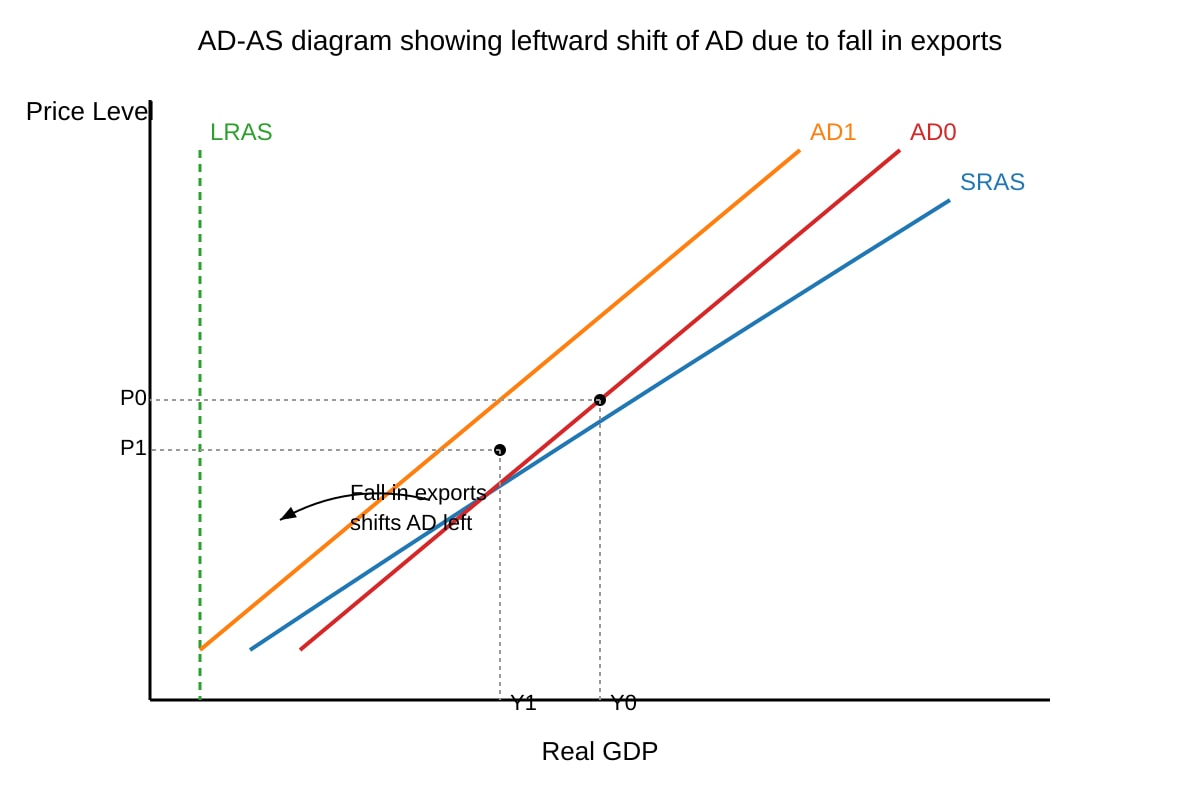
Diagram: AD shifts left from AD0 to AD1 due to export fall. [1 for shift, 1 for label, 1 for lower Y]
Teaching note: Exports are component of AD (X–M).
Q10. [4 marks]
Argue: Inflation rise to 2.8% is moderate; policy may have prevented deeper recession. [2]
Counter: If inflation target is 2%, policy contributed to demand-pull inflation. [2]
Teaching note: Evaluation needed, not just description.
Q11. [2 marks]
Managed float: exchange rate mainly market-determined but central bank intervenes to avoid excessive volatility. [2]
Q12. [3 marks]
Appreciation → imports cheaper in domestic currency → imported inflation falls. [2] Export volumes may drop. [1]
Q13. [3 marks]
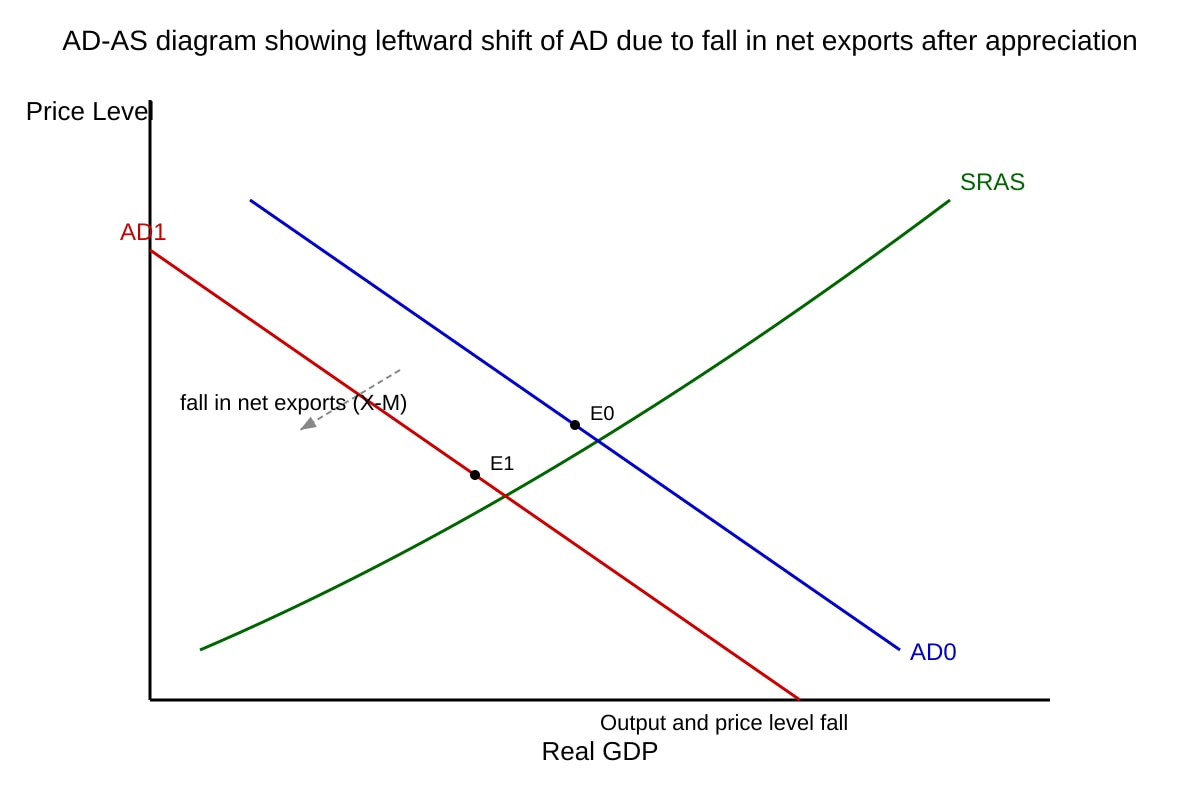
Diagram: AD left shift due to net exports fall after appreciation. [3]
Q14. [4 marks]
Success: inflation controlled at 1.9%. [2]
Cost: export fall 3%, possible growth slowdown. [2]
Teaching note: Balanced judgment.
Q15. [1 mark]
Limitation: cannot address domestic demand-pull inflation; or affects competitiveness. [1]
Section C Answers
Q16. [3 marks]
Contractionary monetary: raise interest rates → reduce consumption & investment → AD falls → price level falls. [3]
Q17. [3 marks]
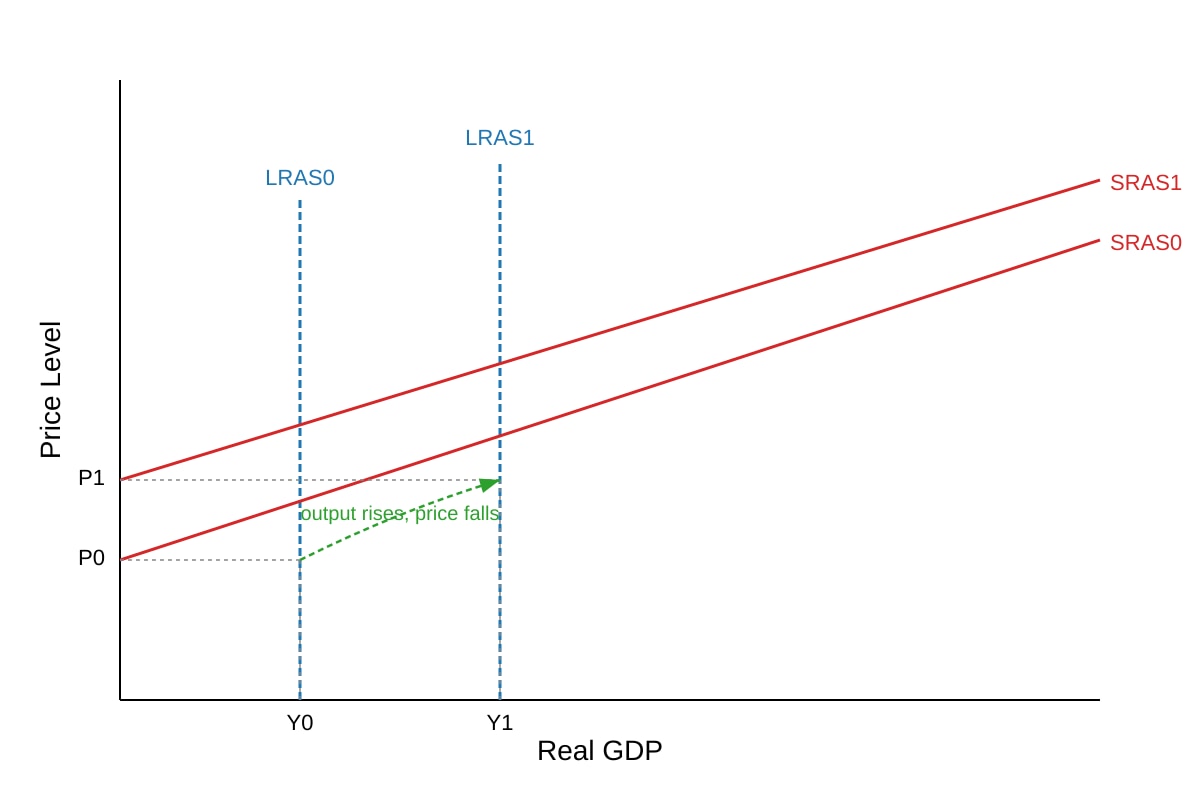
Diagram: LRAS & SRAS right → potential output ↑, price ↓. [3]
Q18. [5 marks]
Fiscal: direct, but small open economy has high leakages (imports). [2]
Monetary: less effective due to capital mobility & exchange rate. [2]
Conclusion: depends on shock type. [1]
Q19. [5 marks]
Compatible in LR via supply-side. [2]
Conflict in SR via AD expansion (Phillips curve). [2]
Eval with diagram. [1]
Q20. [5 marks]
Demand-side: expansionary fiscal to cut unemployment. [2]
Supply-side: training to reduce structural unemployment & boost capacity. [2]
Justify with data. [1]