TuitionGoWhere Practice Paper — Chemistry H1 A-Level
TuitionGoWhere Secondary School (AI)
| |
|---|
| Subject: | Chemistry |
| Level: | A-Level H1 |
| Paper: | Practice Paper — Acids, Bases & Salts (Version 5 of 5) |
| Duration: | 1 hour 15 minutes |
| Total Marks: | 60 |
| Name: | ________________________ |
| Class: | ________________________ |
| Date: | ________________________ |
Instructions to Candidates:
- Write your name, class, and date in the spaces provided above.
- Answer ALL questions in the spaces provided.
- Write in dark blue or black pen.
- You may use a calculator.
- The total mark for this paper is 60.
- The number of marks for each question or part question is shown in brackets [ ].
- Essential working must be shown for calculation questions to earn full credit.
Section A: Multiple Choice Questions (10 marks)
Questions 1–10: Choose the most appropriate answer for each question. Write your answer in the space provided.
1. Which of the following is the correct expression for the ionic product of water, Kw?
A. Kw=[H2O]
B. Kw=[H+(aq)][OH−(aq)]
C. Kw=[OH−(aq)][H+(aq)]
D. Kw=[H+(aq)]+[OH−(aq)]
Answer: ________ [1]
2. A solution has a pH of 3.40 at 25 °C. What is the concentration of OH−(aq) ions in this solution?
A. 2.51×10⁻¹¹ mol dm−3
B. 3.98×10⁻⁴ mol dm−3
C. 3.98×10⁻¹¹ mol dm−3
D. 2.51×10⁻⁴ mol dm−3
Answer: ________ [1]
3. Which of the following salts produces an acidic solution when dissolved in water?
A. Na2CO3
B. NH4Cl
C. KNO3
D. CH3COONa
Answer: ________ [1]
4. A buffer solution is prepared by mixing 50.0 cm3 of 0.200 mol dm−3 CH3COOH with 50.0 cm3 of 0.200 mol dm−3 NaOH. Which statement about this mixture is correct?
A. The resulting solution is a buffer because it contains a weak acid and its conjugate base.
B. The resulting solution is not a buffer because all the acid has been neutralised.
C. The resulting solution is a buffer because excess CH3COOH remains.
D. The resulting solution is not a buffer because it contains only CH3COONa and water.
Answer: ________ [1]
5. In a titration of 25.0 cm3 of 0.100 mol dm−3 H2SO4 with 0.100 mol dm−3 NaOH, what volume of NaOH is required to reach the end-point?
A. 12.5 cm3
B. 25.0 cm3
C. 50.0 cm3
D. 100.0 cm3
Answer: ________ [1]
6. The pH curve shown below represents the titration of a strong acid with a strong base. At the equivalence point, the pH is:
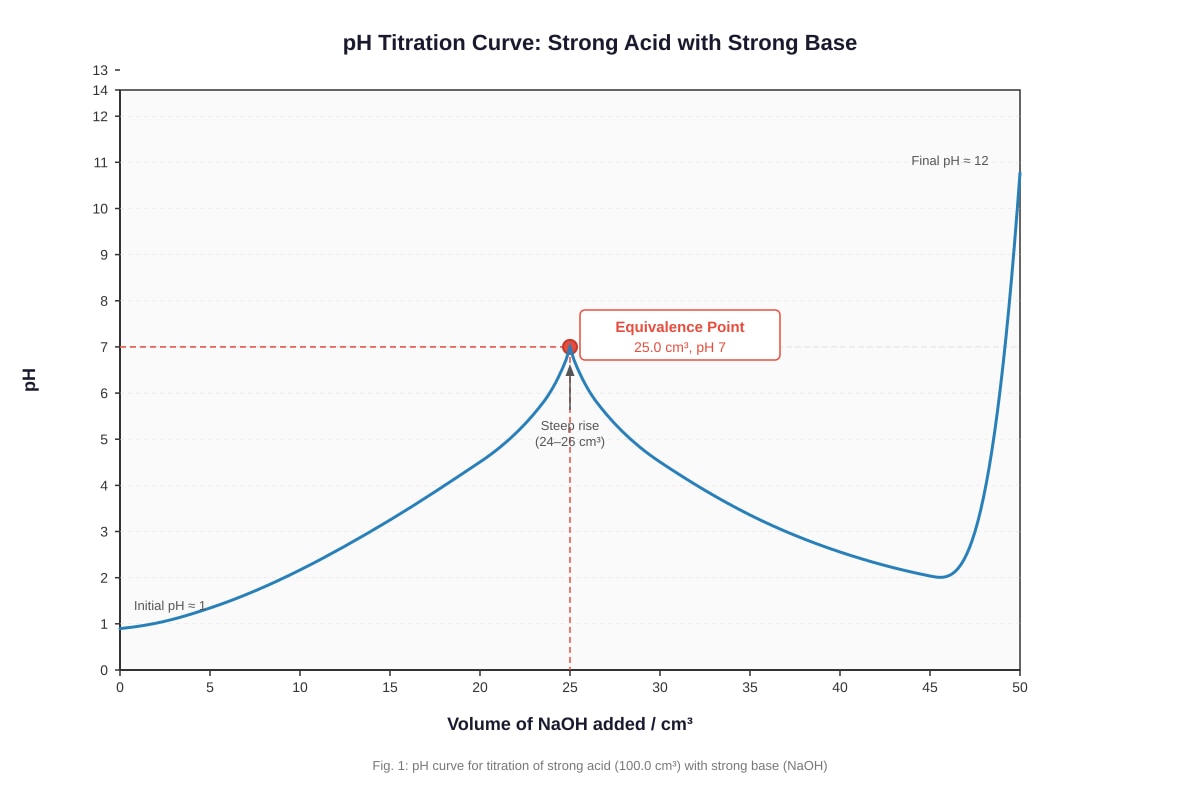
Generated graph for Q6.
A. 1
B. 7
C. 10
D. 13
Answer: ________ [1]
7. Which of the following is a property of a strong base?
A. It partially dissociates in water.
B. It has a pH less than 7.
C. It conducts electricity well in aqueous solution.
D. It forms an equilibrium with its ions in solution.
Answer: ________ [1]
8. The Ka of a weak acid HA is 1.8×10⁻⁵ mol dm−3 at 25 °C. What is the pH of a 0.100 mol dm−3 solution of HA?
A. 1.00
B. 2.87
C. 3.74
D. 5.74
Answer: ________ [1]
9. Which salt undergoes hydrolysis to produce a basic solution?
A. NaCl
B. K2SO4
C. NaF
D. AlCl3
Answer: ________ [1]
10. A solution contains 0.025 mol of HCl dissolved in 500 cm3 of water. What is the concentration of H+(aq) in mol dm−3?
A. 0.0125
B. 0.025
C. 0.050
D. 0.100
Answer: ________ [1]
Section B: Structured Questions (35 marks)
Questions 11–17: Answer all questions in the spaces provided.
11. (a) Define the term strong acid. [1]
...................................................................................................................................................
...................................................................................................................................................
(b) Write an equation to show the dissociation of hydrochloric acid in water. Include state symbols. [1]
...................................................................................................................................................
(c) Explain why a 0.100 mol dm−3 solution of hydrochloric acid has a lower pH than a 0.100 mol dm−3 solution of ethanoic acid, CH3COOH. [2]
...................................................................................................................................................
...................................................................................................................................................
...................................................................................................................................................
...................................................................................................................................................
12. A student carries out a titration to determine the concentration of a solution of potassium hydroxide, KOH, using 0.150 mol dm−3 sulfuric acid, H2SO4.
The student uses 25.0 cm3 of the KOH solution and finds that 18.6 cm3 of H2SO4 is required to reach the end-point.
(a) Write a balanced equation for the reaction between H2SO4 and KOH. Include state symbols. [1]
...................................................................................................................................................
...................................................................................................................................................
(b) Calculate the number of moles of H2SO4 used in the titration. [1]
...................................................................................................................................................
(c) Using your answer to (b), calculate the concentration of the KOH solution in mol dm−3. [2]
...................................................................................................................................................
...................................................................................................................................................
...................................................................................................................................................
...................................................................................................................................................
13. (a) What is meant by the term buffer solution? [2]
...................................................................................................................................................
...................................................................................................................................................
...................................................................................................................................................
...................................................................................................................................................
(b) A buffer solution is prepared by mixing 40.0 cm3 of 0.500 mol dm−3 CH3COOH with 20.0 cm3 of 0.500 mol dm−3 NaOH.
(i) Calculate the number of moles of CH3COOH and NaOH initially present. [2]
...................................................................................................................................................
...................................................................................................................................................
(ii) Hence, determine the number of moles of CH3COOH and CH3COO− present in the buffer after the reaction. [2]
...................................................................................................................................................
...................................................................................................................................................
...................................................................................................................................................
...................................................................................................................................................
14. The following data were collected during a titration of 25.0 cm3 of 0.200 mol dm−3 propanoic acid (C2H5COOH, Ka=1.3×10⁻⁵ mol dm−3) with 0.200 mol dm−3 NaOH.

Generated graph for Q14.
(a) From the graph, determine the volume of NaOH required to reach the equivalence point. [1]
...................................................................................................................................................
(b) Explain why the pH at the equivalence point is greater than 7. [2]
...................................................................................................................................................
...................................................................................................................................................
...................................................................................................................................................
...................................................................................................................................................
(c) At the half-equivalence point, pH = pKa. Use the graph to estimate the pKa of propanoic acid. Hence calculate the Ka value and compare it with the literature value of 1.3×10⁻⁵ mol dm−3. [2]
...................................................................................................................................................
...................................................................................................................................................
...................................................................................................................................................
...................................................................................................................................................
15. (a) Define the term salt hydrolysis. [1]
...................................................................................................................................................
...................................................................................................................................................
...................................................................................................................................................
(b) Classify each of the following salts as producing an acidic, basic, or neutral solution when dissolved in water. Explain your reasoning in each case. [6]
(i) NH4NO3
...................................................................................................................................................
...................................................................................................................................................
...................................................................................................................................................
(ii) Na2CO3
...................................................................................................................................................
...................................................................................................................................................
...................................................................................................................................................
(iii) KCl
...................................................................................................................................................
...................................................................................................................................................
...................................................................................................................................................
16. A solution is prepared by dissolving 4.90 g of sulfuric acid, H2SO4, in water to make 250 cm3 of solution.
(a) Calculate the concentration of the H2SO4 solution in mol dm−3. [2]
(Mr of H2SO4 = 98.0)
...................................................................................................................................................
...................................................................................................................................................
...................................................................................................................................................
(b) Assuming complete dissociation, calculate the pH of this solution. [2]
...................................................................................................................................................
...................................................................................................................................................
...................................................................................................................................................
...................................................................................................................................................
(c) This sulfuric acid solution is used to titrate 20.0 cm3 of a solution of barium hydroxide, Ba(OH)2. The equation for the reaction is:
H2SO4(aq)+Ba(OH)2(aq)→BaSO4(s)+2H2O(l)
If 24.5 cm3 of the H2SO4 solution is required for complete reaction, calculate the concentration of the Ba(OH)2 solution in mol dm−3. [3]
...................................................................................................................................................
...................................................................................................................................................
...................................................................................................................................................
...................................................................................................................................................
...................................................................................................................................................
17. A student investigates the properties of three solutions, P, Q, and R, each of concentration 0.100 mol dm−3.
- Solution P: HCl
- Solution Q: CH3COOH
- Solution R: NaOH
(a) Arrange the three solutions in order of increasing pH. Explain your reasoning. [2]
...................................................................................................................................................
...................................................................................................................................................
...................................................................................................................................................
...................................................................................................................................................
(b) The student adds 10.0 cm3 of 0.100 mol dm−3 NaOH to 25.0 cm3 of solution Q. Calculate the pH of the resulting mixture. [4]
(Ka of CH3COOH = 1.8×10⁻⁵ mol dm−3)
...................................................................................................................................................
...................................................................................................................................................
...................................................................................................................................................
...................................................................................................................................................
...................................................................................................................................................
...................................................................................................................................................
...................................................................................................................................................
...................................................................................................................................................
Section C: Free Response (15 marks)
Questions 18–20: Answer all questions in the spaces provided.
18. A solution of ammonia, NH3, is a weak base with Kb=1.8×10⁻⁵ mol dm−3 at 25 °C.
(a) Write an expression for the base dissociation constant, Kb, for ammonia. [1]
...................................................................................................................................................
...................................................................................................................................................
(b) Calculate the pH of a 0.150 mol dm−3 solution of ammonia. [4]
...................................................................................................................................................
...................................................................................................................................................
...................................................................................................................................................
...................................................................................................................................................
...................................................................................................................................................
...................................................................................................................................................
...................................................................................................................................................
(c) A buffer solution can be prepared by mixing ammonia solution with ammonium chloride, NH4Cl. Explain, with the aid of equations, how this buffer resists changes in pH when:
(i) a small amount of dilute hydrochloric acid is added [2]
...................................................................................................................................................
...................................................................................................................................................
...................................................................................................................................................
...................................................................................................................................................
(ii) a small amount of dilute sodium hydroxide is added [2]
...................................................................................................................................................
...................................................................................................................................................
...................................................................................................................................................
...................................................................................................................................................
19. A student wishes to determine the concentration of a solution of nitric acid, HNO3, by titration with a standard solution of sodium carbonate, Na2CO3.
(a) Write a balanced equation for the reaction between HNO3 and Na2CO3. [1]
...................................................................................................................................................
...................................................................................................................................................
(b) The student dissolves 1.325 g of anhydrous Na2CO3 in water and makes up the solution to 250 cm3 in a volumetric flask. Calculate the concentration of the Na2CO3 solution in mol dm−3. [2]
(Mr of Na2CO3 = 106.0)
...................................................................................................................................................
...................................................................................................................................................
...................................................................................................................................................
(c) 25.0 cm3 of the HNO3 solution is titrated with the Na2CO3 solution using methyl orange as indicator. The titration requires 22.4 cm3 of Na2CO3 solution to reach the end-point.
(i) State the colour change observed at the end-point. [1]
...................................................................................................................................................
...................................................................................................................................................
(ii) Calculate the concentration of the HNO3 solution in mol dm−3. [3]
...................................................................................................................................................
...................................................................................................................................................
...................................................................................................................................................
...................................................................................................................................................
...................................................................................................................................................
(d) Explain why phenolphthalein would not be a suitable indicator for this titration. [2]
...................................................................................................................................................
...................................................................................................................................................
...................................................................................................................................................
...................................................................................................................................................
20. The pH of human blood is maintained at approximately 7.40 by the carbonic acid–hydrogen carbonate buffer system:
H2CO3(aq)⇌H+(aq)+HCO3−(aq)
(a) Explain how this buffer system maintains blood pH when small amounts of acid enter the bloodstream. Include relevant equations. [3]
...................................................................................................................................................
...................................................................................................................................................
...................................................................................................................................................
...................................................................................................................................................
...................................................................................................................................................
...................................................................................................................................................
(b) The Ka of carbonic acid is 4.3×10⁻⁷ mol dm−3. In a sample of blood, the concentration of HCO3− is 2.5×10⁻² mol dm−3 and the concentration of H2CO3 is 1.25×10⁻³ mol dm−3.
(i) Write the expression for Ka for carbonic acid. [1]
...................................................................................................................................................
...................................................................................................................................................
(ii) Use the Henderson–Hasselbalch equation to calculate the pH of this blood sample. [2]
...................................................................................................................................................
...................................................................................................................................................
...................................................................................................................................................
...................................................................................................................................................
...................................................................................................................................................
(c) State one consequence for the human body if the blood pH drops below 7.35 (a condition known as acidosis). [1]
...................................................................................................................................................
...................................................................................................................................................
END OF PAPER