AI Generated Quiz
A Level Biology H3 Human Physiology Quiz
Free A Level Biology H3 Human Physiology quiz, AI version, with questions, answers, and A Level-style practice for Singapore students.
These static practice materials are generated from the site's syllabus and paper-generation workflow, with source and model context shown so students and parents can evaluate the material before use.
Questions
Free quiz and exam paper access
Enter your details to view this paper
Your access is remembered on this device.
Answers
A-Level Biology H3 Quiz - Human Physiology: Answer Key
Total Marks: 100
Section A: Short-Answer Questions (Questions 1–10, 40 marks)
1. Describe the role of Ca²⁺ ions in the transmission of a signal across a cholinergic synapse. (4 marks)
Answer: When an action potential arrives at the presynaptic terminal, it causes voltage-gated Ca²⁺ channels to open (1 mark). Ca²⁺ ions flow into the presynaptic terminal down their electrochemical gradient (1 mark). The influx of Ca²⁺ triggers the exocytosis of synaptic vesicles containing acetylcholine (ACh) into the synaptic cleft (1 mark). ACh then diffuses across the cleft and binds to receptors on the postsynaptic membrane, initiating a postsynaptic potential (1 mark).
Marking notes:
- Award marks for: (i) opening of voltage-gated Ca²⁺ channels, (ii) influx of Ca²⁺, (iii) exocytosis of vesicles, (iv) release of neurotransmitter.
- Common mistake: Students may confuse Ca²⁺ with Na⁺. Emphasise that Ca²⁺ entry is the trigger for vesicle fusion, not the depolarising current.
2. Explain why organisms require different communication systems, using one example of a local communication system and one example of a long-distance communication system in the human body. (4 marks)
Answer: Organisms require different communication systems because different responses require different speeds, durations, and specificities of signalling (1 mark).
- Local communication system example: Paracrine signalling, where signalling molecules (e.g., histamine released by mast cells during an allergic reaction) act on nearby target cells. This allows for rapid, localised responses without affecting distant tissues (1.5 marks).
- Long-distance communication system example: The endocrine system, where hormones (e.g., insulin released by the pancreas) are transported via the bloodstream to act on distant target cells. This allows for coordinated, sustained responses that affect the whole body (1.5 marks).
Marking notes:
- Award 1 mark for explaining the need for different systems (speed, duration, specificity).
- Award 1.5 marks for each correctly described example with a clear link to function.
- Accept other valid examples (e.g., synaptic transmission for local, nervous system for long-distance).
3. A myelinated neurone has a resting membrane potential of -70 mV. An action potential is initiated at the axon hillock. Explain how the action potential is propagated along the myelinated axon. (4 marks)
Answer: The action potential is propagated by saltatory conduction (1 mark). Depolarisation at one node of Ranvier generates a local current that flows through the cytoplasm to the adjacent node, depolarising it to threshold (1 mark). Voltage-gated Na⁺ channels at the next node open, generating a new action potential (1 mark). The myelin sheath acts as an electrical insulator, preventing ion flow across the membrane in the internodal regions, so the action potential "jumps" from node to node, increasing conduction velocity (1 mark).
Marking notes:
- Award marks for: (i) saltatory conduction, (ii) local current flow between nodes, (iii) sequential opening of Na⁺ channels at nodes, (iv) role of myelin as insulator.
- Common mistake: Students may think the action potential travels inside the myelin. Clarify that it regenerates only at the nodes.
4. Outline the principles of homeostasis, using the regulation of blood glucose concentration as an example. (4 marks)
Answer: Homeostasis is the maintenance of a stable internal environment despite external changes, achieved through negative feedback (1 mark). The key components are: a receptor (detects change), a control centre (compares to set point), and an effector (produces a response to reverse the change) (1 mark).
Example: After a meal, blood glucose rises. Beta cells in the pancreas (receptor and control centre) detect the increase and secrete insulin (1 mark). Insulin promotes glucose uptake by cells and glycogen synthesis in the liver (effector), lowering blood glucose back to the set point (1 mark).
Marking notes:
- Award 1 mark for defining homeostasis and negative feedback.
- Award 1 mark for identifying the three components.
- Award 2 marks for correctly applying the components to blood glucose regulation.
- Accept other valid examples (e.g., temperature regulation, osmoregulation).
5. Compare and contrast the structure and function of a cholinergic synapse and an electrical synapse. (4 marks)
Answer: Similarities: Both allow communication between neurones (1 mark).
Differences:
- Structure: Cholinergic synapses have a synaptic cleft (~20 nm) and rely on neurotransmitter (ACh) release from vesicles. Electrical synapses have gap junctions (connexons) that directly connect the cytoplasm of adjacent cells (1 mark).
- Function: Cholinergic synapses are slower (synaptic delay due to neurotransmitter release and diffusion) and can be modulatory (excitatory or inhibitory). Electrical synapses are very fast (direct ion flow) and are typically bidirectional (1 mark).
- Plasticity: Cholinergic synapses can undergo long-term potentiation/depression; electrical synapses are less plastic (1 mark).
Marking notes:
- Award 1 mark for a valid similarity.
- Award 1 mark for each valid difference (up to 3 marks).
- Accept other valid differences (e.g., fatigue, directionality).
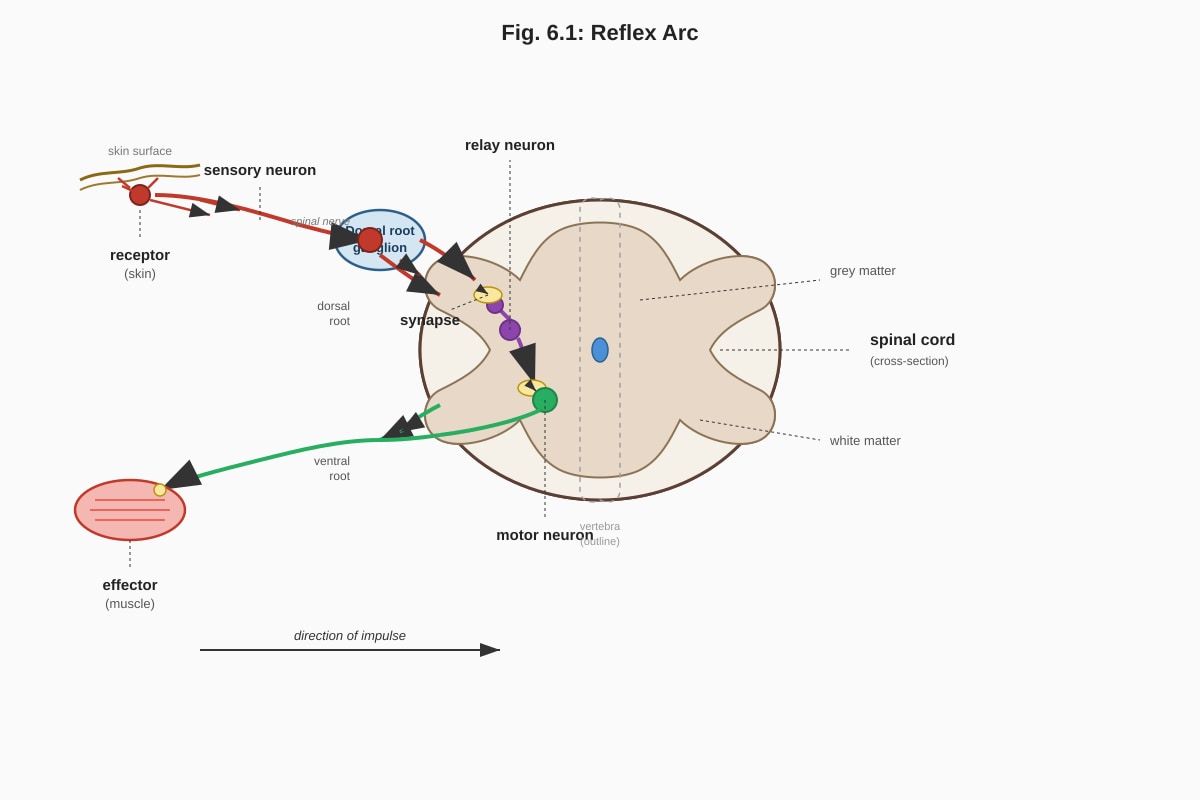
6. Using the diagram, explain how a reflex action is coordinated and why it is important for survival. (4 marks)
Answer: A reflex action is an automatic, rapid response to a stimulus that does not involve conscious thought (1 mark). The stimulus (e.g., touching a hot object) is detected by a receptor in the skin. A sensory neurone carries the impulse to the spinal cord, where it synapses with a relay neurone (1 mark). The relay neurone synapses with a motor neurone, which carries the impulse to an effector (muscle), causing contraction and withdrawal of the limb (1 mark). Reflexes are important for survival because they allow rapid protection from harm without the delay of processing in the brain (1 mark).
Marking notes:
- Award 1 mark for defining a reflex action.
- Award 1 mark for correctly tracing the pathway (receptor → sensory neurone → relay neurone → motor neurone → effector).
- Award 1 mark for mentioning the spinal cord as the integration centre.
- Award 1 mark for explaining the survival advantage (speed, no conscious delay).
7. Explain how the human body maintains a constant core body temperature when exposed to a cold environment. (4 marks)
Answer: When core body temperature drops, thermoreceptors in the skin and hypothalamus detect the change (1 mark). The hypothalamus (control centre) activates heat-conserving and heat-generating mechanisms (1 mark):
- Vasoconstriction: Blood vessels in the skin constrict, reducing blood flow to the surface and minimising heat loss (1 mark).
- Shivering: Skeletal muscles contract involuntarily, generating heat through increased metabolic activity (1 mark).
- Other mechanisms: piloerection (traps air for insulation, though less effective in humans), increased metabolic rate, behavioural changes (e.g., putting on a coat).
Marking notes:
- Award 1 mark for identifying the receptors and control centre.
- Award 1 mark for explaining vasoconstriction.
- Award 1 mark for explaining shivering.
- Award 1 mark for any additional valid mechanism (e.g., increased metabolism, behavioural changes).
- Common mistake: Students may confuse vasoconstriction with vasodilation. Emphasise that vasoconstriction reduces heat loss.
8. Describe the role of the hypothalamus in coordinating the body's response to a decrease in blood water potential. (4 marks)
Answer: A decrease in blood water potential (increased solute concentration) is detected by osmoreceptors in the hypothalamus (1 mark). The hypothalamus signals the posterior pituitary gland to release antidiuretic hormone (ADH) (1 mark). ADH increases the permeability of the collecting ducts in the kidneys to water, allowing more water to be reabsorbed into the bloodstream (1 mark). This increases blood water potential back towards the set point (1 mark).
Marking notes:
- Award 1 mark for identifying osmoreceptors in the hypothalamus.
- Award 1 mark for ADH release from the posterior pituitary.
- Award 1 mark for explaining the effect on the kidneys (increased water reabsorption).
- Award 1 mark for linking the response to restoring blood water potential.
- Common mistake: Students may think ADH is produced in the pituitary. Clarify that it is produced in the hypothalamus and stored/released from the posterior pituitary.
9. A patient has a condition where their pancreatic beta cells are destroyed by their own immune system. Predict and explain the effect of this condition on blood glucose regulation. (4 marks)
Answer: This condition is Type 1 diabetes mellitus (1 mark). Beta cells produce insulin, so their destruction leads to insulin deficiency (1 mark). Without insulin, cells cannot take up glucose from the blood, and the liver does not convert glucose to glycogen (1 mark). This results in hyperglycaemia (persistently high blood glucose), which can lead to symptoms such as frequent urination, thirst, and weight loss (1 mark).
Marking notes:
- Award 1 mark for identifying Type 1 diabetes.
- Award 1 mark for explaining insulin deficiency.
- Award 1 mark for explaining the consequences (reduced glucose uptake, reduced glycogen synthesis).
- Award 1 mark for describing the outcome (hyperglycaemia and associated symptoms).
- Common mistake: Students may confuse Type 1 (autoimmune destruction of beta cells) with Type 2 (insulin resistance). Emphasise the difference.
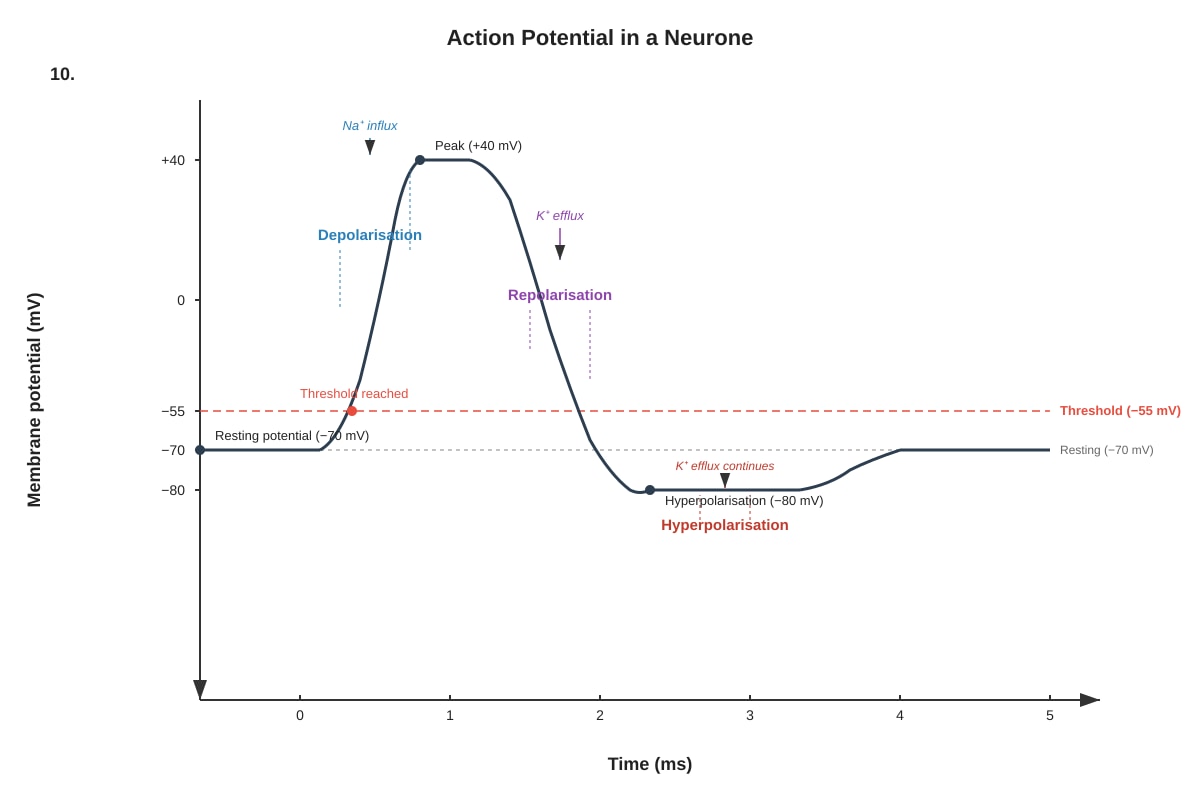
10. Using the graph, explain the ionic mechanisms responsible for the depolarisation and repolarisation phases of the action potential. (4 marks)
Answer: Depolarisation: When a stimulus depolarises the membrane to threshold (-55 mV), voltage-gated Na⁺ channels open (1 mark). Na⁺ ions rush into the neurone down their electrochemical gradient, causing the membrane potential to become more positive, rising to +40 mV (1 mark).
Repolarisation: At the peak of the action potential, voltage-gated Na⁺ channels inactivate, and voltage-gated K⁺ channels open (1 mark). K⁺ ions flow out of the neurone down their electrochemical gradient, restoring the negative membrane potential (1 mark).
Marking notes:
- Award 1 mark for explaining the role of Na⁺ influx in depolarisation.
- Award 1 mark for describing the opening of voltage-gated Na⁺ channels.
- Award 1 mark for explaining the role of K⁺ efflux in repolarisation.
- Award 1 mark for describing the opening of voltage-gated K⁺ channels.
- Common mistake: Students may think Na⁺ channels remain open throughout. Emphasise that they inactivate at the peak.
Section B: Data-Based and Structured Questions (Questions 11–15, 30 marks)
11. (a) Calculate the change in membrane potential from resting to peak in the control condition. (1 mark)
Answer: Change = Peak potential - Resting potential = (-30 mV) - (-70 mV) = +40 mV (1 mark).
Marking notes:
- Award 1 mark for correct calculation and units.
- Common mistake: Students may forget the negative signs. Emphasise careful subtraction.
11. (b) Based on the data, suggest a mechanism of action for Drug X. (2 marks)
Answer: Drug X prevents the postsynaptic potential from occurring (the peak potential remains at -70 mV, same as resting) (1 mark). This suggests Drug X may be an antagonist that blocks acetylcholine (ACh) receptors on the postsynaptic membrane, preventing ACh from binding and opening ion channels (1 mark). Alternatively, Drug X could inhibit the release of ACh from the presynaptic terminal.
Marking notes:
- Award 1 mark for identifying that Drug X blocks the postsynaptic response.
- Award 1 mark for suggesting a plausible mechanism (e.g., receptor antagonist, inhibition of ACh release).
- Accept any valid mechanism that explains the data.
11. (c) Explain how your suggested mechanism would affect the transmission of a signal across the synapse. (2 marks)
Answer: If Drug X blocks ACh receptors, ACh released from the presynaptic terminal cannot bind to its receptors (1 mark). This prevents the opening of ligand-gated Na⁺ channels on the postsynaptic membrane, so no depolarisation (excitatory postsynaptic potential, EPSP) occurs, and the signal is not transmitted to the postsynaptic neurone (1 mark).
Marking notes:
- Award 1 mark for explaining the block of ACh binding.
- Award 1 mark for explaining the consequence (no EPSP, no signal transmission).
- Ensure the answer is consistent with the mechanism suggested in (b).
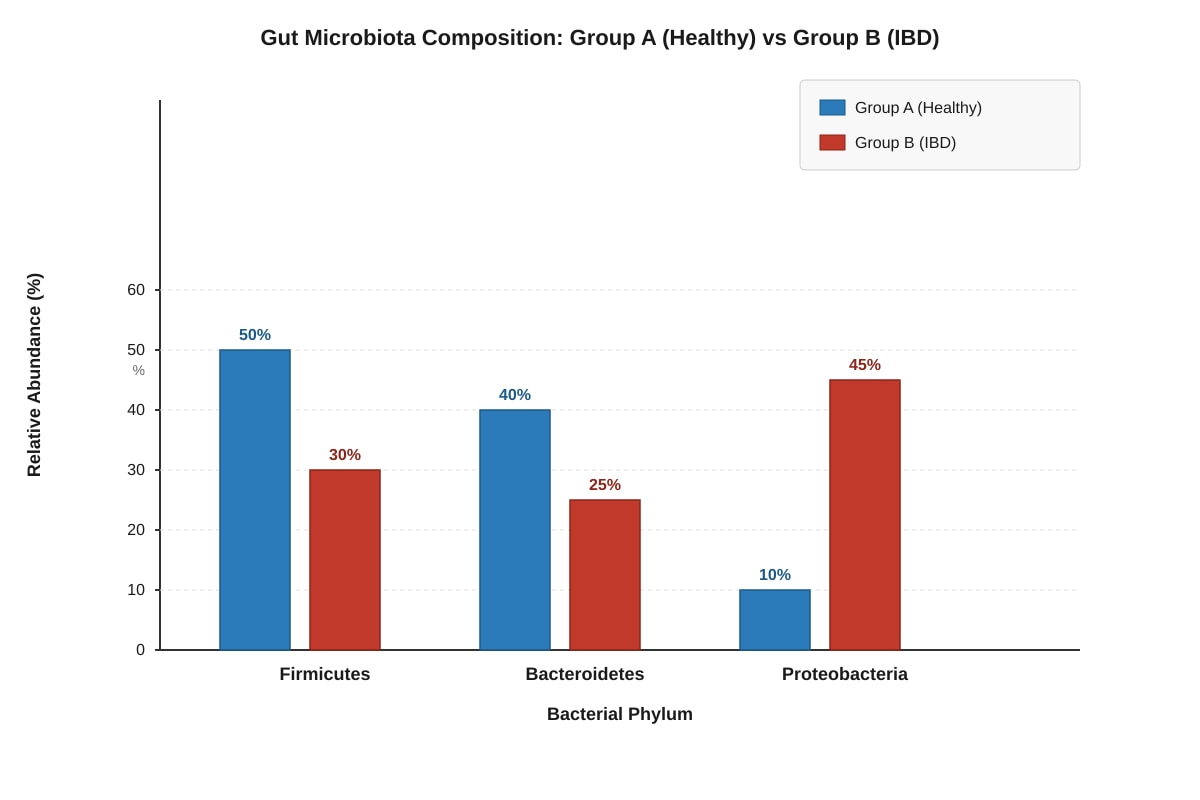
12. (a) Describe the difference in gut microbiota composition between Group A and Group B. (2 marks)
Answer: Group A (healthy) has a higher relative abundance of Firmicutes (50%) and Bacteroidetes (40%) compared to Group B (IBD) (30% and 25% respectively) (1 mark). Group B has a much higher relative abundance of Proteobacteria (45%) compared to Group A (10%) (1 mark).
Marking notes:
- Award 1 mark for describing the decrease in Firmicutes and Bacteroidetes in Group B.
- Award 1 mark for describing the increase in Proteobacteria in Group B.
- Accept numerical values or qualitative descriptions.
12. (b) Suggest how the altered microbiota in Group B might contribute to the development of inflammatory bowel disease. (3 marks)
Answer: The increase in Proteobacteria, which includes many pathogenic species (e.g., E. coli), may trigger an inflammatory immune response in the gut (1 mark). The reduction in beneficial bacteria (Firmicutes and Bacteroidetes) may reduce the production of anti-inflammatory molecules (e.g., short-chain fatty acids like butyrate) that help maintain gut barrier integrity and regulate immune responses (1 mark). The combined effect is a breakdown of the gut barrier, increased inflammation, and the development of IBD (1 mark).
Marking notes:
- Award 1 mark for linking increased Proteobacteria to inflammation.
- Award 1 mark for linking decreased beneficial bacteria to reduced anti-inflammatory signals.
- Award 1 mark for explaining the overall consequence (barrier breakdown, IBD).
- Accept other valid mechanisms (e.g., altered metabolite production, immune dysregulation).
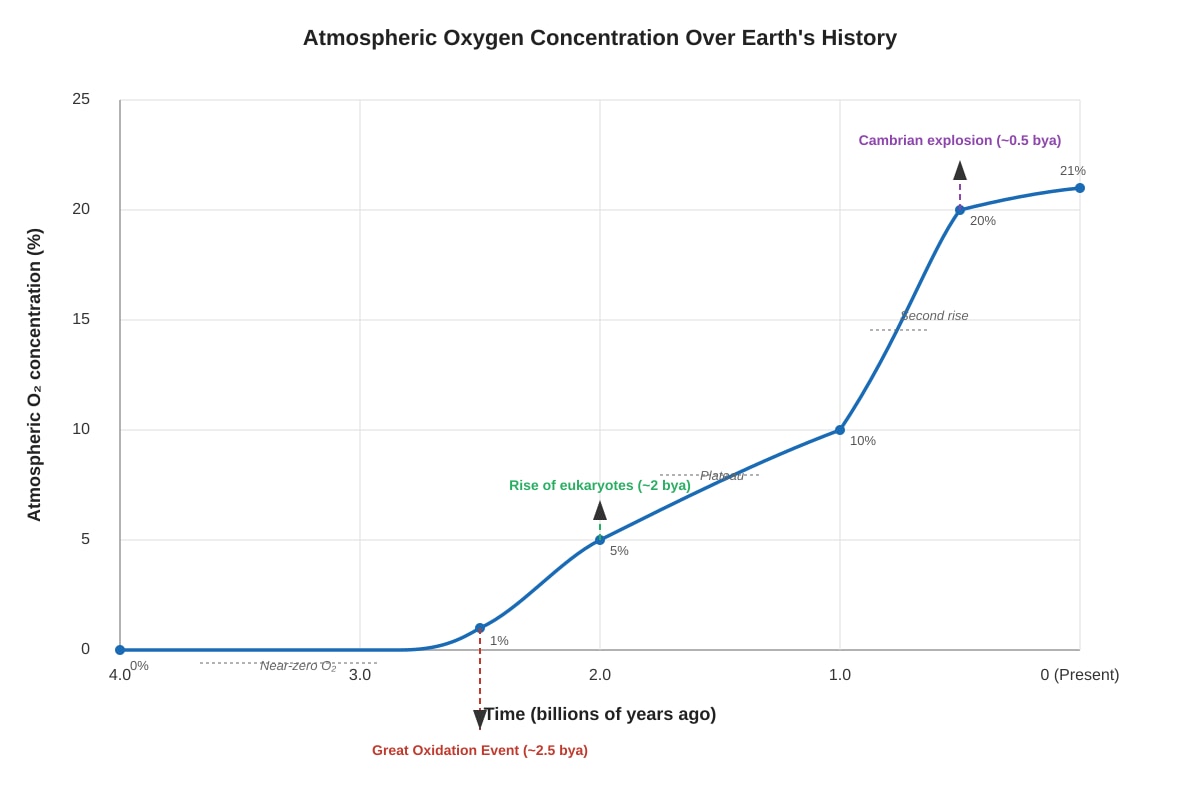
13. (a) Describe the pattern of change in atmospheric oxygen concentration over the past 4 billion years. (2 marks)
Answer: For the first 2 billion years, atmospheric oxygen concentration remained near zero (1 mark). A gradual rise began around 2.5 billion years ago (Great Oxidation Event), followed by a second significant increase around 0.6 billion years ago, reaching near-modern levels (21%) (1 mark).
Marking notes:
- Award 1 mark for describing the initial near-zero period.
- Award 1 mark for describing the two main rises.
- Accept approximate time points.
13. (b) Explain the importance of the rise in atmospheric oxygen concentration for the evolution of complex multicellular life. (3 marks)
Answer: The rise in oxygen allowed for the evolution of aerobic respiration, which is much more efficient (produces ~36 ATP per glucose) than anaerobic respiration (produces ~2 ATP per glucose) (1 mark). This increased energy availability supported the evolution of larger, more complex, and multicellular organisms with higher energy demands (1 mark). Oxygen also allowed for the formation of the ozone layer, which protected organisms from harmful UV radiation, enabling life to colonise land (1 mark).
Marking notes:
- Award 1 mark for linking oxygen to aerobic respiration and increased ATP yield.
- Award 1 mark for linking increased energy to the evolution of complex life.
- Award 1 mark for explaining the role of the ozone layer.
- Accept other valid points (e.g., oxygen as a terminal electron acceptor, role in collagen synthesis).
14. (a) Predict the effect of this mutation on the resting membrane potential of the neurone. (2 marks)
Answer: The Na⁺/K⁺ ATPase pump actively transports 3 Na⁺ out of the cell and 2 K⁺ into the cell, maintaining the concentration gradients that underlie the resting membrane potential (1 mark). An 80% reduction in pump activity would cause the concentration gradients to run down over time: intracellular Na⁺ would increase and intracellular K⁺ would decrease. This would make the resting membrane potential less negative (depolarised) (1 mark).
Marking notes:
- Award 1 mark for explaining the normal role of the Na⁺/K⁺ ATPase.
- Award 1 mark for predicting a less negative (depolarised) resting potential.
- Accept "the resting potential would be closer to zero" or similar.
14. (b) Explain how this mutation would affect the ability of the neurone to generate action potentials. (3 marks)
Answer: A less negative resting potential means the membrane is closer to threshold (1 mark). This could make the neurone hyperexcitable, as smaller stimuli could trigger action potentials (1 mark). However, over time, the reduced Na⁺ gradient would mean that when voltage-gated Na⁺ channels open, less Na⁺ enters the cell, reducing the rate and magnitude of depolarisation, potentially making it harder to reach threshold and generate action potentials (1 mark).
Marking notes:
- Award 1 mark for explaining that the membrane is closer to threshold.
- Award 1 mark for explaining potential hyperexcitability.
- Award 1 mark for explaining the reduced Na⁺ gradient and its effect on action potential generation.
- Accept a well-reasoned argument for either increased or decreased excitability, as long as it is consistent with the predicted change in resting potential.
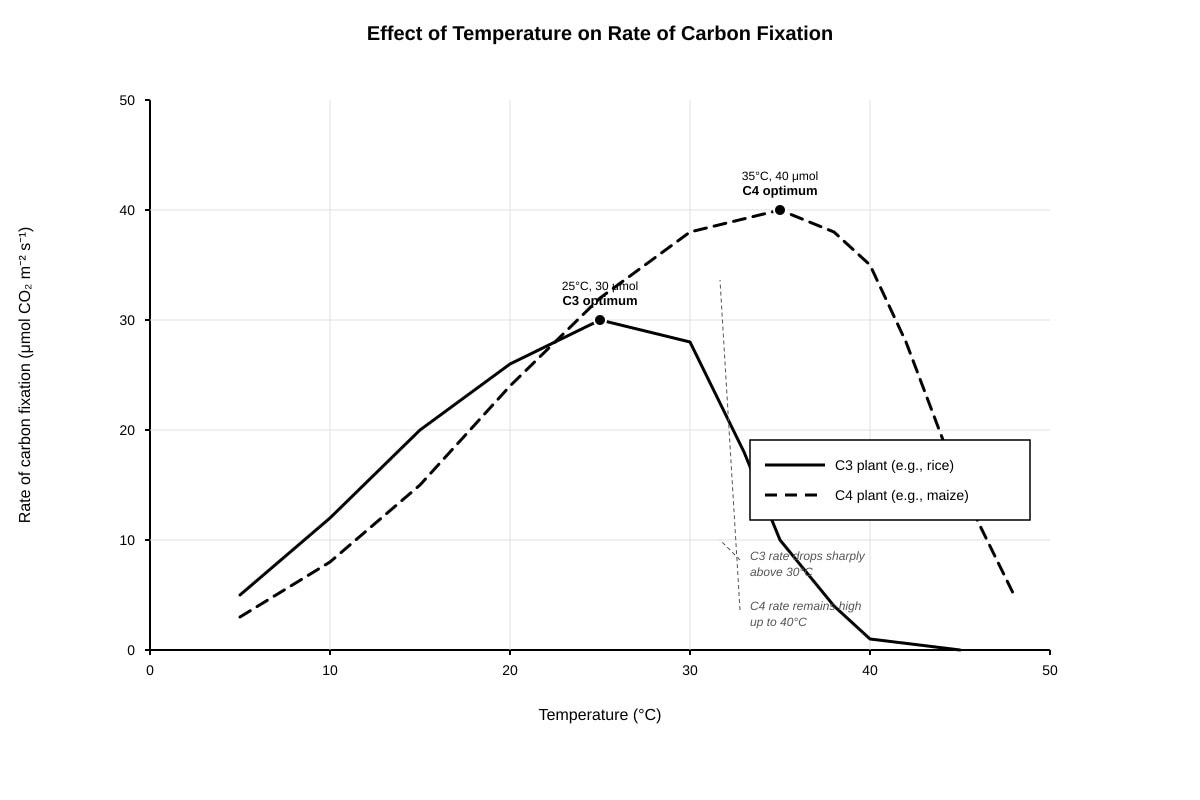
15. (a) Compare the effect of temperature on carbon fixation in C3 and C4 plants. (2 marks)
Answer: Both plants show an increase in carbon fixation rate with temperature up to an optimum, followed by a decline (1 mark). The C3 plant has a lower optimum temperature (around 25°C) and its rate declines sharply above 30°C, while the C4 plant has a higher optimum temperature (around 35°C) and maintains a higher rate at elevated temperatures (1 mark).
Marking notes:
- Award 1 mark for describing the general pattern (increase then decrease).
- Award 1 mark for comparing the optima and performance at high temperatures.
- Accept numerical values from the graph.
15. (b) Explain the physiological basis for the difference in temperature optima between C3 and C4 plants. (3 marks)
Answer: C3 plants use RuBisCO to fix CO₂ in the Calvin cycle. At high temperatures, RuBisCO's oxygenase activity increases, leading to photorespiration, which reduces carbon fixation efficiency (1 mark). C4 plants have a spatial separation of carbon fixation: CO₂ is initially fixed by PEP carboxylase in mesophyll cells into a 4-carbon compound, which is then transported to bundle sheath cells where CO₂ is released and refixed by RuBisCO (1 mark). PEP carboxylase has a higher optimum temperature and no oxygenase activity, so C4 plants can fix carbon efficiently at higher temperatures without significant photorespiration (1 mark).
Marking notes:
- Award 1 mark for explaining photorespiration in C3 plants at high temperatures.
- Award 1 mark for describing the C4 pathway (spatial separation, PEP carboxylase).
- Award 1 mark for explaining why C4 plants are more efficient at high temperatures.
- Common mistake: Students may confuse C4 and CAM pathways. Emphasise spatial (C4) vs. temporal (CAM) separation.
Section C: Free-Response Questions (Questions 16–20, 30 marks)
16. Discuss the importance of negative feedback mechanisms in maintaining homeostasis in the human body. Use specific examples to illustrate your answer. (6 marks)
Answer: Negative feedback is a regulatory mechanism in which a change in a physiological variable triggers a response that reverses the change, bringing the variable back towards its set point. This is essential for maintaining a stable internal environment (homeostasis).
Example 1: Blood glucose regulation. After a meal, blood glucose rises. Beta cells in the pancreas detect the increase and secrete insulin. Insulin promotes glucose uptake by cells and glycogen synthesis in the liver, lowering blood glucose. When blood glucose falls, insulin secretion decreases, and glucagon is released to raise glucose levels. This ensures a stable blood glucose concentration.
Example 2: Body temperature regulation. If core temperature rises, thermoreceptors in the skin and hypothalamus detect the change. The hypothalamus activates cooling mechanisms: vasodilation (increases heat loss from the skin) and sweating (evaporative cooling). If temperature falls, the hypothalamus activates heat-conserving mechanisms: vasoconstriction and shivering.
Importance: Negative feedback prevents physiological variables from deviating too far from their set points, which could be damaging or fatal. For example, uncontrolled hyperglycaemia can lead to diabetic ketoacidosis, and extreme hyperthermia can cause protein denaturation and death. Negative feedback provides stability and allows the body to respond dynamically to internal and external changes.
Marking scheme (6 marks):
- (1 mark) Definition of negative feedback and its role in homeostasis.
- (2 marks) Detailed description of one example (receptor, control centre, effector, response).
- (2 marks) Detailed description of a second example.
- (1 mark) Explanation of the importance of negative feedback (preventing harmful deviations).
17. Evaluate the role of the human microbiota in maintaining health and preventing disease. (6 marks)
Answer: The human microbiota consists of trillions of microorganisms (bacteria, fungi, viruses) that live on and in the human body, particularly in the gut. It plays a crucial role in health.
Beneficial roles:
- Digestion and nutrition: Gut bacteria break down dietary fibre into short-chain fatty acids (SCFAs) like butyrate, which provide energy for colon cells and have anti-inflammatory effects.
- Immune system development: The microbiota helps train the immune system to distinguish between harmless and pathogenic microbes, reducing the risk of allergies and autoimmune diseases.
- Protection against pathogens: Commensal bacteria compete with pathogens for resources and attachment sites, and produce antimicrobial substances.
- Vitamin synthesis: Gut bacteria produce vitamins such as vitamin K and some B vitamins.
Dysbiosis and disease:
- Inflammatory bowel disease (IBD): An imbalance in gut microbiota (e.g., increased Proteobacteria, decreased Firmicutes) is associated with chronic inflammation.
- Obesity and metabolic syndrome: Altered microbiota composition can affect energy extraction from food and influence metabolism.
- Allergies and asthma: Reduced microbial diversity in early life is linked to increased risk of allergic diseases.
Evaluation: The microbiota is essential for health, but its composition is influenced by diet, antibiotics, and lifestyle. Maintaining a healthy microbiota through a diverse diet (rich in fibre) and avoiding unnecessary antibiotics can promote health. However, the relationship is complex and bidirectional: disease can alter the microbiota, and an altered microbiota can contribute to disease. More research is needed to establish causal mechanisms and develop microbiota-based therapies (e.g., probiotics, faecal microbiota transplantation).
Marking scheme (6 marks):
- (1 mark) Introduction to the microbiota.
- (2 marks) Description of beneficial roles (at least two).
- (2 marks) Description of how dysbiosis contributes to disease (at least two examples).
- (1 mark) Evaluation of the evidence and implications for health.
18. Explain how the structure of a myelinated neurone is adapted for the rapid transmission of nerve impulses. (6 marks)
Answer: The myelinated neurone has several structural adaptations that enable rapid impulse transmission.
Myelin sheath: Formed by Schwann cells (in the PNS) or oligodendrocytes (in the CNS), the myelin sheath is a lipid-rich insulating layer that surrounds the axon. It prevents ion flow across the membrane in the internodal regions, forcing the action potential to "jump" from one node of Ranvier to the next (saltatory conduction). This is much faster than continuous conduction along an unmyelinated axon.
Nodes of Ranvier: These are gaps in the myelin sheath where the axon membrane is exposed. They contain a high density of voltage-gated Na⁺ and K⁺ channels. Action potentials are regenerated only at these nodes, reducing the number of depolarisation events needed to propagate the signal along the axon.
Large axon diameter: A larger axon diameter reduces the internal resistance to ion flow, allowing local currents to spread more rapidly along the axon. This further increases conduction velocity.
Axon hillock: The initial segment of the axon has a low threshold for action potential generation, ensuring that signals are initiated efficiently.
Conclusion: The combination of myelination, nodes of Ranvier, and large axon diameter allows myelinated neurones to conduct impulses at speeds of up to 120 m/s, enabling rapid reflexes and coordination.
Marking scheme (6 marks):
- (1 mark) Description of the myelin sheath and its insulating properties.
- (2 marks) Explanation of saltatory conduction and the role of nodes of Ranvier.
- (1 mark) Explanation of how large axon diameter increases speed.
- (1 mark) Any additional adaptation (e.g., axon hillock, high channel density at nodes).
- (1 mark) Summary of overall speed and functional significance.
19. Discuss the factors that affect the probability of a pandemic occurring, with reference to the role of human behaviour and biological factors. (6 marks)
Answer: A pandemic is a global outbreak of a disease. The probability of a pandemic depends on a complex interplay of biological and human factors.
Biological factors:
- Pathogen characteristics: High transmissibility (e.g., via respiratory droplets), long incubation period (allowing asymptomatic spread), high mutation rate (e.g., RNA viruses like influenza and coronaviruses), and ability to survive on surfaces all increase pandemic potential.
- Evolution of new virulent strains: Antigenic drift (gradual mutation) and antigenic shift (reassortment of genetic segments) can produce novel strains to which the human population has little pre-existing immunity.
- Development of drug resistance: Antimicrobial resistance can make infections harder to treat, prolonging outbreaks and increasing spread.
Human behaviour and societal factors:
- Global travel and trade: Large-scale movements of people can rapidly spread a pathogen across the globe. Air travel allows an infected person to reach any continent within hours.
- Urbanisation and population density: High population density in cities facilitates rapid person-to-person transmission.
- Sanitation and water supply: Poor sanitation and contaminated water supplies can spread waterborne diseases (e.g., cholera).
- Food production and distribution: Intensive animal farming can create opportunities for zoonotic spillover events.
- Healthcare infrastructure: Weak healthcare systems, lack of surveillance, and limited access to vaccines and treatments can allow outbreaks to grow unchecked.
- Public health measures: Delayed or inadequate responses (e.g., testing, contact tracing, quarantine, vaccination) increase the probability of a pandemic.
Conclusion: The probability of a pandemic is determined by the interaction between the biological properties of the pathogen and human societal factors. Mitigation requires global surveillance, rapid response, investment in healthcare, and addressing root causes such as deforestation and wildlife trade.
Marking scheme (6 marks):
- (1 mark) Definition of a pandemic.
- (2 marks) Discussion of biological factors (at least two).
- (2 marks) Discussion of human/societal factors (at least two).
- (1 mark) Conclusion linking factors and mitigation strategies.
20. Compare and contrast the mechanisms of action of the nervous system and the endocrine system in coordinating responses to internal and external stimuli. (6 marks)
Answer: Both systems coordinate responses, but they differ in speed, duration, and mode of communication.
Similarities:
- Both detect stimuli and produce responses to maintain homeostasis.
- Both use chemical messengers: neurotransmitters (nervous system) and hormones (endocrine system).
- Both involve feedback mechanisms (e.g., negative feedback in hormone regulation).
Differences:
| Feature | Nervous System | Endocrine System |
|---|---|---|
| Speed | Very fast (milliseconds) | Slower (seconds to hours) |
| Duration | Short-lived (milliseconds to seconds) | Long-lasting (minutes to days) |
| Signal type | Electrical impulses (action potentials) and neurotransmitters | Chemical hormones |
| Transmission | Along neurones; direct, targeted | Via bloodstream; widespread |
| Target cells | Specific (synaptic cleft) | Any cell with appropriate receptors |
| Response | Rapid, precise (e.g., muscle contraction) | Gradual, sustained (e.g., growth, metabolism) |
| Recovery | Fast (neurotransmitter breakdown/reuptake) | Slow (hormone clearance from blood) |
Integration: The two systems are interconnected. For example, the hypothalamus links the nervous and endocrine systems: it receives neural input and controls the pituitary gland, which regulates other endocrine glands. The fight-or-flight response involves both rapid neural activation (sympathetic nervous system) and sustained hormonal release (adrenaline from the adrenal medulla).
Conclusion: The nervous system is adapted for rapid, short-term responses, while the endocrine system is adapted for slower, longer-term regulation. Together, they provide comprehensive coordination of the body's functions.
Marking scheme (6 marks):
- (1 mark) Identification of a similarity.
- (3 marks) Comparison of at least three key differences (speed, duration, transmission, target, etc.).
- (1 mark) Explanation of integration (e.g., hypothalamus-pituitary axis, fight-or-flight).
- (1 mark) Conclusion summarising the complementary roles.
End of Answer Key