AI Generated Quiz
A Level Biology H3 Genetics Inheritance Quiz
Free A Level Biology H3 Genetics Inheritance quiz, AI version, with questions, answers, and A Level-style practice for Singapore students.
These static practice materials are generated from the site's syllabus and paper-generation workflow, with source and model context shown so students and parents can evaluate the material before use.
Questions
Free quiz and exam paper access
Enter your details to view this paper
Your access is remembered on this device.
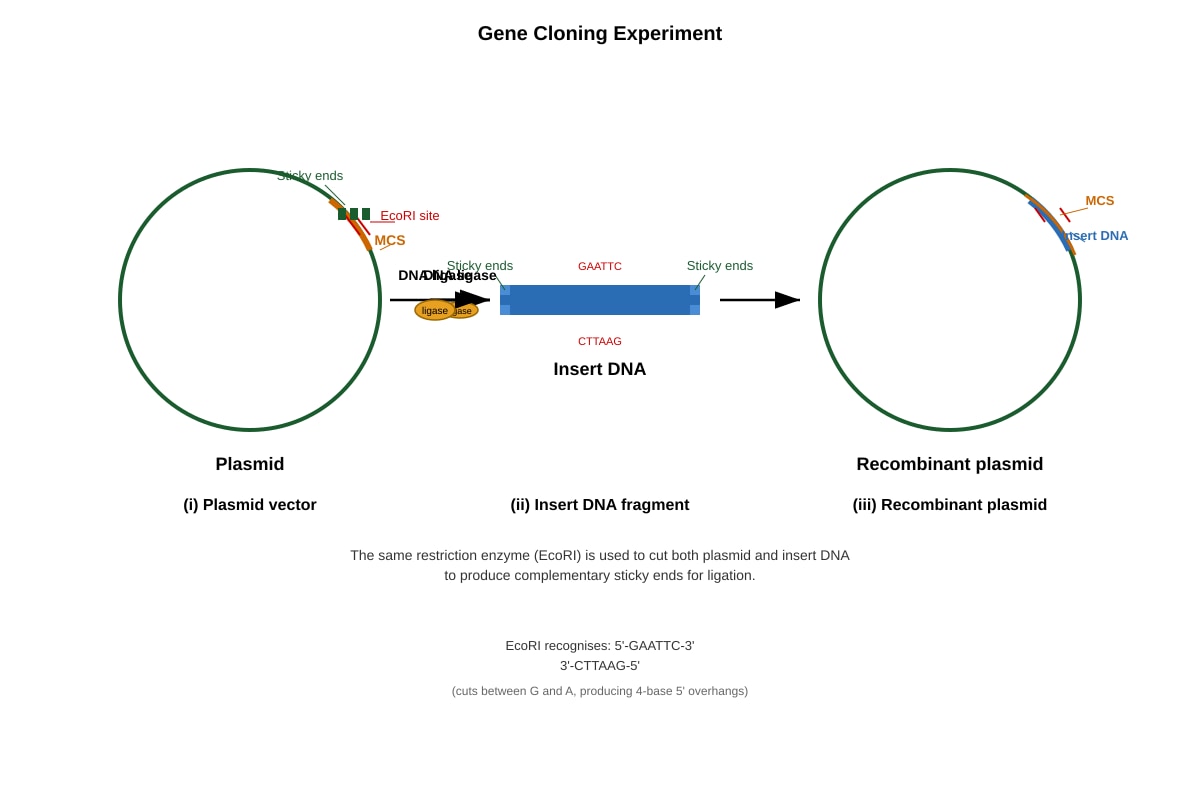
Answers
A-Level Biology H3 Quiz - Genetics Inheritance: Answer Key
Total Marks: 60
Section A: Multiple-Choice Questions (Questions 1–5)
1. D. Exposure to high-energy radiation
- Explanation: SCNT (A), transcription factor reprogramming (B), and chemical induction (C) are established methods to induce pluripotency. High-energy radiation causes DNA damage and mutations, not controlled reprogramming to a stem cell state.
- Marking: 1 mark for correct answer.
2. C. They cleave DNA at specific recognition sequences, often palindromic.
- Explanation: Restriction endonucleases are "molecular scissors" that cut DNA at specific palindromic sequences (e.g., GAATTC for EcoRI). Option A describes reverse transcriptase; B describes DNA ligase; D describes helicase.
- Marking: 1 mark for correct answer.
3. B. Methylation of CpG islands in promoter regions
- Explanation: DNA methylation, particularly at CpG islands in gene promoters, is strongly associated with transcriptional silencing. Acetylation (A) generally activates gene expression. Phosphorylation (C) and ubiquitination (D) are involved in other cellular processes.
- Marking: 1 mark for correct answer.
4. B. The gene must be synthesised without introns (as cDNA).
- Explanation: E. coli is a prokaryote and lacks the spliceosome machinery to remove introns from pre-mRNA. Therefore, a cDNA copy (made from mature mRNA) must be used to ensure the correct eukaryotic protein is produced.
- Marking: 1 mark for correct answer.
5. B. It synthesises a DNA strand complementary to an RNA template.
- Explanation: Reverse transcriptase is an RNA-dependent DNA polymerase. It uses an RNA template to synthesise a complementary DNA strand (cDNA). This is crucial for making cDNA from mRNA for cloning eukaryotic genes.
- Marking: 1 mark for correct answer.
Section B: Short-Answer Questions (Questions 6–15)
6. Principle of SCNT: The nucleus from a mature (somatic) cell is transferred into an enucleated egg cell (an egg cell from which its own nucleus has been removed). The egg cell is then stimulated to divide and develop into an early embryo. The resulting cells are pluripotent stem cells, as the egg cell's cytoplasm reprograms the somatic nucleus to an embryonic state.
- Application: Therapeutic cloning to generate patient-specific stem cells for regenerative medicine (e.g., to repair damaged tissue without immune rejection) or reproductive cloning (e.g., Dolly the sheep).
- Marking Scheme:
- 1 mark for describing the transfer of a somatic nucleus into an enucleated egg.
- 1 mark for explaining that the egg cytoplasm reprograms the nucleus to a stem cell state.
- 1 mark for a valid application (e.g., therapeutic cloning, regenerative medicine, studying development).
7. (a) Reason for using cDNA:
- Eukaryotic genes contain introns (non-coding sequences). E. coli, being a prokaryote, lacks the spliceosome complex to remove introns from pre-mRNA. If genomic DNA were used, the E. coli would produce a non-functional pre-mRNA or a truncated protein. cDNA is synthesised from mature mRNA, which has already had its introns spliced out, so it contains only the coding sequence (exons) and can be directly expressed in E. coli.
- Marking: 2 marks for a clear explanation linking introns in genomic DNA to the lack of splicing machinery in E. coli.
(b) Enzyme and principle:
- Enzyme: Reverse transcriptase.
- Principle: Reverse transcriptase uses the insulin mRNA as a template. A primer (often oligo-dT) binds to the poly-A tail of the mRNA. The enzyme then synthesises a complementary DNA strand (cDNA) in the 5' to 3' direction, using deoxyribonucleotide triphosphates (dNTPs).
- Marking: 1 mark for naming reverse transcriptase; 1 mark for describing the principle (using RNA template to make DNA).
8. Role of DNA ligase: DNA ligase catalyses the formation of phosphodiester bonds between the adjacent sugar-phosphate backbones of the DNA fragments. In cloning, it joins the sticky ends of the insert DNA to the complementary sticky ends of the linearised plasmid vector. This step is critical because without it, the insert would not be covalently integrated into the plasmid, and the recombinant plasmid would not be stable. The ligation step seals the nicks, creating a continuous, circular, and stable recombinant DNA molecule.
- Marking Scheme:
- 1 mark for identifying the formation of phosphodiester bonds.
- 1 mark for explaining that it joins the insert to the plasmid.
- 1 mark for stating that this creates a stable, circular recombinant plasmid.
9. Comparison of DNA methylation and histone modification:
- DNA Methylation: Involves the addition of a methyl group to the 5' carbon of cytosine bases, typically in CpG dinucleotides. Methylation of CpG islands in promoter regions is associated with gene silencing. It works by recruiting proteins that bind to methylated DNA and promote a condensed chromatin structure, or by physically blocking the binding of transcription factors.
- Histone Modification: Involves the covalent addition of various chemical groups (e.g., acetyl, methyl, phosphate) to the N-terminal tails of histone proteins. For example, histone acetylation (adding an acetyl group) neutralises the positive charge on histones, reducing their affinity for DNA and leading to a more open, transcriptionally active chromatin structure (euchromatin). Histone deacetylation has the opposite effect, leading to condensed, inactive chromatin (heterochromatin).
- Commonality: Both are epigenetic mechanisms that alter gene expression without changing the underlying DNA sequence. They are both heritable through cell divisions.
- Marking Scheme:
- 1 mark for describing DNA methylation (addition of methyl groups to DNA, often silencing).
- 1 mark for describing histone modification (e.g., acetylation/deacetylation affecting chromatin structure).
- 1 mark for explaining how each affects gene expression (e.g., blocking transcription factors, altering chromatin compaction).
- 1 mark for stating that both are epigenetic changes (heritable, no DNA sequence change).
10. Potential role of ribozymes in genetic engineering:
- Role: Ribozymes could be used as sequence-specific RNA endonucleases to cleave target RNA molecules. For example, a "hammerhead ribozyme" could be designed to bind to and cleave a specific viral mRNA, thereby preventing viral protein synthesis. This is a form of gene silencing.
- Advantage: Ribozymes are RNA molecules and can be encoded by a DNA sequence and expressed within a cell. This allows for a genetically encoded therapeutic agent. They can be designed with high specificity for their target RNA, potentially reducing off-target effects compared to some chemical inhibitors. They also act catalytically, meaning a single ribozyme molecule can cleave many target RNA molecules.
- Marking Scheme:
- 1 mark for identifying a role (e.g., cleaving specific RNA molecules).
- 1 mark for explaining how it works (e.g., designed to bind and cut a target mRNA).
- 1 mark for an advantage (e.g., genetically encodable, high specificity, catalytic activity).
11. (a) Phenomenon: Epigenetics (specifically, epigenetic inheritance or paramutation).
- Marking: 1 mark for "epigenetics" or "epigenetic change".
(b) Explanation:
- Increased methylation of the gene promoter is a form of epigenetic silencing. The methyl groups recruit proteins that promote a condensed chromatin structure (heterochromatin) or physically block the binding of transcription factors. This prevents the transcription of the gene responsible for the original flower colour. If this gene codes for an enzyme in the pigment pathway, its silencing leads to a lack of that pigment, resulting in a different flower colour.
- Marking Scheme:
- 1 mark for linking methylation to reduced transcription/silencing.
- 1 mark for explaining how this leads to a change in the phenotype (e.g., blocking pigment production).
12. Evaluation of genetic engineering for food sustainability:
- Significance: Genetic engineering can significantly enhance food sustainability by:
- Increasing yield: Crops can be engineered for higher yield per unit area.
- Reducing losses: Crops can be made resistant to pests (e.g., Bt corn), diseases, and herbicides, reducing crop losses.
- Improving nutritional content: Crops can be biofortified (e.g., Golden Rice with increased beta-carotene to address Vitamin A deficiency).
- Adapting to climate change: Crops can be engineered for drought tolerance or salt tolerance, allowing cultivation in marginal lands.
- Example: Bt corn is engineered to produce a toxin from Bacillus thuringiensis that is lethal to specific insect pests. This reduces the need for chemical pesticides, lowers production costs, and reduces environmental damage, contributing to more sustainable agriculture.
- Marking Scheme:
- 1 mark for a clear statement of significance (e.g., increases yield, reduces losses).
- 1 mark for a specific, well-explained example (e.g., Bt corn, Golden Rice).
- 1 mark for evaluating the impact (e.g., reduces pesticide use, addresses malnutrition).
13. Functions of plasmid features:
- Origin of replication (ori): A DNA sequence that allows the plasmid to replicate independently within the host bacterium. This ensures that the plasmid (and the cloned gene) is copied and passed on to daughter cells during cell division.
- Multiple cloning site (MCS): A short DNA sequence containing several unique restriction enzyme recognition sites. This is where the foreign DNA (insert) is inserted. The presence of multiple sites provides flexibility in choosing which restriction enzymes to use for cloning.
- Antibiotic resistance gene: A selectable marker gene (e.g., ampR for ampicillin resistance). Bacteria that have taken up the plasmid will survive on a medium containing the antibiotic, while bacteria without the plasmid will die. This allows for the selection of transformed cells.
- Marking Scheme: 1 mark for each correctly explained function (3 marks total).
14. Chromatin remodelling and gene expression:
- Description: Chromatin remodelling involves the dynamic changes in chromatin structure, primarily through the action of ATP-dependent chromatin remodelling complexes. These complexes can slide, eject, or restructure nucleosomes (the basic units of chromatin). This process can expose or hide specific DNA sequences, such as promoter regions, from the transcriptional machinery.
- Effect on gene expression: If a promoter is made accessible by remodelling, transcription factors and RNA polymerase can bind, leading to gene activation. Conversely, if a promoter is packaged into a tightly condensed nucleosome, it is inaccessible, leading to gene silencing.
- Relation to epigenetics: Chromatin remodelling is a key epigenetic mechanism. The altered chromatin state (open or closed) can be inherited through cell divisions, providing a "memory" of gene expression patterns without changing the DNA sequence itself.
- Marking Scheme:
- 1 mark for describing the process (e.g., sliding or ejecting nucleosomes).
- 1 mark for linking it to making DNA accessible/inaccessible for transcription.
- 1 mark for connecting it to epigenetics (heritable change in expression without DNA sequence change).
15. (a) Sticky ends:
- The sequence GAATTC is cut between G and A on both strands.
- Top strand (5' to 3'): G|AATTC → G and AATTC
- Bottom strand (3' to 5'): CTTAA|G → CTTAA and G
- The resulting sticky ends are:
- 5'-G overhang on one fragment: ...G
- 5'-AATTC overhang on the other fragment: AATTC...
- Correct drawing:
5' ...G AATTC... 3' 3' ...CTTAA G... 5' - Marking: 1 mark for showing the correct cut sites; 1 mark for showing the complementary single-stranded overhangs.
(b) Advantage of sticky ends:
- Sticky ends have complementary single-stranded overhangs. This allows the insert and vector to anneal (base-pair) via hydrogen bonds before ligation, increasing the efficiency and specificity of the ligation reaction. Blunt ends lack this complementarity, making ligation less efficient and more likely to result in self-ligation of the vector.
- Marking: 1 mark for explaining that complementary base pairing increases ligation efficiency.
Section C: Extended-Response Questions (Questions 16–20)
16. (a) Hypermethylation and cancer:
- Hypermethylation of the promoter region of a tumour suppressor gene (e.g., p53, Rb) leads to its transcriptional silencing. Tumour suppressor genes normally function to inhibit cell division, promote DNA repair, or induce apoptosis (programmed cell death). When they are silenced, this "brake" on cell proliferation is removed, allowing cells to divide uncontrollably and accumulate further mutations, contributing to cancer development.
- Marking: 2 marks for linking hypermethylation to silencing of a tumour suppressor gene and explaining how this loss of function promotes cancer.
(b) Epigenetic therapies:
- Understanding that these changes are epigenetic (and therefore potentially reversible) opens up new therapeutic avenues. Drugs called "epigenetic modifiers" could be developed:
- DNA methyltransferase inhibitors (e.g., 5-azacytidine): These drugs can reverse hypermethylation, potentially reactivating silenced tumour suppressor genes.
- Histone deacetylase (HDAC) inhibitors (e.g., vorinostat): These drugs can promote a more open chromatin state, also helping to reactivate silenced genes.
- These therapies could be used alone or in combination with traditional chemotherapy to restore normal gene expression patterns and inhibit cancer growth.
- Marking Scheme:
- 1 mark for stating that epigenetic changes are reversible.
- 1 mark for suggesting a drug class (e.g., DNMT inhibitor or HDAC inhibitor).
- 1 mark for explaining the mechanism (e.g., reactivating tumour suppressor genes).
17. (a) Calculation of white butterflies:
- Step 1: The white phenotype is recessive (bb). The frequency of the recessive allele (b) is q.
- Step 2: p + q = 1. Given p (frequency of B) = 0.7, so q = 1 - 0.7 = 0.3.
- Step 3: Under Hardy–Weinberg equilibrium, the frequency of the homozygous recessive genotype (bb) is q² = (0.3)² = 0.09.
- Step 4: Expected number of white butterflies = q² × total population = 0.09 × 1000 = 90 butterflies.
- Marking Scheme:
- 1 mark for correctly calculating q.
- 1 mark for correctly calculating q².
- 1 mark for the final correct answer (90).
(b) Reason for deviation:
- Possible reason: Natural selection is acting against the white phenotype. White butterflies may be more visible to predators in the environment, leading to lower survival and reproduction rates. This is an example of directional or stabilising selection.
- Explanation: The deviation from Hardy–Weinberg equilibrium indicates that evolution is occurring. The allele frequencies are changing over time due to selective pressure, which is a key mechanism of evolution.
- Marking Scheme:
- 1 mark for a valid reason (e.g., natural selection, non-random mating, genetic drift).
- 1 mark for explaining how this relates to evolution (change in allele frequencies over time).
18. Discussion of genetic engineering for treating genetic diseases:
- Example: Severe Combined Immunodeficiency (SCID) caused by a deficiency in the adenosine deaminase (ADA) gene.
- Key steps in gene therapy:
- Isolation: Harvest haematopoietic stem cells (HSCs) from the patient's bone marrow.
- Gene insertion: Use a modified retrovirus (a viral vector) to carry a functional copy of the ADA gene. The virus infects the HSCs and integrates the functional gene into the cell's genome.
- Reinfusion: The genetically modified HSCs are re-infused back into the patient. These cells will now produce functional ADA enzyme, restoring immune function.
- Ethical consideration:
- Germline vs. Somatic Therapy: Current gene therapy targets somatic cells (e.g., HSCs), so the change is not passed to offspring. However, the possibility of germline gene therapy (modifying sperm, eggs, or embryos) raises major ethical concerns, including the potential for unintended consequences in future generations, the issue of "designer babies," and questions of consent from the unborn child.
- Other considerations: Cost and accessibility, long-term safety (risk of insertional mutagenesis causing cancer), and the potential for the therapy to be used for enhancement rather than treatment.
- Marking Scheme:
- 1 mark for a specific, relevant disease example.
- 2 marks for a clear, logical description of the key steps (harvest cells, insert gene, return to patient).
- 2 marks for a well-articulated ethical consideration with a brief explanation.
19. (a) Enzyme: Restriction endonuclease (specifically EcoRI, as it cuts at GAATTC).
- Marking: 1 mark for "restriction endonuclease" or "restriction enzyme".
(b) Reason for using the same enzyme:
- Using the same restriction enzyme to cut both the plasmid and the insert DNA generates complementary sticky ends on both molecules. For example, EcoRI produces 5'-AATT overhangs on both fragments. These complementary overhangs can base-pair with each other via hydrogen bonds, allowing the insert to be specifically and efficiently ligated into the plasmid. If different enzymes were used, the ends would not be complementary, and ligation would be very inefficient or impossible.
- Marking Scheme:
- 1 mark for stating that it generates complementary sticky ends.
- 1 mark for explaining that this allows for specific and efficient ligation.
(c) Selection method:
- Method: Plate the transformed E. coli on agar containing an antibiotic (e.g., ampicillin). The plasmid contains an antibiotic resistance gene (e.g., ampR). Only bacteria that have successfully taken up a plasmid (recombinant or non-recombinant) will survive and form colonies.
- To distinguish recombinant from non-recombinant: A second selection step is needed. If the MCS is located within a second marker gene (e.g., lacZ), insertional inactivation can be used. Bacteria with a non-recombinant plasmid will produce a blue colony on X-gal medium, while bacteria with a recombinant plasmid (where the insert disrupts lacZ) will produce a white colony.
- Marking Scheme:
- 1 mark for describing antibiotic selection (e.g., ampicillin resistance).
- 1 mark for describing a method to distinguish recombinant from non-recombinant (e.g., blue-white screening).
20. Essay on Epigenetics:
- Introduction: Epigenetics refers to heritable changes in gene expression that do not involve alterations to the DNA sequence. Key mechanisms include DNA methylation, histone modification, and chromatin remodelling.
- Regulation during development:
- During development, cells become progressively more specialised. This is driven by epigenetic changes that establish and maintain cell-type-specific gene expression patterns.
- For example, pluripotent stem cells in the early embryo have a "blank slate" epigenome. As development proceeds, specific genes are silenced (e.g., via DNA methylation) and others are activated (e.g., via histone acetylation) to direct differentiation into neurons, muscle cells, etc.
- Once established, these patterns are stably inherited through mitosis, ensuring that a liver cell remains a liver cell.
- Inheritance of non-DNA-encoded traits:
- Epigenetic marks can sometimes be passed from one generation to the next (transgenerational epigenetic inheritance).
- An example is the agouti mouse. The coat colour of offspring is influenced by the diet of the mother, which affects the methylation status of the agouti gene in the developing embryo. This results in a range of coat colours in genetically identical mice, demonstrating the inheritance of a phenotype not determined by the DNA sequence.
- Environmental influence on offspring phenotype:
- Environmental factors such as diet, stress, and toxins can induce epigenetic changes in parents that are then passed to their offspring.
- For example, studies have shown that the offspring of parents who experienced famine have an increased risk of metabolic diseases. This is thought to be due to epigenetic modifications (e.g., altered DNA methylation patterns) established in the parents' germ cells in response to the nutritional stress.
- Conclusion: Epigenetics provides a crucial layer of regulation that explains how a single genome can give rise to diverse cell types, how some traits can be inherited without DNA changes, and how the environment can have a lasting impact on an individual and their descendants.
- Marking Scheme (5 marks):
- AO1 (Knowledge, ~1 mark): Demonstrates knowledge of key epigenetic mechanisms (methylation, histone modification).
- AO2 (Application, ~2 marks): Applies this knowledge to explain development and inheritance, using specific examples (e.g., cell differentiation, agouti mouse).
- AO3 (Evaluation/Synthesis, ~2 marks): Synthesises information to discuss the impact of the environment and the broader implications for heredity. The response should be well-structured and clearly argued.
- Note: This is a marking descriptor. A student's essay should be assessed holistically against these criteria.