AI Generated Quiz
A Level Biology H3 Evolution Diversity Quiz
Free A Level Biology H3 Evolution Diversity quiz, HY3 AI version, with questions, answers, and A Level-style practice for Singapore students.
These static practice materials are generated from the site's syllabus and paper-generation workflow, with source and model context shown so students and parents can evaluate the material before use.
Questions
Free quiz and exam paper access
Enter your details to view this paper
Your access is remembered on this device.
Answers
A-Level Biology H3 Quiz - Evolution Diversity: Answer Key
Topic: Evolution Diversity (Biological Evolution – Core Idea 4)
Total Marks: 40
Syllabus-first content; not past-year derived.
Section A (1 mark each)
1. Sexual selection is selection based on traits that increase mating success rather than survival.
Mark: 1 for correct definition or feature (e.g. mate choice, intrasexual competition).
2. Example: Darwin’s finches on Galápagos Islands diversified into multiple feeding niches.
Mark: 1 for any valid example (e.g. Hawaiian honeycreepers).
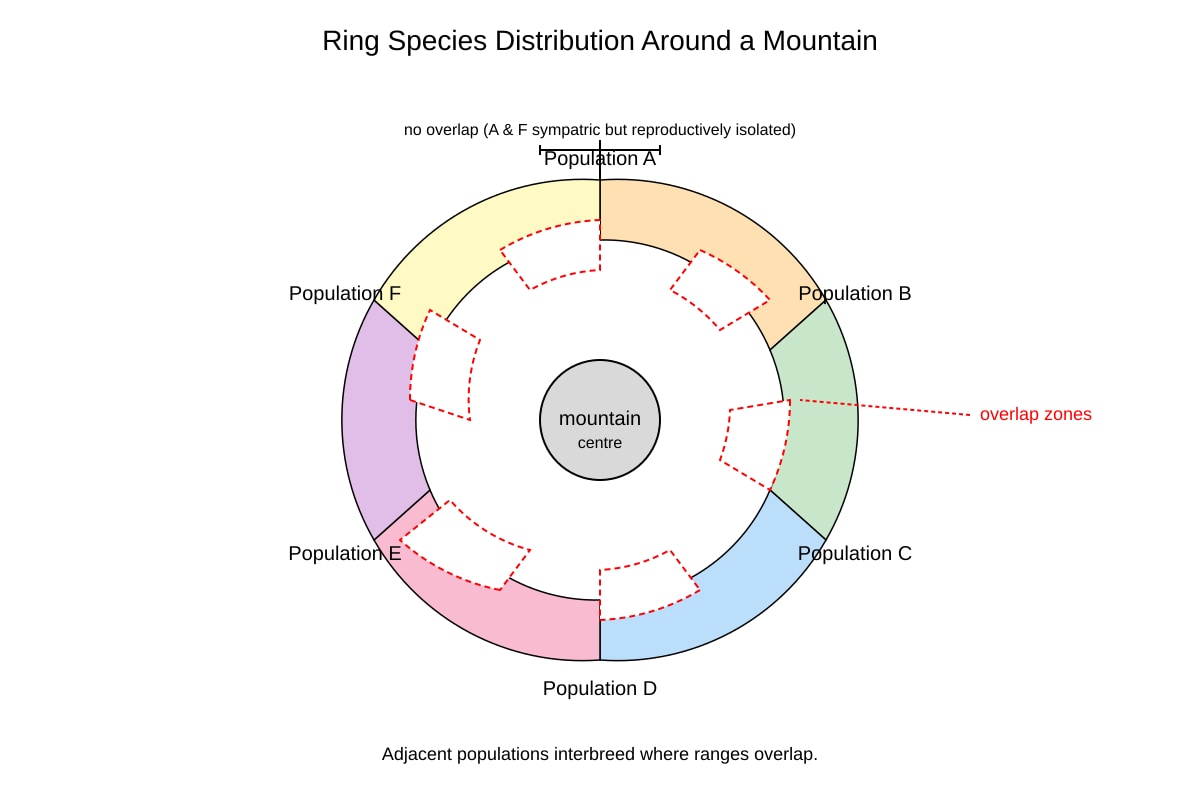
3. A ring species is a series of neighbouring populations that can interbreed with adjacent ones but where the two ends are reproductively isolated.
Mark: 1 for single-sentence definition.
4. Mechanism: non-disjunction during meiosis producing unreduced gametes.
Mark: 1 for any correct mechanism (e.g. somatic chromosome doubling).
5. Introgression.
Mark: 1.
Section B (2 marks each)
6. Traits favoured by mates (e.g. bright plumage) may attract predators; however, increased mating offsets survival cost.
Marks: 1 for trait example, 1 for trade-off explanation.
7. Finches colonised islands, exploited different foods, leading to beak diversification from common ancestor.
Marks: 1 for colonisation/ancestor, 1 for niche divergence.
8. Biological species concept defines species by interbreeding; ring species show continuous interbreeding yet terminal forms do not mate.
Marks: 1 for concept, 1 for contradiction.
9. Hybridisation merges genomes, creating novel combinations and sometimes fertile polyploids.
Marks: 1 for genome mixing, 1 for outcome.
10. Introgression leaves genetic traces, confusing strict tree-like phylogeny; shows networks.
Marks: 1 for gene transfer trace, 1 for phylogenetic implication.
11. Rising O₂ allowed aerobic respiration, higher ATP yield, enabling complex life.
Marks: 1 for O₂ rise, 1 for metabolic benefit.
12. rRNA sequences mutate slowly; similarities indicate common ancestry, differences estimate divergence time.
Marks: 1 for conserved sequence use, 1 for inference.
13. Polyploidy gives larger cells/ organs (gigas effect), aiding domestication (e.g. wheat).
Marks: 1 for example, 1 for significance.
14. Shared biochemical pathways (e.g. Calvin cycle) imply descent from common ancestor.
Marks: 1 for pathway, 1 for evolutionary inference.
15. Sexual selection acts on reproductive success via mates; natural selection on survival/environment.
Marks: 1 each mechanism.
Section C (3 marks each)
16.
(frequency of ).
.
(heterozygotes).
Marks: 1 for q² calc, 1 for q and p, 1 for 2pq.
17. Map shows adjacent interbreeding, A–F isolated despite contact. This is ring species; implies speciation can be gradual around barrier.
Marks: 1 for map reading, 1 for ring species demo, 1 for implication.
18. Fewer differences = closer relative; tree: X–Y–Z–W–V. Caution: convergent amino acid change may mislead.
Marks: 1 for tree logic, 1 for ordering, 1 for caution.
19. Autopolyploidy: unreduced gamete self-fertilises → AAA (triploid) or AAAA. Consequence: instant reproductive isolation from diploid.
Marks: 1 for scenario, 2 for consequence/speciation.
20. Biomolecules give genetic dates/resolutions; fossils give morphology/time; combined reduces missing-record bias.
Marks: 1 biomolecular benefit, 1 fossil benefit, 1 integration value.