AI Generated Exam Paper
A Level Biology H3 Practice Paper 4
Free A Level Biology H3 Practice Paper 4, HY3 AI version, with questions, answers, and A Level-style practice for Singapore students.
These static practice materials are generated from the site's syllabus and paper-generation workflow, with source and model context shown so students and parents can evaluate the material before use.
Questions
Free quiz and exam paper access
Enter your details to view this paper
Your access is remembered on this device.
Answers
TuitionGoWhere Practice Paper Answers — Biology H3 A-Level (Version 4)
Topic: Cells and Biomolecules of Life
Total Marks: 40
Section A: Knowledge and Understanding
1. [2 marks]
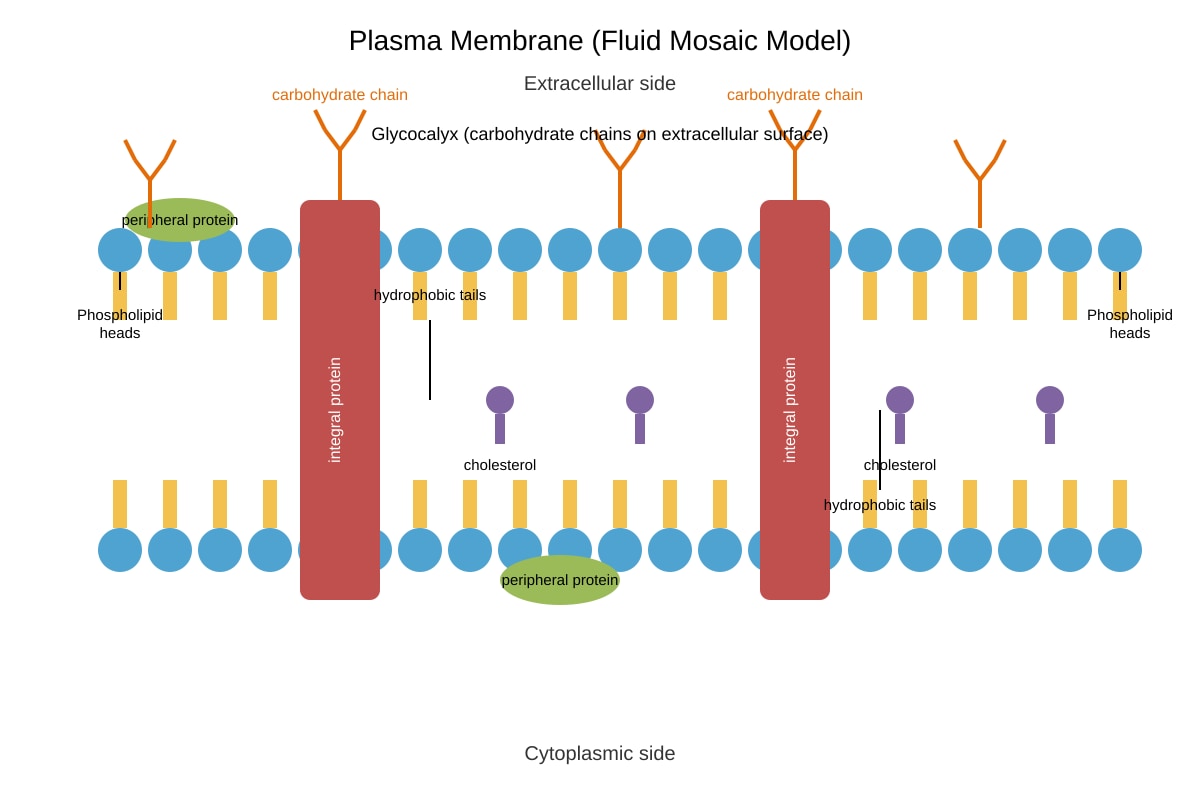
Current understanding: membrane is a fluid phospholipid bilayer with embedded and peripheral proteins (fluid mosaic); proteins move laterally; glycocalyx outside.
Marking: 1 for bilayer+proteins, 1 for fluidity/modern detail.
2. [2 marks]
Prions are misfolded proteins (morphology: proteinaceous infectious particle, no nucleic acid). They replicate by inducing normal cellular prion protein to misfold into the abnormal form.
Marking: 1 morphology, 1 replication mechanism.
3. [2 marks]
Example: Chlamydomonas (alga). Mode: photosynthetic (autotrophic via chloroplasts).
Marking: 1 example, 1 nutrition.
4. [2 marks]
Cell theory states cells are basic unit of life and arise from existing cells; multinucleate hyphae have many nuclei in one cytoplasm, not separated into cells, challenging "one nucleus per cell" assumption but still bounded by membrane.
Marking: 1 challenge, 1 explanation.
5. [2 marks]
Differentiation = process where cells become specialised in structure/function. Necessary to form tissues/organs with distinct roles in multicellular organisms.
Marking: 1 definition, 1 necessity.
6. [2 marks]
Examples: phosphorylation (activates/inactivates enzyme), glycosylation (targets protein to membrane/cell surface).
Marking: 1 type each + consequence.
7. [2 marks]
Cleavage cuts precursor polypeptide (e.g., proinsulin to insulin) to yield active form; removes inhibitory sequences.
Marking: 1 process, 1 outcome.
8. [2 marks]
Glycosylation adds carbohydrate, aiding folding, stability, cell-signalling recognition (e.g., glycoproteins in immune ID).
Marking: 1 addition, 1 capability.
Section B: Application and Analysis
9. [2 marks]
Subunits (α₂β₂) assemble into quaternary structure; haem groups in subunits bind O₂ cooperatively (allosteric).
Marking: 1 subunits, 1 cooperative binding.
10. [2 marks]
Surface clefts have specific charge/hydrophobic/polar residues; complementarity to antigen shape/chemistry enables diverse binding.
Marking: 1 surface property, 1 diversity mechanism.
11. [2 marks]
Mechanism: compartmentalisation + allosteric regulation + post-translational modification (e.g., phosphorylation cascades).
Marking: 1 mechanism, brief elaboration.
12. [2 marks]
Mitochondria have own DNA, divide independently (challenges single-cell origin), but are within eukaryotic cell and originated from endosymbiotic bacterium (conforms as derived from living cell).
Marking: 1 challenge, 1 conform.
13. [2 marks]
Acellular agents lack cell structure and cannot self-replicate without host; they do not meet cell theory definition of life but exist as biological entities.
Marking: 1 extent, 1 reasoning.
14. [2 marks]
Diagram shows proteins floating in bilayer; flexibility from lipid fluidity and mobile proteins.
Expected visual: bilayer with embedded/peripheral proteins, glycocalyx.
Marking: 1 diagram link, 1 flexibility reason.
15. [2 marks]
Yeast: unicellular, one nucleus per cell; filamentous fungi: hyphae, multinucleate (coenocytic) or septate with multiple nuclei.
Marking: 1 yeast, 1 filamentous.
16. [2 marks]
Phosphorylation adds PO₄³⁻ to serine/threonine/tyrosine, altering conformation and active site availability.
Marking: 1 process, 1 activity change.
Section C: Evaluation and Synthesis
17. [2 marks]
Not alone: shape (cleft) and chemical groups (H-bonds, ionic) both matter; binding is complementary interaction.
Marking: 1 evaluation, 1 reference.
18. [2 marks]
Differentiation creates cell types; modification (e.g., glycosylation) enables signalling between them, supporting tissue function.
Marking: 1 each concept.
19. [2 marks]
Acellularity lacks cells; endosymbiosis shows organelle origin; both extend but cell theory still useful as framework for cellular life.
Marking: 1 each challenge.
20. [2 marks]
Protein sequences/structures show homology; conserved biomolecules indicate common ancestry and divergence.
Marking: 1 method, 1 evolutionary link.