AI Generated Exam Paper
A Level Biology H3 Practice Paper 3
Free A Level Biology H3 Practice Paper 3, HY3 AI version, with questions, answers, and A Level-style practice for Singapore students.
These static practice materials are generated from the site's syllabus and paper-generation workflow, with source and model context shown so students and parents can evaluate the material before use.
Questions
TuitionGoWhere Practice Paper - Biology H3 A-Level
TuitionGoWhere Practice Paper (AI) — Version 3
Subject: Biology H3
Level: A-Level
Paper: Practice Paper (Syllabus-First, Version 3 of 5)
Duration: 2 hours 30 minutes
Total Marks: 75
Name: ______________________
Class: ______________________
Date: ______________________
Instructions:
- This is a syllabus-aligned practice paper generated from inferred templates. No past-year exam evidence was available; questions are NOT claimed to be exam-derived.
- Section A is compulsory (50 marks): one stimulus-based question (25 marks) and one free-response question (25 marks).
- Section B (25 marks): answer ONE of two free-response questions.
- Use blue or black pen. Write clearly.
- Marks are awarded for scientific reasoning, integration of concepts, and communication.
Section A (50 marks)
Question 1 — Stimulus-Based (25 marks)
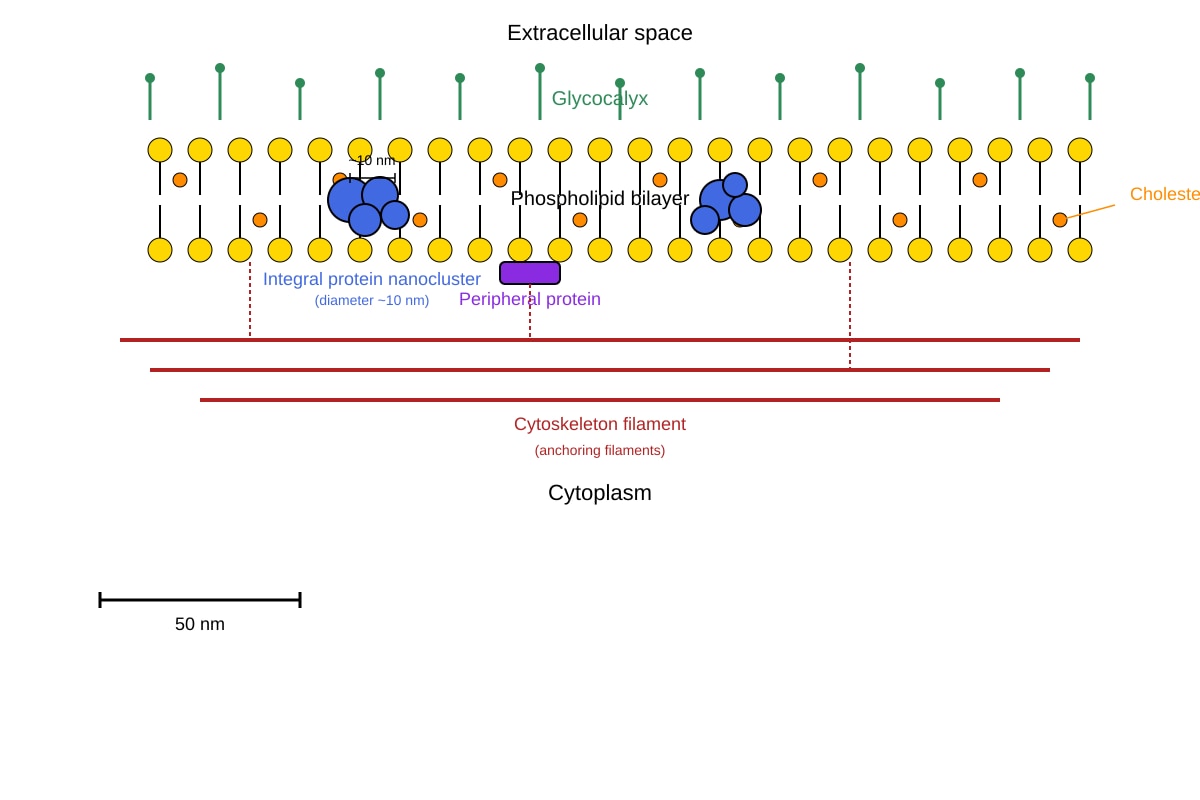
The fluid mosaic model of the plasma membrane has evolved since Singer and Nicolson (1972). Recent cryo-EM studies show that membrane proteins are often organised into transient nanoclusters rather than freely diffusing monomers. Prions are acellular infectious agents composed mainly of misfolded protein. Filamentous fungi such as Neurospora crassa form multinucleate hyphae. Yeasts such as Saccharomyces cerevisiae exist as unicellular eukaryotes.
Image pending generation: diagram for Q1.
(a) State two structural features of the fluid mosaic model that differ from the original 1972 proposal. [2]
(b) Explain how the nanocluster organisation of membrane proteins challenges the classical "random diffusion" view. [3]
(c) Prions replicate by templated conformational conversion of normal cellular prion protein (PrPC) to the disease form (PrPSc). Explain why prions are considered to challenge the cell theory. [4]
(d) Filamentous fungi form multinucleate hyphae through incomplete cytokinesis. Discuss the extent to which this conforms to the cell theory. [4]
(e) Haemoglobin is a tetrameric protein with binding sites for oxygen. Using haemoglobin as an example, explain how protein subunits and binding sites allow regulation of function. [5]
(f) A eukaryotic cell regulates thousands of enzymes by post-translational modification. Give two examples of such modification and state how each alters protein activity. [4]
(g) Evaluate the usefulness of the cell theory in modern H3 biology given exceptions such as prions and multinucleate hyphae. [3]
Question 2 — Free Response (25 marks)
Cell differentiation is essential in multicellular organisms, yet mature cells can be reprogrammed to a stem-cell state. Protein modification including cleavage, phosphorylation, and glycosylation generates functional diversity.
Discuss the molecular basis of cell differentiation and how protein modification contributes to the regulation of cellular function. In your answer, include the role of epigenetic mechanisms and the significance of enzyme regulation in a differentiated eukaryotic cell. [25]
Section B (25 marks)
Answer ONE question from Section B.
Question 3 — Option A (25 marks)
Protista include a wide range of eukaryotic organisms such as algae. Endosymbiosis is proposed to explain the origin of mitochondria and chloroplasts.
(a) Describe the evidence that supports the endosymbiotic origin of chloroplasts. [6]
(b) Explain how acellularity in prions and viruses differs from the condition of unicellular Protista such as algae. [6]
(c) Assess the extent to which endosymbiosis challenges the cell theory. [13]
Question 4 — Option B (25 marks)
Immunoglobulin molecules are large glycoproteins produced by plasma cells. They recognise diverse antigens via variable regions.
(a) Explain how protein cleavage and glycosylation contribute to immunoglobulin diversity and function. [8]
(b) Compare the structure of prokaryotic RNA polymerase with that of a typical eukaryotic multisubunit protein in terms of subunit composition and regulation. [7]
(c) Evaluate how protein binding specificity is achieved despite a limited number of genes encoding immunoglobulins. [10]
Total for Paper: 75 marks
Answers
TuitionGoWhere Practice Paper — Biology H3 A-Level (Version 3) Answer Key
Subject: Biology H3
Level: A-Level
Paper: Practice Paper (AI, Version 3 of 5)
Total Marks: 75
Note: No past-year paper evidence was available. Answers are syllabus-first teaching notes.
Section A (50 marks)
Question 1 — Stimulus-Based (25 marks)
(a) [2 marks]
- Modern model includes protein nanoclusters / lipid rafts rather than uniform distribution. [1]
- Proteins are anchored or constrained by cytoskeleton / not freely mobile. [1]
Teaching note: Original model showed proteins as freely floating in bilayer; current data shows organisation.
(b) [3 marks]
- Nanoclusters imply constrained/localised diffusion, not random 2D walk. [1]
- Interactions with cytoskeleton reduce lateral mobility. [1]
- Function (signalling) is regionalised rather than uniform. [1]
(c) [4 marks]
- Cell theory: cells are basic unit of life, all cells from cells. [1]
- Prions lack cells entirely (acellular). [1]
- Replicate without cellular division, using host protein conversion. [1]
- Therefore break "all living things are cellular" assumption. [1]
(d) [4 marks]
- Cell theory states cell is unit; hyphae are multinucleate but continuous cytoplasm. [1]
- Conforms: bounded by membrane, nuclei derived from division. [1]
- Challenges: one "cell" boundary may enclose many nuclei. [1]
- Overall partial conformance; structure is syncytial not single nucleus per cell. [1]
(e) [5 marks]
- Haemoglobin has 4 subunits (2α,2β). [1]
- Each subunit binds O₂ cooperatively. [1]
- Binding site conformational change increases affinity (T→R). [1]
- Subunit interaction allows allosteric regulation (Bohr effect). [1]
- Shows subunits + clefts produce efficient O₂ transport. [1]
(f) [4 marks]
- Phosphorylation: adds PO₄, changes charge/activity (e.g. enzyme on/off). [2]
- Glycosylation: adds sugars, aids folding/location (e.g. ER proteins). [2]
(g) [3 marks]
- Still useful as framework. [1]
- Exceptions show need for extension not rejection. [1]
- Modern cell biology integrates exceptions. [1]
Question 2 — Free Response (25 marks)
Marking descriptors:
- Clear molecular basis of differentiation (DNA methylation, histone mod, TF networks) — up to 8
- Protein modification examples with mechanism — up to 8
- Epigenetics link — up to 5
- Enzyme regulation in differentiated cell — up to 4
Model answer points:
- Differentiation = selective gene expression, not DNA loss. [4]
- Epigenetic marks silence non-needed genes. [4]
- Cleavage activates/inactivates proteins (e.g. insulin propeptide). [3]
- Phosphorylation rapid on/off switch. [3]
- Glycosylation targets proteins. [2]
- Thousands of enzymes regulated by these in space/time. [4]
- Conclusion: modification essential for phenotype stability. [2]
Section B (25 marks)
Question 3 — Option A
(a) [6] Double membrane, own circular DNA, divide by binary fission, ribosomes 70S, phylogeny to cyanobacteria. (6 pts)
(b) [6] Prions/viruses no cells; algae are cellular eukaryotes with organelles. (6 pts)
(c) [13] Endosymbiosis shows organelles were cells; challenges strict cell-autonomy view but supports common ancestry. (13 pts: intro 2, evidence 5, evaluation 6)
Question 4 — Option B
(a) [8] Cleavage forms light/heavy chains; glycosylation stabilises/sorts. (8)
(b) [7] Prokaryotic RNA pol multi-subunit α₂ββ'ω + σ; eukaryotic larger with CTD regulation. (7)
(c) [10] V(D)J recombination, somatic hypermutation generate diversity from limited genes. (10)
Total: 75 marks
Free quiz and exam paper access
Enter your details to view this paper
Your access is remembered on this device.