AI Generated Exam Paper
A Level Biology H3 Practice Paper 2
Free A Level Biology H3 Practice Paper 2, HY3 AI version, with questions, answers, and A Level-style practice for Singapore students.
These static practice materials are generated from the site's syllabus and paper-generation workflow, with source and model context shown so students and parents can evaluate the material before use.
Questions
Free quiz and exam paper access
Enter your details to view this paper
Your access is remembered on this device.
Answers
TuitionGoWhere Practice Paper Answers — Biology H3 A-Level (Version 2)
Total Marks: 75
Section A: 25 marks
Section B: 25 marks
Section C: 25 marks (choose 1)
Section A Marking Scheme
Q1(a) [2 marks]
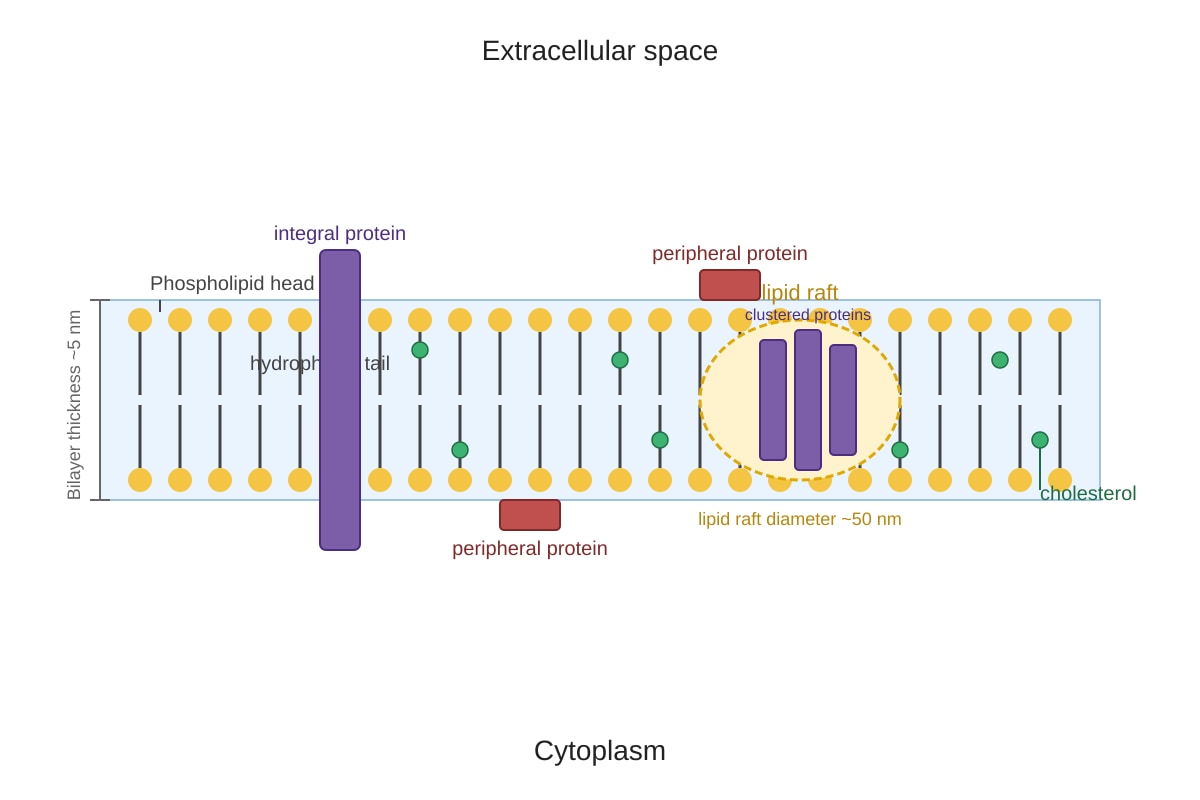
- Phospholipid bilayer with embedded proteins (1)
- Proteins float laterally within lipid layer like mosaic (1)
Teaching note: Original model emphasised mobility and asymmetric protein placement, not fixed rafts.
Q1(b) [3 marks]
- Lipid raft shows clustered proteins, not random (1)
- Diagram shows 3 proteins in raft region (1)
- Indicates organised microdomains with specific lipid composition (1)
Common mistake: Saying proteins are fixed permanently; they are dynamic but enriched.
Q1(c) [4 marks]
- Glycosylation = addition of carbohydrate to protein (1)
- Occurs in ER/Golgi (1)
- Consequence: cell recognition / stability / signalling (2 for clear example)
Example: ABO antigens on RBC membrane.
Q1(d) [3 marks]
- Prions are proteins without nucleic acid (1)
- Acellular, not composed of cells (1)
- Infect by misfolding host proteins, bypassing cell-based reproduction (1)
Challenges: Cell theory states cells arise from cells.
Q1(e) [3 marks]
- Compartmentalisation separates enzymes/substrates (1)
- Localises reactions, prevents cross-talk (1)
- Enables independent control e.g. pH, inhibitors (1)
Q1(f) [3 marks]
- Area = (1)
- Each phospholipid = (1)
- Number = molecules (1)
Working:
Q1(g) [4 marks]
- Supports: organelles originated from free-living bacteria (2)
- Contradicts: strict "cell from cell" if taken literally pre-endosymbiosis (1)
- Overall extends not destroys theory (1)
Q1(h) [3 marks]
- Subunits allow cooperative binding (1)
- Different combinations → diverse specificity (1)
- Example haemoglobin tetramer (1)
Section B Marking Scheme
Q2 [25 marks]
Descriptors:
- AO1 knowledge (max 6): correct definitions of subunits, modification types, regulation, challenges.
- AO2 application/evaluation (max 14): integrated examples haemoglobin/immunoglobulin; cleavage/phosphorylation/glycosylation; enzyme regulation via localisation/allostery; cell theory limits.
- Written communication (max 5): structured, coherent, terminology precise.
Indicative content:
- Haemoglobin: 4 subunits (α₂β₂), cooperative O₂ binding (4)
- Immunoglobulin: Y-shaped, variable regions from subunits (3)
- Cleavage: insulin prohormone → active (3)
- Phosphorylation: enzyme on/off (3)
- Glycosylation: trafficking (2)
- Enzyme regulation: compartments, isoforms, inhibitors (4)
- Acellularity/prions, multinucleation/hyphae, endosymbiosis (6)
Section C Marking Scheme (choose one)
Q3 [25 marks]
(a) Yeast: unicellular, budding; filamentous: hyphae, spores [8: 4+4]
(b) Algae e.g. Chlamydomonas: photosynthesis, O₂, food base [5]
(c) Multinucleate hyphae = one cytoplasm many nuclei; challenges "one nucleus one cell" but shared cytoplasm [7]
(d) Differentiation: specialised function, protein expression profiles [5]
Q4 [25 marks]
(a) Carbs, lipids, proteins, nucleic acids + roles [8]
(b) Conserved pathways show common ancestry [6]
(c) Haemoglobin subunits → O₂ transport efficiency, adaptation to altitude [6]
(d) Prions blur life definition; protein-only inheritance [5]