AI Generated Exam Paper
A Level Biology H3 Practice Paper 1
Free A Level Biology H3 Practice Paper 1, HY3 AI version, with questions, answers, and A Level-style practice for Singapore students.
These static practice materials are generated from the site's syllabus and paper-generation workflow, with source and model context shown so students and parents can evaluate the material before use.
Questions
TuitionGoWhere Practice Paper - Biology H3 A-Level
TuitionGoWhere Practice Paper (AI) — Version 1
Subject: Biology H3
Level: A-Level
Paper: Practice Paper (Topic: Cells and Biomolecules of Life)
Duration: 1 hour 30 minutes
Total Marks: 60
Name: ______________________
Class: ______________________
Date: ______________________
Instructions:
- This practice paper is generated from syllabus-first inference. No past-year A-Level H3 Biology paper evidence was available; questions are NOT claimed to be exam-derived.
- Answer all questions in Sections A, B, and C.
- Use clear scientific terminology and show working where requested.
- Section marks sum to the Total Marks exactly.
Section A: Knowledge and Understanding (15 marks)
Short structured questions on Core Idea 1 learning outcomes.
1. State the current understanding of the fluid mosaic model of the cell membrane. [2]
2. Name one morphological feature of prions and explain why they are considered acellular. [2]
3. Give two reasons why cell differentiation is necessary in multicellular organisms. [2]
4. Identify one type of protein modification that confers new capability and state the modification. [1]
5. Explain how the hyphae of filamentous fungi challenge the cell theory. [2]
6. State one role of glycosylation in protein modification. [1]
7. Describe how endosymbiosis provides evidence that challenges the traditional cell theory. [2]
8. Name one Protista group and state a distinguishing characteristic. [1]
9. Give one reason why protein binding sites allow recognition of diverse molecules. [1]
10. State how a eukaryotic cell can regulate thousands of enzymes efficiently. [1]
Section B: Application and Analysis (25 marks)
Data-based and applied questions.
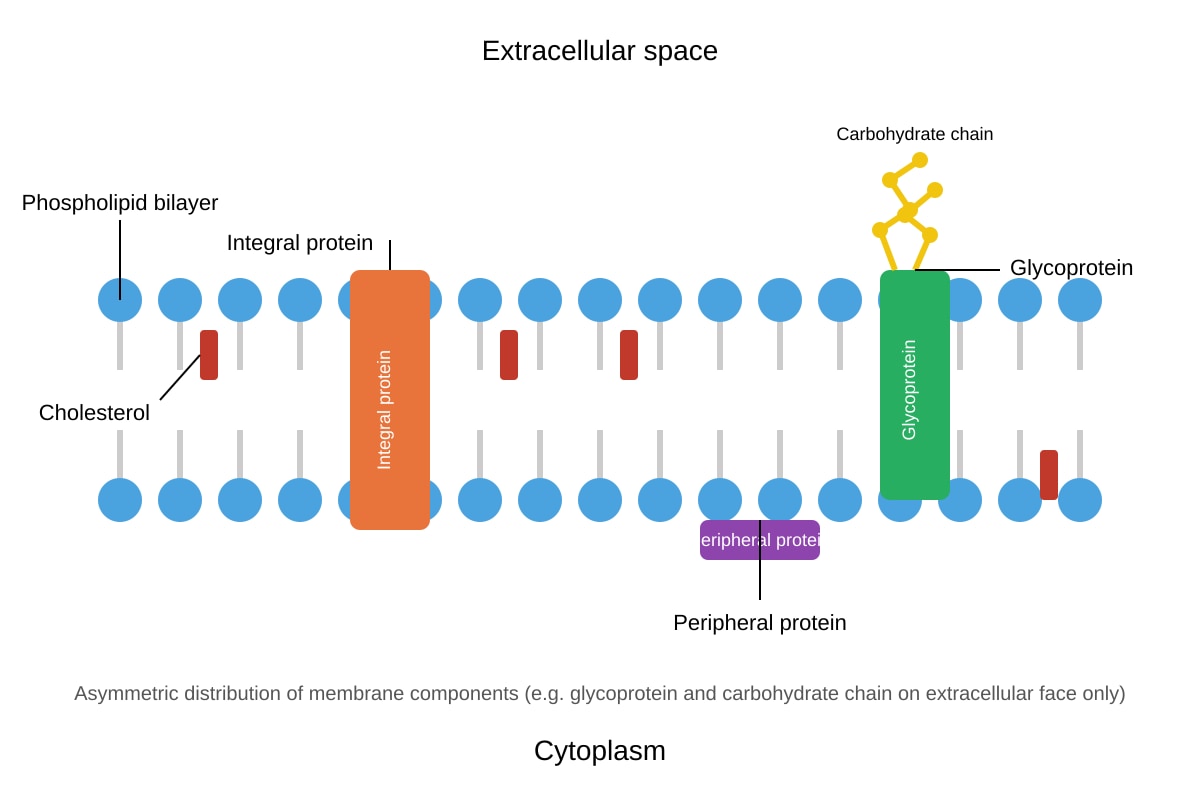
11. The diagram below shows a membrane with embedded proteins.
Image pending generation: diagram for Q11.
Using the diagram, describe two features of the fluid mosaic model and state one function of cholesterol. [4]
12. A yeast and a filamentous fungus were observed. Compare their morphology and life cycle in a table. [4]
13. Prions replicate by inducing conformational change in normal proteins. Explain how this violates the central dogma expectation of nucleic-acid-based inheritance. [3]
14. Haemoglobin is a large glycoprotein with subunits. Describe how subunit structure and binding sites relate to its oxygen-carrying function. [4]
15. The table shows enzyme activities in a eukaryotic cell under two conditions.
| Condition | Total enzymes | Active enzymes | Regulated by phosphorylation |
|---|---|---|---|
| A | 4000 | 1200 | 800 |
| B | 4000 | 3000 | 2500 |
Calculate the percentage increase in active enzymes from A to B and suggest how phosphorylation regulates enzymes. [4]
16. Immunoglobulin has a cleft that binds antigens. Explain how surface properties enable binding to highly diverse molecules. [3]
17. Prokaryotic RNA polymerase is a multi-subunit enzyme. State one advantage of subunit composition for transcription. [2]
18. Cleavage of a pro-protein produces active insulin. Describe the modification and why it confers new capability. [3]
19. Algae are Protista with chloroplasts. Using endosymbiosis, explain the origin of these chloroplasts. [2]
20. Evaluate the extent to which acellular entities (prions and viruses) conform to cell theory. [3]
Section C: Synthesis and Evaluation (20 marks)
Free-response style integration.
21. Discuss how protein modification (cleavage, phosphorylation, glycosylation) and subunit assembly enable a eukaryotic cell to produce and regulate diverse functional proteins. Use haemoglobin, immunoglobulin, and insulin as examples. [10]
22. Evaluate the challenges that acellularity, multinucleation, and endosymbiosis pose to the cell theory, and assess the extent to which the theory remains valid. [10]
End of Paper
Answers
TuitionGoWhere Practice Paper - Biology H3 A-Level (Answers)
Subject: Biology H3
Level: A-Level
Paper: Practice Paper (Topic: Cells and Biomolecules of Life) — Version 1
Total Marks: 60
Answers are syllabus-first inferences; no past-paper evidence was used.
Section A: Knowledge and Understanding (15 marks)
1. [2 marks]
Current understanding: membrane is a fluid phospholipid bilayer with proteins embedded/moving laterally; mosaic of lipids, proteins, glycoproteins.
Marking: 1 mark for fluid bilayer, 1 mark for mobile proteins/mosaic.
2. [2 marks]
Morphology: prions are misfolded proteins (no cellular structure). Acellular because they lack cells, cytoplasm, and nucleic acid.
Marking: 1 mark feature, 1 mark acellular reason.
3. [2 marks]
Reasons: (1) specialised function (e.g., muscle vs nerve); (2) efficient division of labour in multicellular organism.
1 mark each.
4. [1 mark]
Phosphorylation (or cleavage, glycosylation). Accept any one with modification named.
5. [2 marks]
Hyphae are multinucleate (many nuclei in one cytoplasm), challenging idea that one cell = one nucleus. 1 mark multinucleate, 1 mark challenge.
6. [1 mark]
Glycosylation aids folding, stability, or cell recognition.
7. [2 marks]
Endosymbiosis: mitochondria/chloroplasts arose from engulfed prokaryotes; shows organelles have own origin, blurring "cell from preexisting cell" strictness. 1+1.
8. [1 mark]
Algae (photosynthetic Protista) or amoeba (motile). Characteristic stated.
9. [1 mark]
Binding sites/clefts have specific shape & charge complementarity.
10. [1 mark]
Via compartmentalisation, allosteric regulation, modification (e.g., phosphorylation).
Section B: Application and Analysis (25 marks)
11. [4 marks]
Features: proteins embedded/spans bilayer; lateral movement. Cholesterol: maintains fluidity/rigidity at temp change. 2+1+1.
12. [4 marks]
Table: Yeast = unicellular, budding; Filamentous = hyphae, multinucleate, spore. 2 marks each.
13. [3 marks]
Central dogma: DNA→RNA→protein. Prions: protein only induces same protein misfold, no nucleic acid transfer. Violates nucleic-acid inheritance. 1+1+1.
14. [4 marks]
Subunits (α2β2) allow cooperative binding; haem binding site in each subunit; conformational change on O₂ bind. 2+2.
15. [4 marks]
% increase = (3000−1200)/1200 ×100 = 150%. Phosphorylation activates/inactivates enzymes, rapid switch. 2 for calc, 2 for explanation.
16. [3 marks]
Surface charge/hydrophobicity shape complementarity; diverse clefts fit antigen shapes. 1+2.
17. [2 marks]
Subunits allow assembly of core + sigma factor for promoter specificity. 1+1.
18. [3 marks]
Cleavage removes C-peptide; active insulin formed. New capability: active hormone. 1+2.
19. [2 marks]
Chloroplasts from engulfed cyanobacteria (endosymbiosis). 1+1.
20. [3 marks]
Prions/viruses lack cellular structure; depend on host; do not fully conform. 1+1+1.
Section C: Synthesis and Evaluation (20 marks)
21. [10 marks]
Descriptors: modification types explained (3); subunit examples (3); regulation link (2); synthesis clarity (2). Use Hb, Ig, insulin.
22. [10 marks]
Descriptors: acellularity (3), multinucleation (3), endosymbiosis (2), theory validity assessment (2).
Free quiz and exam paper access
Enter your details to view this paper
Your access is remembered on this device.