AI Generated Quiz
A Level H2 Biology Cells Biomolecules Quiz
Free A Level H2 Biology Cells Biomolecules quiz, HY3 AI version, with questions, answers, and A Level-style practice for Singapore students.
These static practice materials are generated from the site's syllabus and paper-generation workflow, with source and model context shown so students and parents can evaluate the material before use.
Questions
Free quiz and exam paper access
Enter your details to view this paper
Your access is remembered on this device.
Answers
A-Level Biology H2 Quiz - Cells Biomolecules (Answer Key)
Topic: Cells Biomolecules
Total Marks: 40
Note: Content generated from LLM-inferred templates (Stage 4/5) using syllabus 9477. Not claimed as past-year derived.
Section A
1. [2 marks]
- Phospholipids: form bilayer barrier, hydrophobic core blocks ions. [1]
- Proteins: transport, enzymes, receptors. [1] (accept glycoproteins/glycolipids/cholesterol with correct role)
Teaching: Fluid mosaic = proteins floating in phospholipid sea. Mark 1 each component+role.
2. [1 mark] Glycosidic bond.
Teaching: Condensation between glucose monomers releases water forming α-1,4 or α-1,6 glycosidic bonds.
3. [2 marks]
- Bacterial: no membrane-bound organelles; eukaryotic: has mitochondria etc. [1]
- Bacterial: circular DNA, 70S ribosomes; eukaryotic: linear DNA in nucleus, 80S ribosomes. [1]
Common mistake: stating bacteria have no DNA.
4. [1 mark] Enzyme active site changes shape slightly to better fit substrate upon binding.
Teaching: Contrast with rigid lock-and-key.
5. [2 marks]
- Haemoglobin: primary (aa sequence), secondary (α-helix), tertiary (3D chain), quaternary (4 subunits). [1]
- Myoglobin single chain lacks quaternary structure. [1]
Section B
6. [3 marks]
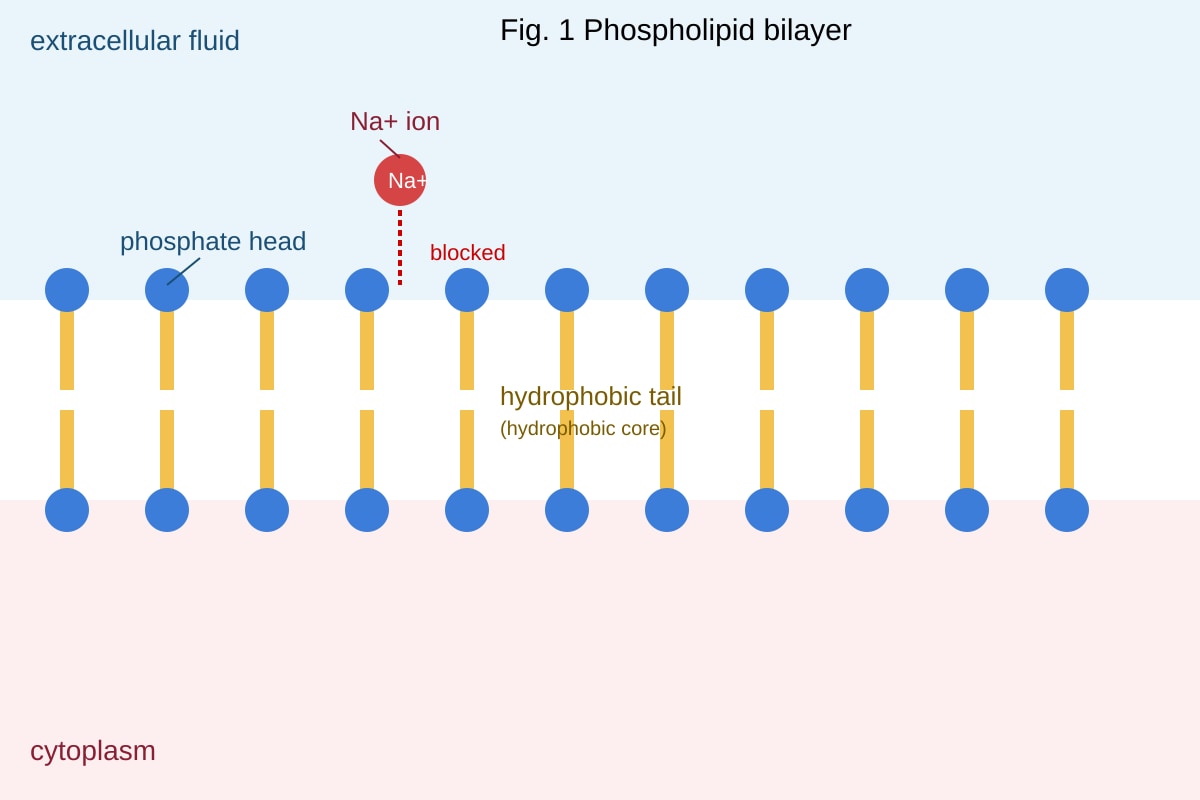
- Bilayer has hydrophobic fatty acid tails inward. [1]
- Na⁺ is charged/hydrophilic, repelled by non-polar core. [1]
- Requires protein channel/pump to cross. [1]
Ref Fig 1: ion stuck at outer head.
7. [3 marks]
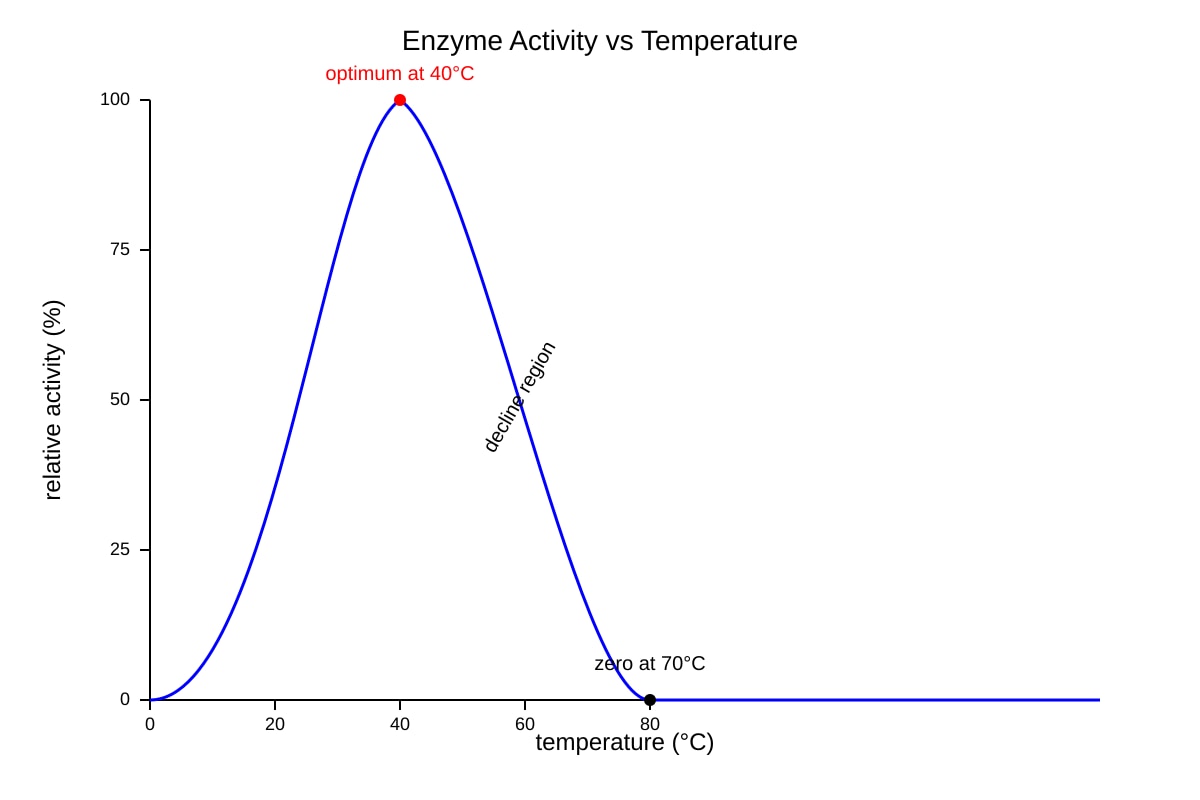
- Below optimum, higher temp increases KE, more ES collisions. [1]
- At optimum (40°C) max rate. [1]
- Above optimum, denaturation: H-bonds/ionic bonds break, active site lost. [1]
8. [2 marks]
- Facilitated diffusion: no ATP, down gradient via carrier/channel. [1]
- Active transport: ATP needed, against gradient via pump. [1]
9. [3 marks]
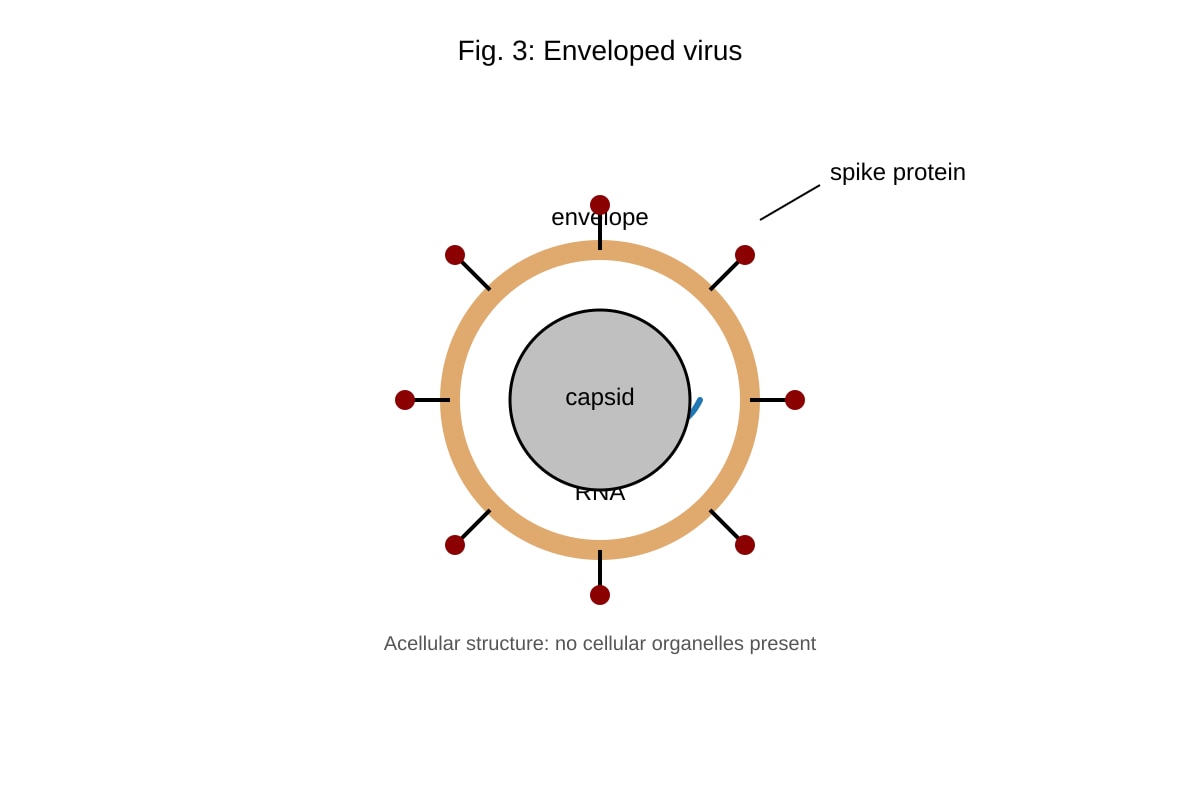
- Virus has no cells, no metabolism, no reproduction without host. [1]
- Challenges "all living things are cells" / cell theory. [1]
- Acellular entity with genetic material only. [1]
10. [4 marks]
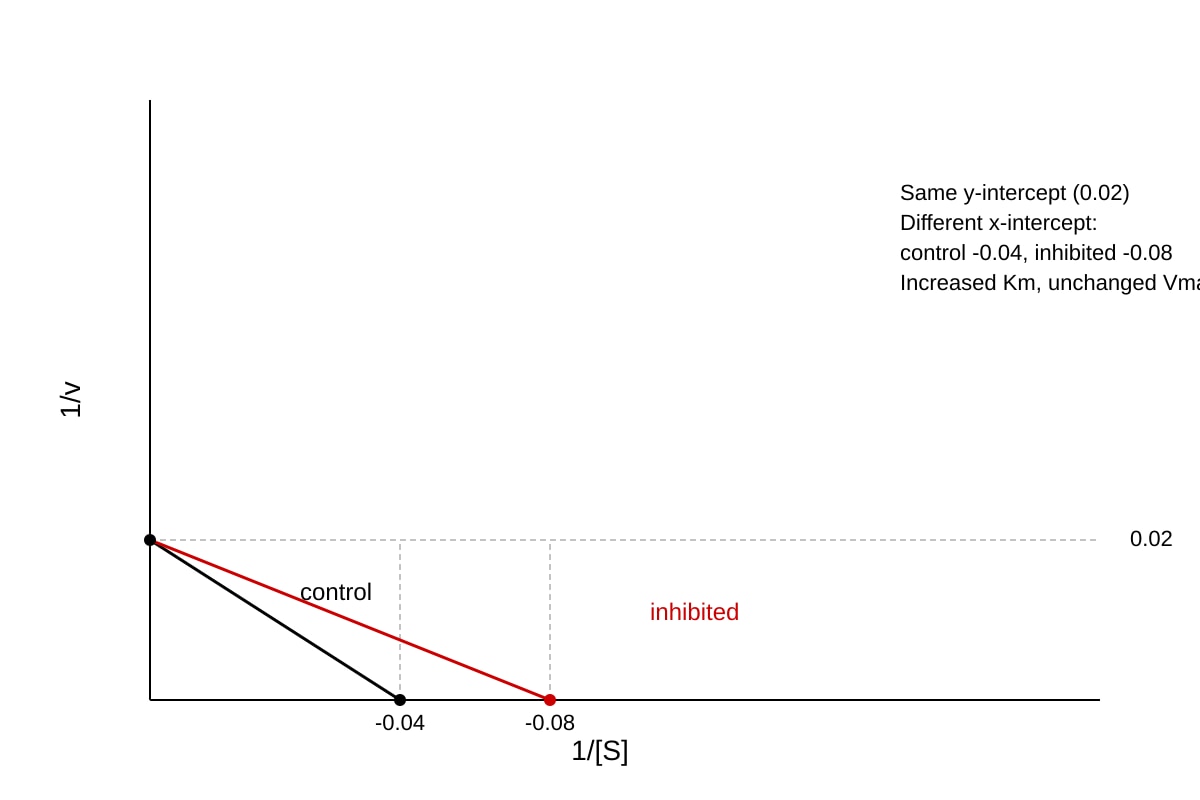
- Same y-intercept → Vmax unchanged. [1]
- Different x-intercept → Km increased. [1]
- Competitive inhibition: inhibitor binds active site, more substrate overcomes. [1]
- Apparent Km higher as more [S] needed for half Vmax. [1]
11. [2 marks] Competitive inhibition. [1] Apparent Km = substrate concentration at half Vmax in presence of inhibitor. [1]
12. [3 marks]
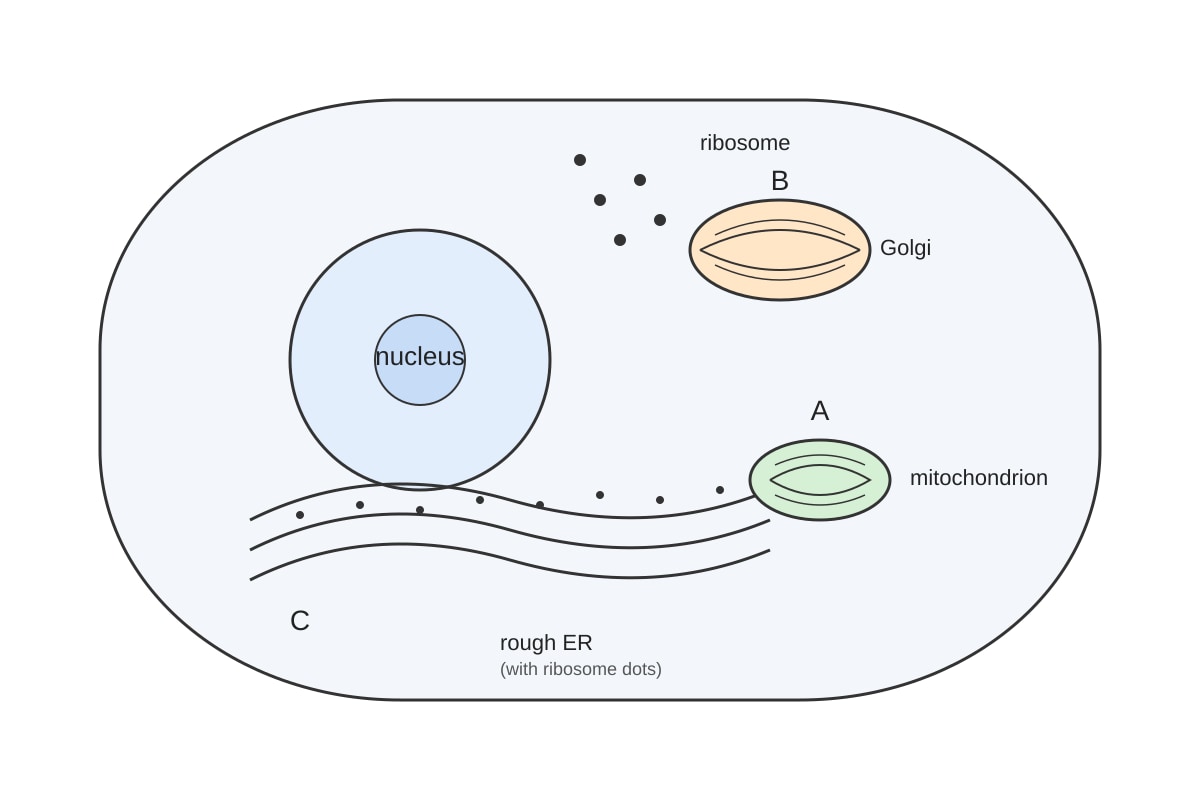
- A mitochondrion: ATP via respiration. [1]
- B Golgi: modify/sort proteins. [1]
- C rough ER: protein synthesis (ribosomes). [1]
13. [2 marks] Glycogen more branched (α-1,6 every 8–12 residues) vs amylopectin. [1] More ends for rapid glucose release in animals. [1]
14. [3 marks]
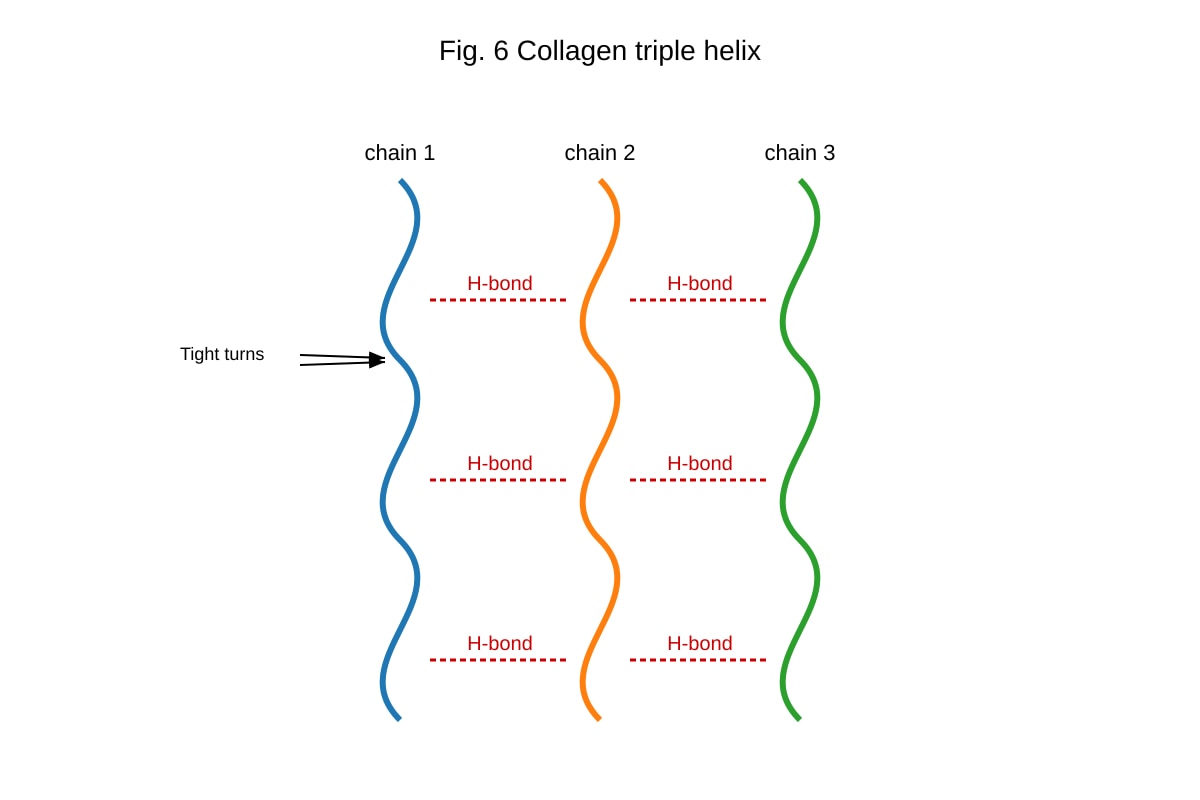
- Inter-chain H-bonds stabilise triple helix. [1]
- Glycine small allows tight turns. [1]
- Proline rigidifies chain. [1]
15. [2 marks] Totipotent (zygote → all cell types + extraembryonic). [1] Pluripotent (embryonic stem → all tissues not extraembryonic). [1]
Section C
16. [2 marks] Peptide bonds = n−1 = 5−1 = 4. [2]
Method: condensation removes water between each adjacent pair.
17. [4 marks]
Solution ψ = ψs + ψp = −0.4 + 0.1 = −0.3 MPa. [1]
Cell ψ = −0.5 MPa. [1]
Δψ = cell − soln = −0.5 − (−0.3) = −0.2 MPa. [1]
Water moves into cell (from higher ψ −0.3 to lower −0.5). [1]
18. [3 marks]
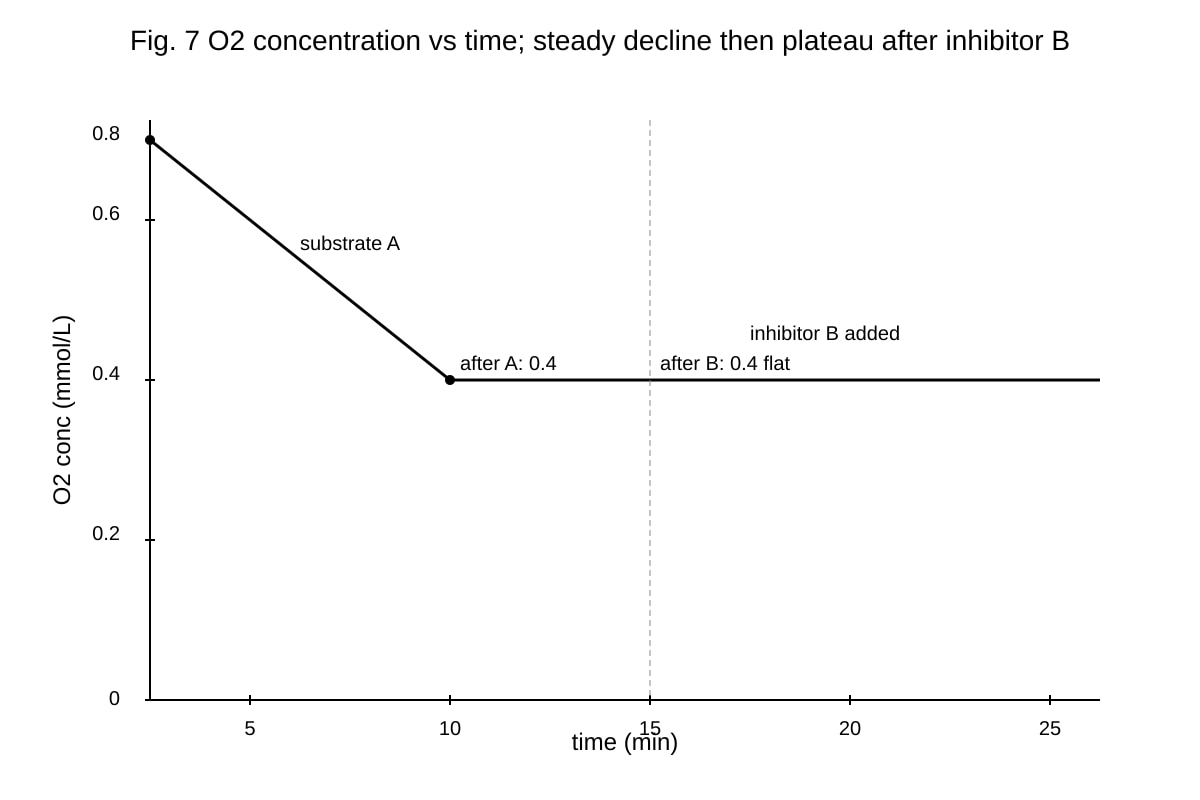
- With A, O₂ falls as ETC active. [1]
- After B, plateau: inhibitor blocks ETC, O₂ not used. [1]
- O₂ final electron acceptor at complex IV, forms H₂O. [1]
19. [3 marks] Products: glycerol + 3 fatty acids. [1] Ester bond cleaved. [1] One triglyceride has 3 ester bonds. [1]
20. [3 marks]
- At high T, cholesterol restricts phospholipid movement → less fluid. [1]
- At low T, prevents tight packing of tails → avoids solidify. [1]
- Acts as buffer to membrane fluidity. [1]