AI Generated Exam Paper
A Level H2 Biology Practice Paper 4
Free A Level H2 Biology Practice Paper 4, HY3 AI version, with questions, answers, and A Level-style practice for Singapore students.
These static practice materials are generated from the site's syllabus and paper-generation workflow, with source and model context shown so students and parents can evaluate the material before use.
Questions

Free quiz and exam paper access
Enter your details to view this paper
Your access is remembered on this device.
Answers
TuitionGoWhere Practice Paper - Biology H2 A-Level (Version 4) — Answer Key
Subject: Biology H2
Level: A-Level
Topic: Cells & Biomolecules
Total Marks: 60
Section A: Short Structured Questions (1–8) — Mark Scheme
1. [3 marks]
- All living organisms are composed of cells. (1)
- The cell is the smallest unit of life / basic unit of structure and function. (1)
- All cells arise from pre-existing cells. (1)
Teaching note: Cell theory is foundational; do not confuse with "cells come from spontaneous generation".
2. [2 marks]
- Glycosidic bond. (1)
- Condensation reaction (water removed). (1)
Teaching note: Monomers join via condensation; hydrolysis reverses it.
3. [1 mark]
- Presence of peptidoglycan cell wall / circular DNA / 70S ribosomes / no membrane-bound organelles. (any one)
Teaching note: Eukaryotic animal cells lack cell walls entirely.
4. [2 marks]
- Glycoproteins. (1)
- Glycolipids. (1)
Teaching note: Carbohydrate chains on extracellular surface enable recognition.
5. [2 marks]
- Enzyme active site changes shape slightly to fit substrate upon binding. (1)
- Forms enzyme-substrate complex more complementary than lock-and-key. (1)
Teaching note: Contrast with rigid lock-and-key model.
6. [1 mark]
- Secondary structure.
Teaching note: H-bonds between backbone C=O and N–H groups.
7. [1 mark]
- Endocytosis (or phagocytosis if specified as bacteria).
Teaching note: Exocytosis is opposite direction.
8. [2 marks]
- Totipotent can differentiate into all cell types including extra-embryonic tissues. (1)
- Multipotent can differentiate into limited range of related cell types. (1)
Teaching note: Pluripotent is between these two.
Section B: Data and Figure Interpretation (9–14) — Mark Scheme
9. [3 marks]
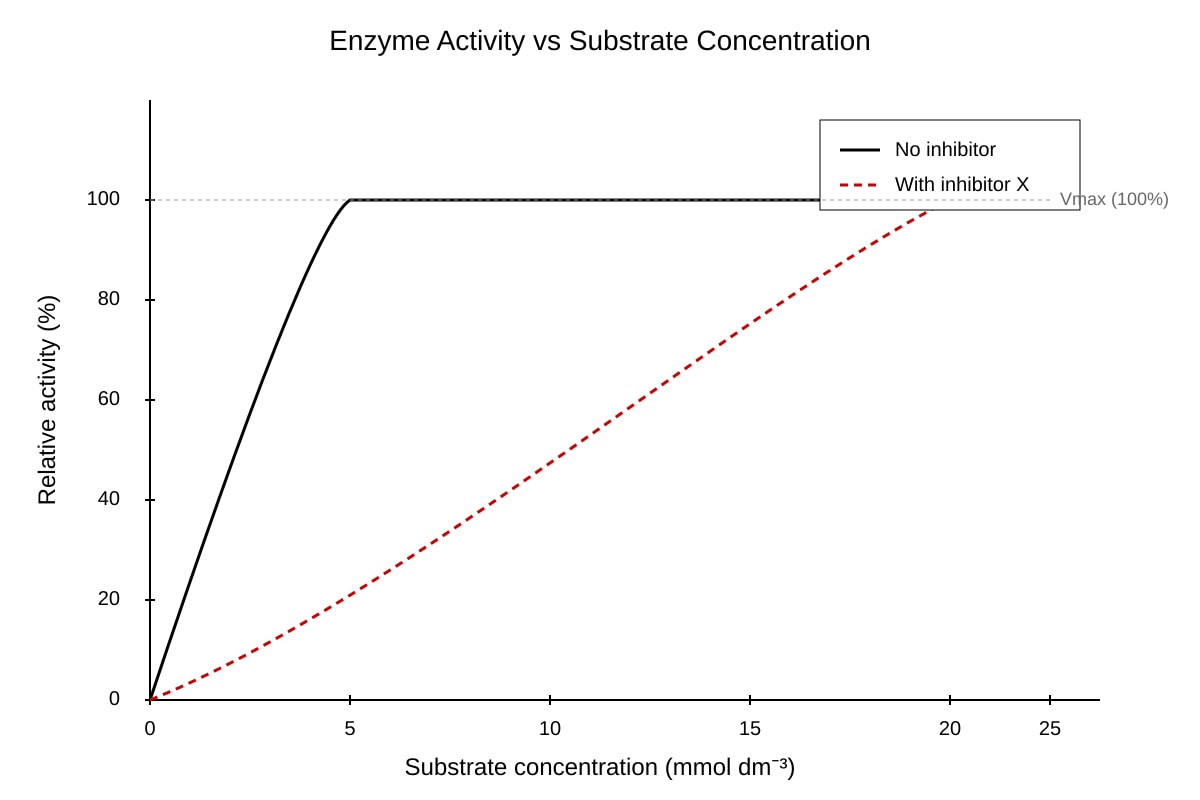
- Inhibitor X increases substrate concentration needed to reach Vmax (apparent Km increased). (1)
- Vmax unchanged (same plateau). (1)
- Competitive inhibition (binds active site, overcome by high [S]). (1)
Visual needed: Q9-fig1 shows two curves with same max, Curve B shifted right.
10. [3 marks]
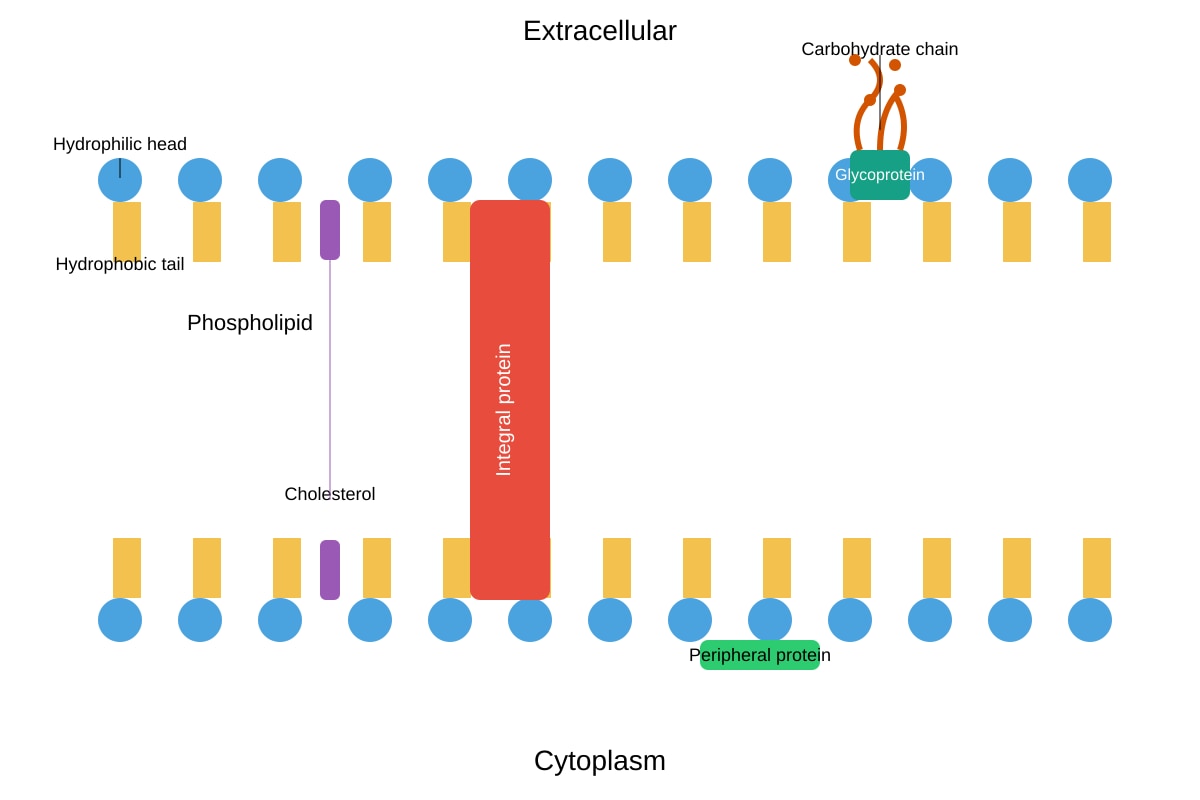
- Cholesterol restricts phospholipid movement, reduces fluidity at high temp and prevents solidification at low temp. (1)
- Glycoprotein has extracellular carbohydrate chain acting as receptor for signalling molecules. (1)
- Enables cell-cell recognition / communication. (1)
Visual needed: Q10-fig1 shows cholesterol between lipids, glycoprotein on outer surface.
11. [2 marks]
- Δ[O₂] = 8.0 – 3.2 = 4.8 mg dm⁻³ over 6 min.
- Rate = 4.8 / 6 = 0.8 mg dm⁻³ min⁻¹. (2 for correct calc and unit)
Method: rate = change / time.
12. [3 marks]
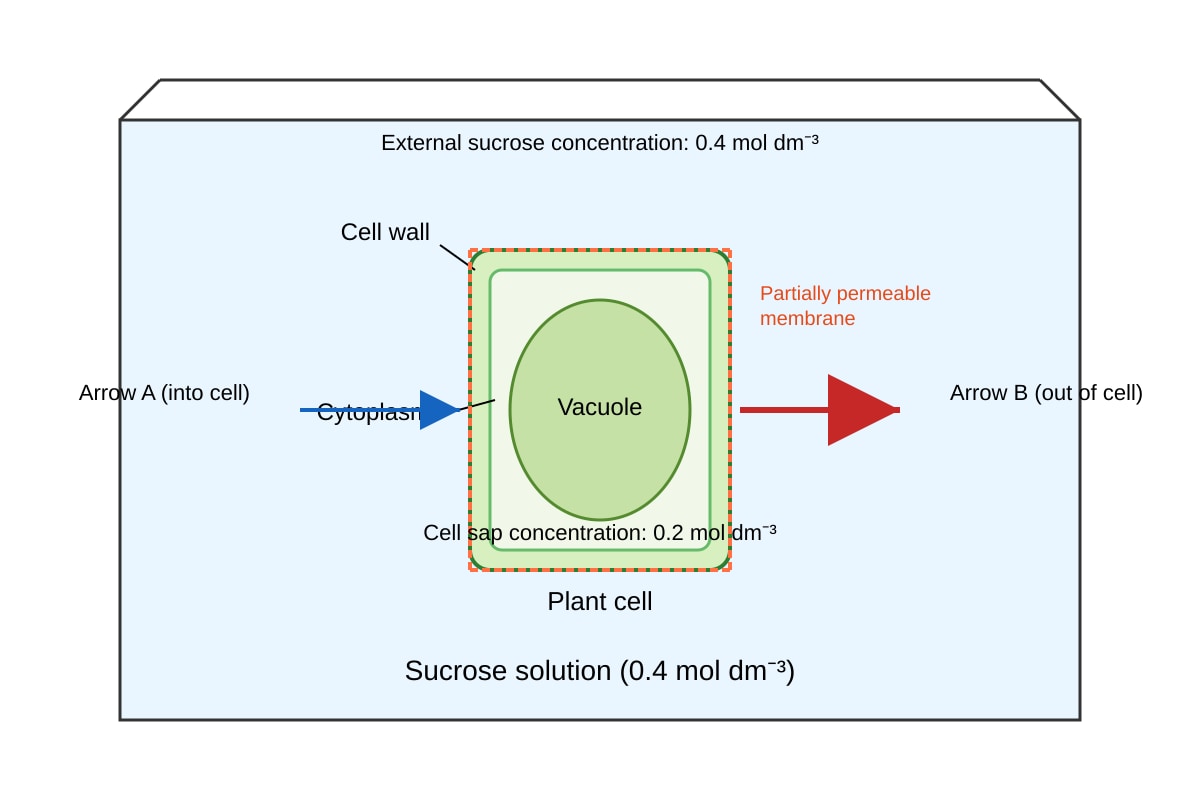
- Net water moves out of cell (sucrose 0.4 > cell sap 0.2). (1)
- Water potential of external solution more negative. (1)
- Cell undergoes plasmolysis (membrane pulls from wall). (1)
Visual needed: Q12-fig1 arrows show net outward movement.
13. [2 marks]
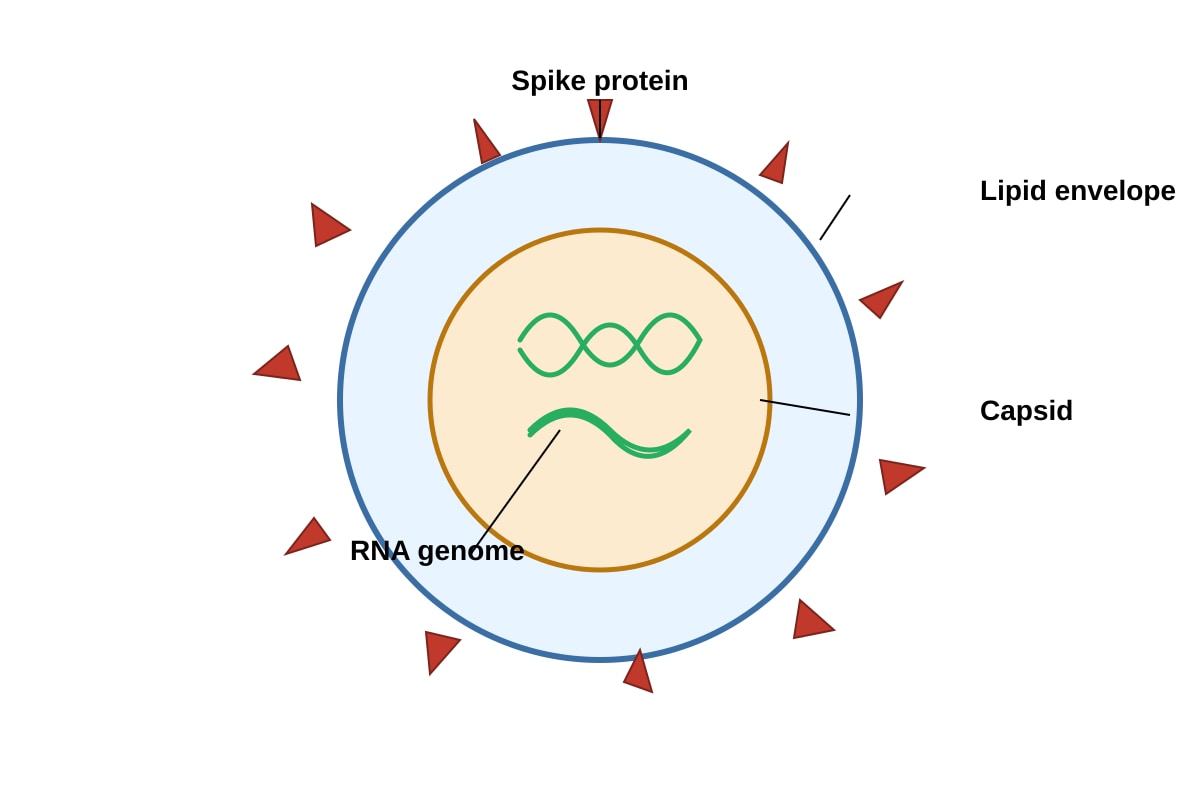
- Viruses are not cells / lack cellular structure. (1)
- They cannot reproduce independently, challenge "all living things are cells". (1)
Visual needed: Q13-fig1 shows acellular virus.
14. [2 marks]
- 3 peptide bonds (4 amino acids – 1). (1)
- Ionic bond (or salt bridge) between Lys side chain (NH₃⁺) and carboxylate. (1)
Teaching note: Disulfide is between cysteines, not Lys.
Section C: Extended Structured Response (15–20) — Mark Scheme
15. [4 marks]
- Made of two subunits: large (60S) and small (40S) in eukaryotes; composed of rRNA + protein. (2)
- Small subunit binds mRNA; large subunit catalyses peptide bond formation. (2)
Teaching note: Prokaryotic are 70S (30S+50S).
16. [4 marks]
- Facilitated diffusion: down gradient, no ATP, carrier/channel (e.g., GLUT1 glucose). (2)
- Active transport: against gradient, ATP, pump (e.g., Na⁺/K⁺ ATPase). (2)
Both selective via proteins.
17. [4 marks]
- Quaternary: 4 polypeptide chains (2α2β) each with haem group bind O₂. (2)
- Low pH (Bohr effect) stabilises deoxy form, reduces affinity. (2)
Teaching note: H⁺ binds histidine, shifts curve right.
18. [3 marks]
- Optimal pH 7, activity declines either side. (1)
- Extreme pH disrupts H-bonds/ionic bonds, denatures enzyme. (2)
Visual needed: Q18-fig1 bars peak at pH7.
19. [4 marks]
- Embryonic: pluripotent, differentiate into all body tissues. (2)
- Blood: multipotent, form blood lineages (myeloid/lymphoid). (1)
- Pluripotency = all germ layers but not extra-embryonic. (1)
20. [3 marks]
- Binds allosteric site, changes active site shape permanently. (1)
- Reduces Vmax as fewer functional enzymes. (1)
- More substrate cannot displace allosteric inhibitor. (1)
Teaching note: Contrast with competitive.