AI Generated Exam Paper
A Level H2 Biology Practice Paper 3
Free A Level H2 Biology Practice Paper 3, HY3 AI version, with questions, answers, and A Level-style practice for Singapore students.
These static practice materials are generated from the site's syllabus and paper-generation workflow, with source and model context shown so students and parents can evaluate the material before use.
Questions
Free quiz and exam paper access
Enter your details to view this paper
Your access is remembered on this device.
Answers
TuitionGoWhere Practice Paper — Answer Key (Version 3)
Subject: Biology H2 A-Level
Topic: Cells & Biomolecules
Total Marks: 60
Section A (16 marks)
1. [3 marks]
- All living organisms are composed of cells. (1)
- The cell is the smallest unit of life / basic structural and functional unit. (1)
- All cells arise from pre-existing cells. (1)
Teaching note: Cell theory is foundational; do not confuse with "cells come from spontaneous generation" (wrong).
2. [1 mark] Glycosidic bond.
Note: Specifically α-1,4 glycosidic in starch/glycogen; α-1,6 for branching.
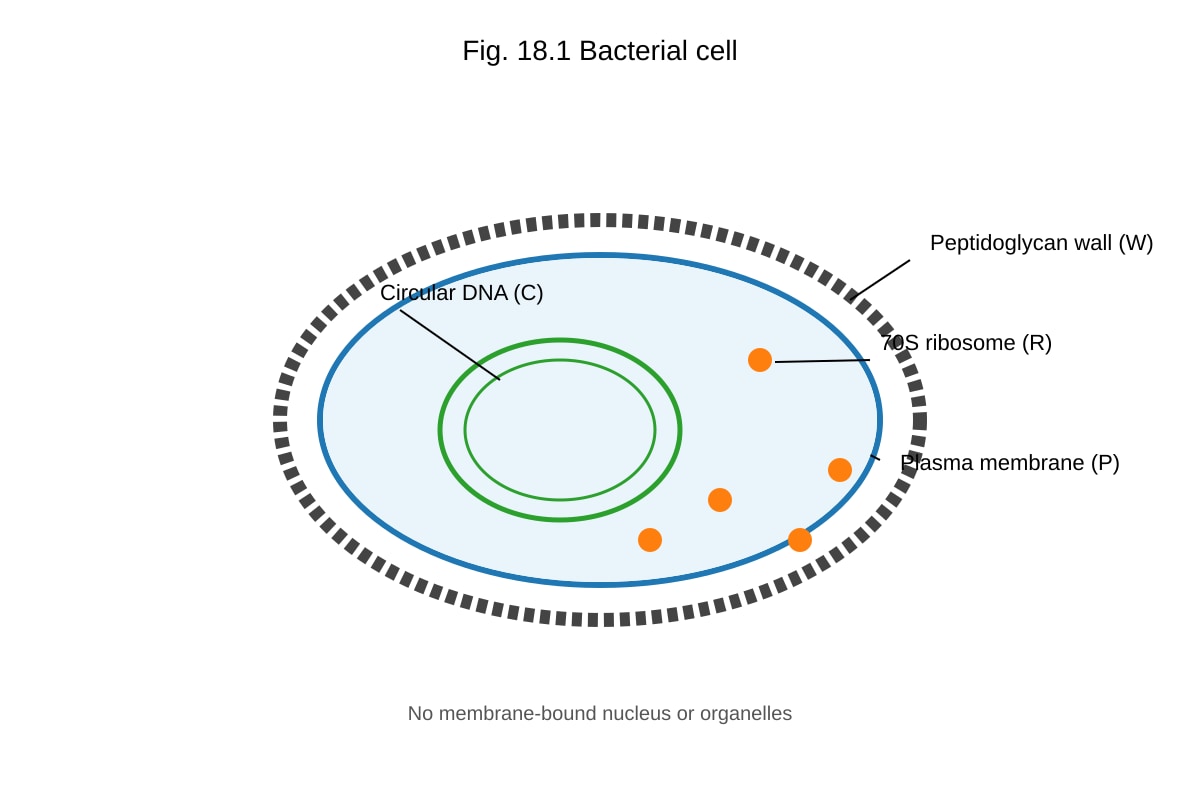
3. [1 mark] Any one: bacterial cell has no membrane-bound organelles / has circular DNA / has peptidoglycan wall / 70S ribosomes. (vs eukaryotic nucleus, linear DNA, etc.)
Marking: Must be structural, not metabolic.
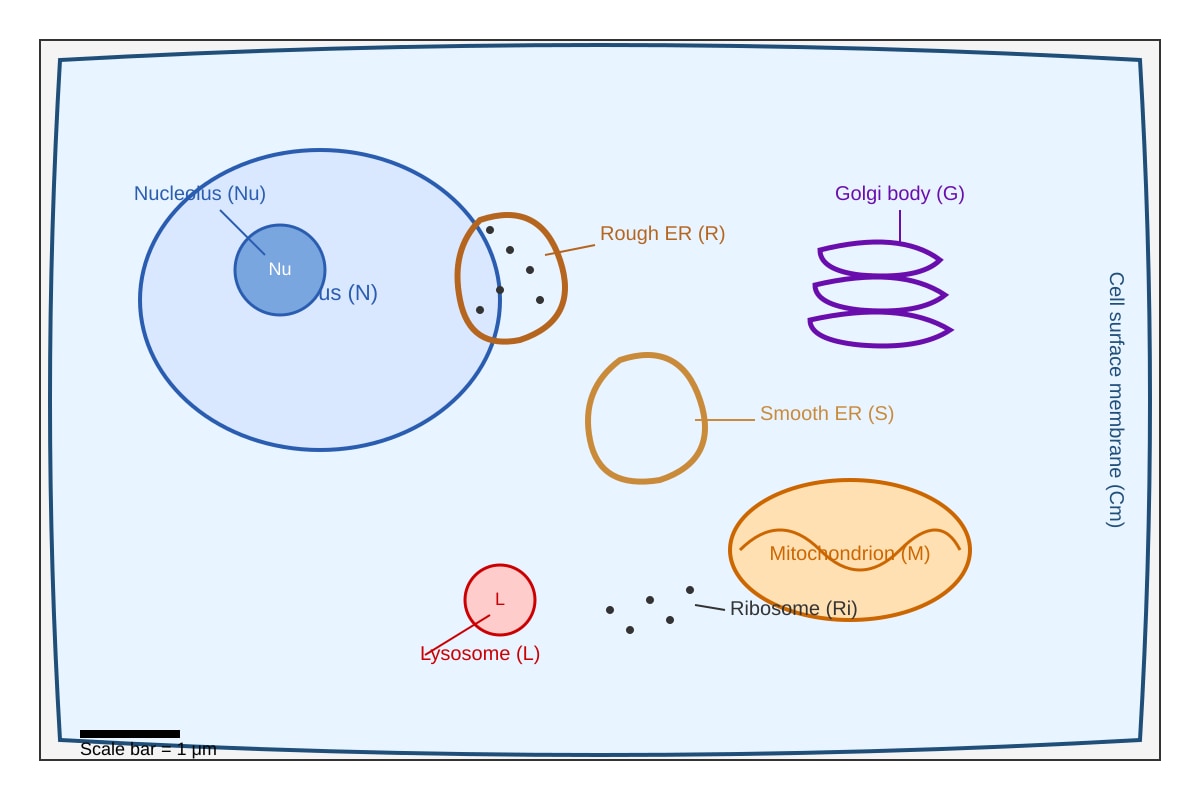
4. [1 mark] Modifies, sorts, and packages proteins (e.g., into vesicles for secretion).
5. [2 marks] Diffusion of free water molecules (1) across a partially permeable membrane from a region of lower solute concentration to higher solute concentration (1).
Common mistake: Saying "water moves to where there is more water" — must mention solute gradient.
6. [1 mark] Fluid mosaic model.
7. [1 mark] Primary structure.
8. [2 marks] Example: Influenza virus (1); envelope contains host-derived membrane with viral glycoproteins (e.g., haemagglutinin) (1). Other enveloped: HIV, coronavirus.
Section B (28 marks)
9. [3 marks]
- Organelle M = mitochondrion. (1)
- Function: site of aerobic respiration / ATP production via oxidative phosphorylation. (2 for clear description, 1 if vague)
Image requirement: Fig shows M as oval with internal cristae; student must identify from label.
10. [4 marks]
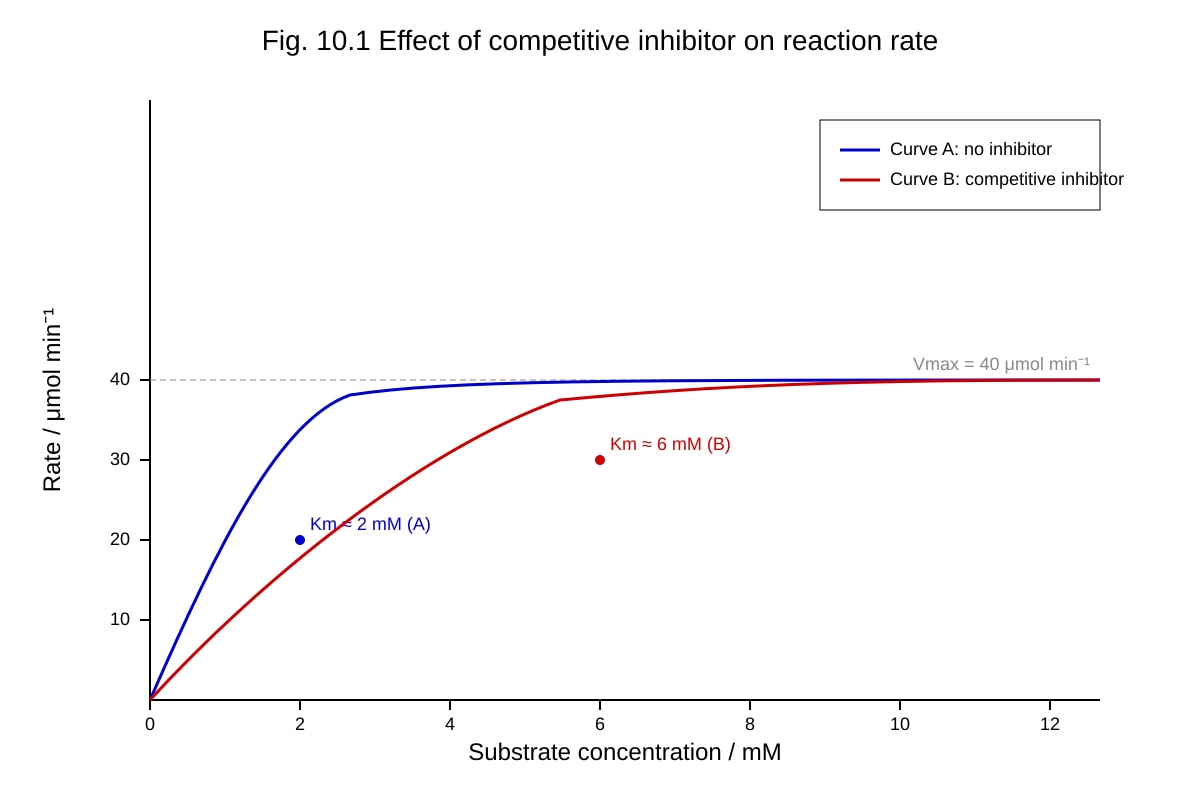
- Competitive inhibitor increases apparent Km (from ~2 to ~6 mM) because more substrate needed to reach half-Vmax. (2)
- Vmax unchanged (both 40 μmol min⁻¹) because inhibitor does not block catalysis when active site saturated. (1)
- High [substrate] outcompetes inhibitor for active site, overcoming inhibition. (1)
Teaching: Km = [S] at ½Vmax; competitive = same Vmax, higher Km.
11. [4 marks]
- Mechanism: Facilitated diffusion uses channel/carrier protein down gradient; active transport uses pump against gradient. (1+1)
- Energy: Facilitated = none (passive); active = ATP / gradient. (1)
- Selectivity: both specific to substrate via protein shape. (1)
- Examples: GLUT1 glucose (facilitated); Na⁺/K⁺ ATPase (active). (within above marks)
12. [3 marks]
- Tertiary = 3D folding of one polypeptide via side-chain interactions. (1)
- Bonds: hydrogen bonds (1), ionic bonds (1) [also disulfide, hydrophobic – any two named & correct = 2]
Note: Primary = sequence; secondary = α-helix/β-sheet.
13. [4 marks]
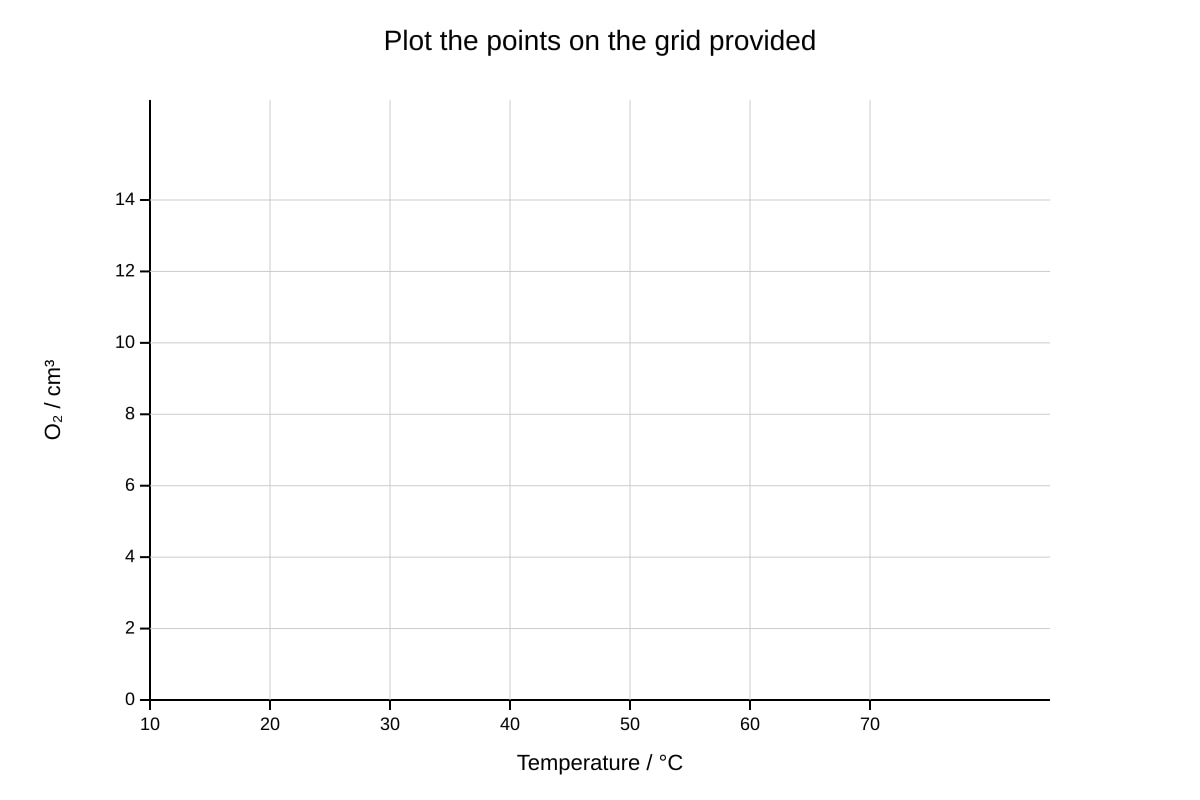
- Plot 5 points accurately on grid (2 marks total, 0.4 each).
- Trend: rate increases 20→40 °C (optimal ~40), then decreases sharply to 60 °C due to denaturation. (2)
Image: Grid must show axes; correct plotting verified against table.
14. [4 marks]
- Structure: glycerol + 2 fatty acids + phosphate group (hydrophilic head, 2 hydrophobic tails). (2)
- In water, tails turn inward, heads face out → bilayer / membrane. (2)
Equation note: triglyceride minus one FA + phosphate = phospholipid.
15. [3 marks]
- Potency: multipotent (1).
- Cells: e.g., red blood cells, white blood cells (lymphoid/myeloid lineages) (2).
Section C (16 marks)
16. [3 marks]
- Challenge: viruses are acellular / not made of cells / cannot reproduce without host cell. (1.5)
- Studied in cell bio: they infect cells, use host machinery, reveal membrane/receptor function. (1.5)
17. [3 marks]
- Prediction: tertiary structure unfolds / denatures. (1)
- Mechanism: heat breaks H-bonds/ionic; low pH disrupts ionic charges on side chains. (2)
18. [2 marks]
- No nucleus / circular DNA not enclosed (1); no membrane-bound organelles (1).
Fig must show these.
19. [4 marks]
- Non-competitive: binds allosteric site, changes active site shape. (1)
- Vmax decreased (1); Km unchanged (1).
- Substrate increase cannot overcome (1) because active sites altered regardless of [S].
20. [4 marks]
- Role: structural support (tendons, bone, skin). (2)
- Primary feature: repeated Gly-X-Y amino acid sequence (e.g., glycine every 3rd) allows tight triple helix. (2)
Total: 60 marks — paper internally timed for 75 min with review buffer.