AI Generated Exam Paper
A Level H2 Biology Practice Paper 2
Free A Level H2 Biology Practice Paper 2, HY3 AI version, with questions, answers, and A Level-style practice for Singapore students.
These static practice materials are generated from the site's syllabus and paper-generation workflow, with source and model context shown so students and parents can evaluate the material before use.
Questions
Free quiz and exam paper access
Enter your details to view this paper
Your access is remembered on this device.
Answers
TuitionGoWhere Practice Paper — Answer Key (Version 2)
Subject: Biology H2
Level: A-Level
Paper: Practice Paper (Cells & Biomolecules)
Total Marks: 60
Section A (16 marks)
Q1 [3]
- All living organisms are composed of cells. [1]
- The cell is the smallest unit of life. [1]
- Cells arise from pre-existing cells. [1]
Teaching note: These three statements are the core of cell theory. A common mistake is omitting "pre-existing cells" (spontaneous generation is false).
Q2 [1]
- Glycosidic bond.
Teaching note: Formed by condensation reaction; in starch it is α-1,4 and α-1,6 (branches).
Q3 [1]
- Bacterial cell lacks membrane-bound organelles (e.g., no nucleus) OR has circular DNA / 70S ribosomes / peptidoglycan wall. (Any one.)
Marking: 1 mark for a valid structural difference.
Q4 [2]
- Glycolipids [1]
- Cholesterol [1] (or glycoproteins are proteins, not lipids; accept only lipids)
Teaching note: Fluid mosaic model includes phospholipids, cholesterol, glycolipids, proteins, glycoproteins.
Q5 [2]
- The induced-fit model states that the enzyme's active site changes shape slightly to better fit the substrate upon binding.
Marking: 2 marks for mentioning conformational change + substrate fit. (1 mark if only "enzyme fits substrate" without change.)
Q6 [1]
- Tertiary (and also quaternary, but primary target is tertiary).
Teaching note: Disulfide bridges form between cysteine residues in tertiary folding.
Q7 [1]
- Endocytosis (or phagocytosis/pinocytosis if specified large particles → phagocytosis; accept endocytosis).
Q8 [1]
- Reduces membrane fluidity at high temperature / maintains stability / reduces permeability to very small water-soluble molecules. (Any one.)
Section B (24 marks)
Q9 [2]
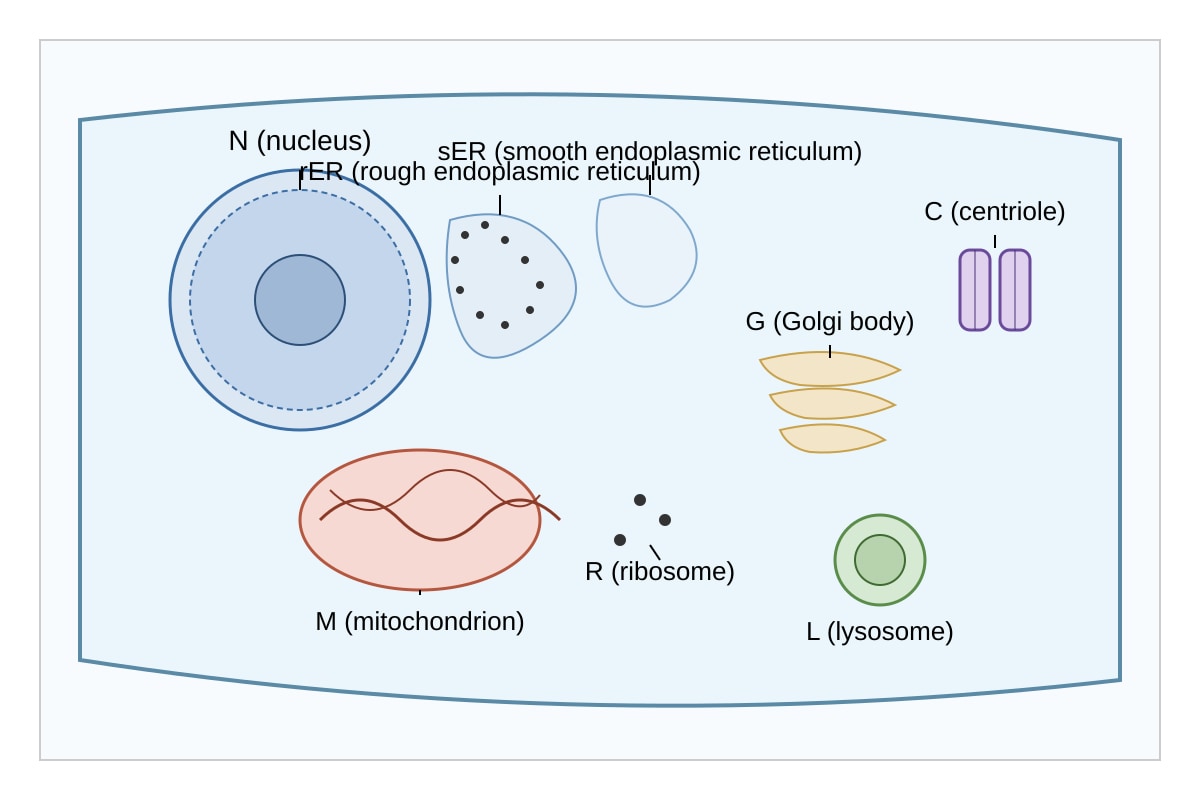
- Organelle G = Golgi body (Golgi apparatus). [1]
- Function: modifies, sorts, and packages proteins/lipids from ER for secretion or delivery. [1]
From image: G labelled near stacked membranes.
Q10 [4]
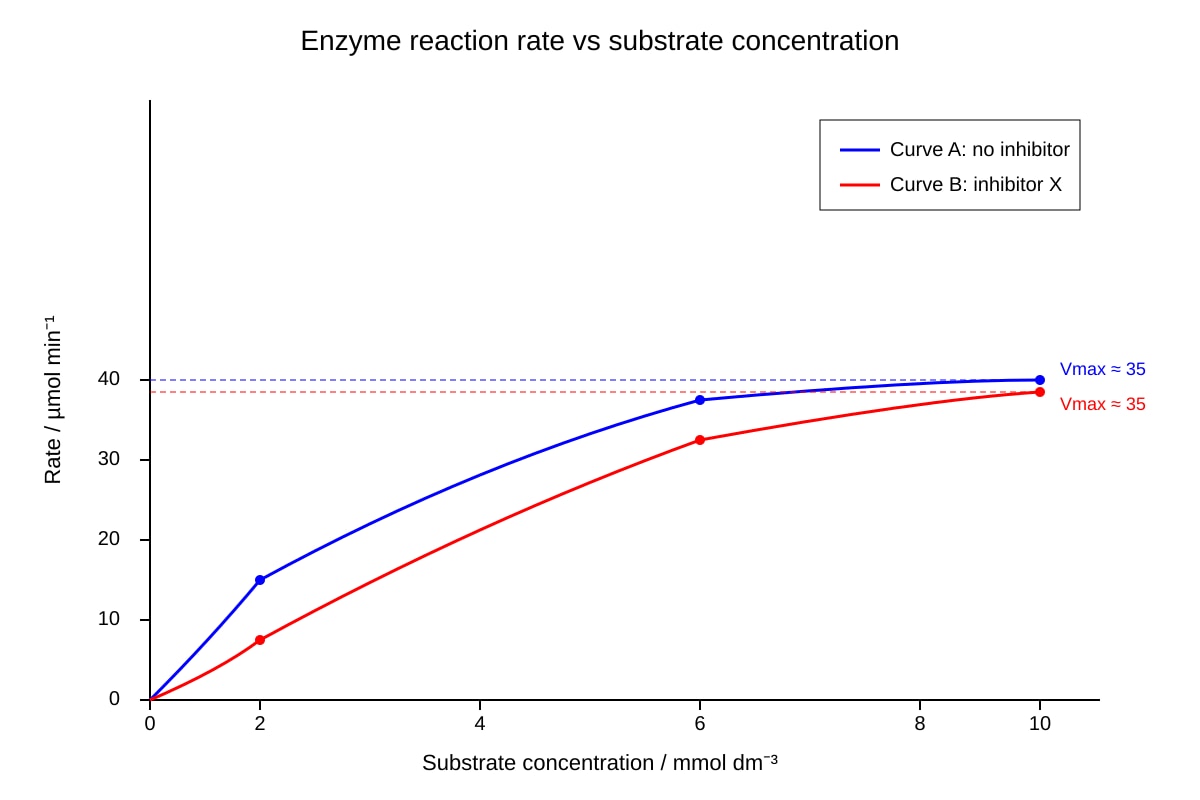
- Type: Competitive inhibition. [1]
- Vmax unchanged (~35 µmol min⁻¹) for both curves. [1]
- Km increased: curve B needs higher substrate concentration to reach half Vmax. [1]
- Explanation: inhibitor X resembles substrate, competes for active site; more substrate overcomes inhibition. [1]
Teaching note: On graph, both plateaus equal → Vmax same; B shifted right → apparent Km higher.
Q11 [2]
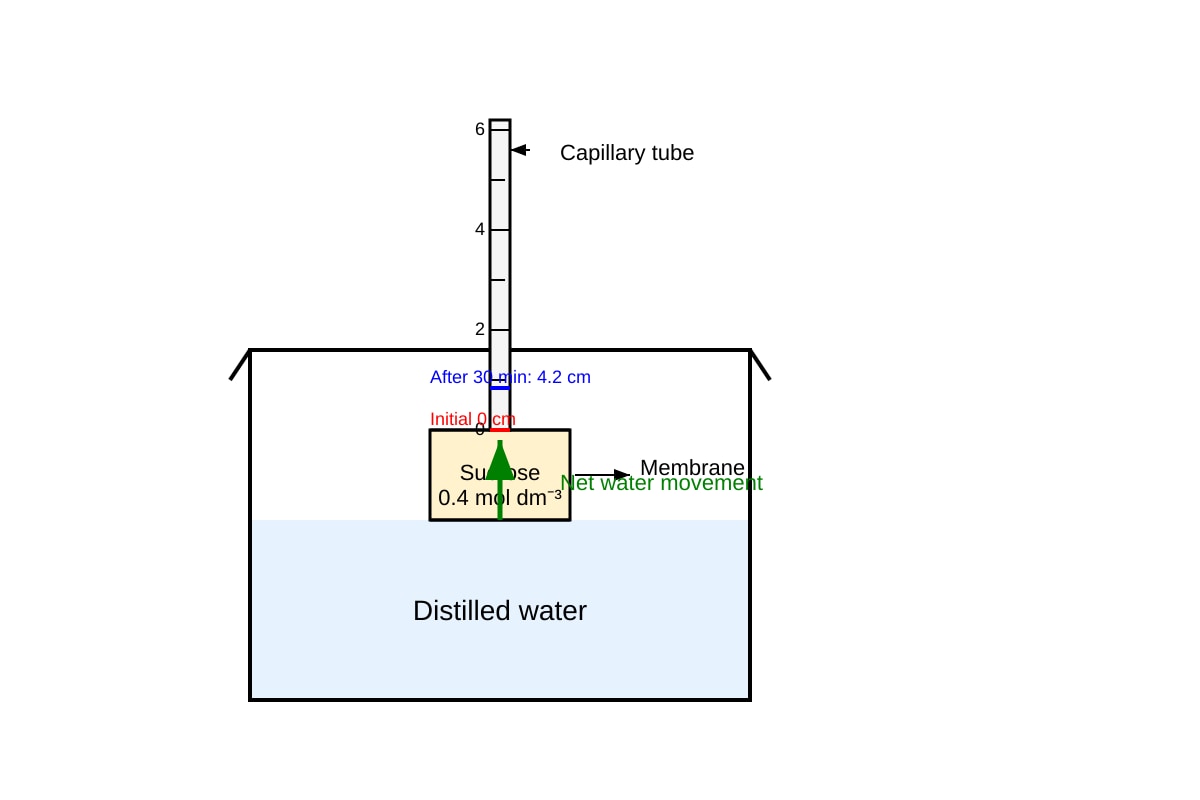
- Distance moved = 4.2 cm – 0 cm = 4.2 cm.
- Time = 30 min.
- Rate = 4.2 / 30 = 0.14 cm min⁻¹. [2]
Marking: 1 for correct subtraction, 1 for rate with unit.
Q12 [3]
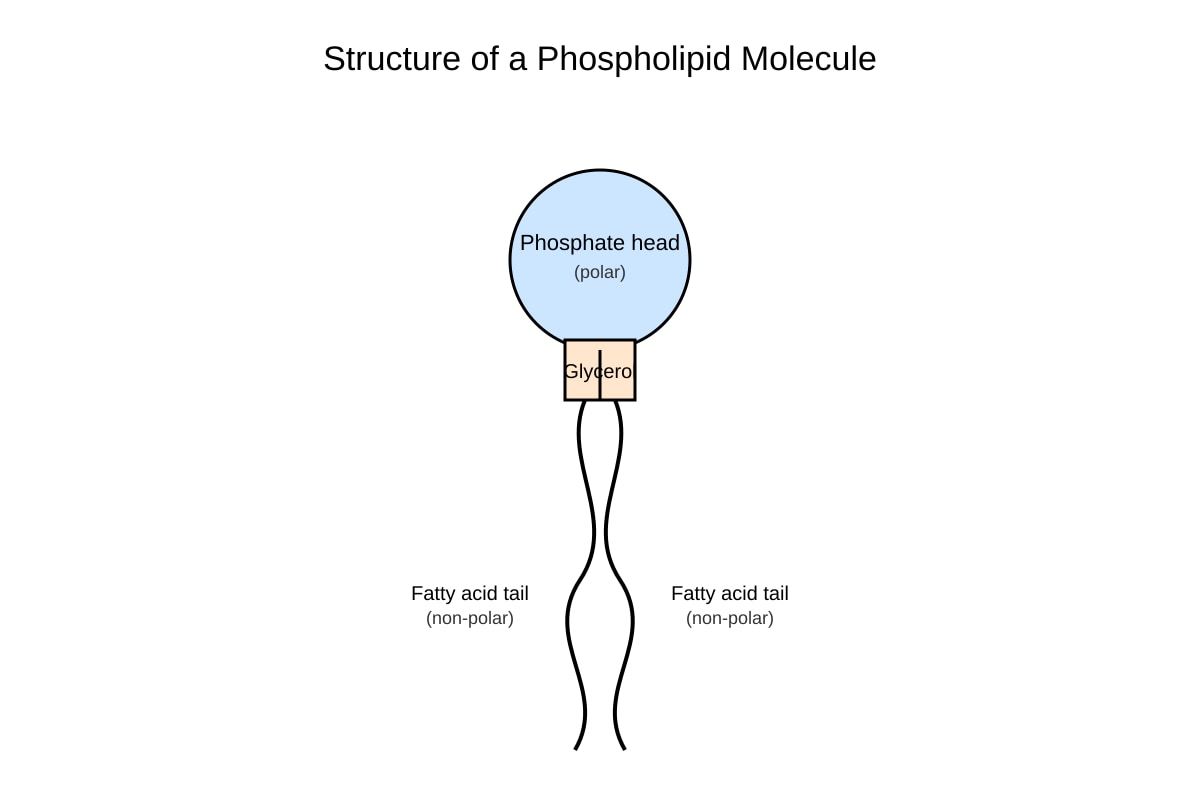
- Phosphate head is polar/hydrophilic. [1]
- Fatty acid tails are non-polar/hydrophobic. [1]
- In water, phospholipids arrange into bilayer with heads outward, tails inward, forming membrane. [1]
From Fig: head labelled polar, tails non-polar.
Q13 [2]
- Δ[O₂] = 8.0 – 4.8 = 3.2 mg dm⁻³ over 10 min.
- Mean rate = 3.2 / 10 = 0.32 mg dm⁻³ min⁻¹. [2]
Marking: 1 for Δ, 1 for rate + unit.
Q14 [2]
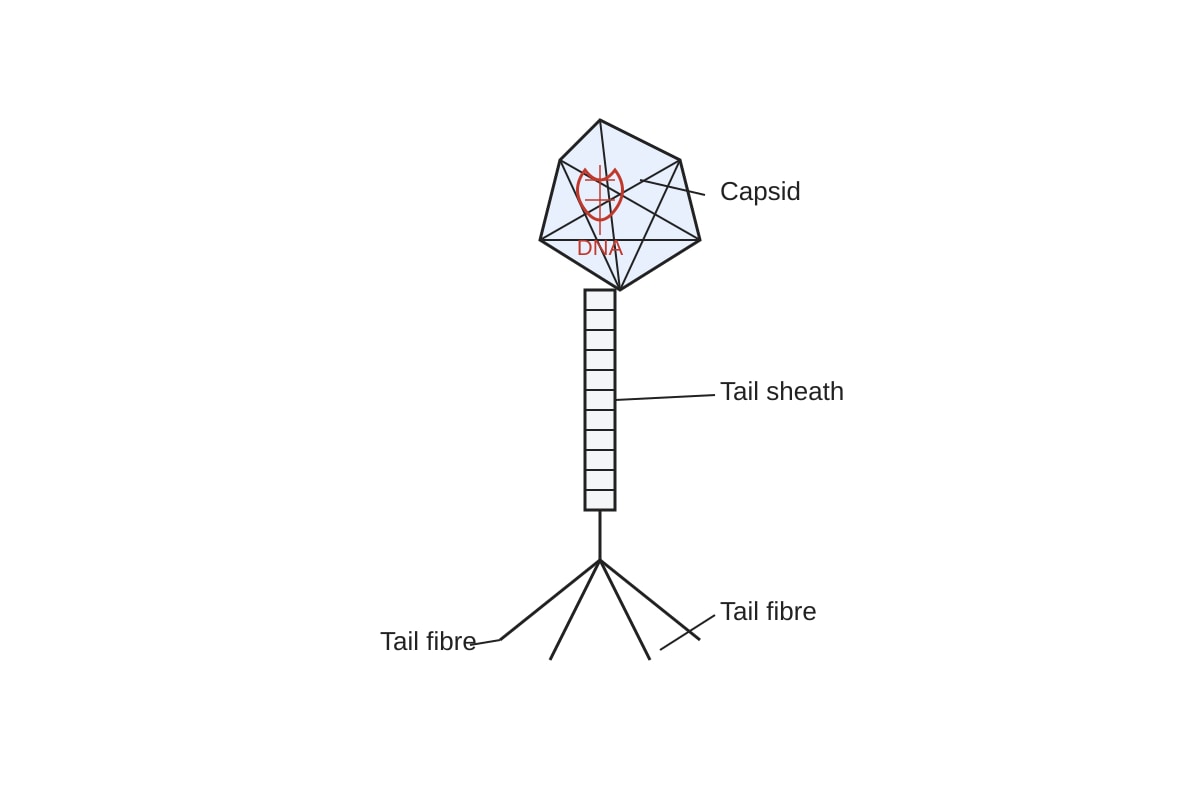
- Bacteriophage is not cellular (acellular particle). [1]
- It cannot reproduce independently; requires host cell. [1]
Teaching note: Challenges "all life is cellular" and "cells from cells" because virus needs host.
Section C (20 marks)
Q15 [4]
- Starch: α-glucose, α-1,4 and α-1,6 glycosidic bonds; energy storage in plants. [1+1]
- Cellulose: β-glucose, β-1,4 bonds; structural in plant cell walls. [1+1]
- Glycogen: α-glucose, α-1,4 and α-1,6 (more branches); energy storage in animals. [1+1]
Max 4 marks: allocate 2 for linkages, 2 for functions. Common mistake: confusing α/β.
Q16 [5]
- Primary: sequence of amino acids from gene; peptide bonds. [1]
- Secondary: α-helix/β-sheet from H-bonds between backbone. [1]
- Tertiary: 3D folding by H-bonds, ionic, hydrophobic, disulfide. [2]
- Quaternary: multiple polypeptides held by same bonds as tertiary. [1]
Teaching note: Bonds listed per level; mark per correct level+bond.
Q17 [4]
- Facilitated diffusion: down gradient, no ATP, carrier/channel protein. [2]
- Active transport: against gradient, ATP needed, pump protein. [2]
Example: GLUT1 vs Na⁺/K⁺ ATPase. Marking: 2 each for mechanism contrast.
Q18 [4]
- Totipotency: can form all cell types + extraembryonic. Example: zygote. [1+1]
- Pluripotency: all cell types of body. Example: embryonic stem cell. [1+1]
- Multipotency: limited lineages. Example: blood stem cell (lymphoid/myeloid). [1+1]
Max 4: 2 def, 2 examples.
Q19 [3]
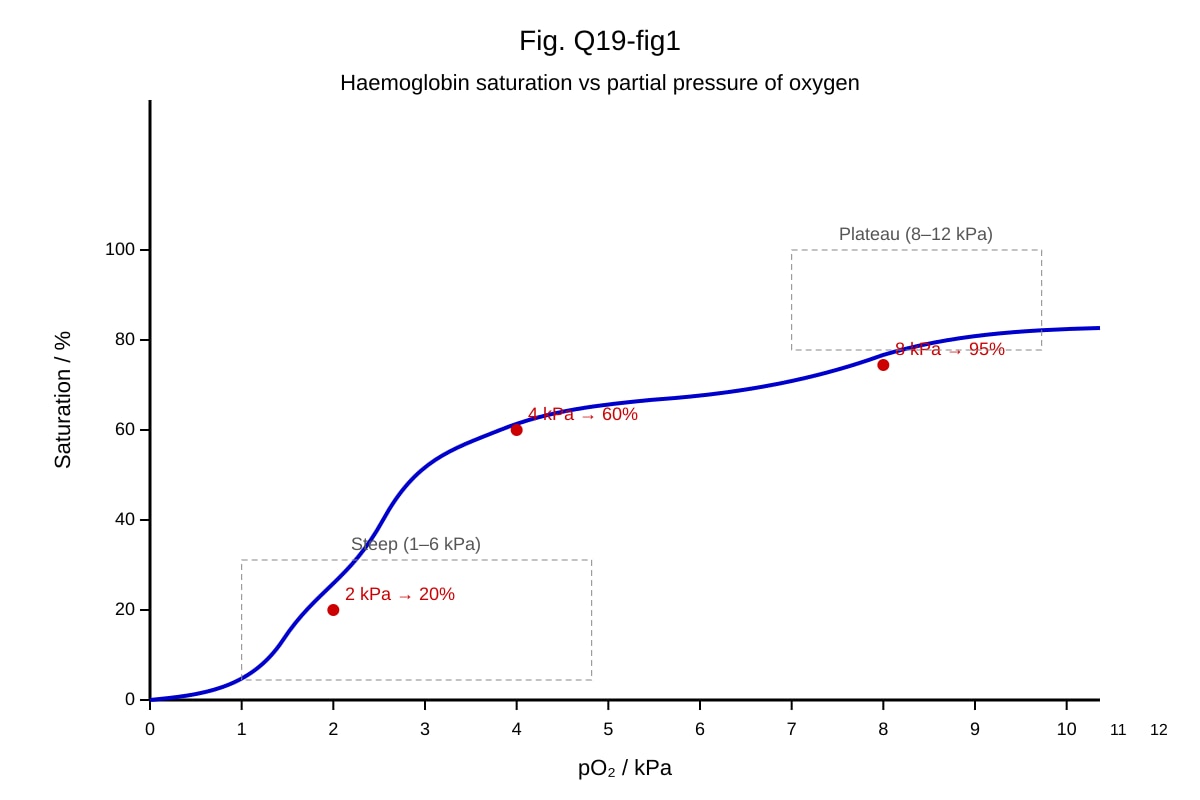
- Quaternary = 4 subunits (2α 2β). [1]
- Sigmoidal curve shows cooperativity: binding O₂ to one subunit increases affinity of others. [1]
- Supports efficient loading at lungs (high pO₂) and unloading at tissues (low pO₂). [1]
From Fig: S-shape visible.
Q20 [4]
- At 60 °C, protein denatures: tertiary/quaternary bonds (H, ionic, hydrophobic, disulfide) break. [2]
- Active site destroyed; return to 37 °C does not refold correctly (irreversible). [1]
- Thus activity not recovered. [1]
Teaching note: High temp beyond optimum causes permanent denaturation.