From Real Exams Exam Paper
A Level H2 Biology Practice Paper 5
Free A Level H2 Biology Practice Paper 5, HY3 Exam version, with questions, answers, and A Level-style practice for Singapore students.
These static practice materials are generated from the site's syllabus and paper-generation workflow, with source and model context shown so students and parents can evaluate the material before use.
Questions
TuitionGoWhere Exam Practice (AI) — Biology H2 A-Level Practice Paper
Subject: Biology H2
Level: A-Level
Paper: Practice Paper (Version 5 of 5)
Duration: 75 minutes
Total Marks: 60
Name: ___________________________
Class: ___________________________
Date: ___________________________
Instructions:
- Answer all questions in the spaces provided.
- Use blue or black pen.
- Marks for each question are shown in brackets.
- Section marks and total marks are given at the end of each section.
Section A: Cells, Organelles and Viruses (Questions 1–5) [12 marks]
1. State one feature that is present in a typical eukaryotic cell but absent in a typical bacterial cell. [1]
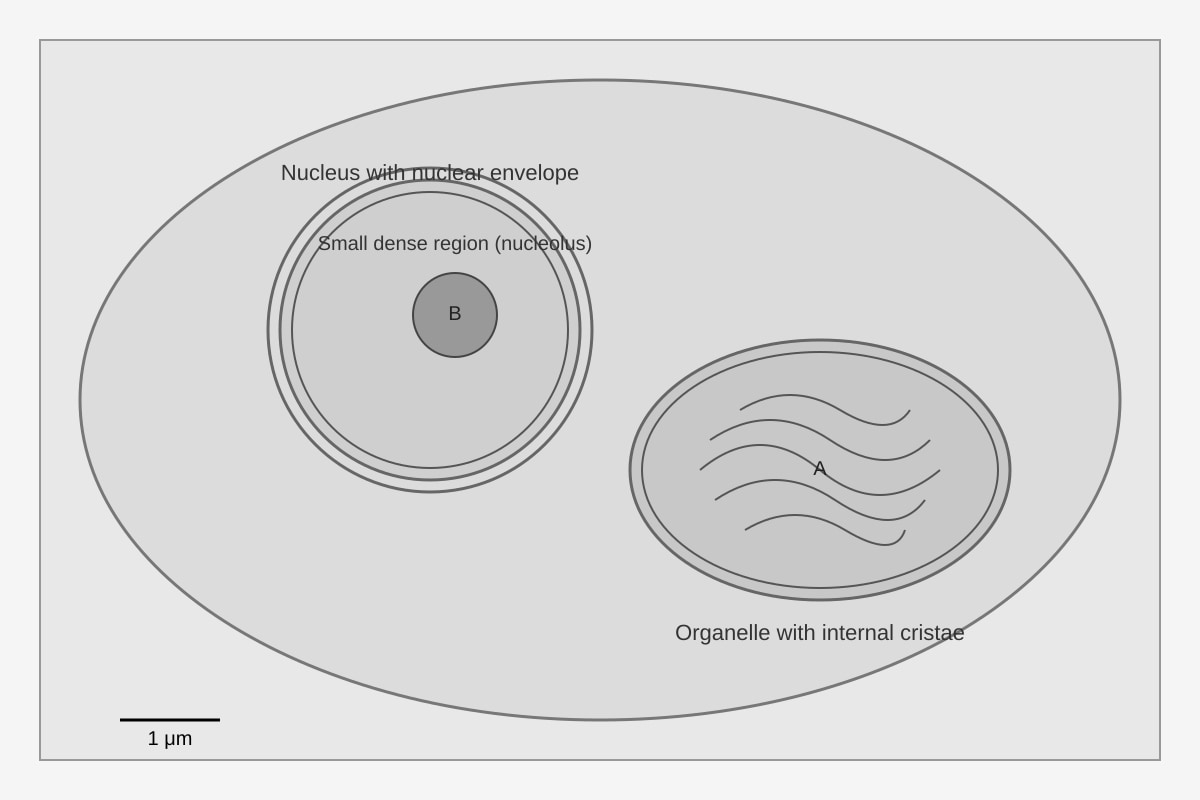
2. With reference to the electron micrograph below, identify structures A and B and state one function of each. [4]
Image pending generation: figure for Q2.
Structure A: ___________________ Function: ___________________
Structure B: ___________________ Function: ___________________
3. Explain why viruses are said to challenge the cell theory. [3]
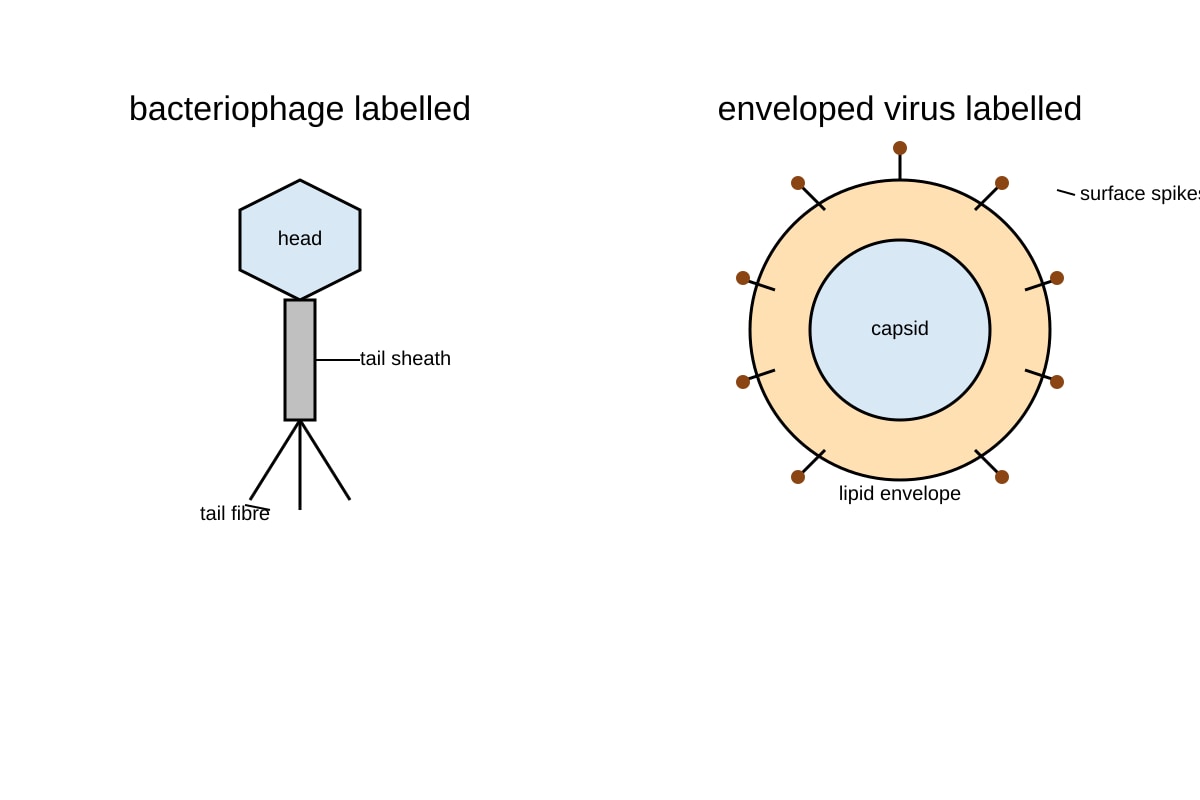
4. A bacteriophage and an enveloped influenza virus are shown below. State one structural component found in the enveloped virus but not in the bacteriophage. [1]
Image pending generation: figure for Q4.
5. Outline the role of the Golgi body in a secretory cell. [3]
Section B: Biomolecules and Membranes (Questions 6–10) [16 marks]
6. Name the bond formed between two glucose monomers in starch and state the type of reaction that forms it. [2]
Bond: ___________________ Reaction: ___________________
7. Describe the difference in molecular structure between cellulose and glycogen. [3]
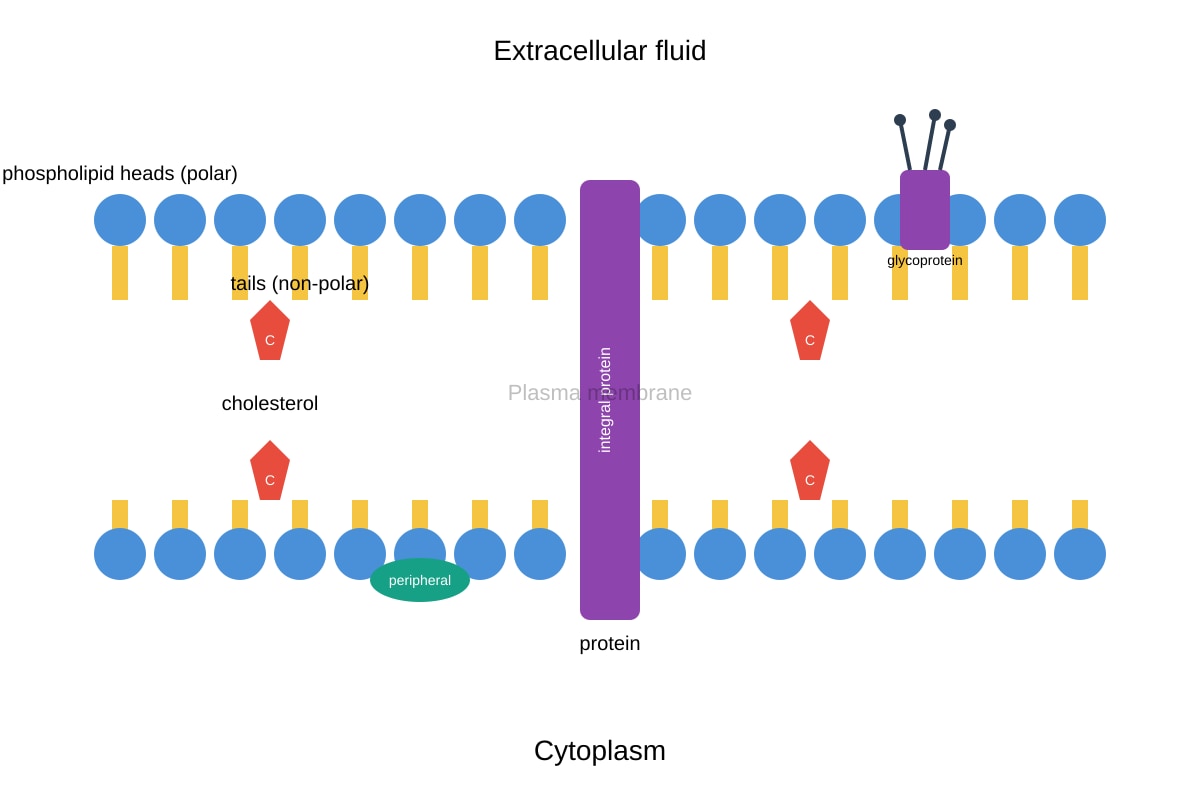
8. With reference to Fig. below, explain how the arrangement of phospholipids maintains membrane fluidity. [3]
Image pending generation: diagram for Q8.
9. A cell is placed in a solution with a lower water potential than its cytoplasm. State the term for this type of solution and predict the net movement of water. [2]
Solution: ___________________ Movement: ___________________
10. Compare active transport and facilitated diffusion in terms of (i) energy requirement and (ii) direction relative to concentration gradient. [4]
(i) _______________________________________________________
(ii) _______________________________________________________
Section C: Proteins, Enzymes and Stem Cells (Questions 11–15) [16 marks]
11. Name the four levels of protein structure and state the bond mainly responsible for tertiary structure stability other than peptide bonds. [3]
Levels: __________________________________________________
Bond: ___________________
12. Using the induced-fit model, explain how an enzyme catalyses a reaction. [3]
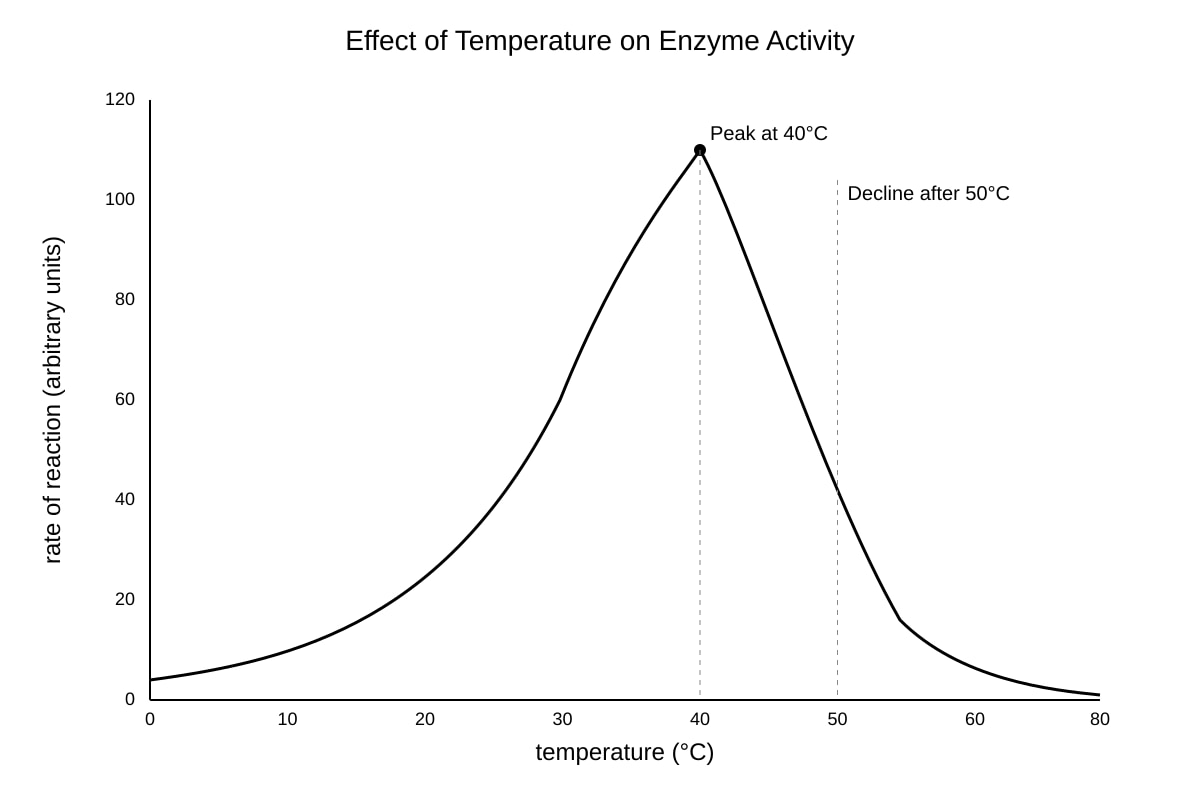
13. The graph below shows the effect of temperature on enzyme activity. Describe and explain the trend shown. [4]
Image pending generation: graph for Q13.
14. Define competitive inhibition and state how it can be overcome. [3]
15. State one difference between pluripotent and multipotent stem cells. [3]
Section D: Data Interpretation and Synthesis (Questions 16–20) [16 marks]
16. A student measured the initial rate of an enzyme-catalysed reaction at different substrate concentrations. The data are shown below.
| [Substrate] (mmol dm⁻³) | Rate (μmol min⁻¹) |
|---|---|
| 2 | 12 |
| 4 | 22 |
| 8 | 36 |
| 16 | 40 |
| 32 | 41 |
Plot a suitable graph and state the maximum rate approached. [4]
Image pending generation: graph for Q16.
Max rate: ___________________
17. With reference to the data in Q16, explain why the rate plateaus at high substrate concentration. [3]
18. Haemoglobin and collagen have different structures. State the quaternary structure status of each and explain how structure relates to function. [4]
19. A drug binds to an allosteric site on an enzyme, reducing its activity. Identify the inhibition type and predict its effect on Vmax. [2]
Type: ___________________ Effect on Vmax: ___________________
20. Stem cells from umbilical cord blood are used in therapy. State their potency type and one medical application. [3]
End of Paper — Total Marks: 60
Answers
TuitionGoWhere Exam Practice (AI) — Biology H2 A-Level Practice Paper (Version 5) Answer Key
Total Marks: 60
Section A Answers (12 marks)
Q1 [1 mark]
Answer: Membrane-bound nucleus (or any membrane-bound organelle such as mitochondria).
Teaching note: Bacterial cells are prokaryotes and lack membrane-bound organelles; eukaryotes have them.
Common mistake: stating "DNA" (both have DNA).
Q2 [4 marks]
Structure A: Mitochondrion [1]; Function: site of aerobic respiration / ATP production [1].
Structure B: Nucleolus [1]; Function: produces ribosomal RNA (rRNA) / assembly of ribosomes [1].
Marking: ID 1 + function 1 each.
Visual needed: A = cristae-bearing organelle; B = dense nuclear region.
Q3 [3 marks]
- Viruses are not made of cells [1]
- They cannot reproduce independently without a host cell [1]
- Thus they violate "all living organisms are composed of cells / cells arise from cells" [1].
Teaching: Cell theory states cells are basic unit of life; viruses are acellular.
Q4 [1 mark]
Answer: Lipid envelope (or glycoprotein spikes).
Note: Bacteriophage lacks envelope; enveloped virus has it.
Q5 [3 marks]
- Modifies proteins from rough ER (e.g., glycosylation) [1]
- Packages into vesicles [1]
- Sorts and directs to plasma membrane / secretion [1].
Section B Answers (16 marks)
Q6 [2 marks]
Bond: glycosidic bond [1]; Reaction: condensation (dehydration) [1].
Q7 [3 marks]
- Cellulose: linear β-glucose chains, cross-linked by H-bonds → rigid [1.5]
- Glycogen: branched α-glucose chains, compact storage [1.5].
Q8 [3 marks]
- Phospholipid bilayer has hydrophobic tails that avoid water [1]
- Cholesterol restricts phospholipid movement at high temp, prevents solidification at low temp [1]
- Proteins and lipids can move laterally → fluid [1].
Q9 [2 marks]
Solution: hypertonic [1]; Movement: water leaves cell (net outward) [1].
Q10 [4 marks]
(i) Active transport requires ATP; facilitated diffusion does not [2]
(ii) Active transport against gradient; facilitated diffusion down gradient [2].
Section C Answers (16 marks)
Q11 [3 marks]
Levels: primary, secondary, tertiary, quaternary [2]; Bond: hydrogen / ionic / disulfide / hydrophobic [1].
Q12 [3 marks]
- Substrate binds active site [1]
- Enzyme changes shape (induced fit) to strain substrate [1]
- Lowers activation energy → product released [1].
Q13 [4 marks]
- Rate increases to 40°C optimum (more kinetic energy, more collisions) [2]
- Above 40°C, denaturation of tertiary structure, active site lost [2].
Q14 [3 marks]
- Competitive inhibitor resembles substrate, binds active site [1.5]
- Overcome by increasing substrate concentration [1.5].
Q15 [3 marks]
- Pluripotent: can form all body cell types (e.g., embryonic) [1.5]
- Multipotent: limited range (e.g., blood stem) [1.5].
Section D Answers (16 marks)
Q16 [4 marks]
Graph: x-y plot, curve levelling [2]; Max rate ≈ 41 μmol min⁻¹ [2].
Q17 [3 marks]
- At high [S], all active sites saturated [1.5]
- Adding more substrate cannot increase rate [1.5].
Q18 [4 marks]
- Haemoglobin: quaternary (4 subunits), carries O₂ cooperatively [2]
- Collagen: triple helix, tensile strength [2].
Q19 [2 marks]
Type: non-competitive / allosteric [1]; Vmax decreases [1].
Q20 [3 marks]
Potency: multipotent [1.5]; Application: treat leukaemia / blood disorders [1.5].
Free quiz and exam paper access
Enter your details to view this paper
Your access is remembered on this device.