From Real Exams Exam Paper
A Level H2 Biology Practice Paper 3
Free A Level H2 Biology Practice Paper 3, HY3 Exam version, with questions, answers, and A Level-style practice for Singapore students.
These static practice materials are generated from the site's syllabus and paper-generation workflow, with source and model context shown so students and parents can evaluate the material before use.
Questions
Free quiz and exam paper access
Enter your details to view this paper
Your access is remembered on this device.
Answers
TuitionGoWhere Exam Practice (AI) — Biology H2 A-Level
Practice Paper 3 (Cells & Biomolecules) Version 3 — Answer Key
Total Marks: 60
Section A Answers (1–8)
1. [3 marks]
- All living organisms are composed of cells. (1)
- The cell is the smallest unit of life / basic structural and functional unit. (1)
- All cells arise from pre-existing cells. (1)
Teaching note: Cell theory is foundational; do not say “cells come from nothing”.
2. [1 mark] Nucleus.
Teaching note: The nucleolus is inside the nucleus and synthesises rRNA.
3. [2 marks]
- Presence of peptidoglycan cell wall (not cellulose/chitin). (1)
- Circular DNA (not linear chromosomes in nucleus). (1)
Alternative: 70S ribosomes / no membrane-bound organelles.
Common mistake: Stating “smaller” is not structural enough.
4. [4 marks]
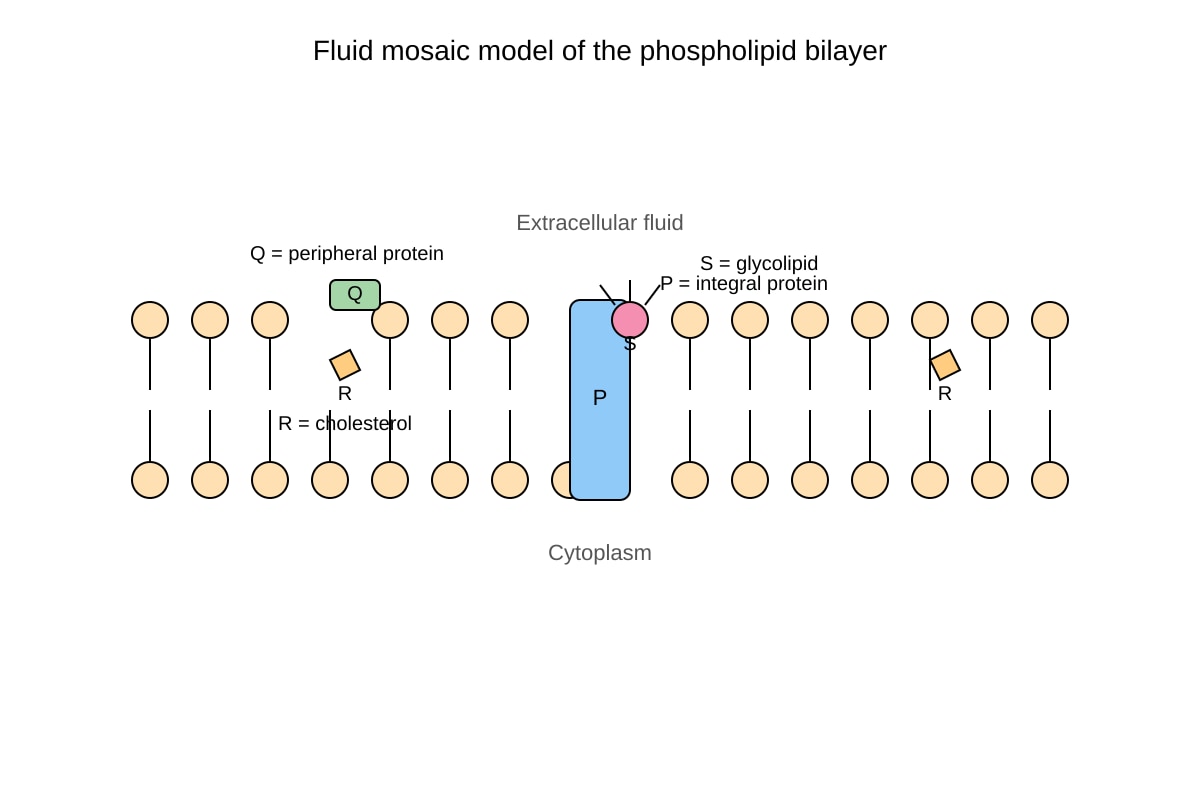
- Phospholipid: forms bilayer, barrier to hydrophilic substances. (2: name 1, function 1)
- Cholesterol: restricts fluidity / stabilises membrane at high temp. (2)
Other acceptable: Glycolipid – cell recognition; Glycoprotein – receptor.
Teaching note: Fluid mosaic = proteins floating in lipid sea.
5. [2 marks] Enzyme active site changes shape slightly to fit substrate (1) forming enzyme-substrate complex (1).
Not lock-and-key which is rigid.
6. [2 marks] Cellulose has straight unbranched chains with β-1,4 glycosidic bonds forming H-bonds for fibre (1); starch is helical/branched α-1,4 and α-1,6 for compact storage (1).
Teaching note: Function follows form.
7. [2 marks] Glycosidic bond (1); condensation / dehydration reaction (1).
8. [1 mark] Disulfide bridge / disulfide bond.
Section B Answers (9–14)
9. [4 marks]
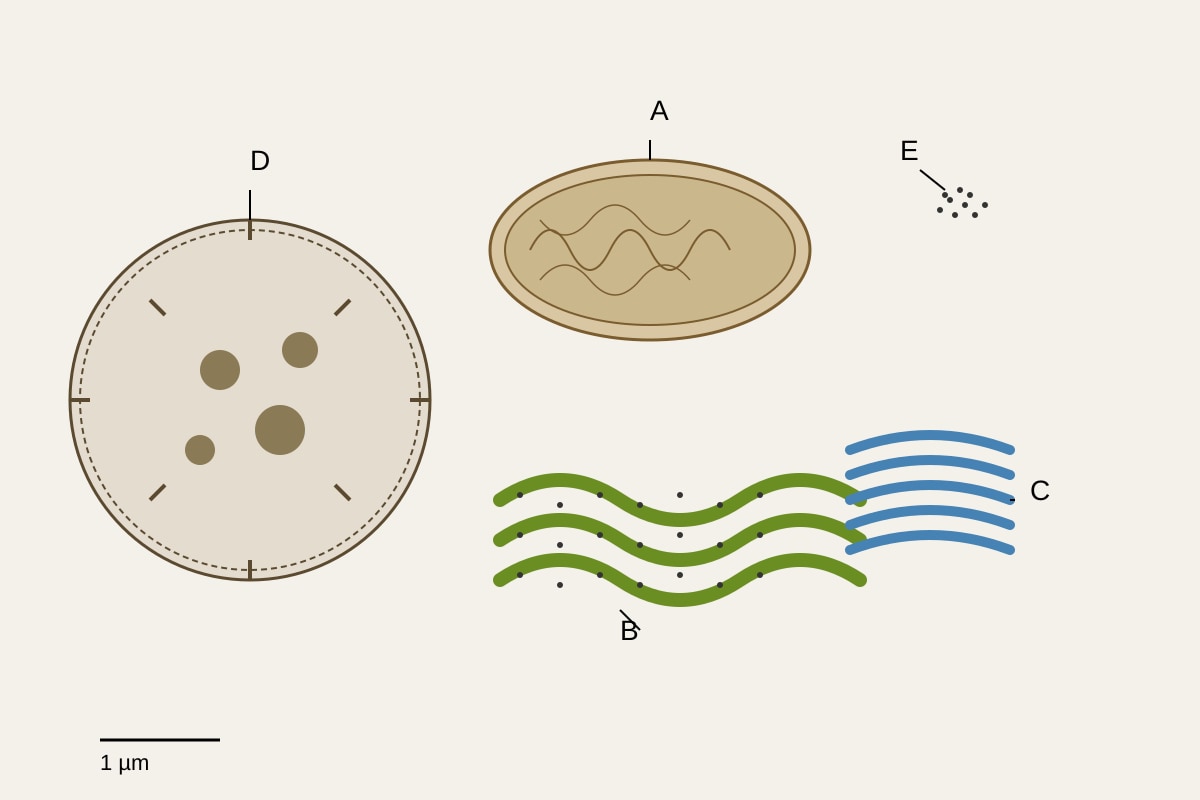
(a) Rough endoplasmic reticulum. (1)
(b) Modifies / packages / sorts proteins into vesicles. (1)
(c) Double membrane and cristae increase surface area for electron transport chain and ATP synthase (1); compartmentalisation allows proton gradient (1).
Image needed: A shows mitochondrion with cristae.
10. [4 marks]
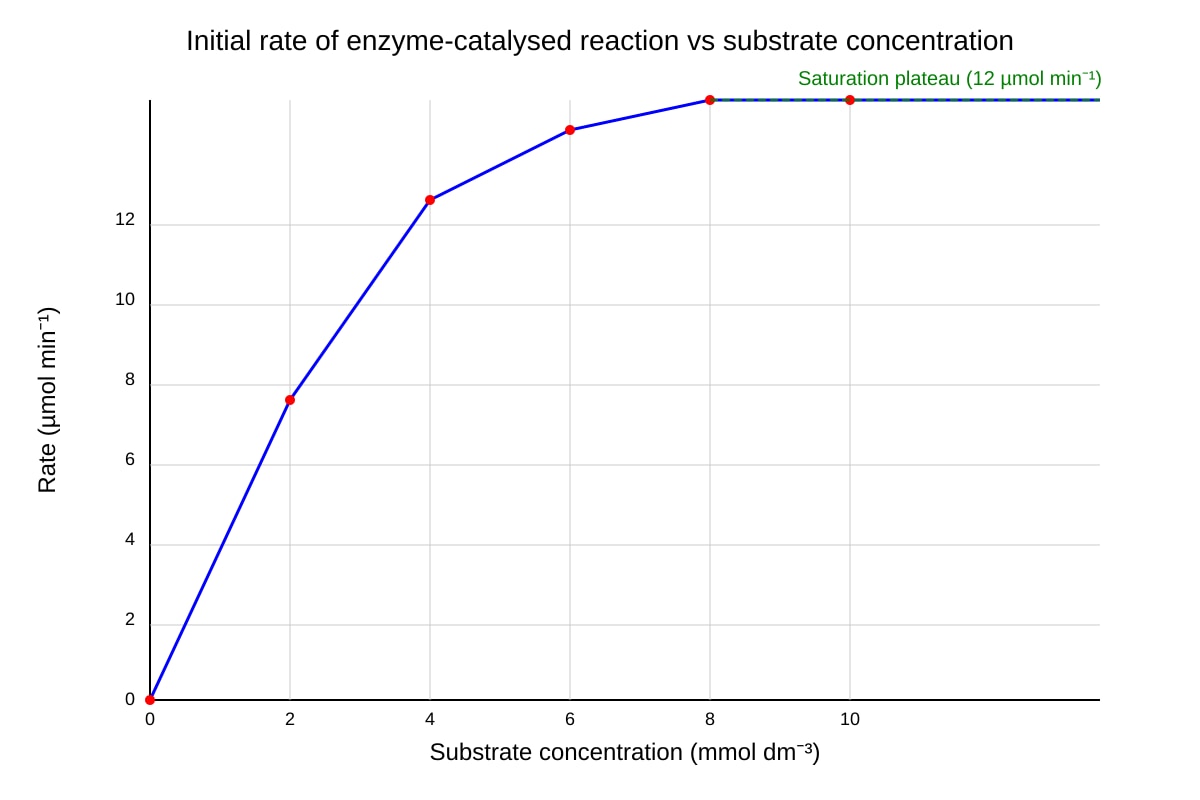
(a) At high [S], all active sites occupied (saturation) (1); rate limited by enzyme concentration (1). (2)
(b) Curve would peak lower then decline (1); 60 °C denatures enzyme, active site lost (1). (2)
11. [4 marks]
(a) Mass gain = 12.5 – 10.0 = 2.5 g over 20 min. Rate = 2.5 / 20 = 0.125 g min⁻¹. [2: calc 1, unit 1]
(b) Water moves into tubing by osmosis (1) because sucrose solution has lower water potential than distilled water (1). [2]
12. [1 mark] Reduces membrane fluidity / maintains stability at high temperature.
13. [2 marks] Viruses are acellular / not made of cells (1); cannot reproduce independently without host cell machinery (1).
Teaching note: They have genetic material but no metabolism of their own.
14. [2 marks] Optimum pH = 7 (1); activity rises to peak at 7 then falls as pH moves away (1). [2]
Section C Answers (15–20)
15. [8 marks]
(a) Primary: sequence of amino acids in polypeptide (2). Secondary: α-helix / β-pleated sheet from H-bonds between backbone (2). Tertiary: 3D folding from R-group interactions (hydrophobic, ionic, H-bond, disulfide) (2). [6]
(b) 80 °C breaks H-bonds / disulfide in tertiary (1); active site denatured, loses function (1). [2]
16. [4 marks] Totipotency: can form all cell types including extra-embryonic (1). Multipotency: can form limited range of cell types within a lineage (1). Example: haematopoietic / blood stem cell (1) + state lymphoid or myeloid (1).
Common mistake: Confusing pluripotent (any body cell) with multipotent.
17. [4 marks]
(a) Active transport (1).
(b) Na⁺ accumulates inside (1) because export stops (1); gradient dissipates, affects osmosis / membrane potential (1). [3]
18. [4 marks]
(i) Genetic material: bacterial = circular DNA in cytoplasm (1); plant = linear DNA in nucleus (1).
(ii) Wall: bacterial = peptidoglycan (1); plant = cellulose (1). [4]
19. [4 marks]
(a) Inhibitor competes with substrate for active site (1); similar shape, reversible by high [S] (1). [2]
(b) Non-competitive binds allosteric site (1); changes active site shape so Vmax lower even with excess S (1). [2]
20. [3 marks]
(a) Peptide bond. (1)
(b) H₂N–CH₂–CO–NH–CH(CH₃)–CO–NH–CH(CH₂OH)–COOH with two –CO–NH– shown. (2)
Teaching note: Condensation removes H₂O between each pair.
End of Answer Key