AI Generated Quiz
A Level H1 Biology Plant Biology Quiz
Free A Level H1 Biology Plant Biology quiz, HY3 AI version, with questions, answers, and A Level-style practice for Singapore students.
These static practice materials are generated from the site's syllabus and paper-generation workflow, with source and model context shown so students and parents can evaluate the material before use.
Questions
Free quiz and exam paper access
Enter your details to view this paper
Your access is remembered on this device.
Answers
A-Level Biology H1 Quiz - Plant Biology: Answer Key
Total Marks: 40
Topic: Plant Biology (syllabus-aligned, AI-generated from Stage 4 templates; not past-year derived)
Section A: Plant Structure and Transport
Q1. [1 mark]
Answer: Cellulose cell wall (or peptidoglycan not present; plant cell wall made of cellulose).
Teaching note: Animal cells have a cell surface membrane only; plant cells have an additional rigid cellulose wall outside the membrane. Accept "cellulose wall" or "rigid cell wall".
Q2. [2 marks]
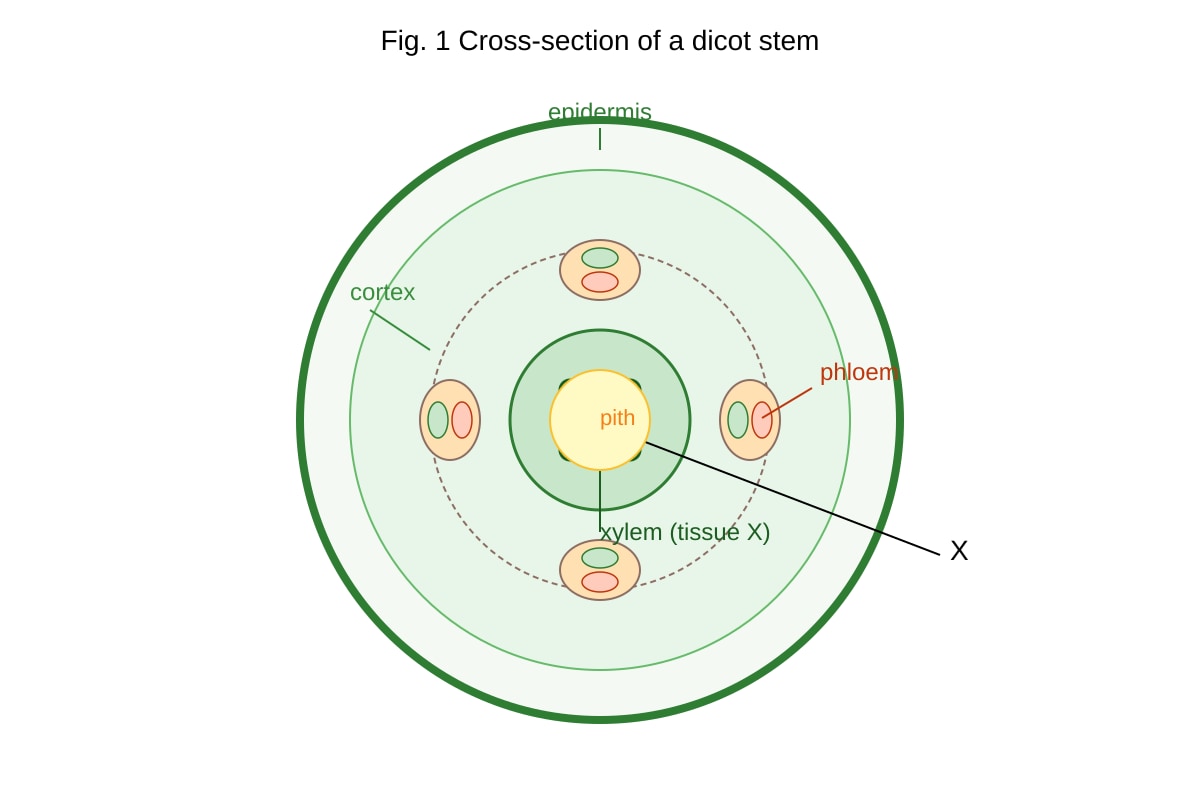
Answer: X = xylem; role = transports water and mineral ions from roots to leaves.
Mark breakdown: 1 for name, 1 for role.
Teaching note: Xylem vessels are specialised for water transport; they are non-living and hollow. From Fig. 1, X is the inner vascular tissue.
Q3. [2 marks]
Answer: Cellulose microfibrils are arranged in a criss-cross / layered network; this resists outward expansion and provides tensile strength.
Mark breakdown: 1 for arrangement, 1 for strength link.
Teaching note: The mesh of microfibrils limits extension when turgor pressure pushes outward.
Q4. [2 marks]
Answer: Soil water has higher water potential than root hair cell sap; water enters by osmosis down the water potential gradient through the membrane.
Mark breakdown: 1 for gradient, 1 for osmosis mechanism.
Teaching note: Osmosis is passive movement of water across selectively permeable membrane.
Q5. [1 mark]
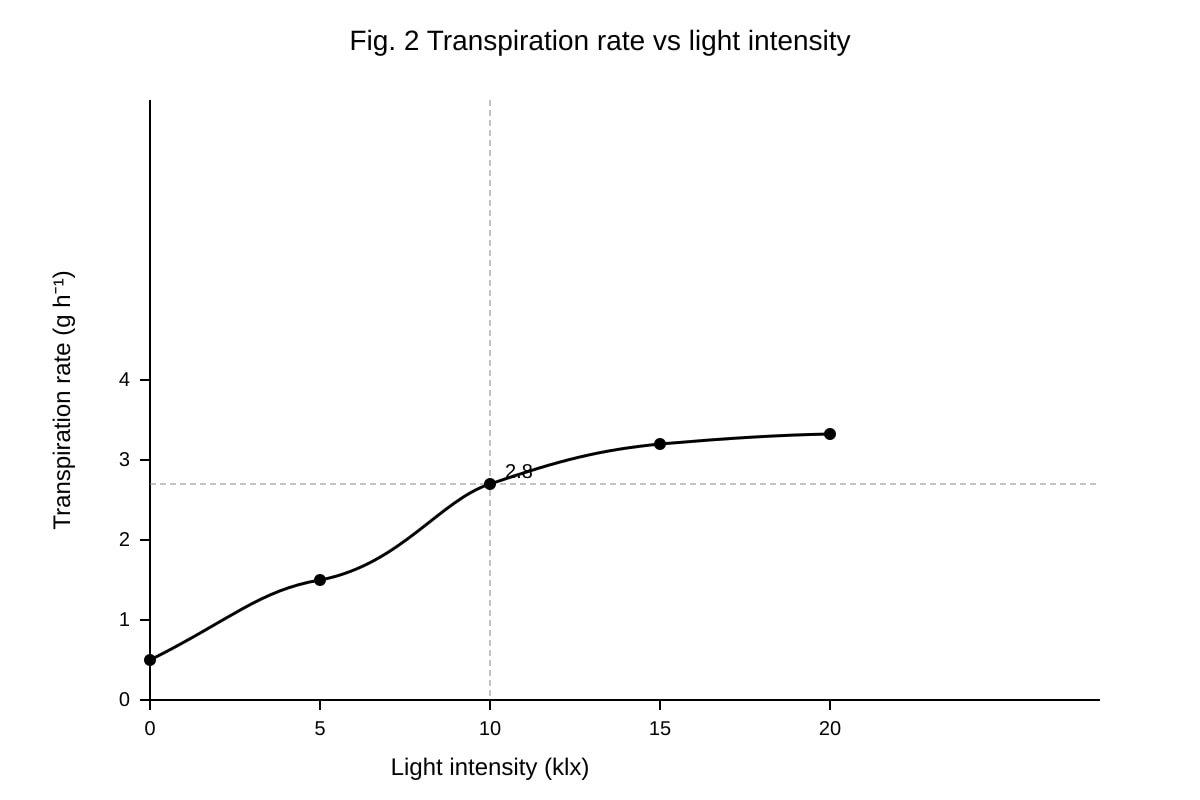
Answer: 2.8 g h⁻¹.
Teaching note: Read from Fig. 2 at 10 klx intersection.
Q6. [2 marks]
Answer: Any two: increased temperature, increased light intensity, increased wind, lower humidity. [1 each]
Teaching note: These raise evaporation from leaf surfaces.
Q7. [2 marks]
Answer: Xylem vessels lose cytoplasm/protoplast at maturity (dead); this forms hollow tubes for unobstructed water column and prevents resistance.
Mark breakdown: 1 dead, 1 function.
Section B: Photosynthesis and Energy
Q8. [2 marks]
Answer:
Mark breakdown: 1 for reactants, 1 for products (allow unbalanced if both sides correct but deduct if wrong coefficients).
Teaching note: Glucose and oxygen produced; CO₂ and water consumed.
Q9. [2 marks]
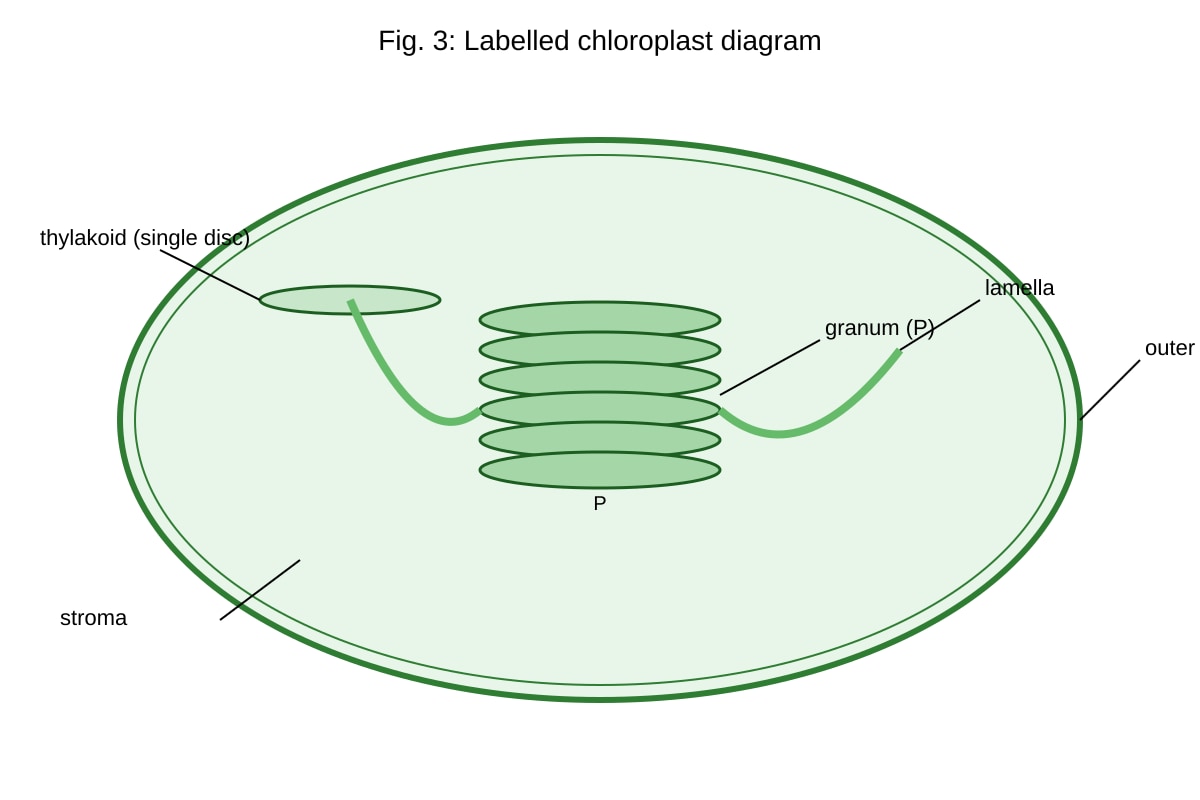
Answer: P = granum (stack of thylakoids); function = site of light-dependent reactions.
Mark breakdown: 1 name, 1 function.
Q10. [2 marks]
Answer: Chlorophyll absorbs light energy (red/blue); excites electrons for electron transport chain.
Mark breakdown: 1 absorb, 1 electron excitation.
Q11. [2 marks]
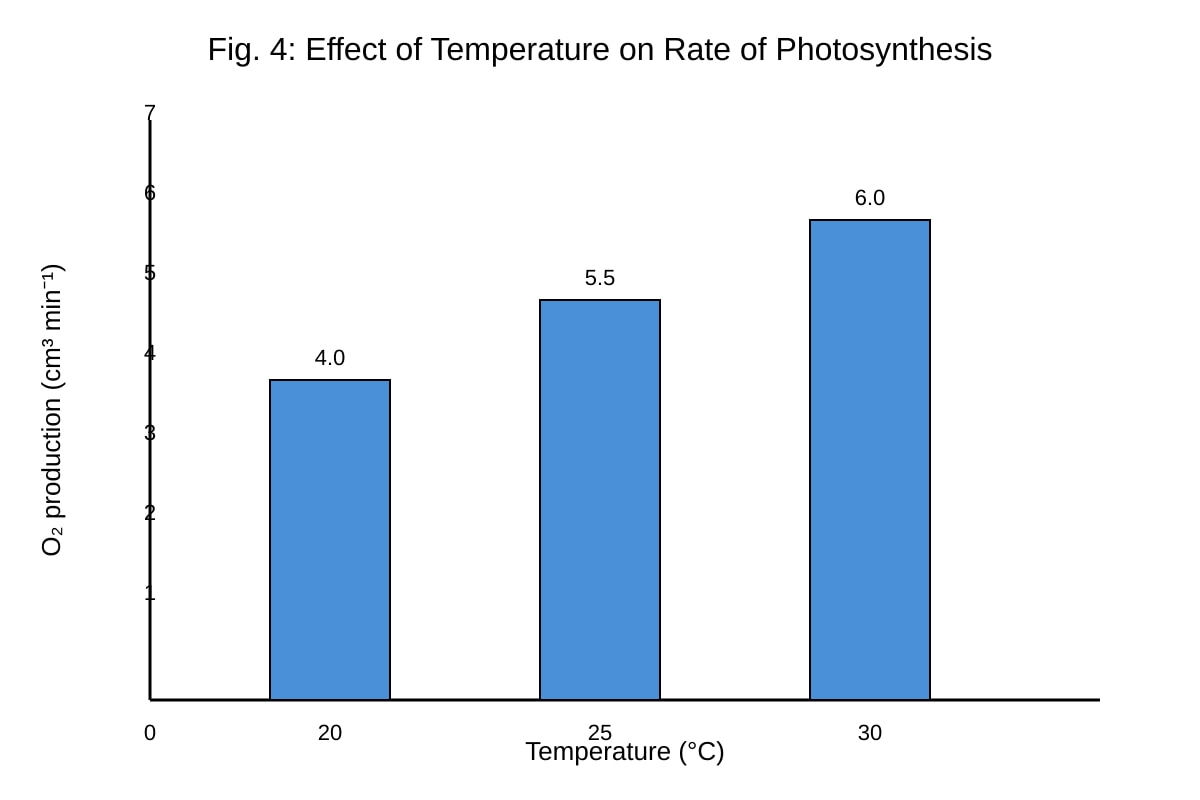
Answer: Mean = (4.0 + 5.5 + 6.0) / 3 = 15.5 / 3 = 5.17 cm³ min⁻¹.
Working: sum = 15.5; divide by 3.
Mark breakdown: 1 for sum, 1 for division/answer.
Q12. [2 marks]
Answer: Light saturation; another factor (CO₂ or enzyme) becomes limiting.
Mark breakdown: 1 saturation, 1 limiting factor.
Q13. [1 mark]
Answer: ATP and reduced NADP (or NADPH). [accept either, or both]
Q14. [2 marks]
Answer: No starch (negative iodine test); no photosynthesis in darkness so starch consumed/reserve depleted.
Mark breakdown: 1 prediction, 1 explanation.
Section C: Plant Responses and Climate Change
Q15. [1 mark]
Answer: Growth response of plant shoot/root to light direction.
Q16. [3 marks]
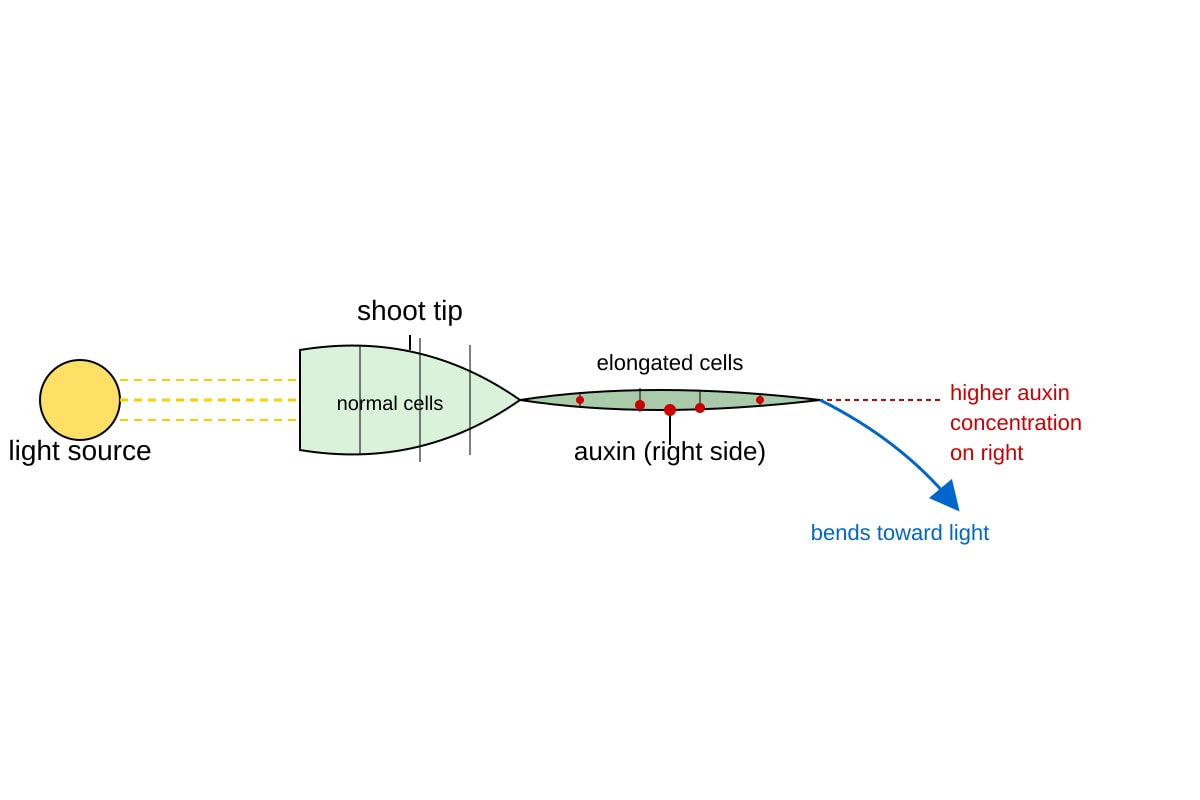
Answer: Auxin redistributes to shaded side (1); promotes cell elongation there (1); shaded side grows faster causing bend toward light (1).
Teaching note: From Fig. 5, auxin on right, right cells longer.
Q17. [2 marks]
Answer: CO₂ is substrate for Calvin cycle; higher CO₂ raises photosynthesis rate and carbohydrate production → more biomass.
Mark breakdown: 1 substrate, 1 biomass link.
Q18. [1 mark]
Answer: Pollen sterility / mismatch of flowering time / reduced germination. [any one]
Q19. [3 marks]
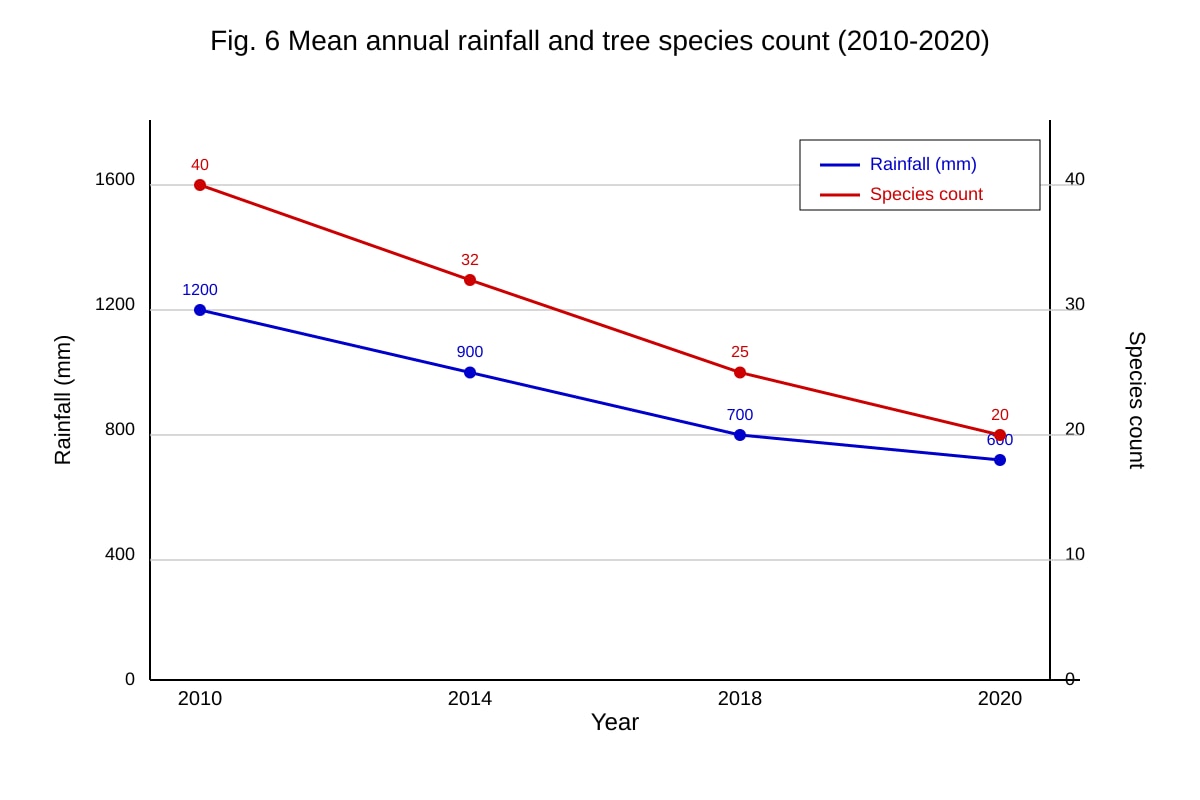
Answer: Both rainfall and species count declined from 2010 to 2020 (1); lower water availability reduces plant survival/germination (1); fewer plants support fewer species (1).
Teaching note: From Fig. 6 lines both fall.
Q20. [3 marks]
Answer: Biochar stores carbon in soil (1); improves soil water/ nutrient retention (1); but production may emit CO₂ and land-use trade-offs (1).
Marking: evaluative – state benefit, mechanism, caveat.