AI Generated Quiz
A Level H1 Biology Genetics Inheritance Quiz
Free A Level H1 Biology Genetics Inheritance quiz, HY3 AI version, with questions, answers, and A Level-style practice for Singapore students.
These static practice materials are generated from the site's syllabus and paper-generation workflow, with source and model context shown so students and parents can evaluate the material before use.
Questions
Free quiz and exam paper access
Enter your details to view this paper
Your access is remembered on this device.
Answers
A-Level Biology H1 Quiz - Genetics Inheritance (Answer Key)
Total Marks: 40
Topic: Genetics & Inheritance (Syllabus 8876 Core Idea 2)
Section A: Core Concepts (1–8)
Q1. [1 mark]
Answer: Mutation (or gene mutation if specifying DNA level).
Teaching note: A mutation is any permanent alteration in the nucleotide sequence of DNA. It can occur in a gene (gene mutation) or in chromosome structure/number.
Q2. [1 mark]
Answer: Down syndrome (trisomy 21).
Teaching note: Trisomy 21 is a numerical chromosomal aberration where an individual has three copies of chromosome 21 instead of two.
Q3. [1 mark]
Answer: DNA polymerase.
Teaching note: DNA polymerase synthesises the new strand by adding nucleotides complementary to the template, in the 5'→3' direction.
Q4. [1 mark]
Answer: An allele is an alternative form of a gene at a specific locus.
Teaching note: For example, a gene for flower colour may have a purple allele and a white allele.
Q5. [1 mark]
Answer: Frameshift mutation (specifically insertion frameshift).
Teaching note: Adding or deleting nucleotides not in multiples of three shifts the reading frame of codons downstream.
Q6. [1 mark]
Answer: Transcription.
Teaching note: Transcription produces pre-mRNA, which is processed into mRNA before translation.
Q7. [1 mark]
Answer: aa.
Teaching note: Homozygous means two identical alleles; recessive is denoted by lowercase.
Q8. [1 mark]
Answer: Multipotent stem cell (or blood stem cell / haematopoietic stem cell).
Teaching note: These are multipotent – they can form multiple blood cell types but not all cell types.
Section B: Interpretation (9–15)
Q9. [2 marks]
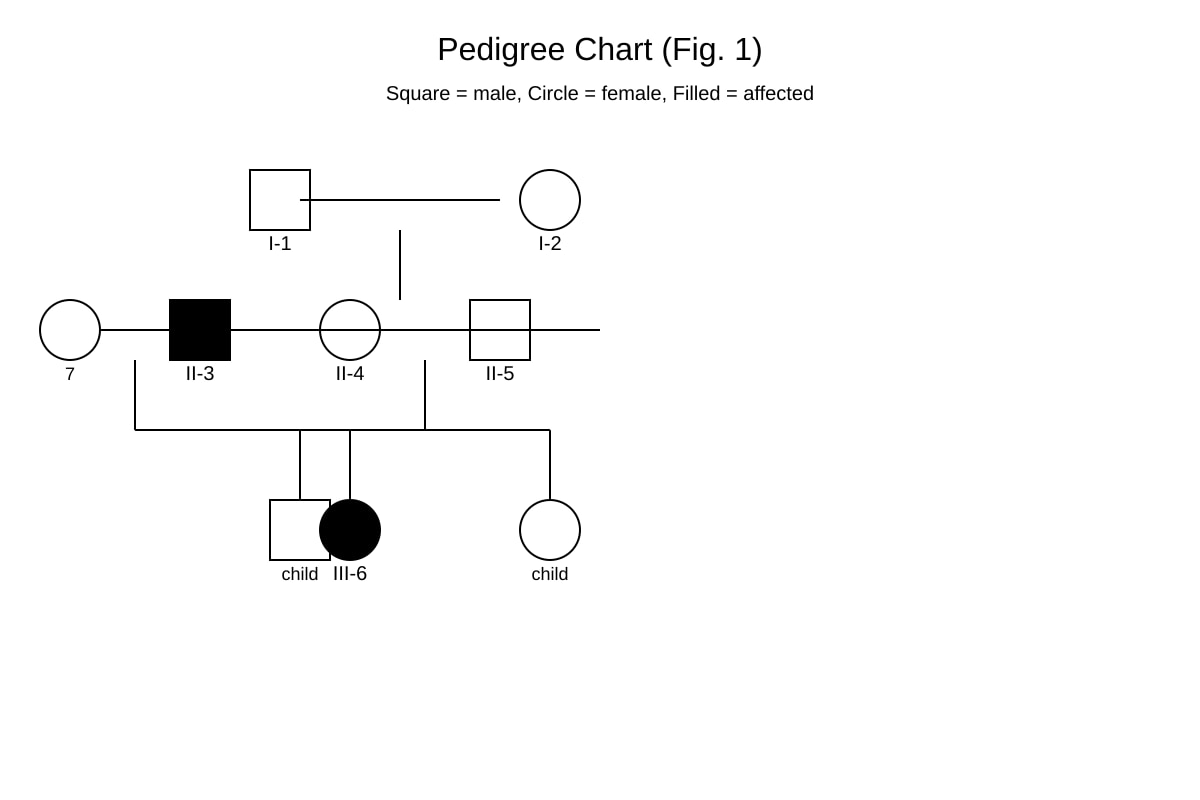
Answer: Autosomal recessive. [1]
Reason: Two unaffected parents (I-1 and I-2) produced an affected offspring (II-3), so the condition cannot be dominant; also affected individuals appear in both sexes equally, suggesting autosomal not X-linked. [1]
Marking: 1 for correct mode, 1 for valid pedigree-based reason.
Q10. [2 marks]
(a) [1] Substitution mutation.
(b) [1] The codon CCA codes for proline, while CTA codes for leucine; a different codon specifies a different amino acid, altering the primary protein structure.
Teaching note: Substitution changes one base, which may change one amino acid (missense) or none (silent).
Q11. [2 marks]
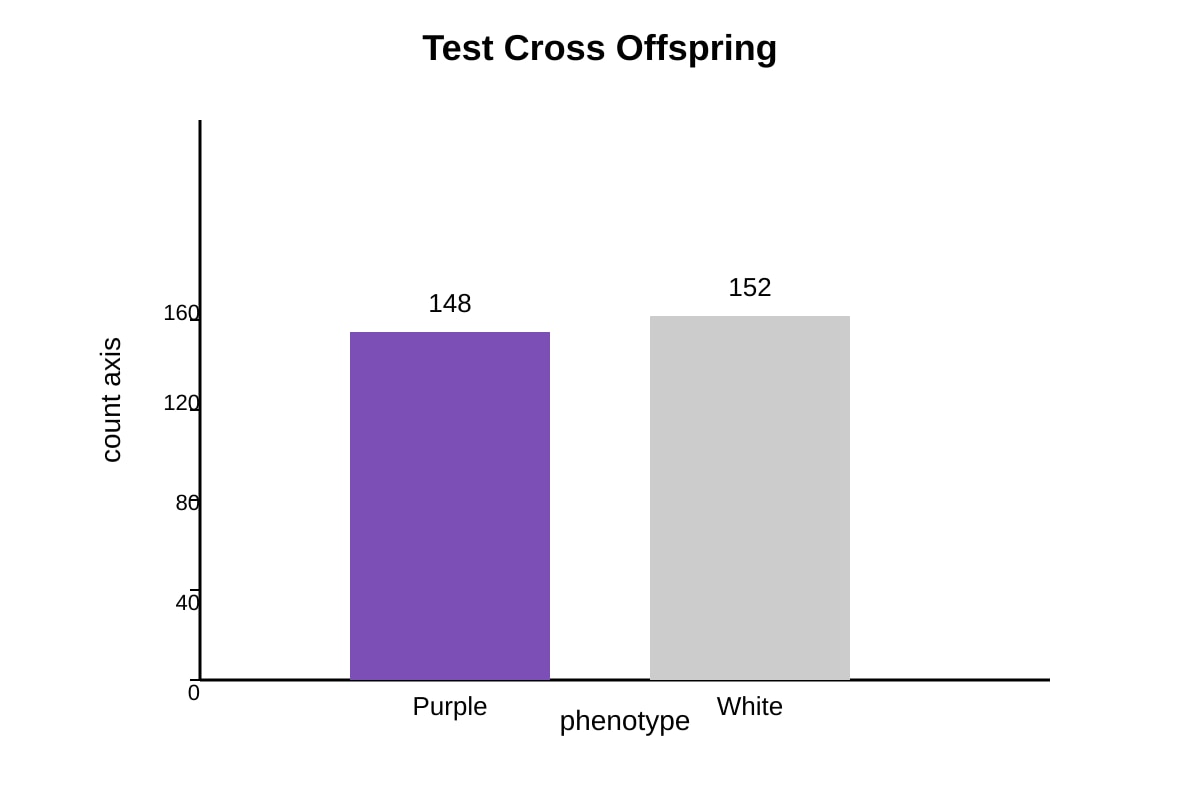
Answer: Genotype of purple parent = Pp (heterozygous). [1]
Reasoning: Test cross with pp (white) gave ~1:1 ratio (148:152 ≈ 1:1), which is the expected outcome when a heterozygote is crossed with a homozygous recessive. [1]
Working: If purple parent were PP, all offspring would be purple. Since half are white, it must carry p.
Q12. [3 marks]
Answer:
- Substitution of A→T changes codon GAG→GTG in β-globin mRNA. [1]
- This replaces glutamic acid with valine at position 6 of haemoglobin β-chain. [1]
- Valine is hydrophobic, causing haemoglobin to polymerise under low oxygen, distorting red cells into sickle shape and reducing oxygen transport. [1]
Marking: 1 per point; accept equivalent detail.
Q13. [2 marks]
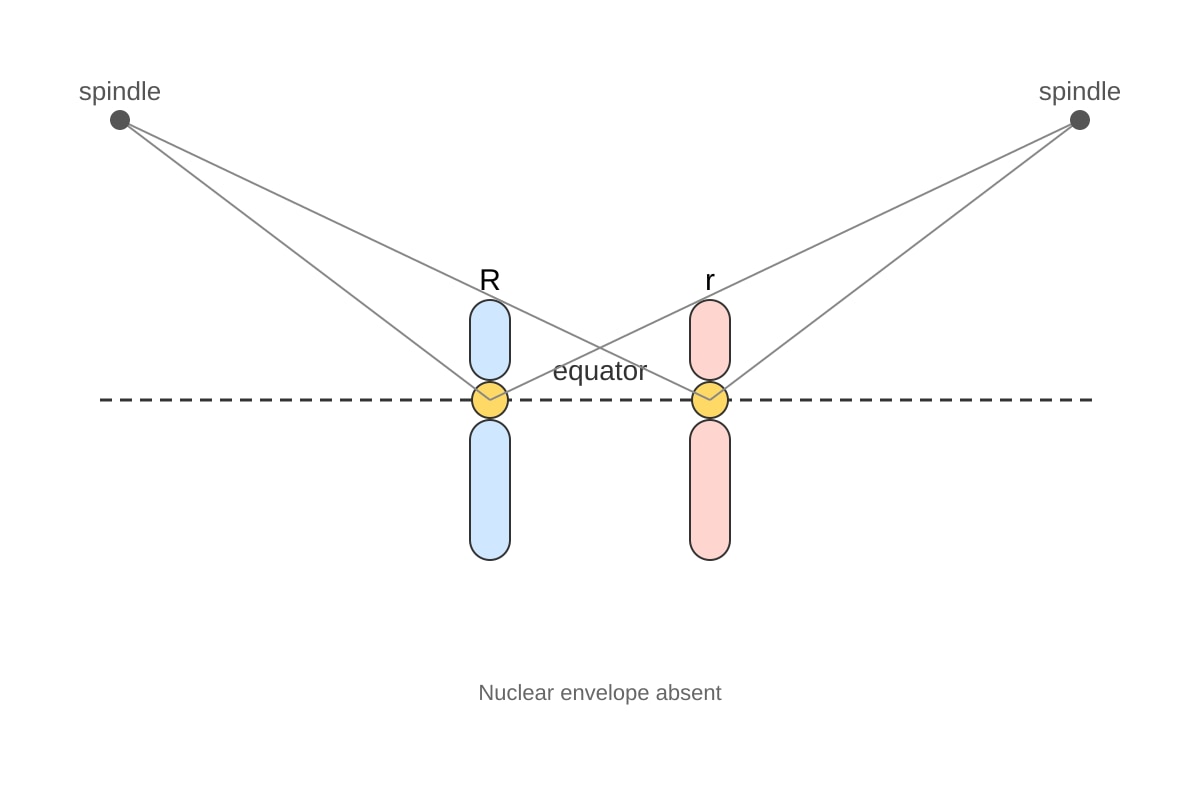
Answer: Gametes will contain either R or r (not Rr). [2 – 1 for each allele listed]
Teaching note: Homologous chromosomes separate in meiosis I; meiosis II separates sister chromatids, so each gamete gets one allele.
Q14. [2 marks]
Working:
A = 22%, so T = 22% (A=T). [1]
A+T = 44%, thus G+C = 56%.
G = C, so G = 28%. [1]
Answer: 28% guanine.
Q15. [2 marks]
Answer: Any two of: translocation, duplication, inversion, deletion. [1 each]
Teaching note: These are structural changes in chromosome arrangement, distinct from gaining/losing whole chromosomes.
Section C: Extended Reasoning (16–20)
Q16. [5 marks]
Answer:
- G1: cell grows, organelles replicate, normal metabolism. [1]
- S: DNA replication occurs, each chromosome becomes two sister chromatids. [1]
- G2: cell checks DNA, prepares for division. [1]
- M (mitosis): prophase, metaphase, anaphase, telophase; chromosomes segregated. [1]
- Significance: tight regulation prevents uncontrolled division (cancer), ensures accurate DNA distribution to daughter cells for growth/repair. [1]
Q17. [4 marks]
Answer:
- Benefit: informed reproductive choice, preparation for care, early intervention. [1]
- Autonomy: respect for parents’ decision-making. [1]
- Ethical concern: potential discrimination or termination based on disability. [1]
- Societal: equity of access to screening, stigmatisation of conditions like Down syndrome. [1]
Marking: 1 mark per distinct consideration; accept other valid points.
Q18. [5 marks]
Answer:
- Transcription: DNA double helix unwinds; RNA polymerase builds pre-mRNA complementary to template strand; introns removed, exons spliced to form mRNA. [2]
- Translation: mRNA binds ribosome; tRNA with anticodon delivers amino acid; peptide bond forms; chain grows until stop codon; polypeptide released and folds. [3]
Teaching note: Connects genotype to phenotype via protein synthesis.
Q19. [3 marks]
Answer:
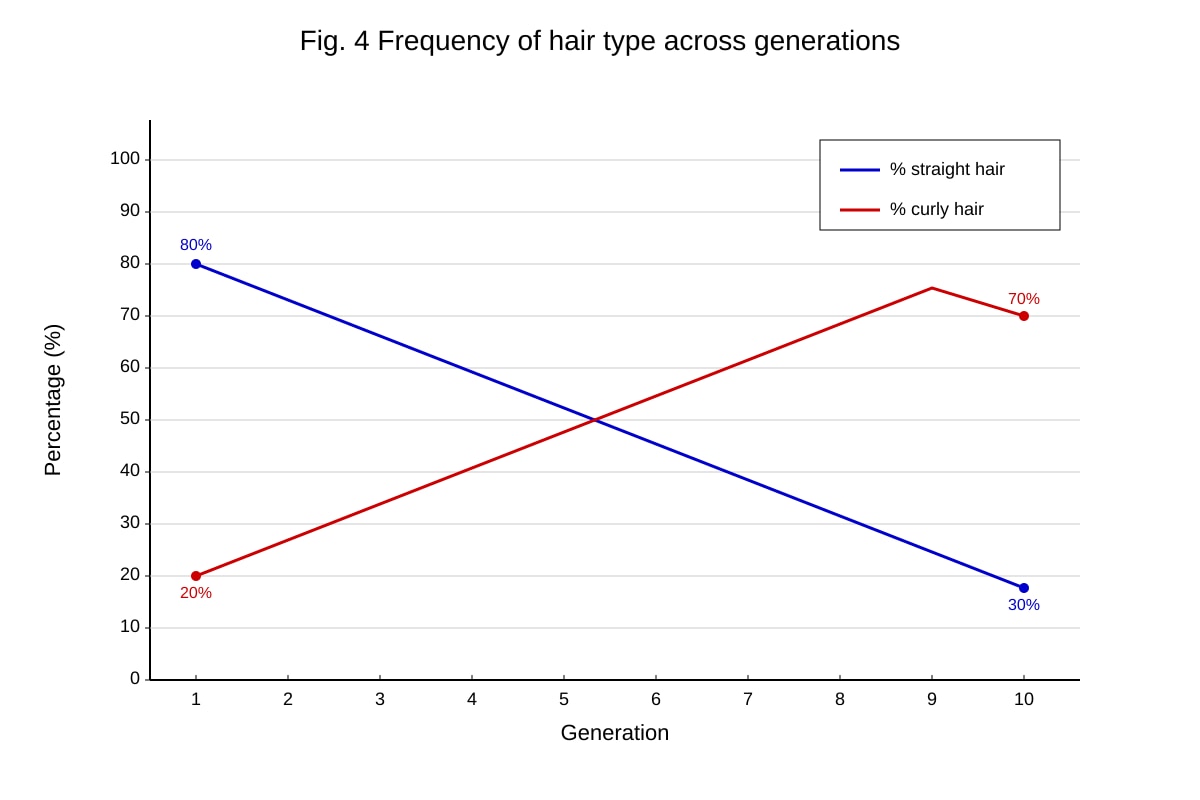
- Climate change may favour curly hair (e.g., via selection if straight hair disadvantage), shifting phenotype frequency. [1]
- However, the graph shows phenotype frequency, not genotype; environmental effects or non-genetic factors could mimic change. [1]
- Limitation: without allele-frequency data across generations, we cannot confirm genetic evolution vs. phenotypic plasticity. [1]
Q20. [4 marks]
Answer:
- Accumulated mutations: multiple genes (oncogenes/tumour suppressors) must be damaged for cancer. [1]
- Angiogenesis: tumour secretes signals to grow new blood vessels for nutrient supply. [1]
- Metastasis: cells break away, travel via blood/lymph, colonise other tissues. [1]
- Together these explain progression from local growth to life-threatening disease. [1]