AI Generated Quiz
A Level H1 Biology Cells Biomolecules Quiz
Free A Level H1 Biology Cells Biomolecules quiz, HY3 AI version, with questions, answers, and A Level-style practice for Singapore students.
These static practice materials are generated from the site's syllabus and paper-generation workflow, with source and model context shown so students and parents can evaluate the material before use.
Questions
Free quiz and exam paper access
Enter your details to view this paper
Your access is remembered on this device.
Answers
A-Level Biology H1 Quiz - Cells Biomolecules (Answer Key)
Total Marks: 40
Topic: Cells & Biomolecules (Core Idea 1, 8876 H1 Biology)
Section A: Cell Structures and Organelles
Q1. [2 marks]
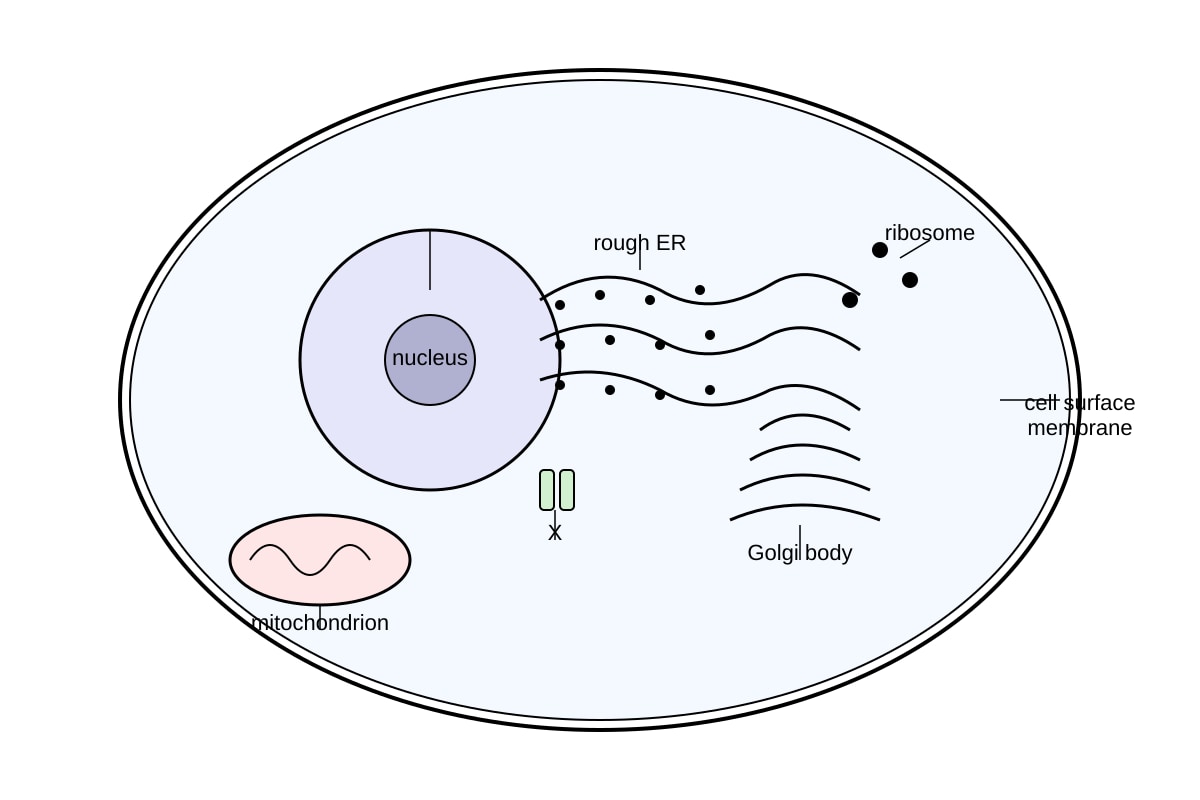
- Answer: Structure X is the centriole (pair). Function: involved in organisation of spindle fibres during cell division (mitosis).
- Teaching note: Centrioles are small cylindrical structures near the nucleus in animal cells. They help separate chromosomes.
- Mark breakdown: 1 mark name, 1 mark function.
- Common mistake: Calling it "centrosome" (centrosome includes centrioles plus matrix).
Q2. [3 marks]
- Answer: Bacterial cell has: (1) circular DNA (not linear, no nucleus); (2) 70S ribosomes (smaller than eukaryotic 80S); (3) peptidoglycan cell wall; lacks membrane-bound organelles.
- Teaching note: Prokaryotes differ from eukaryotes in genetic material shape and ribosome size.
- Mark breakdown: 1 mark circular DNA, 1 mark 70S ribosomes, 1 mark peptidoglycan wall / no membrane-bound organelles.
Q3. [2 marks]
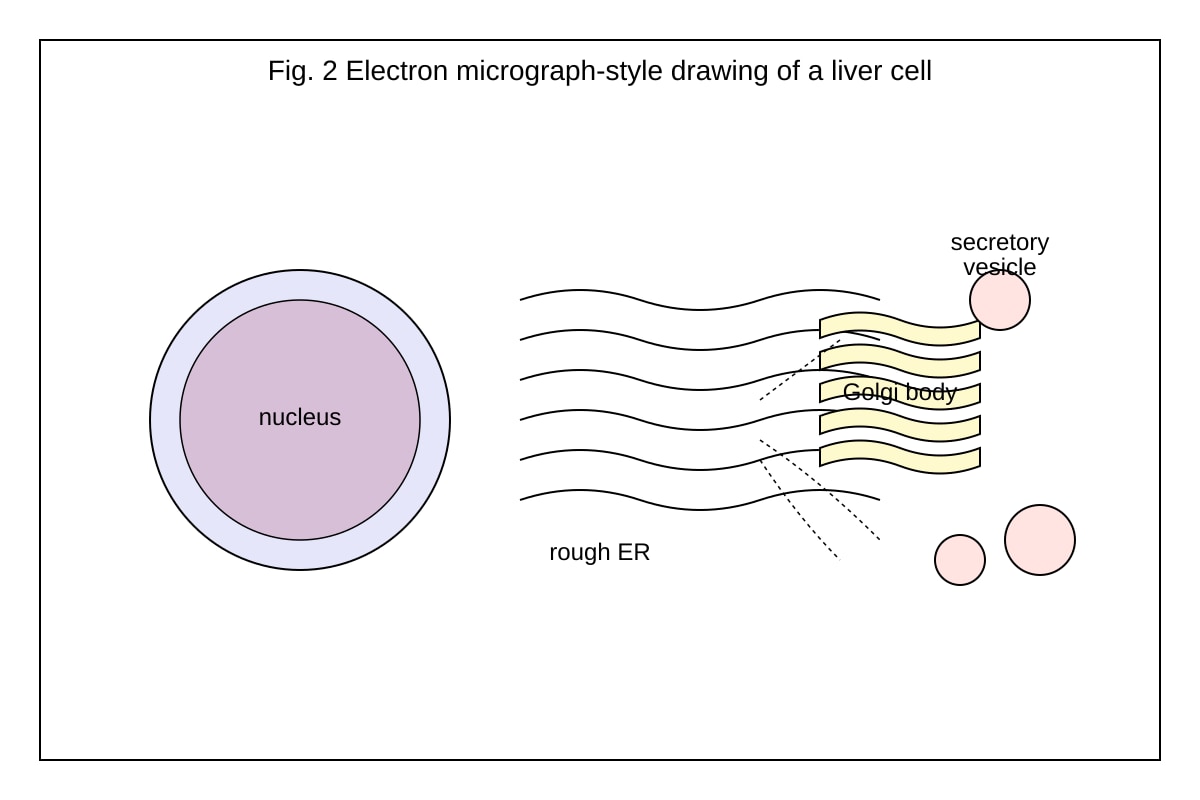
- Answer: Golgi body modifies, sorts, and packages proteins (e.g., enzymes) from rough ER into secretory vesicles for release from liver cell.
- Teaching note: In liver cells, Golgi processes proteins for secretion.
- Mark breakdown: 1 mark modify/packaging, 1 mark secretion/vesicles.
Q4. [2 marks]
- Answer: (1) Cell is the smallest unit of life; (2) all cells arise from pre-existing cells; (3) living organisms are composed of cells (any two).
- Teaching note: Cell theory foundational to biology.
- Mark breakdown: 1 mark each point.
Q5. [3 marks]
- Answer: Mitochondria have outer and inner membranes. Inner membrane folded into cristae → large surface area for electron transport chain and ATP synthase; matrix for Krebs cycle.
- Teaching note: Double membrane separates compartments for chemiosmosis.
- Mark breakdown: 1 mark double membrane, 1 mark cristae/surface area, 1 mark ATP synthesis link.
Section B: Biomolecules and Membranes
Q6. [2 marks]
- Answer: Phospholipids form a bilayer; hydrophilic heads face outward to aqueous environments, hydrophobic tails face inward away from water.
- Teaching note: This gives membrane selectivity.
- Mark breakdown: 1 mark bilayer, 1 mark head/tail orientation.
Q7. [2 marks]
- Answer: Glycosidic bond formed; water molecule released (condensation reaction).
- Teaching note: α-glucose + α-glucose → maltose + H₂O.
- Mark breakdown: 1 mark bond name, 1 mark water.
Q8. [3 marks]
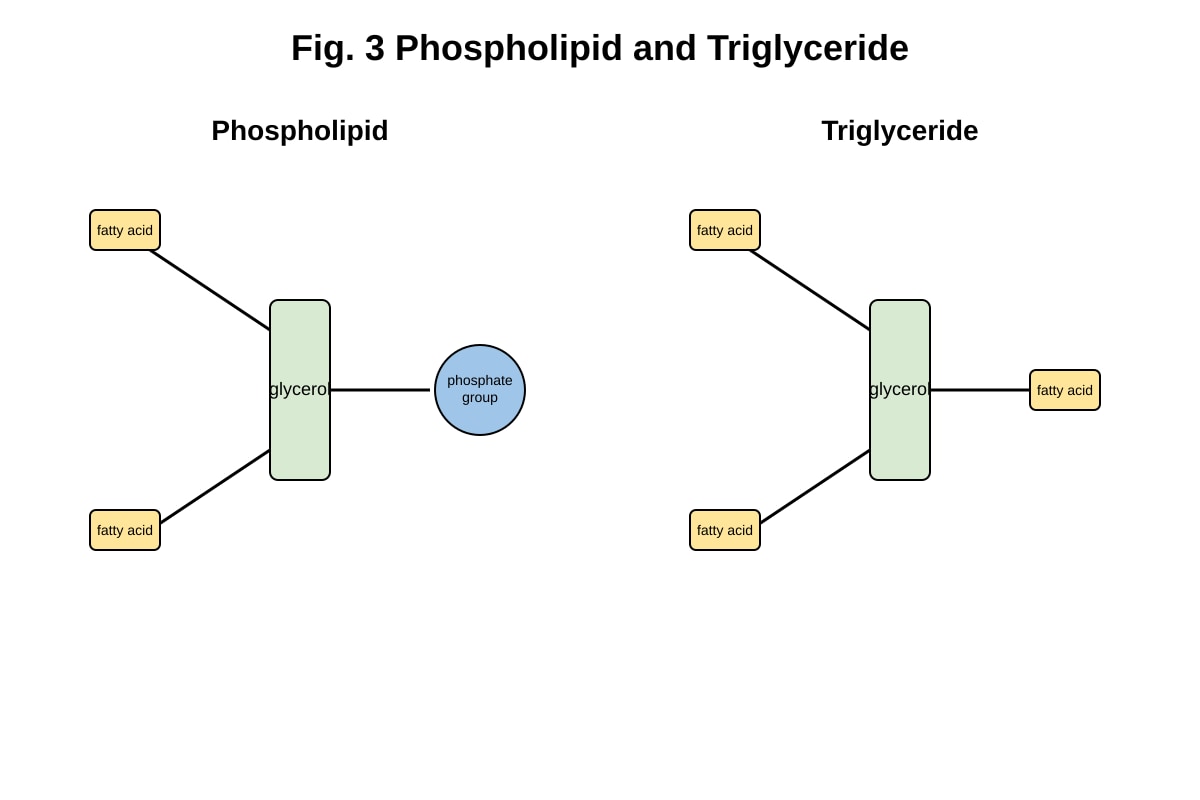
- Answer: Phospholipid: glycerol + 2 fatty acids + phosphate group. Triglyceride: glycerol + 3 fatty acids. Phospholipid has phosphate instead of third fatty acid → amphipathic.
- Teaching note: Difference allows membrane formation.
- Mark breakdown: 1 mark phospholipid 2 FA + phosphate, 1 mark triglyceride 3 FA, 1 mark comparison.
Q9. [3 marks]
- Answer: Cellulose is β-glucose polymer with straight chains; hydrogen bonds between chains form microfibrils → strong, rigid wall.
- Teaching note: β(1→4) linkages give straight structure.
- Mark breakdown: 1 mark β-glucose/straight, 1 mark H-bonds, 1 mark strength/role.
Q10. [2 marks]
- Answer: Cholesterol reduces membrane fluidity at high temp and prevents crystallisation at low temp; maintains stability.
- Teaching note: Fits between phospholipids.
- Mark breakdown: 1 mark temp buffer, 1 mark stability.
Section C: Transport and Proteins
Q11. [3 marks]
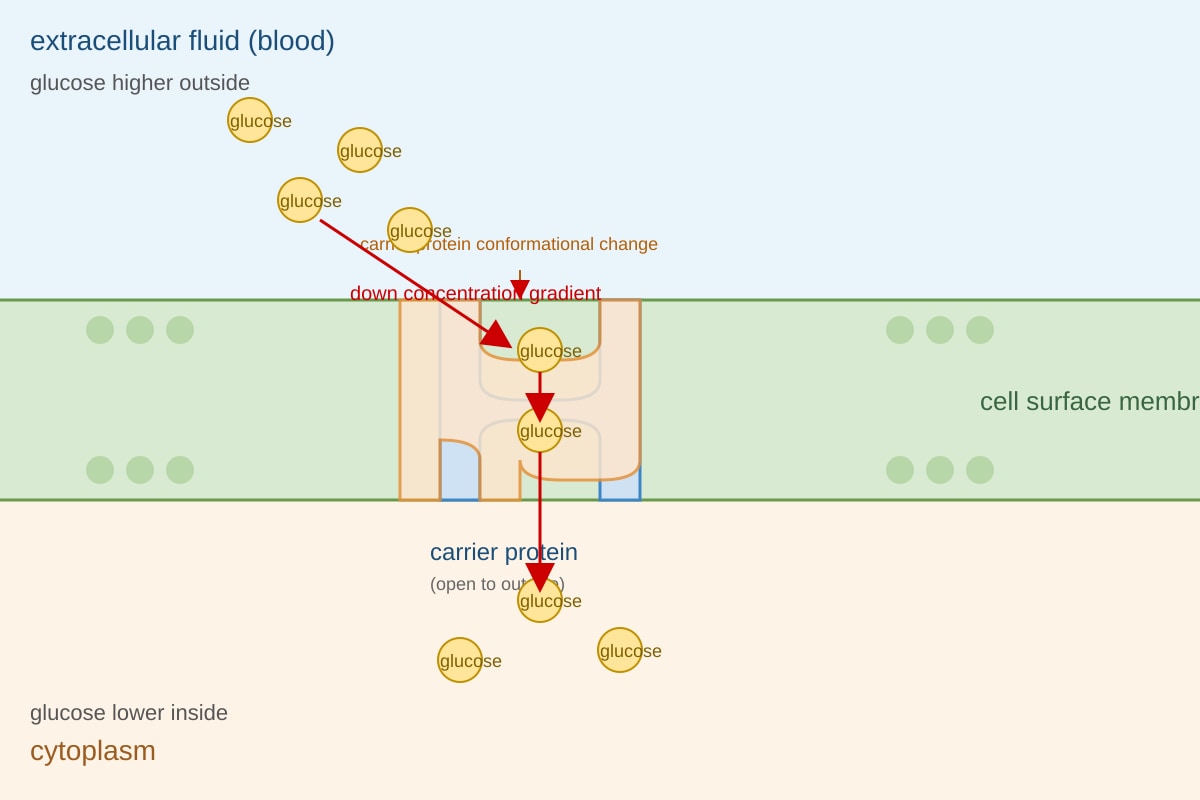
- Answer: Glucose binds carrier protein; moves down concentration gradient from blood (high) to cytoplasm (low) via conformational change; no ATP needed.
- Teaching note: Facilitated diffusion is passive.
- Mark breakdown: 1 mark carrier, 1 mark gradient, 1 mark no ATP/passive.
Q12. [3 marks]
- Answer: Active transport uses ATP to move against gradient; osmosis is passive water movement across semi-permeable membrane down water potential gradient.
- Teaching note: Both membrane processes but energy differs.
- Mark breakdown: 1 mark active+ATP, 1 mark osmosis definition, 1 mark contrast.
Q13. [3 marks]
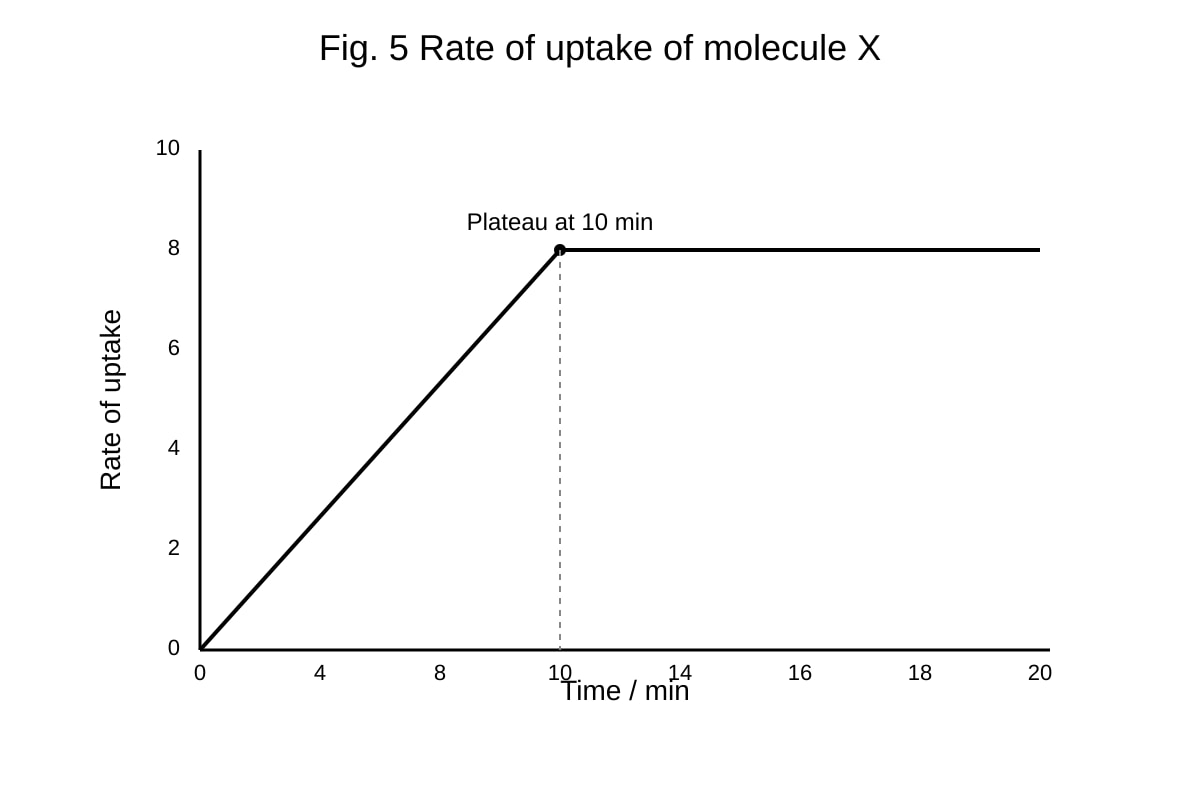
- Answer: Rate plateaus as carrier proteins saturated; all available transporters in use; gradient reduced.
- Teaching note: Fig shows plateau at 10 min.
- Mark breakdown: 1 mark saturation, 1 mark carriers full, 1 mark gradient/equilibrium.
Q14. [4 marks]
- Answer: Primary – peptide bonds; Secondary – H bonds (α-helix/β-sheet); Tertiary – H/ionic/disulfide/hydrophobic; Quaternary – same as tertiary between subunits.
- Teaching note: Levels build complexity.
- Mark breakdown: 1 mark per level + bond.
Q15. [3 marks]
- Answer: High temp breaks H/ionic/disulfide bonds → denaturation; active site lost; enzyme inactive.
- Teaching note: Beyond optimum temp, structure unfolds.
- Mark breakdown: 1 mark bond break, 1 mark denature, 1 mark active site loss.
Section D: Enzymes and Stem Cells
Q16. [3 marks]
- Answer: Substrate binds active site; enzyme changes shape (induced fit) to strain substrate; lowers activation energy; product released.
- Teaching note: Not rigid lock-key.
- Mark breakdown: 1 mark bind, 1 mark shape change, 1 mark lower Ea.
Q17. [3 marks]
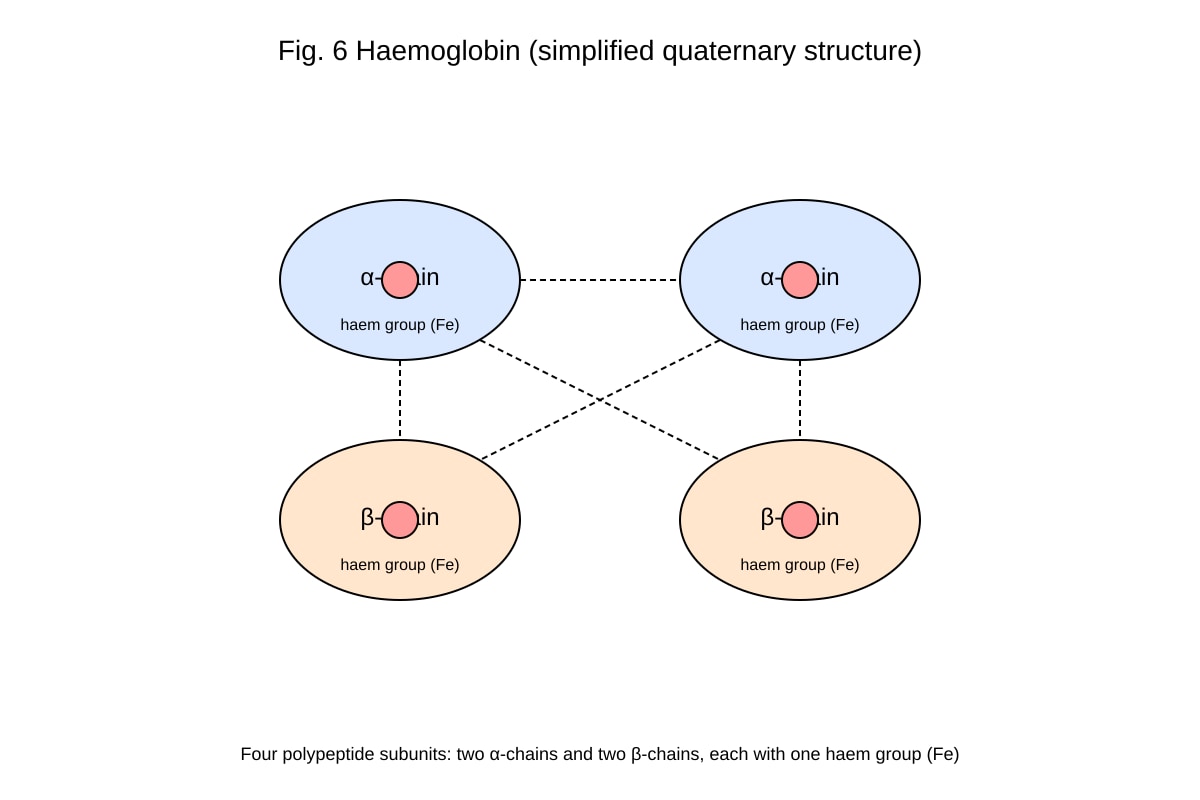
- Answer: Quaternary: 4 subunits (2α,2β) each with haem. Structure allows cooperative O₂ binding/release in blood.
- Teaching note: Cooperativity aids transport.
- Mark breakdown: 1 mark 4 subunits, 1 mark haem, 1 mark O₂ transport.
Q18. [3 marks]
- Answer: Rate increases then plateaus; more substrate → more ES complexes until enzymes saturated.
- Teaching note: Fixed enzyme = limiting at high [S].
- Mark breakdown: 1 mark increase, 1 mark ES complex, 1 mark saturation.
Q19. [2 marks]
- Answer: Embryonic stem cells are pluripotent: can differentiate into all body cell types (not extra-embryonic).
- Teaching note: Pluri ≠ toti.
- Mark breakdown: 1 mark pluripotent, 1 mark differentiate all.
Q20. [1 mark]
- Answer: Replace worn-out blood cells (e.g., red blood cells) / produce blood cells.
- Mark breakdown: 1 mark correct function.