From Real Exams Quiz
A Level H1 Biology Human Physiology Quiz
Free A Level H1 Biology Human Physiology quiz, HY3 Exam version, with questions, answers, and A Level-style practice for Singapore students.
These static practice materials are generated from the site's syllabus and paper-generation workflow, with source and model context shown so students and parents can evaluate the material before use.
Questions

Free quiz and exam paper access
Enter your details to view this paper
Your access is remembered on this device.
Answers
A-Level Biology H1 Quiz - Human Physiology: Answer Key
Total Marks: 40
Topic: Human Physiology
Section A: Short Structured Questions (1–10)
1. [1 mark]
Answer: The SA node acts as the pacemaker / generates electrical impulses that set the heart rate.
Teaching note: The sinoatrial node is a group of specialised cardiac cells in the right atrium. It spontaneously depolarises to initiate each heartbeat. Common mistake: confusing SA node with AV node (which delays impulse).
2. [1 mark]
Answer: Vein.
Teaching note: Veins have large lumens and valves to prevent backflow of blood at low pressure. Arteries lack valves and have thicker muscular walls.
3. [2 marks]
Answer: In the lungs, is high (≈13 kPa); oxygen diffuses from alveolar air into red blood cells (1) and binds reversibly to haemoglobin to form oxyhaemoglobin (1).
Marking: 1 for diffusion down gradient, 1 for binding to haemoglobin.
4. [2 marks]
Answer: Produced in liver (1); stored in gall bladder (1).
Teaching note: Bile emulsifies fats; produced by hepatocytes, concentrated in gall bladder.
5. [2 marks]
Answer: Left ventricle pumps blood to the whole body (systemic circulation) at high pressure (1), so its wall is thicker to generate greater force than the right ventricle which pumps only to lungs (1).
Marking: 1 for systemic vs pulmonary, 1 for pressure/force link.
6. [2 marks]
Answer: Hormone: adrenaline / angiotensin II / aldosterone (any 1) (1). Effect: increases heart rate / constricts arterioles / increases water reabsorption → raises blood pressure (1).
Teaching note: Baroreceptors detect drop; sympathetic response released.
7. [1 mark]
Answer: Active transport (specifically secondary active transport / co-transport).
Note: Facilitated diffusion alone is insufficient as gradient is removed; mark active transport.
8. [2 marks]
Answer: ADH increases permeability of collecting duct to water (1) by inserting aquaporins, so more water is reabsorbed, reducing urine volume and conserving water (1).
9. [2 marks]
Answer: Neutrophils are phagocytes that engulf and destroy pathogens (1) by phagocytosis; they are part of non-specific immunity (1).
10. [1 mark]
Answer: Cartilage rings keep the trachea open (patent) during breathing / prevent collapse.
Section B: Data- and Figure-Based Questions (11–15)
11. (a) [2 marks]
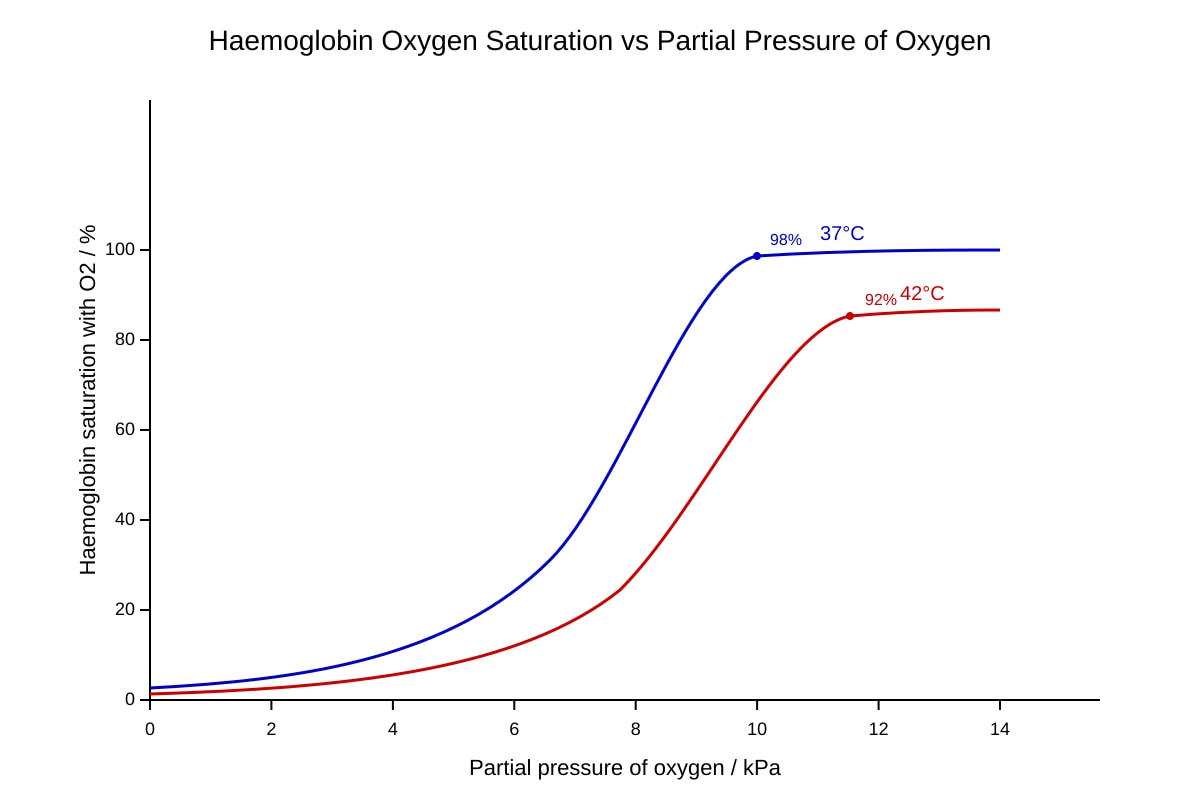
Answer: Increased temperature shifts the curve to the right (1) and lowers saturation at same (1).
(b) [2 marks]
Answer: Exercising muscle is warmer; right shift means haemoglobin releases O2 more easily at tissue (1), improving O2 delivery to respiring cells (1).
12. (a) [2 marks]
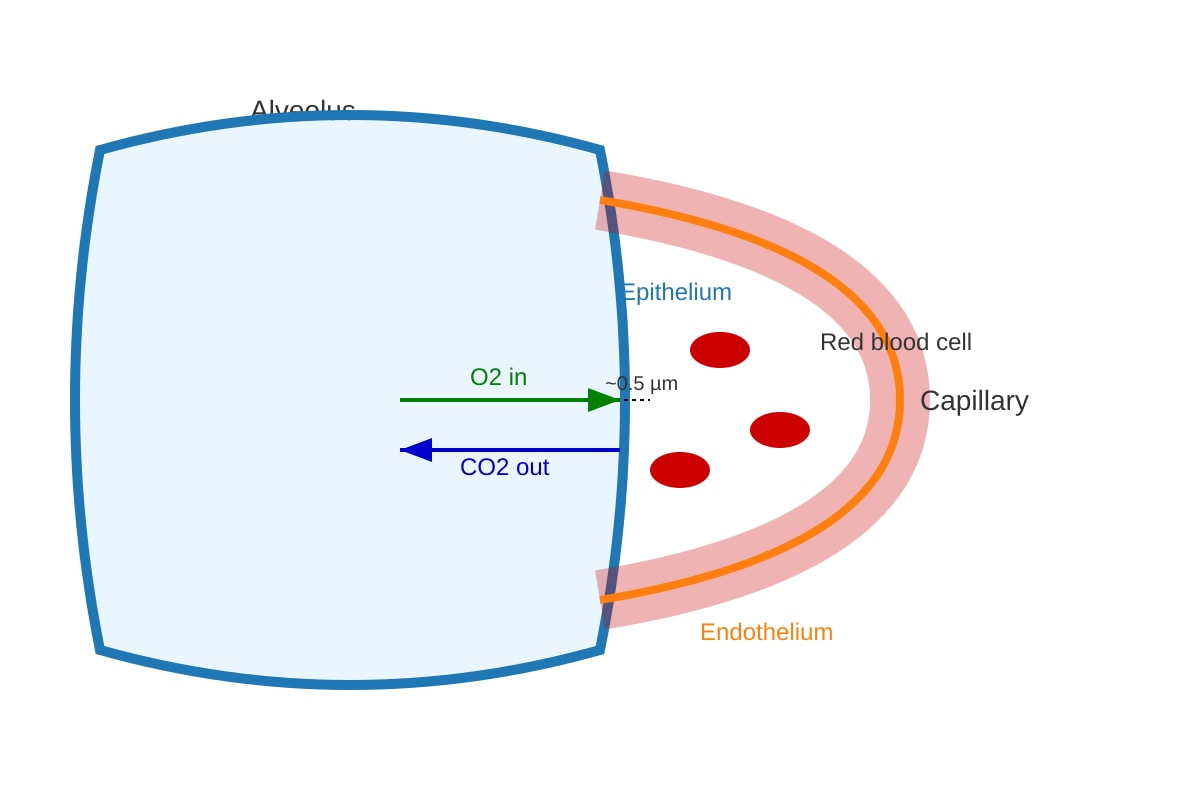
Answer: Alveolar epithelium (type I pneumocyte) (1) and capillary endothelium (1).
(b) [1 mark]
Answer: Walls are one cell thick / no fluid layer / large surface area.
13. (a) [2 marks]
Working: Decrease = ≈ 53.6% (2 marks for correct calc; 1 if minor rounding error).
Answer: 53.6%
(b) [1 mark]
Answer: Active transport (Na+/K+ pump / co-transport).
14. (a) [1 mark]
Answer: QRS complex.
(b) [2 marks]
Working: One cycle = 0.85 s. Rate = bpm ≈ 71 bpm (2 for calc, 1 for method only).
Answer: 71 bpm.
15. (a) [1 mark]
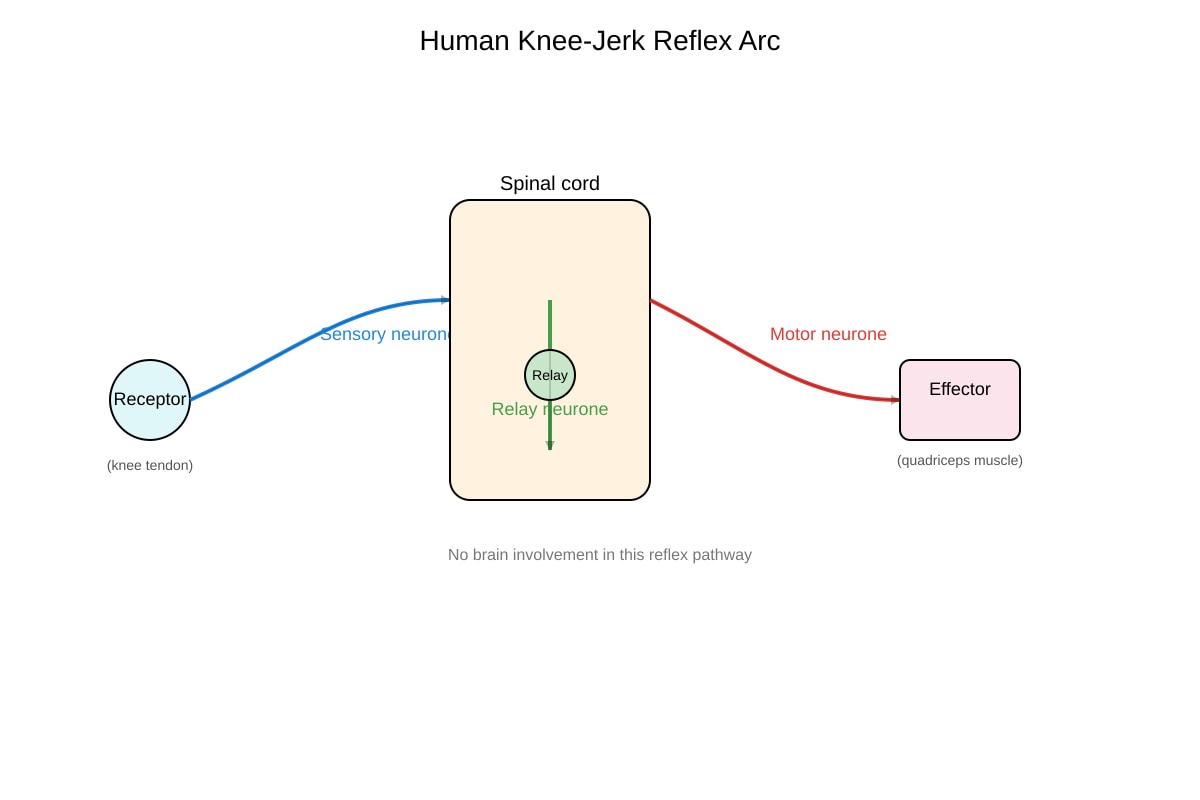
Answer: Relays impulse from sensory to motor neurone within spinal cord.
(b) [2 marks]
Answer: Fewer synapses / no brain processing (1), so impulse pathway is shorter (1).
Section C: Extended Response (16–20)
16. [4 marks]
Answer points:
- External intercostal muscles contract, diaphragm flattens (1)
- Thoracic volume increases (1)
- Pressure in lungs drops below atmospheric (1)
- Air flows in down pressure gradient (1)
Teaching: Inhalation is active; opposite occurs in exhalation.
17. [4 marks]
Answer points:
- Detected by skin thermoreceptors / hypothalamus (1)
- Vasoconstriction of skin arterioles reduces heat loss (1)
- Shivering generates heat by muscle contraction (1)
- Adrenaline/thyroid raises metabolism (1)
Marking: 1 each, max 4.
18. [4 marks]
Answer points with ref to fig:
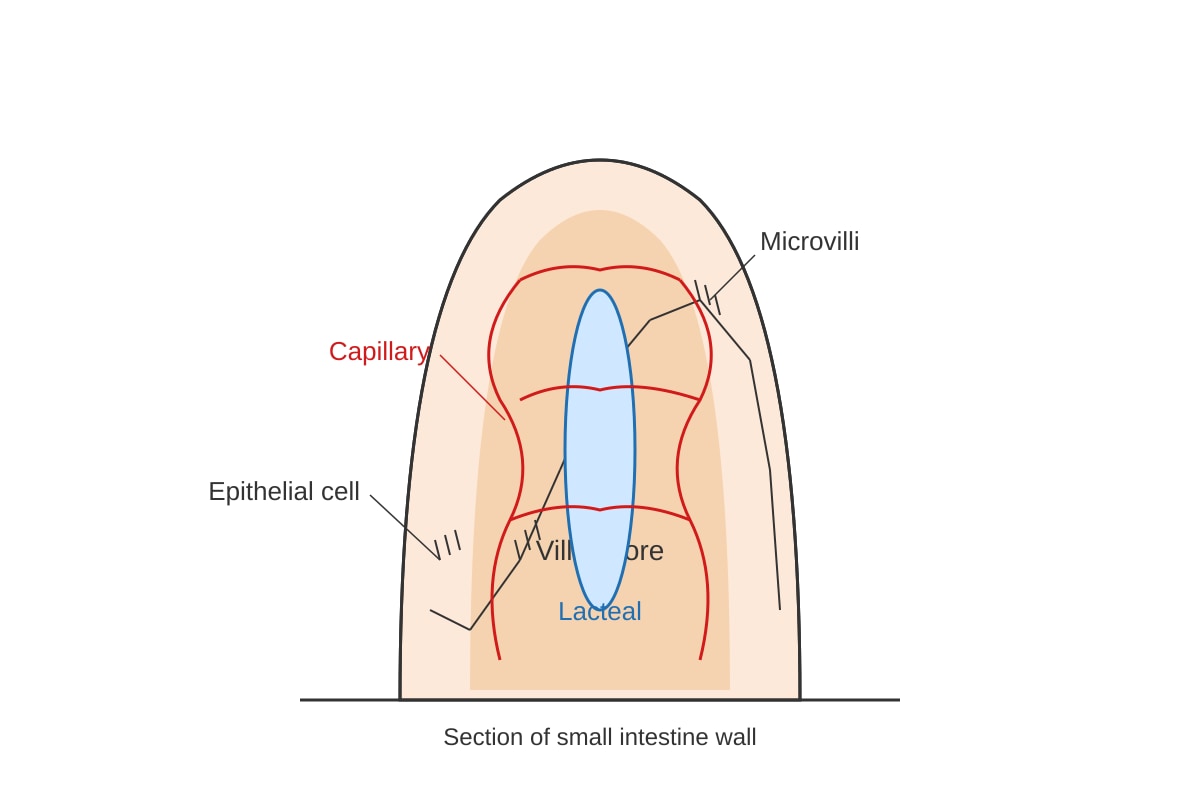
- Microvilli increase surface area (1)
- Thin epithelium shortens diffusion path (1)
- Capillary network maintains concentration gradient (1)
- Lacteal absorbs fats (1)
Marking descriptors: structure–function link required.
19. [4 marks]
Answer points:
- Less haemoglobin → lower O2 carrying capacity (1)
- Tissues receive less O2 (1)
- Aerobic respiration reduced (1)
- Fatigue / anaerobic respiration lactic acid build-up (1)
20. [4 marks]
Answer points:
- Artery: thick muscular wall, no valves, high pressure (2)
- Vein: thin wall, valves, low pressure, large lumen (2)
Compare directly for full marks.