AI Generated Exam Paper
A Level H1 Biology Practice Paper 5
Free A Level H1 Biology Practice Paper 5, HY3 AI version, with questions, answers, and A Level-style practice for Singapore students.
These static practice materials are generated from the site's syllabus and paper-generation workflow, with source and model context shown so students and parents can evaluate the material before use.
Questions
Free quiz and exam paper access
Enter your details to view this paper
Your access is remembered on this device.
Answers
TuitionGoWhere Practice Paper - Biology H1 A-Level (Answers)
Version 5 of 5 — Answer Key & Teaching Notes
Total Marks: 60
Section A (20 marks)
1. [1] One principle: "All living organisms are composed of cells" OR "Cells are the smallest unit of life" OR "All cells come from pre-existing cells".
Teaching note: Cell theory is foundational; any one of the three accepted principles is awarded the mark.
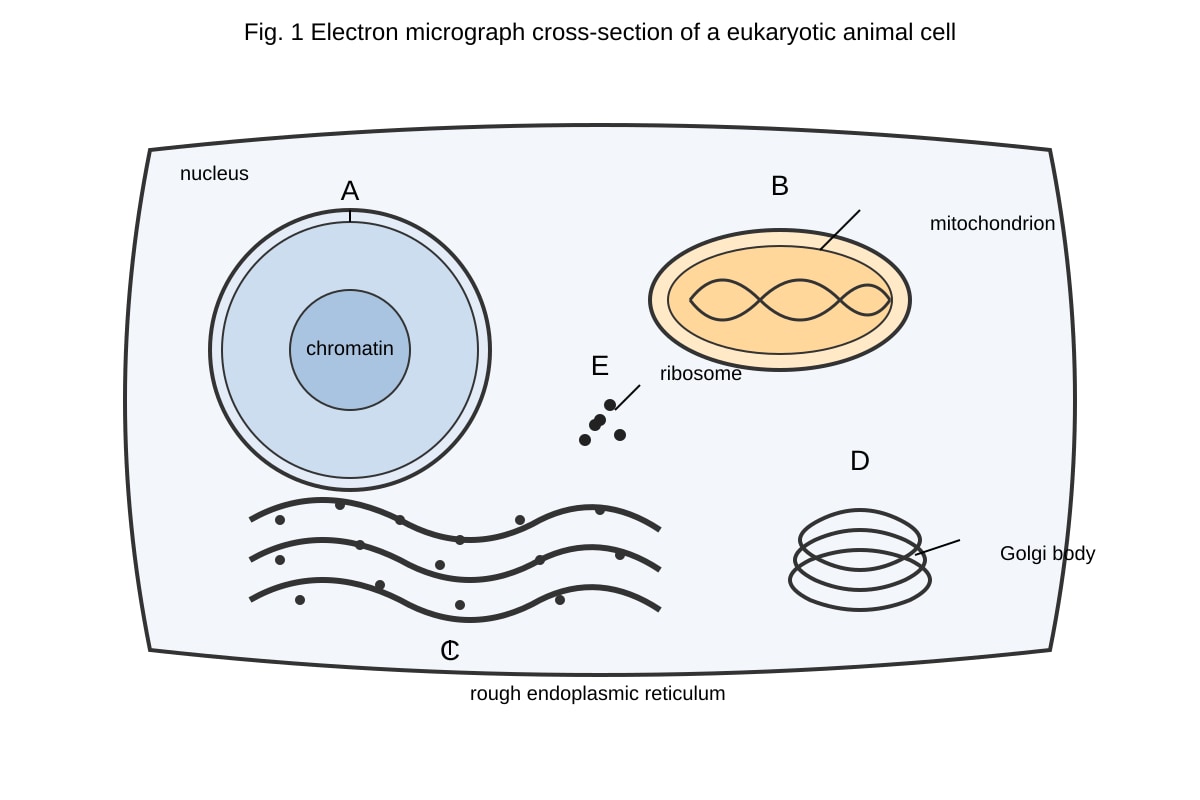
2. [1] Nucleus.
Teaching note: The nucleus houses DNA and the nucleolus; it is membrane-bound in eukaryotes.
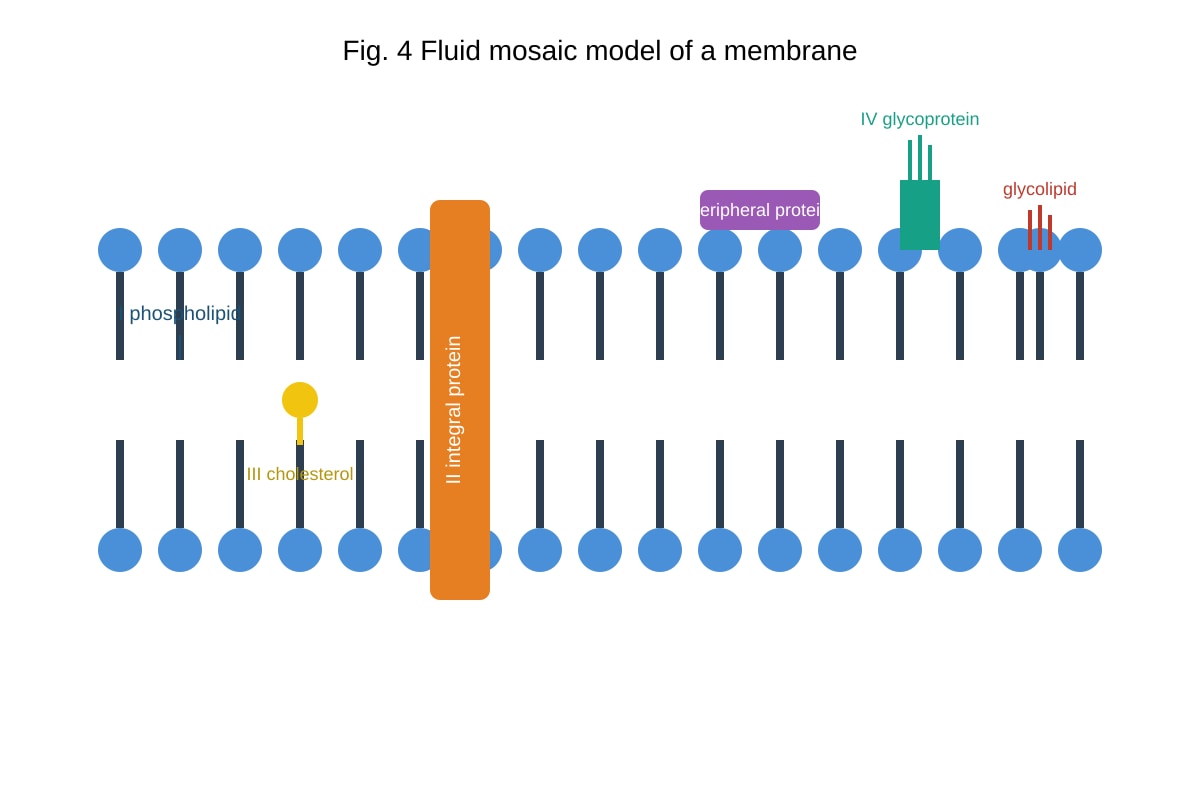
3. [2] Phospholipids form a bilayer; hydrophilic heads face outward to aqueous environments, hydrophobic tails face inward away from water. [1+1]
Teaching note: This arrangement creates a selectively permeable barrier.
4. [1] α-glucose has OH on C1 below the ring (same side as CH₂OH in Haworth); β-glucose has OH above the ring.
Teaching note: This difference affects polymer structure (starch vs cellulose).
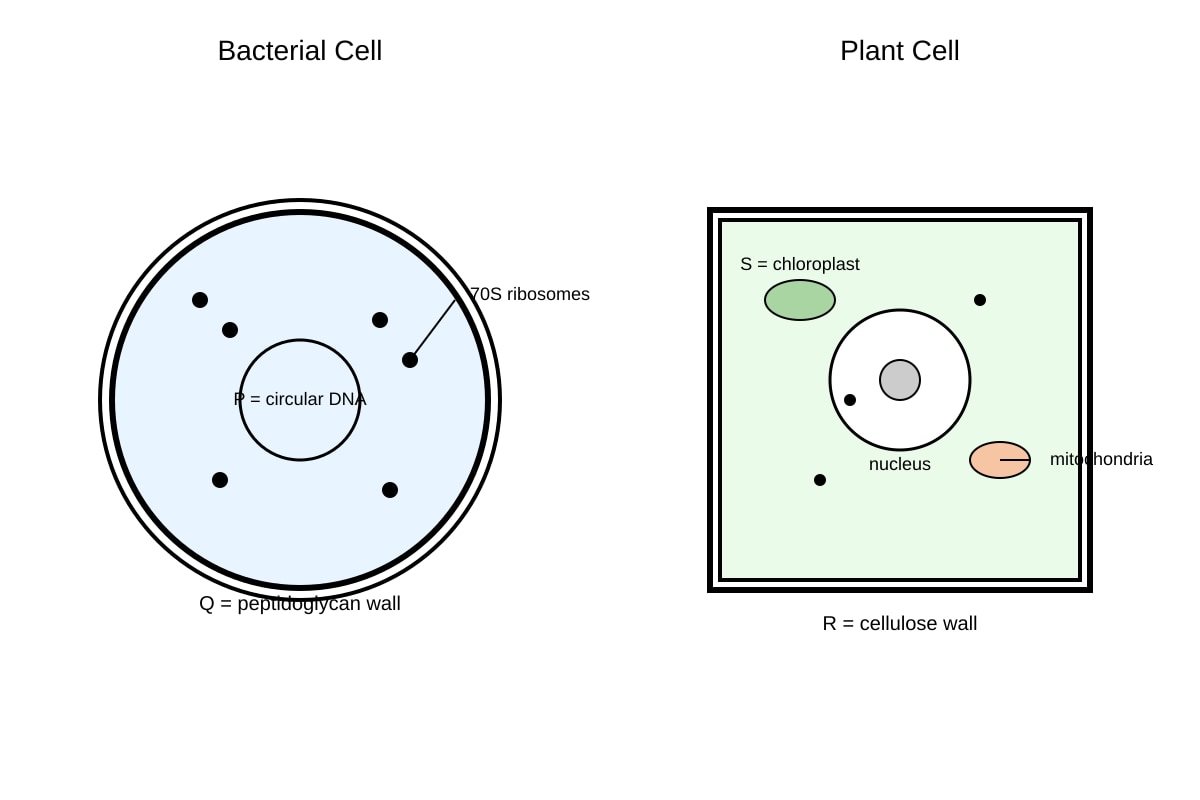
5. [2] Any two: circular DNA, peptidoglycan cell wall, 70S ribosomes. [1 each]
Teaching note: Bacteria are prokaryotes; no nucleus or mitochondria.
6. [2] Movement of substances down a concentration gradient through a transport protein, no ATP required. [1 for gradient, 1 for protein]
Teaching note: Distinct from active transport which needs energy.
7. [1] Peptide bond.
Teaching note: Formed by condensation between amino and carboxyl groups.
8. [1] Multipotent.
Teaching note: Blood stem cells can form multiple blood cell types but not all tissues.
Section B (20 marks)
9. [4]
(a) C = rough endoplasmic reticulum; function = protein synthesis (with ribosomes). [1+1]
(b) E = ribosome; role = site of translation / polypeptide synthesis. [1+1]
Teaching note: RER is studded with ribosomes; key for secretory proteins.
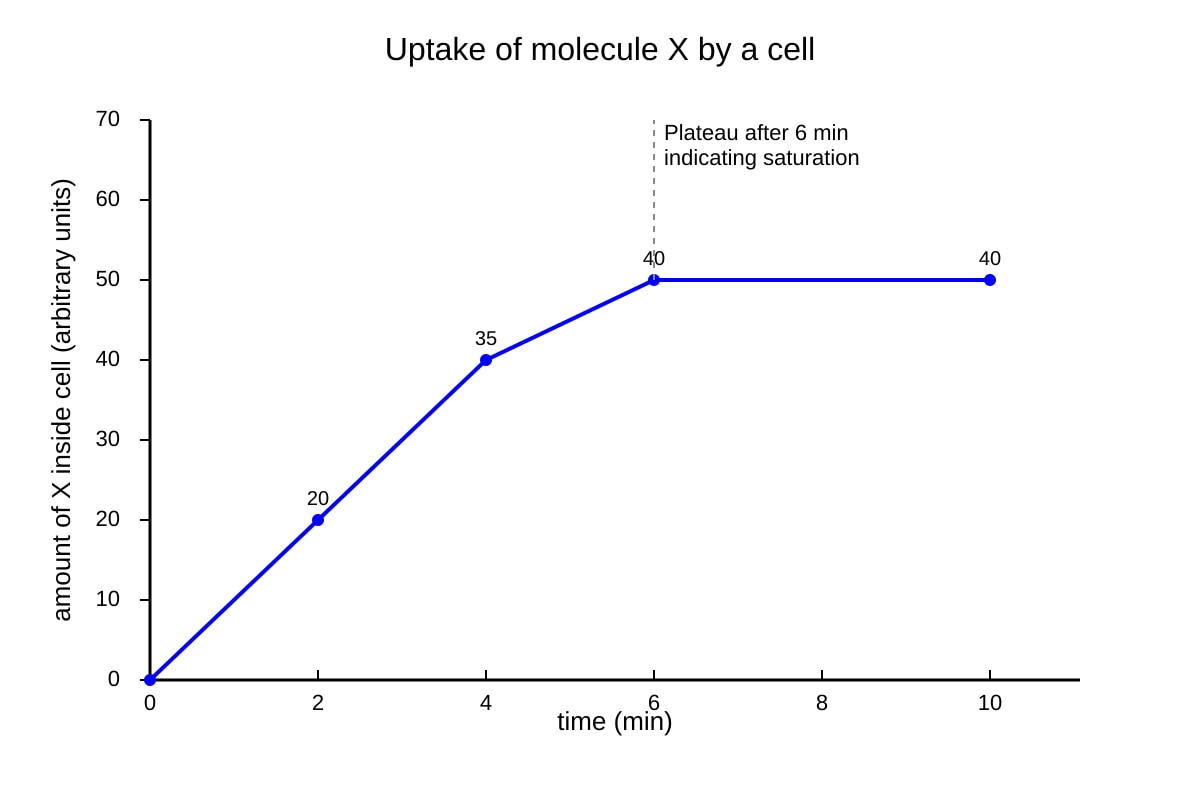
10. [3] Plateau occurs because transport proteins (carriers/channels) become saturated; all available proteins are occupied at max rate (Vmax-like). [1] Uptake is via facilitated diffusion/active transport with limited proteins. [1] No further increase despite gradient. [1]
Teaching note: Saturation is hallmark of protein-mediated transport.
11. [2] Any two differences: bacteria have circular DNA not linear; bacteria have peptidoglycan wall not cellulose; bacteria lack chloroplasts; bacteria have 70S not 80S ribosomes. [1 each]
Teaching note: Core prokaryote vs eukaryote plant cell contrast.
12. [3]
(a) [1] 40 °C (highest rate).
(b) [2] At 60 °C enzyme denatured; tertiary structure disrupted, active site lost. [1] H-bonds/ionic bonds break. [1]
Teaching note: Beyond optimum, protein unfolding reduces rate.
13. [2] Cholesterol restricts phospholipid movement, reduces fluidity at high temp and prevents solidification at low temp; maintains membrane stability. [1+1]
Teaching note: Shown as III between tails in fluid mosaic.
14. [2] Amylose is unbranched helix; amylopectin is branched. [1] Branching allows rapid hydrolysis for energy release. [1]
Teaching note: Starch function is glucose storage.
Section C (20 marks)
15. [4] Triglyceride = 1 glycerol + 3 fatty acids via ester bonds. [1] Hydrophobic, insoluble in water. [1] High C-H ratio gives high energy per gram. [1] Compact storage without osmotic effect. [1]
Teaching note: Structure directly supports long-term anhydrous energy store.
16. [4] Enzyme active site initially not exact fit. [1] Substrate binds, induces conformational change. [1] Stabilises transition state. [1] Lowers activation energy, speeds reaction. [1]
Teaching note: Induced-fit vs lock-and-key; both reduce Ea.
17. [4] Haemoglobin = 4 polypeptide chains (2α, 2β) = quaternary. [1] Each has haem group binding O₂. [1] Cooperative binding: O₂ uptake eases next. [1] Quaternary allows allosteric regulation. [1]
Teaching note: Structure enables efficient O₂ transport in blood.
18. [4] Mitosis: diploid→diploid, identical cells for growth/repair. [1+1] Meiosis: diploid→haploid, gametes for variation. [1] Stem cells (e.g. embryonic totipotent) use mitosis for development. [1]
Teaching note: H1 expects meiosis significance not stage detail.
19. [4] Pyruvate enters mitochondrial matrix directly for Krebs cycle → CO₂ released. [1+1] Glucose needs glycolysis in cytoplasm first (not in mitochondria). [1] Isolated mitochondria lack cytosolic enzymes. [1]
Teaching note: Location of glycolysis vs Krebs is key.
20. [4] Screening detects trisomy 21 pre-birth. [1] Ethical: informed choice, prevention of suffering. [1] Against: potential discrimination, abortion debate. [1] Stem cells (embryonic totipotent) show development continuity, raising moral status questions. [1]
Teaching note: Link bioethics to stem cell potency and life continuity.