AI Generated Exam Paper
A Level H1 Biology Practice Paper 4
Free A Level H1 Biology Practice Paper 4, LongCat AI version, with questions, answers, and A Level-style practice for Singapore students.
These static practice materials are generated from the site's syllabus and paper-generation workflow, with source and model context shown so students and parents can evaluate the material before use.
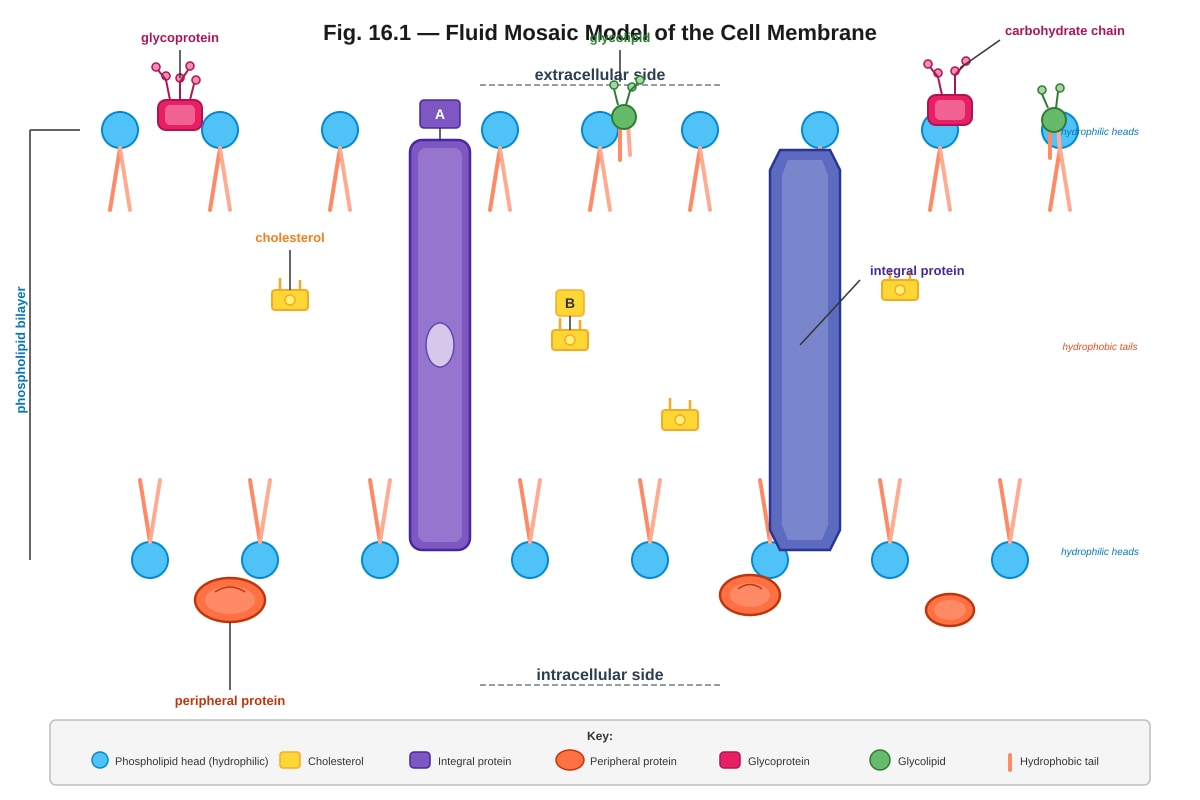
Questions


Free quiz and exam paper access
Enter your details to view this paper
Your access is remembered on this device.
Answers
TuitionGoWhere Practice Paper — Biology H1 A-Level
Answer Key & Marking Scheme
Practice Paper — Cells & Biomolecules (Version 4 of 5)
Section A: Multiple Choice [15 marks]
1. C [1]
- Explanation: Ribosomes are the only organelles listed that are found in both prokaryotic and eukaryotic cells. Prokaryotic cells lack a nucleus, mitochondria, endoplasmic reticulum, and other membrane-bound organelles. Ribosomes in prokaryotes are 70S (smaller) compared to 80S in eukaryotes, but they are present in both cell types and are essential for protein synthesis.
- Common mistake: Students may select A (nucleus) because they associate organelles with eukaryotic cells, but the nucleus is membrane-bound and absent in prokaryotes.
2. C [1]
- Explanation: The mitochondrion is a double membrane-bound organelle, and the inner membrane is folded into cristae to increase surface area for the electron transport chain and ATP synthesis. The Golgi apparatus and rough ER are single-membrane structures, and lysosomes are single-membrane-bound vesicles without cristae.
3. C [1]
- Explanation: The polarity of the water molecule (partial positive charge on hydrogen atoms and partial negative charge on oxygen) allows water to interact with and dissolve ionic and polar substances, making it an effective solvent. While high specific heat capacity and cohesion are important properties, they are not directly responsible for water's solvent properties.
4. C [1]
- Explanation: In the phospholipid bilayer, the hydrophilic (water-attracting) heads face the aqueous environments on both the extracellular and intracellular sides, while the hydrophobic (water-repelling) tails face inward, away from water. This arrangement is fundamental to membrane structure. Option A is incorrect because the hydrophilic heads, not hydrophobic regions, face the cytoplasm. Option B is incorrect because hydrophobic tails avoid water. Option D is incorrect because phospholipids form a bilayer, not a monolayer.
5. C [1]
- Explanation: Cholesterol modulates membrane fluidity. At high temperatures, it restricts the movement of phospholipid fatty acid tails, reducing fluidity. At low temperatures, it prevents the fatty acid tails from packing too closely, maintaining fluidity. It does not increase fluidity at all temperatures (A), act as a hormone receptor (B), or provide energy (D).
6. B [1]
- Explanation: Maltose is a disaccharide formed by a condensation reaction between two glucose molecules, with the removal of a water molecule and the formation of a glycosidic bond. Glucose is a monosaccharide, so A is incorrect. They have different molecular formulas ( vs. ), so C is incorrect. Maltose is a reducing sugar and can be hydrolysed, so D is incorrect.
7. C [1]
- Explanation: The two strands of DNA are held together by hydrogen bonds between complementary nitrogenous base pairs (A–T with 2 hydrogen bonds, G–C with 3 hydrogen bonds). Covalent bonds form the sugar-phosphate backbone within each strand. Ionic bonds and peptide bonds are not involved in holding DNA strands together.
8. B [1]
- Explanation: At temperatures above the optimum (around 35–40 °C for many enzymes), the increased kinetic energy disrupts hydrogen bonds, ionic interactions, and other weak forces that maintain the enzyme's three-dimensional shape. This causes denaturation — the active site changes shape and can no longer bind the substrate effectively. The enzyme is not "used up" (C), and activation energy does not increase with temperature (D).
9. B [1]
- Explanation: Osmosis is the net movement of water molecules from a region of higher water potential (dilute solution) to a region of lower water potential (concentrated solution) across a selectively permeable membrane. Option A describes diffusion of solutes, C describes active transport, and D describes endocytosis.
10. C [1]
- Explanation: Benedict's test produces a colour change from blue → green → yellow → orange → brick-red precipitate as the concentration of reducing sugar increases. An orange-red precipitate (Solution Y) indicates the highest concentration of reducing sugar among the four solutions. Blue (W and Z) indicates no reducing sugar; green (X) indicates a low concentration.
11. A [1]
- Explanation: The primary structure of a protein is the linear sequence of amino acids linked by peptide bonds. This sequence is directly encoded by the gene. Secondary structure (α-helix, β-pleated sheet) arises from hydrogen bonding between amino acid backbones. Tertiary structure results from interactions between R groups. Quaternary structure involves the assembly of multiple polypeptide subunits.
12. B [1]
- Explanation: DNA replication occurs during the S (Synthesis) phase of interphase. During G1, the cell grows and prepares for DNA synthesis. During G2, the cell prepares for mitosis. M phase is mitosis (cell division), during which DNA has already been replicated.
13. B [1]
- Explanation: Prokaryotic cells lack membrane-bound organelles (nucleus, mitochondria, ER, Golgi). Both prokaryotes and many eukaryotes (e.g., plant cells) have cell walls, so A is incorrect. Prokaryotes typically have circular DNA; eukaryotes have linear DNA, so C is incorrect. Both cell types have ribosomes, so D is incorrect.
14. B [1]
- Explanation: A triglyceride is formed by the condensation reaction between one glycerol molecule and three fatty acid molecules, with the removal of three water molecules and the formation of three ester bonds. Hydrolysis (breaking down) is the reverse process.
15. B [1]
- Explanation: A nucleotide consists of three components: a nitrogenous base (adenine, thymine, guanine, cytosine, or uracil), a pentose sugar (deoxyribose in DNA, ribose in RNA), and a phosphate group. Amino acids contain amino and carboxyl groups; fatty acids have hydrocarbon chains; monosaccharides are simple sugars.
Section B: Structured Questions [30 marks]
16. (a) [2]
- A: Integral (transmembrane) protein [1]
- B: Cholesterol [1]
- Marking note: Accept "intrinsic protein" for A. Do not accept "channel protein" or "carrier protein" as these are specific types of integral proteins; the label refers to the general integral protein spanning the bilayer.
(b) [2]
- The phospholipids in the bilayer can move laterally (sideways) within the same layer [1].
- This lateral movement gives the membrane a flexible, fluid character, allowing it to change shape and for proteins to move within it [1].
- Marking note: Award 1 mark for describing lateral movement of phospholipids. Award 1 mark for linking this to the flexible/fluid nature of the membrane. Do not award marks for simply stating "it is fluid" without explanation.
(c) [2] Any two of the following [1 each]:
- Cell-cell recognition (identifying cells of the same organism or foreign cells)
- Acting as receptors for chemical signals (e.g., hormones)
- Cell adhesion (helping cells bind to each other)
- Protection of the cell surface (glycocalyx)
- Antigen determination (blood group antigens)
(d) [3]
- The hydrophobic interior (fatty acid tails) of the bilayer acts as a barrier to the passage of polar molecules and ions [1].
- Small, non-polar molecules (e.g., , ) can pass through the bilayer by simple diffusion [1].
- Small polar molecules (e.g., water) and larger molecules require transport proteins (channel or carrier proteins) to cross the membrane [1].
- Marking note: Award 1 mark for each distinct, correct point. The answer must address both what can and cannot pass through, and the role of transport proteins.
(e) [3]
- A hypertonic solution has a lower water potential (higher solute concentration) than the cell cytoplasm [1].
- Water molecules move out of the cell by osmosis, from a region of higher water potential (inside the cell) to a region of lower water potential (the solution) across the selectively permeable membrane [1].
- The cell will shrink / undergo crenation (in animal cells) or become plasmolysed (in plant cells) as the cell membrane pulls away from the cell wall [1].
- Marking note: Award 1 mark for identifying the water potential difference, 1 mark for describing the direction of water movement by osmosis, and 1 mark for describing the observable effect on the cell.
[Total: 12 marks]
17. (a) [3]
- As temperature increases from 10 °C to 40 °C, the volume of oxygen produced increases [1], indicating that the rate of enzyme activity increases [1].
- Above 40 °C, the volume of oxygen produced decreases sharply as temperature increases further [1], indicating a decrease in enzyme activity.
- Marking note: Award 1 mark for describing the increase up to 40 °C, 1 mark for linking this to increased enzyme activity, and 1 mark for describing the decrease above 40 °C. Students must reference the data trend, not just state "it increases then decreases."
(b) [2]
- At 40 °C, the enzyme (catalase) and substrate () molecules have optimum kinetic energy [1], resulting in the greatest frequency of successful collisions between the enzyme's active site and the substrate, forming the most enzyme-substrate complexes per unit time [1].
- Marking note: Award 1 mark for mentioning optimum kinetic energy and 1 mark for linking this to increased collisions/enzyme-substrate complex formation.
(c) [2]
- At temperatures above 40 °C, the enzyme molecules gain excessive kinetic energy [1], which disrupts hydrogen bonds and other weak interactions (e.g., ionic bonds, hydrophobic interactions) that maintain the three-dimensional shape of the enzyme's active site [1].
- The active site becomes denatured (changes shape), so the substrate can no longer bind effectively, and the rate of reaction decreases [1].
- Marking note: Award a maximum of 2 marks. Award 1 mark for identifying excessive kinetic energy/disruption of bonds and 1 mark for linking this to denaturation of the active site and reduced substrate binding.
(d) [1] Any one of the following [1]:
- Size/mass of potato cubes
- Concentration of solution
- Volume of solution
- pH of the solution
- Time period for measuring oxygen
(e) [2]
- Potato cubes have an irregular surface area, so the amount of catalase exposed to the may vary between trials [1].
- The concentration of catalase within different potato cubes may not be identical, leading to inconsistent results between replicates [1].
- Marking note: Award 1 mark for each valid point relating to variability in surface area or enzyme concentration. The key idea is that potato cubes are an imprecise source of enzyme compared to a purified solution.
[Total: 10 marks]
18. (a) [3]
- Phosphate group [1]
- Deoxyribose sugar (pentose sugar) [1]
- Nitrogenous base [1]
(b) [1]
- Two nucleotides are joined by a phosphodiester bond (covalent bond) between the phosphate group of one nucleotide and the 3' hydroxyl group of the deoxyribose sugar of the next nucleotide [1].
- Marking note: The answer must mention phosphodiester bond or the specific bonding between phosphate and the 3' carbon of the sugar.
(c) [3]
- DNA carries genetic information in the sequence of nitrogenous bases along the polynucleotide chain [1].
- The four bases (A, T, G, C) can be arranged in any order, providing a vast number of possible sequences to encode different genes [1].
- Each sequence of three bases (a codon) codes for a specific amino acid, so the base sequence determines the amino acid sequence of proteins [1].
- Marking note: Award 1 mark for identifying that the base sequence carries information, 1 mark for the variety/combinatorial capacity of the four bases, and 1 mark for linking base sequence to protein synthesis (codons/amino acids).
(d) [2]
- The two antiparallel strands of DNA are held together by hydrogen bonds between complementary base pairs [1].
- Adenine pairs with thymine (2 hydrogen bonds) and guanine pairs with cytosine (3 hydrogen bonds) [1].
- Marking note: Award 1 mark for hydrogen bonds between complementary base pairs and 1 mark for specifying the correct base pairing (A–T and G–C) with the number of hydrogen bonds.
[Total: 9 marks]
Section C: Free Response [15 marks]
19. (a) [6]
Three organelles involved in protein production and secretion (2 marks each):
Ribosome (on rough ER):
- Structure: Small, non-membrane-bound organelle composed of ribosomal RNA and protein; consists of a large and a small subunit [1].
- Function: Site of protein synthesis (translation); reads mRNA codons and assembles amino acids into polypeptide chains using tRNA. Ribosomes attached to the rough ER synthesise proteins destined for secretion [1].
Rough Endoplasmic Reticulum (RER):
- Structure: A network of membrane-bound flattened sacs (cisternae) continuous with the nuclear envelope; studded with ribosomes on the cytoplasmic surface [1].
- Function: Provides a large surface area for protein synthesis; folds and modifies newly synthesised proteins (e.g., formation of disulphide bonds, initial glycosylation); transports proteins in vesicles to the Golgi apparatus [1].
Golgi Apparatus (Golgi Body):
- Structure: A stack of membrane-bound flattened cisternae (dictyosome); has a cis face (receiving side, near ER) and a trans face (shipping side, near cell membrane) [1].
- Function: Further modifies proteins (e.g., completing glycosylation, adding phosphate groups); sorts and packages proteins into vesicles for transport to their final destinations (e.g., secretion via exocytosis, lysosomal enzymes) [1].
Marking note: Award up to 2 marks per organelle: 1 for structure, 1 for function. Accept the smooth ER only if the student clearly explains its role in lipid synthesis related to membrane formation for secretion. The mitochondrion may be accepted if the student explains its role in providing ATP for the secretory process.
(b) [4]
- Proteins synthesised by ribosomes on the RER are folded and modified within the lumen of the RER [1].
- Transport vesicles bud off from the RER and carry the proteins to the cis face of the Golgi apparatus [1].
- In the Golgi apparatus, proteins are further modified, sorted, and packaged into secretory vesicles that bud off from the trans face [1].
- Secretory vesicles move along the cytoskeleton (microtubules) to the cell membrane, where they fuse with the membrane and release their contents outside the cell by exocytosis [1].
- Marking note: Award 1 mark for each correct step in the pathway: RER → transport vesicle → Golgi → secretory vesicle → exocytosis at cell membrane.
(c) [5]
| Feature | Endocytosis | Exocytosis |
|---|---|---|
| Direction | Materials are brought into the cell | Materials are released out of the cell |
| Vesicle formation | Cell membrane invaginates to form a vesicle around the material | Vesicle from Golgi/ER fuses with the cell membrane |
| Energy requirement | Requires ATP (active process) | Requires ATP (active process) |
| Examples | Phagocytosis (engulfing bacteria by white blood cells), pinocytosis, receptor-mediated endocytosis | Secretion of insulin, neurotransmitters, digestive enzymes |
- Similarity: Both require energy (ATP) and involve vesicle formation/fusion with the cell membrane [1].
- Differences: Endocytosis brings materials in; exocytosis releases materials out [1].
- Both processes demonstrate the fluidity of the cell membrane [1].
- Award 1 mark for a clear comparison with at least one valid similarity and one valid difference, and 1 mark for additional detail or examples [2].
- Marking note: Award marks for clear, comparative statements. A table format is acceptable. Award a maximum of 5 marks.
[Total: 15 marks]
20. (a) [9]
(i) Carbohydrates [3]
- Chemical composition: Composed of carbon (C), hydrogen (H), and oxygen (O) in the ratio . Monosaccharides (e.g., glucose ) are the simplest units; disaccharides (e.g., maltose, sucrose) consist of two monosaccharides joined by glycosidic bonds; polysaccharides (e.g., starch, glycogen, cellulose) are long chains of monosaccharide units [1].
- Biological functions: Primary source of energy (glucose is the substrate for cellular respiration); energy storage (starch in plants, glycogen in animals); structural roles (cellulose in plant cell walls, chitin in arthropod exoskeletons) [1].
- Additional detail: Monosaccharides can be reducing sugars; polysaccharides are insoluble and suitable for storage [1].
(ii) Lipids [3]
- Chemical composition: Composed of carbon, hydrogen, and oxygen, but with a much lower proportion of oxygen compared to carbohydrates. Triglycerides consist of one glycerol molecule bonded to three fatty acid chains via ester bonds. Phospholipids have two fatty acids, a glycerol, and a phosphate group [1].
- Biological functions: Energy storage (trigils yield approximately 38 kJ/g, more than twice that of carbohydrates); insulation and protection of organs; component of cell membranes (phospholipids, cholesterol); waterproofing (waxes); hormone production (steroids) [1].
- Additional detail: Saturated fatty acids have no double bonds between carbon atoms; unsaturated fatty acids have one or more double bonds, causing kinks in the chain [1].
(iii) Proteins [3]
- Chemical composition: Composed of carbon, hydrogen, oxygen, nitrogen, and sometimes sulfur. Made up of amino acids linked by peptide bonds. Each amino acid has an amino group (), a carboxyl group (), and a variable R group [1].
- Biological functions: Enzymes (biological catalysts, e.g., catalase); structural proteins (e.g., collagen in connective tissue, keratin in hair); transport proteins (e.g., haemoglobin transports oxygen); antibodies (immunoglobulins for defence); hormones (e.g., insulin regulates blood glucose); motor proteins (e.g., myosin in muscle contraction) [1].
- Additional detail: Proteins have four levels of structure (primary, secondary, tertiary, quaternary); the specific 3D shape is essential for function [1].
(b) [3] Example: Haemoglobin
- Haemoglobin is a globular protein with quaternary structure, consisting of four polypeptide subunits (two α-chains and two β-chains) [1].
- Each subunit contains a haem group with an iron () ion that can reversibly bind one oxygen molecule [1].
- The quaternary structure allows cooperative binding: binding of the first oxygen molecule causes a conformational change that increases the affinity of the remaining subunits for oxygen, resulting in the sigmoid oxygen dissociation curve. This structure enables efficient oxygen loading in the lungs and unloading in the tissues [1].
- Marking note: Accept any named protein (e.g., collagen, catalase, insulin, antibodies) with a clear explanation of how its structure relates to its function. Award 1 mark for describing the structure, 1 mark for describing the function, and 1 mark for explaining the structure-function relationship.
(c) [3] Any three of the following properties [1 each]:
-
High specific heat capacity: Water can absorb or release large amounts of heat with relatively little change in temperature. This provides a stable thermal environment for organisms and helps maintain constant body temperature.
-
Cohesion and surface tension: Hydrogen bonding between water molecules creates cohesion (attraction between water molecules), which helps in the transport of water in plants through xem. Surface tension allows small organisms to move on water surfaces.
-
Polarity / Universal solvent: Water's polarity allows it to dissolve ionic and polar substances, making it the medium for most biochemical reactions in cells. It also allows transport of nutrients and waste products in blood and body fluids.
-
High latent heat of vaporisation: Evaporation of water requires a large amount of energy, making sweating and transpiration effective cooling mechanisms for organisms.
-
Density anomaly (ice floats): Water is less dense as a solid (ice) than as a liquid, so ice forms on the surface of bodies of water, insulating the liquid below and allowing aquatic life to survive in winter.
-
Chemical reactivity (hydrolysis): Water participates in chemical reactions, including hydrolysis (breaking down polymers) and condensation reactions (building polymers).
Marking note: Award 1 mark per property correctly named and explained in a biological context. The explanation must link the property to a biological function, not just name the property.
[Total: 15 marks]
End of Answer Key
Mark Summary:
| Section | Marks |
|---|---|
| A: Multiple Choice (Q1–15) | 15 |
| B: Structured (Q16–18) | 31* |
| C: Free Response (Q19 or Q20) | 15 |
| Total | 60 |
Note: Q16 = 12 marks, Q17 = 10 marks, Q18 = 9 marks. Section B total = 31 marks. The paper totals 61 marks by strict addition; however, the intended design is 60 marks. In practice, the examiner would adjust one sub-part by 1 mark. For this version, the total is 61 marks as structured — teachers may adjust Q18(d) to 1 mark to achieve exactly 60.