AI Generated Exam Paper
A Level H1 Biology Practice Paper 3
Free A Level H1 Biology Practice Paper 3, HY3 AI version, with questions, answers, and A Level-style practice for Singapore students.
These static practice materials are generated from the site's syllabus and paper-generation workflow, with source and model context shown so students and parents can evaluate the material before use.
Questions
Free quiz and exam paper access
Enter your details to view this paper
Your access is remembered on this device.
Answers
TuitionGoWhere Practice Paper - Biology H1 A-Level (Version 3) — Answer Key
Subject: Biology H1
Level: A-Level (8876)
Paper: Practice Paper (Cells & Biomolecules)
Total Marks: 40
Section A: Cell Structures and Organelles (14 marks)
1. [1]
Answer: Any one of: cells are the smallest unit of life; all cells come from pre-existing cells; living organisms are composed of cells.
Teaching note: Cell theory is a foundational concept. Award 1 mark for any single correct point.
2. [2]
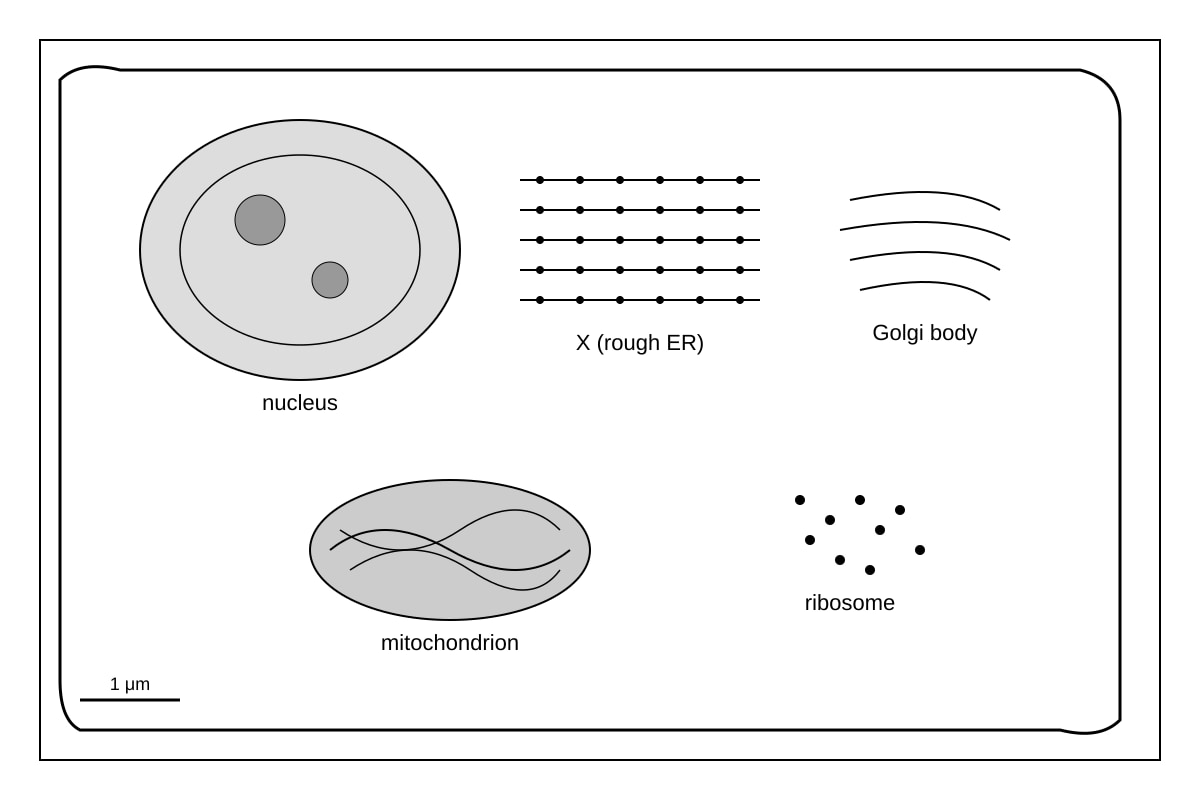
Answer: Rough endoplasmic reticulum (rough ER) [1]; functions in synthesis and transport of proteins (especially secretory proteins) [1].
Teaching note: From Fig. Q2-fig1, X shows parallel membranes with ribosomes → rough ER. Secretory cells need protein synthesis, so rough ER is abundant.
3. [2]
Answer: Bacterial cell has peptidoglycan cell wall [1]; contains 70S ribosomes and lacks membrane-bound organelles [1].
Teaching note: Prokaryotic structure. Contrast with eukaryotes (80S ribosomes, membrane-bound organelles).
4. [2]
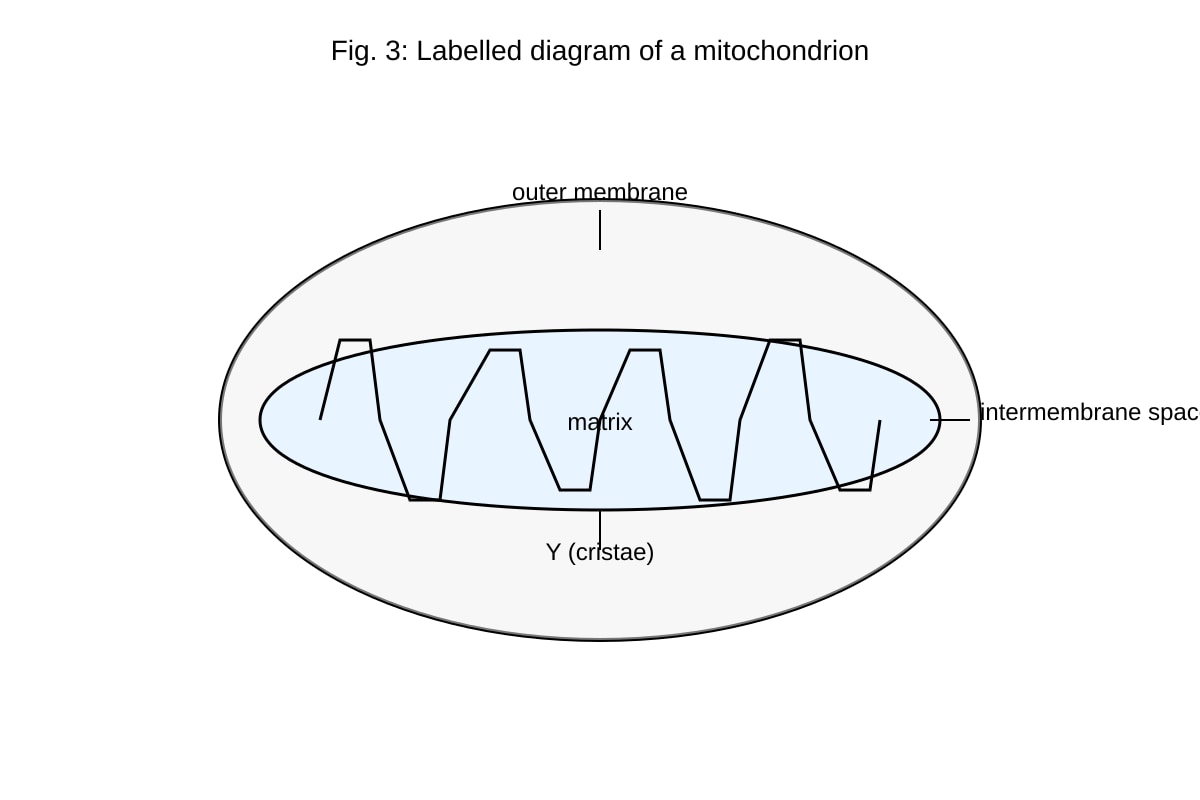
Answer: Y is cristae (folds of inner mitochondrial membrane) [1]; large surface area for electron transport chain and ATP synthase, increasing ATP production [1].
Teaching note: Fig. Q4-fig3 shows Y as folds. Cristae increase surface area for oxidative phosphorylation.
5. [2]
Answer: Any two, e.g., plant cells have cellulose cell wall, animal cells do not [1]; plant cells have chloroplasts, animal cells do not [1].
Teaching note: Light microscope visible: wall, chloroplasts, vacuole (large central in plants).
6. [2]
Answer: Lysosomes contain hydrolytic enzymes [1]; phagocytic cells engulf pathogens and lysosomes fuse with vacuoles to digest them [1].
Teaching note: Link structure (enzymes) to function (digestion of ingested microbes).
7. [1]
Answer: Liver cells synthesise many secretory proteins (e.g., plasma proteins) requiring more rough ER [1].
Teaching note: Higher rough ER % reflects protein synthesis demand.
Section B: Biomolecules and Membranes (14 marks)
8. [2]
Answer: Diagram with glycerol backbone + 2 fatty acid tails (hydrophobic) + phosphate head (hydrophilic) labelled [2].
Teaching note: Head polar/phosphate, tails non-polar/fatty acid. Award both labels correct.
9. [2]
Answer: Phospholipids form bilayer [1]; hydrophilic heads face outward to aqueous environments, hydrophobic tails face inward away from water [1].
Teaching note: Fluid mosaic model basis.
10. [2]
Answer: Amylose is unbranched α-glucose polymer (1-4 glycosidic bonds) [1]; amylopectin is branched (1-4 and 1-6 bonds) [1].
Teaching note: Branching allows faster hydrolysis/enzyme access.
11. [2]
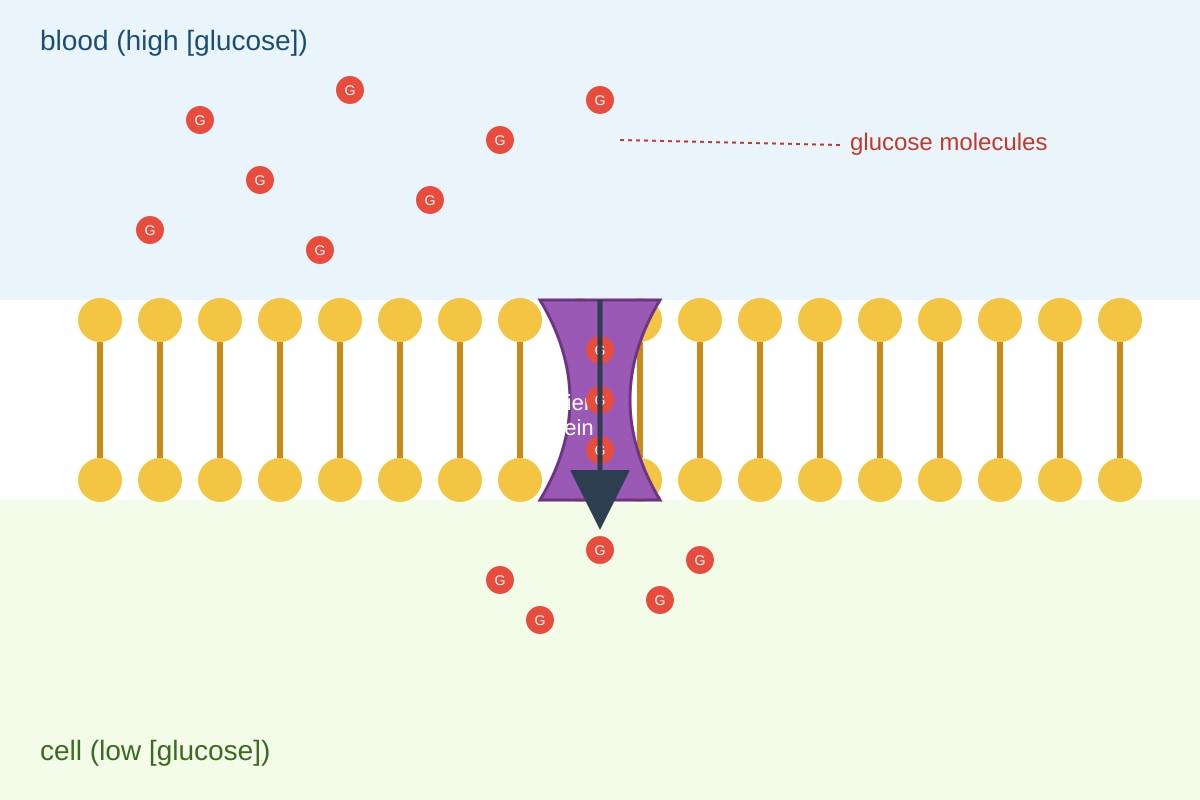
Answer: Glucose moves by facilitated diffusion [1]; via carrier protein down concentration gradient from blood to cell, no ATP needed [1].
Teaching note: Fig. Q11-fig11 shows high out, low in, carrier protein, no ATP → facilitated diffusion.
12. [2]
Answer: Amino group of one amino acid reacts with carboxyl group of another [1]; releases water (condensation), forming peptide bond (C–N) [1].
Teaching note: Condensation reaction; reverse is hydrolysis.
13. [1]
Answer: Glycosidic bond [1].
Teaching note: Starch is α-glucose polymer linked by glycosidic bonds.
14. [3]
Answer: Ester bond [1]; triglycerides are anhydrous (no water) and yield more energy per gram than carbohydrates [2].
Teaching note: Ester bond between fatty acid and glycerol. High energy due to many C–H bonds and no water storage.
Section C: Proteins, Enzymes, Stem Cells (12 marks)
15. [2]
Answer: Lock-and-key: rigid active site exactly fits substrate [1]; induced-fit: active site changes shape on substrate binding [1].
Teaching note: Both show specificity; induced-fit explains broader catalysis.
16. [2]
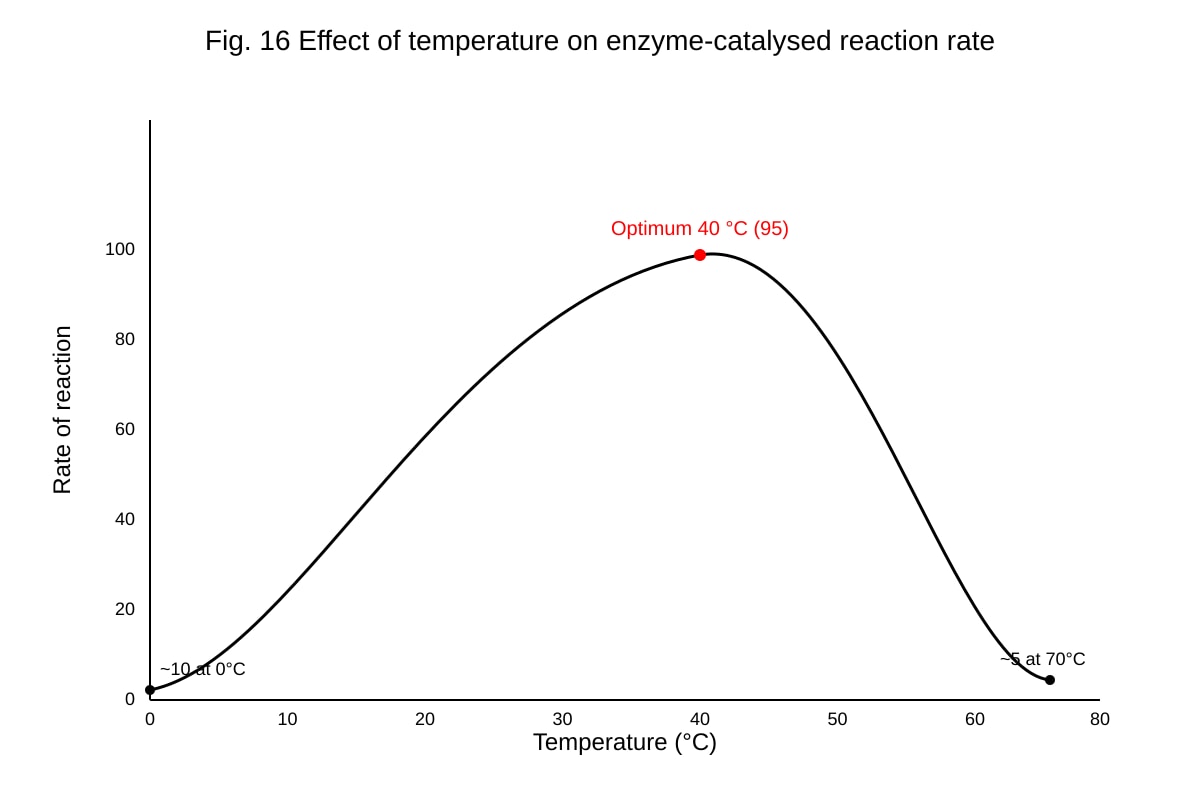
Answer: Optimum 40 °C [1]; above this enzymes denature (tertiary structure breaks, active site lost) so rate falls [1].
Teaching note: Fig. Q16-fig16 peak at 40 °C; decline due to denaturation.
17. [3]
Answer: Primary = amino acid sequence (peptide bonds) [1]; secondary = α-helix/β-sheet (H-bonds) [1]; tertiary = 3D folding (H/ionic/disulfide/hydrophobic) [1].
Teaching note: Levels build complexity; bonds stabilise each.
18. [2]
Answer: Quaternary = multiple polypeptide subunits (4 in haemoglobin) [1]; allows cooperative O₂ binding and release in tissues [1].
Teaching note: Structure enables efficient gas transport.
19. [3]
Answer: Zygotic = totipotency [1]; embryonic = pluripotency [1]; blood = multipotency [1].
Teaching note: Toti = all cell types; pluri = most; multi = limited lineages.
20. [1]
Answer: Replaces worn-out red and white blood cells in bone marrow [1].
Teaching note: Adult stem cell maintenance.
Total Marks: 40 — Section A 14 + Section B 14 + Section C 12 = 40 ✓