From Real Exams Exam Paper
A Level H1 Biology Practice Paper 4
Free A Level H1 Biology Practice Paper 4, LongCat Exam version, with questions, answers, and A Level-style practice for Singapore students.
These static practice materials are generated from the site's syllabus and paper-generation workflow, with source and model context shown so students and parents can evaluate the material before use.
Questions
Free quiz and exam paper access
Enter your details to view this paper
Your access is remembered on this device.
Answers
TuitionGoWhere Practice Paper — Biology H1 A-Level
Answer Key — Version 4
Section A: Multiple Choice Questions [10 marks]
1. Answer: B [1]
Explanation: Prokaryotic cells (e.g., bacteria) lack membrane-bound organelles such as the nucleus, mitochondria, and endoplasmic reticulum. Eukaryotic cells possess these membrane-bound organelles. Option A is incorrect because it reverses the description. Option C is incorrect because prokaryotes have circular DNA while eukaryotes have linear DNA. Option D is incorrect because prokaryotic cell walls are made of peptidoglycan, while plant eukaryotic cell walls are made of cellulose.
2. Answer: C [1]
Explanation: The mitochondrion is the organelle described. It has a double membrane (outer and inner), with the inner membrane folded into cristae to increase surface area for ATP production. Mitochondria also contain their own circular DNA, supporting the endosymbiotic theory. The Golgi apparatus, lysosome, and rough ER do not have their own DNA or cristae.
3. Answer: D [1]
Explanation: Fructose is a monosaccharide (single sugar unit). Sucrose (glucose + fructose), maltose (glucose + glucose), and lactose (glucose + galactose) are all disaccharides (two sugar units joined by a glycosidic bond).
4. Answer: D [1]
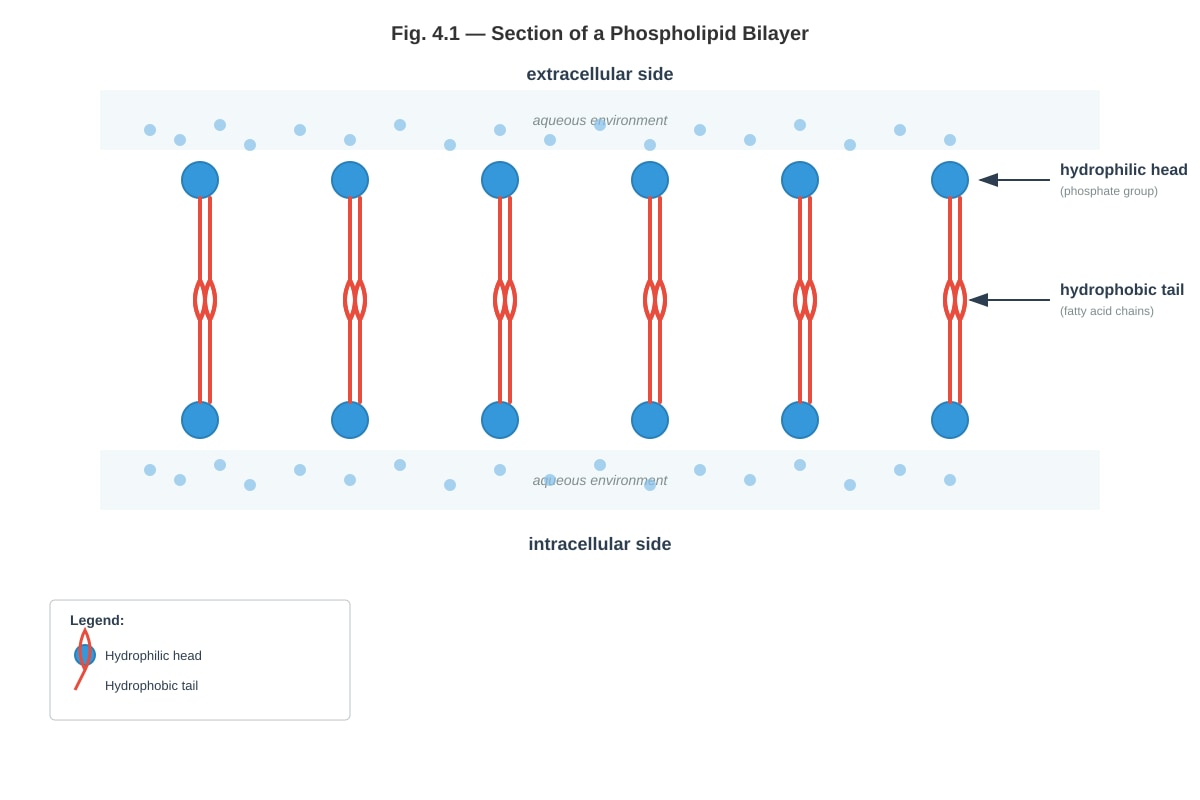
Explanation: The phospholipid bilayer is impermeable to ions such as and because ions are charged and cannot pass through the hydrophobic core of the bilayer. Ions require channel proteins or carrier proteins to cross the membrane. Options A, B, and C are all correct statements: hydrophobic tails face inward away from water, small non-polar molecules can diffuse through the bilayer, and hydrophilic heads contain phosphate groups.
5. Answer: B [1]
Explanation: A hypertonic solution has a higher solute concentration (lower water potential) than the cell cytoplasm. Water moves by osmosis from a region of higher water potential (inside the cell) to a region of lower water potential (outside the cell). This causes the cell to lose water and shrink. In animal cells, this is called crenation; in plant cells, it causes plasmolysis.
6. Answer: B [1]
Explanation: Cholesterol is a lipid molecule embedded in the phospholipid bilayer. At high temperatures, it restricts the movement of phospholipids, reducing membrane fluidity. At low temperatures, it prevents the phospholipids from packing too closely together, maintaining membrane fluidity. This dual role helps maintain membrane stability across a range of temperatures. Cholesterol does not provide energy, act as a receptor, or form channels.
7. Answer: A [1]
Explanation: The number of peptide bonds in a polypeptide is always one less than the number of amino acids. For a polypeptide with 120 amino acids, there are peptide bonds. Each peptide bond links the carboxyl group of one amino acid to the amino group of the next.
8. Answer: B [1]
Explanation: Secondary structure refers to local folding patterns (alpha-helices and beta-pleated sheets) that are stabilised by hydrogen bonds between the backbone amino (–NH) and carbonyl (–C=O) groups of the polypeptide chain. Primary structure is the sequence of amino acids. Tertiary structure involves interactions between R-groups (e.g., disulfide bonds, ionic bonds, hydrophobic interactions). Quaternary structure involves the assembly of multiple polypeptide subunits.
9. Answer: B [1]
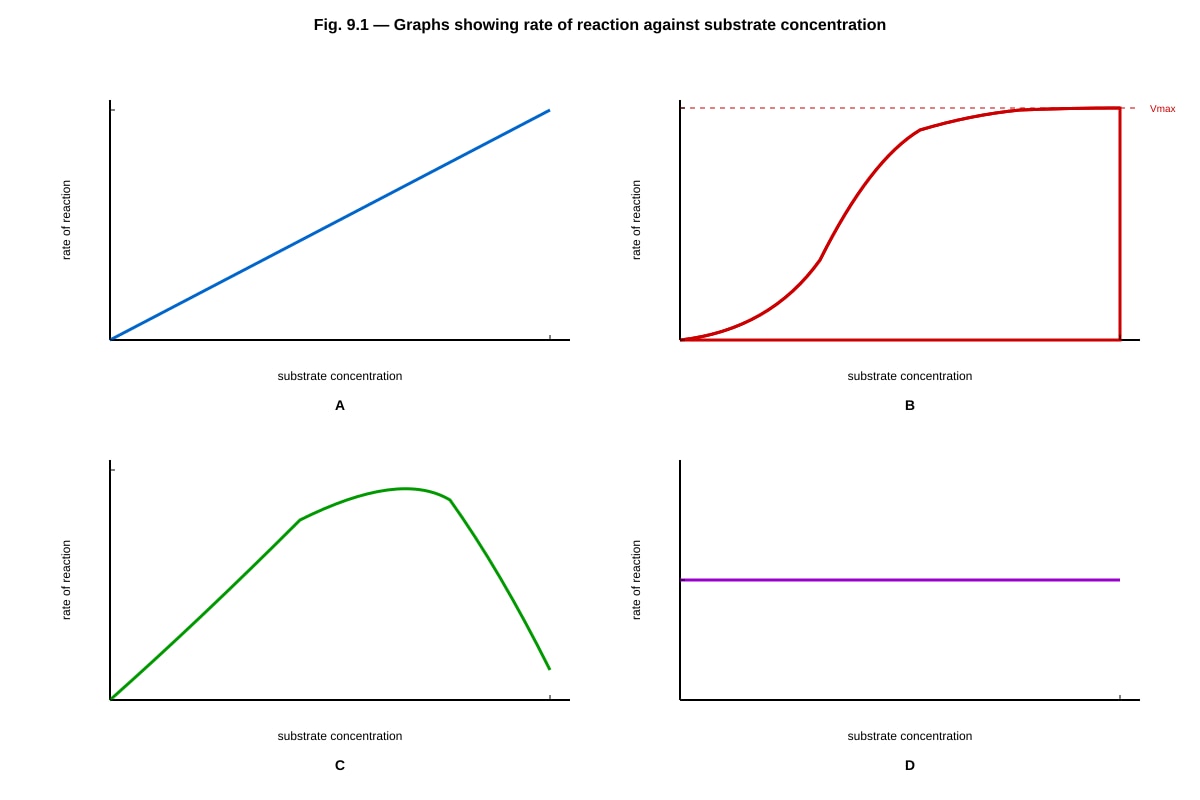
Explanation: Graph B shows the characteristic enzyme saturation curve. At low substrate concentration, the rate increases steeply because there are many free enzyme active sites available. As substrate concentration increases, the rate increases more slowly because more enzyme active sites become occupied. Eventually, the rate plateaus at (maximum velocity) when all enzyme active sites are saturated. Graph A (linear) would only occur at very low substrate concentrations. Graph C suggests enzyme inhibition or denaturation, which is not caused by increasing substrate concentration alone. Graph D shows no enzyme activity.
10. Answer: B [1]
Explanation: Glycogen is a branched polysaccharide used for energy storage in animals, primarily in liver and muscle cells. It can be rapidly broken down to release glucose when energy is needed. Structural support in cell walls is provided by cellulose in plants. Oxygen transport is the function of haemoglobin (a protein). Catalysing metabolic reactions is the function of enzymes (proteins).
Section B: Structured Questions [35 marks]
11. Cell Membrane Structure and Transport [7 marks]
(a) Describe the fluid mosaic model of the cell membrane. [3]
[3 marks] — Award 1 mark for each of the following points (maximum 3):
- The cell membrane is composed of a phospholipid bilayer, with hydrophilic phosphate heads facing the aqueous environments (extracellular and intracellular) and hydrophobic fatty acid tails facing inward.
- Proteins are embedded within or attached to the phospholipid bilayer. Some proteins span the entire membrane (integral/transmembrane proteins), while others are found on the surface (peripheral proteins).
- The membrane is described as "fluid" because the phospholipids and proteins can move laterally within the bilayer, giving the membrane flexibility.
- Cholesterol molecules are interspersed among the phospholipids, helping to regulate membrane fluidity.
- Glycoproteins and glycolipids (carbohydrate chains attached to proteins or lipids) are present on the extracellular surface and are involved in cell recognition and signalling.
Marking note: Any three valid points for 3 marks. The description should convey both the structural arrangement (phospholipid bilayer with embedded proteins) and the dynamic nature (fluidity) of the membrane.
(b) Explain why the cell membrane is described as "selectively permeable." [2]
[2 marks] — Award 1 mark for each of the following points:
- The cell membrane allows certain substances to pass through while restricting others. [1]
- Small, non-polar molecules (e.g., , ) and small uncharged polar molecules (e.g., water) can diffuse freely through the phospholipid bilayer. [1]
- Large polar molecules, ions (e.g., , , ), and charged molecules cannot pass through the hydrophobic core and require transport proteins (channel proteins or carrier proteins) to cross the membrane. [1]
Marking note: Award a maximum of 2 marks. The key idea is that the membrane controls what enters and exits the cell based on molecular size, charge, and polarity.
(c) Distinguish between facilitated diffusion and active transport. [2]
[2 marks] — Award 1 mark for each of the following distinguishing points:
| Feature | Facilitated Diffusion | Active Transport |
|---|---|---|
| Direction | Down the concentration gradient (high → low) | Against the concentration gradient (low → high) |
| Energy requirement | Does not require energy (passive) | Requires energy in the form of ATP |
| Transport proteins | Uses channel proteins or carrier proteins | Uses carrier proteins (pumps) |
Marking note: Any two valid distinguishing features for 2 marks. The most important distinction is the direction of transport relative to the concentration gradient and whether energy is required.
12. Biological Molecules — Carbohydrates and Lipids [6 marks]
(a) State two structural differences between a triglyceride and a phospholipid. [2]
[2 marks] — Award 1 mark for each difference (maximum 2):
- A triglyceride has three fatty acid chains attached to a glycerol molecule, whereas a phospholipid has two fatty acid chains and one phosphate group attached to glycerol. [1]
- Triglycerides are entirely hydrophobic (non-polar), whereas phospholipids have a hydrophilic head (phosphate group) and hydrophobic tails (fatty acid chains), making them amphipathic. [1]
(b) Explain why triglycerides are more suitable than glycogen for long-term energy storage in animals. [2]
[2 marks] — Award 1 mark for each point:
- Triglycerides store more energy per gram than glycogen because they have a higher proportion of carbon–hydrocarbon (C–H) bonds, which release more energy when oxidised. [1]
- Triglycerides are hydrophobic and can be stored in anhydrous (water-free) fat droplets, whereas glycogen is hydrophilic and binds a large amount of water, making it heavier and bulkier for the same amount of stored energy. [1]
Marking note: The key concept is that triglycerides provide a more compact, lightweight, and energy-dense form of energy storage, which is advantageous for mobile organisms.
(c) Starch and cellulose are both polysaccharides composed of glucose monomers. Explain why humans can digest starch but not cellulose. [2]
[2 marks] — Award 1 mark for each point:
- Starch contains glucose monomers linked by α-1,4-glycosidic bonds (and α-1,6 in branched amylopectin), which can be broken down by the enzyme amylase produced by humans. [1]
- Cellulose contains glucose monomers linked by β-1,4-glycosidic bonds, which cannot be broken down by human enzymes because humans lack the enzyme cellulase. [1]
Marking note: The difference in glycosidic bond type (α vs. β) determines whether the enzyme can access and hydrolyse the bond. This is a fundamental concept in carbohydrate chemistry.
13. Proteins and Enzymes [6 marks]
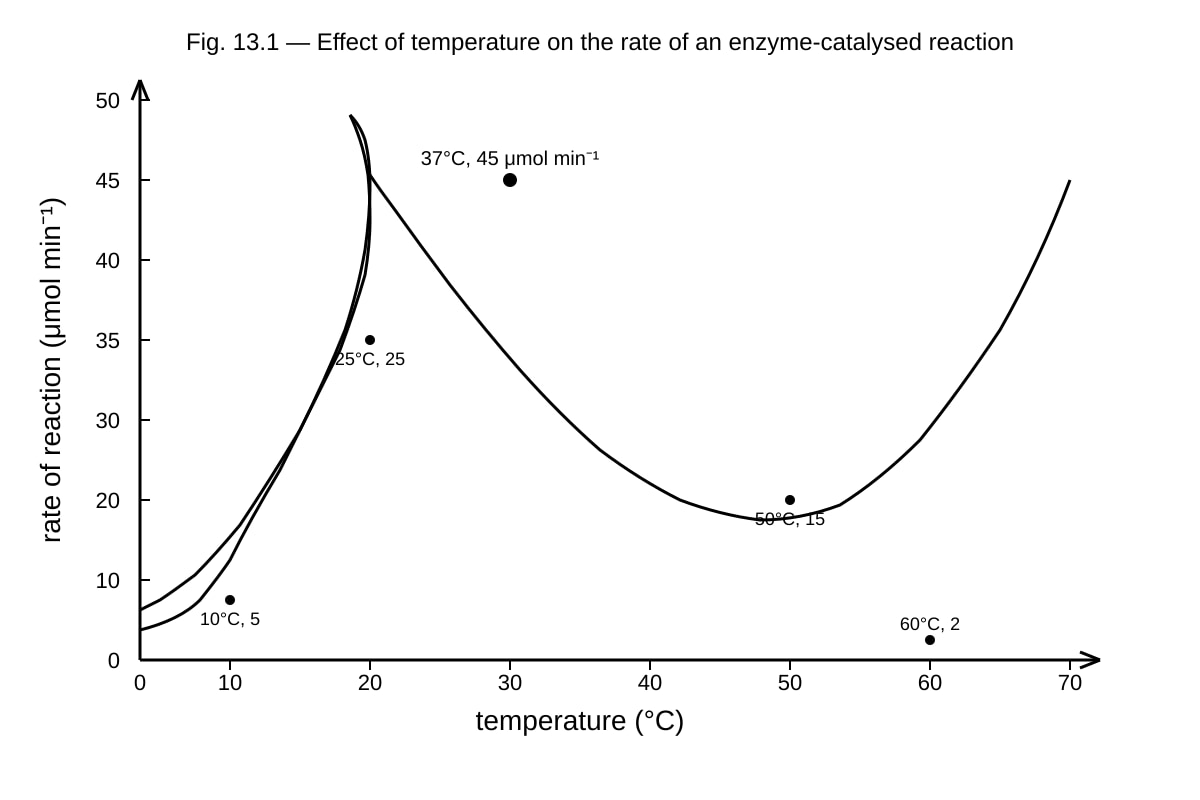
(a) State the optimum temperature for this enzyme. [1]
Answer: 37°C [1]
The optimum temperature is the temperature at which the enzyme shows the maximum rate of reaction. From Fig. 13.1, the peak of the curve occurs at 37°C, where the rate is 45 μmol min⁻¹.
(b) Explain the shape of the curve between 10°C and 37°C. [2]
[2 marks] — Award 1 mark for each point:
- As temperature increases, the kinetic energy of both enzyme and substrate molecules increases, leading to more frequent and more energetic collisions between enzyme active sites and substrate molecules. [1]
- This results in a higher rate of formation of enzyme–substrate complexes, and therefore a higher rate of product formation. [1]
Marking note: The explanation should link increased temperature to increased molecular motion and collision frequency, which increases the rate of enzyme–substrate complex formation.
(c) Explain the sharp decrease in reaction rate above 37°C. [2]
[2 marks] — Award 1 mark for each point:
- Above the optimum temperature, the increased thermal energy disrupts the hydrogen bonds, ionic bonds, and other non-covalent interactions that maintain the enzyme's tertiary structure. [1]
- This causes the enzyme to denature — the active site loses its specific shape, so substrate molecules can no longer bind effectively, and the rate of reaction drops sharply. [1]
Marking note: The key concept is denaturation — the irreversible loss of the enzyme's three-dimensional structure due to the breaking of bonds that maintain the active site shape.
(d) Predict and explain what would happen to the reaction rate if the temperature were reduced from 37°C to 10°C and then returned to 37°C. [1]
[1 mark]
- The reaction rate would decrease when the temperature is reduced to 10°C (due to lower kinetic energy and fewer collisions), but would return to the original rate when the temperature is restored to 37°C. [1]
- This is because lowering the temperature does not denature the enzyme — it only slows down molecular motion. The enzyme's structure remains intact, so it can function normally when the temperature is restored.
Marking note: This distinguishes between the reversible effect of low temperature (reduced kinetic energy) and the irreversible effect of high temperature (denaturation).
14. Nucleic Acids [5 marks]
(a) Describe the structure of a DNA nucleotide. [2]
[2 marks] — Award 1 mark for each component:
- A DNA nucleotide consists of three components: a deoxyribose sugar (a pentose sugar), a phosphate group, and a nitrogenous base. [1]
- The nitrogenous base is attached to the 1' carbon of the deoxyribose sugar, and the phosphate group is attached to the 5' carbon. The four possible bases are adenine (A), thymine (T), guanine (G), and cytosine (C). [1]
(b) State two structural differences between DNA and RNA. [2]
[2 marks] — Award 1 mark for each difference (maximum 2):
- DNA contains the sugar deoxyribose, whereas RNA contains the sugar ribose. [1]
- DNA is typically double-stranded (double helix), whereas RNA is typically single-stranded. [1]
- DNA contains the base thymine (T), whereas RNA contains uracil (U) instead of thymine. [1]
Marking note: Any two valid differences for 2 marks.
(c) Explain why the base pairing rule (A–T and G–C) is important for DNA replication. [1]
[1 mark]
- The complementary base pairing rule ensures that each strand of the original DNA molecule serves as a template for the synthesis of a new complementary strand, resulting in two identical DNA molecules. [1]
- Because A always pairs with T (via 2 hydrogen bonds) and G always pairs with C (via 3 hydrogen bonds), the sequence of bases on one strand determines the sequence on the other strand, ensuring accurate copying of genetic information.
15. Cell Organelles and Protein Synthesis [6 marks]
(a) State the function of the ribosomes on the rough endoplasmic reticulum. [1]
[1 mark]
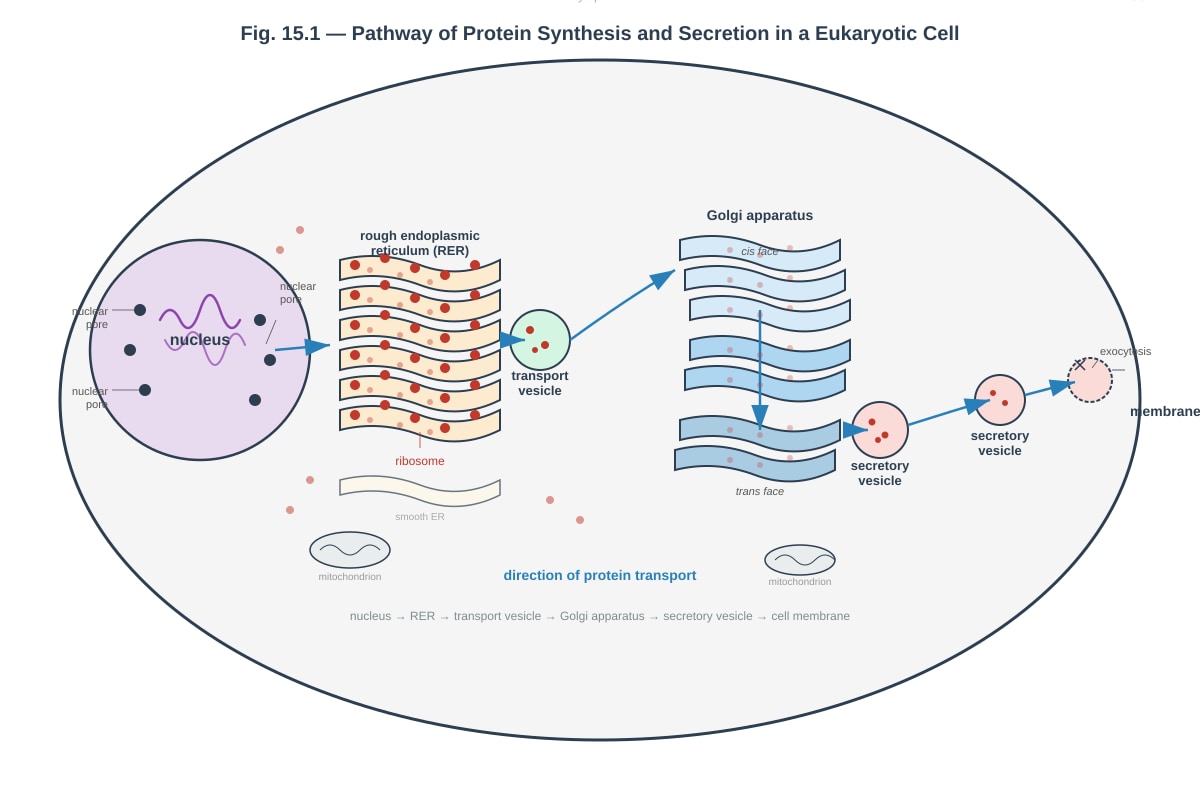
- Ribosomes on the RER are responsible for protein synthesis (translation). They read the mRNA sequence and assemble amino acids into polypeptide chains. [1]
- Proteins synthesised on the RER are destined for secretion from the cell, incorporation into the cell membrane, or transport to other organelles (e.g., lysosomes).
(b) Describe the role of the Golgi apparatus in the secretion of proteins. [2]
[2 marks] — Award 1 mark for each point:
- The Golgi apparatus modifies proteins received from the RER, for example by adding carbohydrate groups (glycosylation) to form glycoproteins, or by folding and processing proteins into their functional forms. [1]
- The Golgi apparatus sorts and packages proteins into vesicles. These vesicles bud off from the trans face of the Golgi and transport proteins to their final destinations, such as the cell membrane for secretion (exocytosis) or to lysosomes. [1]
(c) Explain why proteins synthesised by free ribosomes in the cytoplasm are not secreted from the cell. [2]
[2 marks] — Award 1 mark for each point:
- Proteins synthesised by free ribosomes lack a signal peptide (signal sequence) that would direct them to the rough endoplasmic reticulum. [1]
- Without entering the RER, these proteins do not enter the secretory pathway (RER → Golgi → secretory vesicles → cell membrane). Instead, they remain in the cytoplasm or are targeted to organelles such as the nucleus, mitochondria, or peroxisomes. [1]
Marking note: The key concept is the signal hypothesis — the presence or absence of a signal peptide determines whether a protein enters the secretory pathway.
(d) A mutation causes the nuclear pore to become non-functional. Explain the effect this would have on protein synthesis. [1]
[1 mark]
- mRNA transcribed in the nucleus would be unable to exit the nucleus through the nuclear pore to reach the ribosomes in the cytoplasm. [1]
- Without mRNA reaching the ribosomes, translation cannot occur, and protein synthesis would cease.
16. Water as a Biological Molecule [5 marks]
(a) State three properties of water that are important for living organisms. [3]
[3 marks] — Award 1 mark for each property (maximum 3):
- Water is an excellent solvent — it dissolves many ionic and polar substances, allowing metabolic reactions to occur in aqueous solution. [1]
- Water has a high specific heat capacity — it can absorb or release large amounts of heat with only a small change in temperature, helping organisms maintain a stable internal temperature. [1]
- Water has a high latent heat of vaporisation — evaporation of water (e.g., sweating) removes large amounts of heat, providing an effective cooling mechanism. [1]
- Water molecules are cohesive (stick to each other via hydrogen bonds), which helps in the transport of water through xylem vessels in plants. [1]
- Water is less dense as a solid (ice floats), which insulates bodies of water and allows aquatic life to survive under ice in winter. [1]
Marking note: Any three valid properties for 3 marks.
(b) Explain how hydrogen bonding contributes to one of the properties you stated in part (a). [2]
[2 marks] — Example answer (high specific heat capacity):
- Water molecules are held together by hydrogen bonds between the partially positive hydrogen atoms of one molecule and the partially negative oxygen atoms of neighbouring molecules. [1]
- When heat is absorbed, much of the energy is used to break hydrogen bonds rather than increase the kinetic energy (temperature) of the water molecules. This means water can absorb large amounts of heat before its temperature rises significantly. [1]
Alternative answer (solvent properties):
- Water's polarity (due to the unequal sharing of electrons between O and H) allows it to form hydrogen bonds with ions and polar molecules, surrounding and separating them (hydration shells), which enables dissolution. [2]
Marking note: Award 2 marks for a clear explanation linking hydrogen bonding to a specific property of water.
Section C: Data-Based Question [15 marks]
17. Investigation of Osmosis in Plant Cells [15 marks]
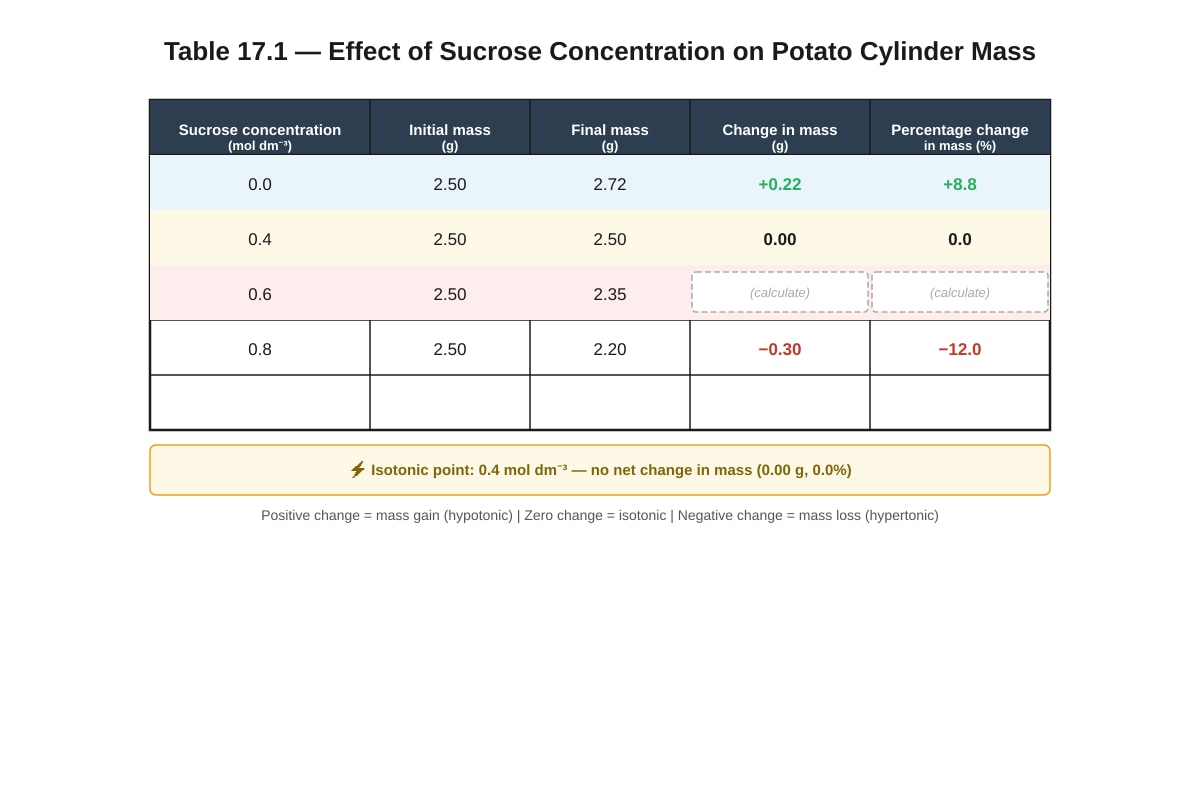
(a) Complete the table by calculating the change in mass and percentage change in mass for the cylinder placed in 0.6 mol dm⁻³ sucrose solution. Show your working. [2]
[2 marks]
Working:
Change in mass = Final mass − Initial mass
Change in mass = g [1]
Percentage change in mass =
Percentage change in mass = [1]
| Sucrose concentration (mol dm⁻³) | Initial mass (g) | Final mass (g) | Change in mass (g) | Percentage change in mass (%) |
|---|---|---|---|---|
| 0.0 | 2.50 | 2.72 | +0.22 | +8.8 |
| 0.2 | 2.50 | 2.60 | +0.10 | +4.0 |
| 0.4 | 2.50 | 2.50 | 0.00 | 0.0 |
| 0.6 | 2.50 | 2.35 | −0.15 | −6.0 |
| 0.8 | 2.50 | 2.20 | −0.30 | −12.0 |
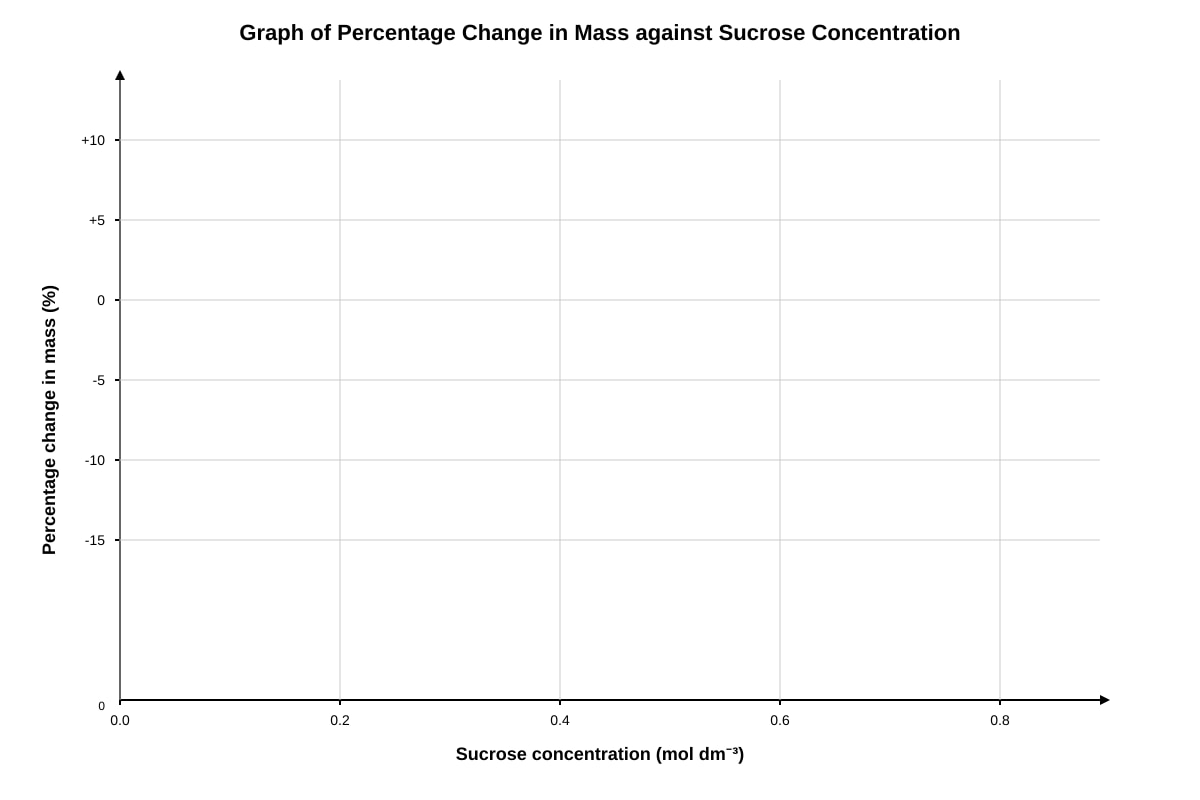
(b) Plot a graph of percentage change in mass (y-axis) against sucrose concentration (x-axis). [3]
[3 marks] — Award marks as follows:
- Correct axes and labels [1]: y-axis labelled "Percentage change in mass (%)" and x-axis labelled "Sucrose concentration (mol dm⁻³)" with appropriate units.
- Appropriate scale [1]: Both axes use a consistent, appropriate scale that uses at least half of the graph paper.
- Accurate plotting and line [1]: All five points plotted correctly (within ±0.5 mm) and a smooth curve or best-fit line drawn through the points.
Expected graph features:
- The graph should show a downward-sloping curve/line.
- The curve crosses the x-axis (0% change) at approximately 0.4 mol dm⁻³.
- Points: (0.0, +8.8), (0.2, +4.0), (0.4, 0.0), (0.6, −6.0), (0.8, −12.0).
(c) From your graph, determine the sucrose concentration at which there is no net movement of water into or out of the potato cells. Explain your answer. [2]
[2 marks]
- The sucrose concentration at which there is no net movement of water is approximately 0.4 mol dm⁻³. [1]
- At this concentration, the percentage change in mass is 0%, meaning the water potential of the sucrose solution is equal to the water potential of the potato cell sap. There is no water potential gradient, so there is no net movement of water by osmosis. [1]
Marking note: Accept values in the range 0.38–0.42 mol dm⁻³ if read from a correctly plotted graph.
(d) Explain why the potato cylinder in 0.0 mol dm⁻³ sucrose solution showed an increase in mass. [2]
[2 marks]
- The 0.0 mol dm⁻³ sucrose solution is essentially pure water, which has a higher water potential (less negative) than the cell sap of the potato cells. [1]
- Water moves by osmosis from the solution (higher water potential) into the potato cells (lower water potential) across the partially permeable cell membrane, causing the cells to gain water and the cylinder to increase in mass. [1]
(e) Explain why the potato cylinder in 0.8 mol dm⁻³ sucrose solution showed a decrease in mass. [2]
[2 marks]
- The 0.8 mol dm⁻³ sucrose solution has a lower water potential (more negative) than the cell sap of the potato cells because it has a higher solute concentration. [1]
- Water moves by osmosis from the potato cells (higher water potential) into the sucrose solution (lower water potential) across the partially permeable cell membrane, causing the cells to lose water and the cylinder to decrease in mass. [1]
(f) The student repeated the experiment using potato cylinders that had been boiled for 10 minutes before being placed in the sucrose solutions. Predict and explain the results you would expect. [2]
[2 marks]
- Prediction: There would be no change in mass (or negligible change) in any of the sucrose solutions. [1]
- Explanation: Boiling kills the cells and destroys the partially permeable cell membrane, making it fully permeable. Without a selectively permeable membrane, osmosis cannot occur. Water and sucrose molecules can move freely in and out of the cells, so there is no net movement of water driven by a water potential gradient. [1]
Marking note: The key concept is that osmosis requires a living, selectively permeable membrane. Boiling denatures the membrane proteins and disrupts the phospholipid bilayer, destroying selective permeability.
(g) Suggest two sources of error in this experiment and explain how each could be minimised. [2]
[2 marks] — Award 1 mark for each valid source of error with a corresponding improvement (maximum 2):
Error 1: Inconsistent drying of the potato cylinders before weighing — excess surface water could add to the mass and give inaccurate results.
Improvement: Blot all potato cylinders with absorbent paper using a consistent technique before each weighing. [1]
Error 2: Variation in the size and surface area of the potato cylinders — cylinders with different surface area-to-volume ratios would have different rates of water movement.
Improvement: Use a cork borer of the same diameter to cut all cylinders and ensure they are all the same length. [1]
Alternative errors (any two accepted):
- Temperature fluctuations during the experiment — controlled by conducting the experiment in a water bath at constant temperature.
- Insufficient time for equilibrium to be reached — ensure all cylinders are left for the same duration and that sufficient time has passed.
- Evaporation of water from the sucrose solutions — cover the containers with parafilm or lids to prevent evaporation.
Summary of Marks
| Section | Marks |
|---|---|
| A: Multiple Choice (Q1–Q10) | 10 |
| B: Structured Questions (Q11–Q16) | 35 |
| C: Data-Based Question (Q17) | 15 |
| Total | 60 |
Common Mistakes and Teaching Notes
- Q4: Students often assume the membrane is permeable to all small molecules. Emphasise that charge (ions) is a critical factor — the hydrophobic core blocks charged particles regardless of size.
- Q7: Students may incorrectly answer 120 (confusing amino acids with peptide bonds). Reinforce: peptide bonds = amino acids − 1.
- Q11(b): Students sometimes confuse "selectively permeable" with "fully permeable." Emphasise that the membrane actively controls passage based on size, charge, and polarity.
- Q12(c): Students may state that humans "don't have the right enzyme" without explaining the structural reason (α vs. β glycosidic bonds). Both the bond type and the enzyme specificity should be mentioned.
- Q13(d): This question tests understanding of the difference between reversible (low temperature) and irreversible (high temperature) effects on enzyme activity. This is a common exam trap.
- Q17(c): Students should understand that the point of zero mass change represents the isotonic point — where the external solution has the same water potential as the cell sap.
- Q17(f): This tests understanding that osmosis requires a living, selectively permeable membrane. Boiling destroys membrane integrity, a concept frequently tested in A-Level Biology.