From Real Exams Exam Paper

A Level H1 Biology Practice Paper 3

Free Exam-Derived DeepSeek V4 Pro A Level H1 Biology Practice Paper 3 practice paper with questions and answers for Singapore students. This page is rendered as a direct URL so the questions and answers can be discovered without pressing in-page buttons.

These static practice materials are generated from the site's syllabus and paper-generation workflow, with source and model context shown so students and parents can evaluate the material before use.

A Level H1 Biology From Real Exams Generated by DeepSeek V4 Pro Updated 2026-06-03

Questions

<!-- TuitionGoWhere generation metadata: stage=3-1; model=deepseek/deepseek-v4-pro; model_label=DeepSeek V4 Pro; generated=2026-05-27; Sources: Stage 2-1 real exam-derived templates and Stage 2-2 exam-enriched syllabus. -->

A-Level Biology H1 Quiz - Cells Biomolecules

Name: _______________ Class: _______________ Date: _______________ Score: _____ / 40

Duration: 1 hour 15 minutes Total Marks: 40


Instructions

  • Answer ALL questions in the spaces provided.
  • Read each question carefully before answering.
  • Where diagrams are needed, draw them clearly with labels.
  • Marks are indicated in brackets at the end of each question or part-question.
  • Write your answers in blue or black ink. Pencil may be used for diagrams only.
  • A simple calculator may be used where necessary.

Section A: Short Answer (10 marks)

Answer ALL questions in this section.


1. A student observes a cell under a microscope and notes the presence of a cell wall, a large central vacuole, and numerous chloroplasts.

(a) Identify the type of cell being observed. [1]

Answer space here: .....................................................................................................................

.....................................................................................................................

(b) State one structural feature visible under the microscope that confirms this cell is eukaryotic and not prokaryotic. [1]

Answer space here: .....................................................................................................................

.....................................................................................................................


2. Phospholipids are the major structural component of cell membranes.

Describe the arrangement of phospholipids in a cell surface membrane. [2]

Answer space here: .....................................................................................................................

.....................................................................................................................

.....................................................................................................................

.....................................................................................................................


3. The table below shows the relative concentrations of four ions in pond water and in the cytoplasm of an aquatic plant cell.

IonConcentration in pond water (arbitrary units)Concentration in plant cell cytoplasm (arbitrary units)
K⁺1125
Na⁺4015
Ca²⁺122
Cl⁻358

(a) Using information in the table, state which ion is most likely to enter the cell by simple diffusion. Explain your answer. [2]

Answer space here: .....................................................................................................................

.....................................................................................................................

.....................................................................................................................

(b) Explain how the plant cell maintains a high concentration of K⁺ in its cytoplasm despite the concentration gradient. [2]

Answer space here: .....................................................................................................................

.....................................................................................................................

.....................................................................................................................


4. State two functions of proteins embedded in the phospholipid bilayer of a cell membrane. [2]

Answer space here: .....................................................................................................................

.....................................................................................................................

.....................................................................................................................

.....................................................................................................................


Section B: Structured Response (15 marks)

Answer ALL questions in this section.


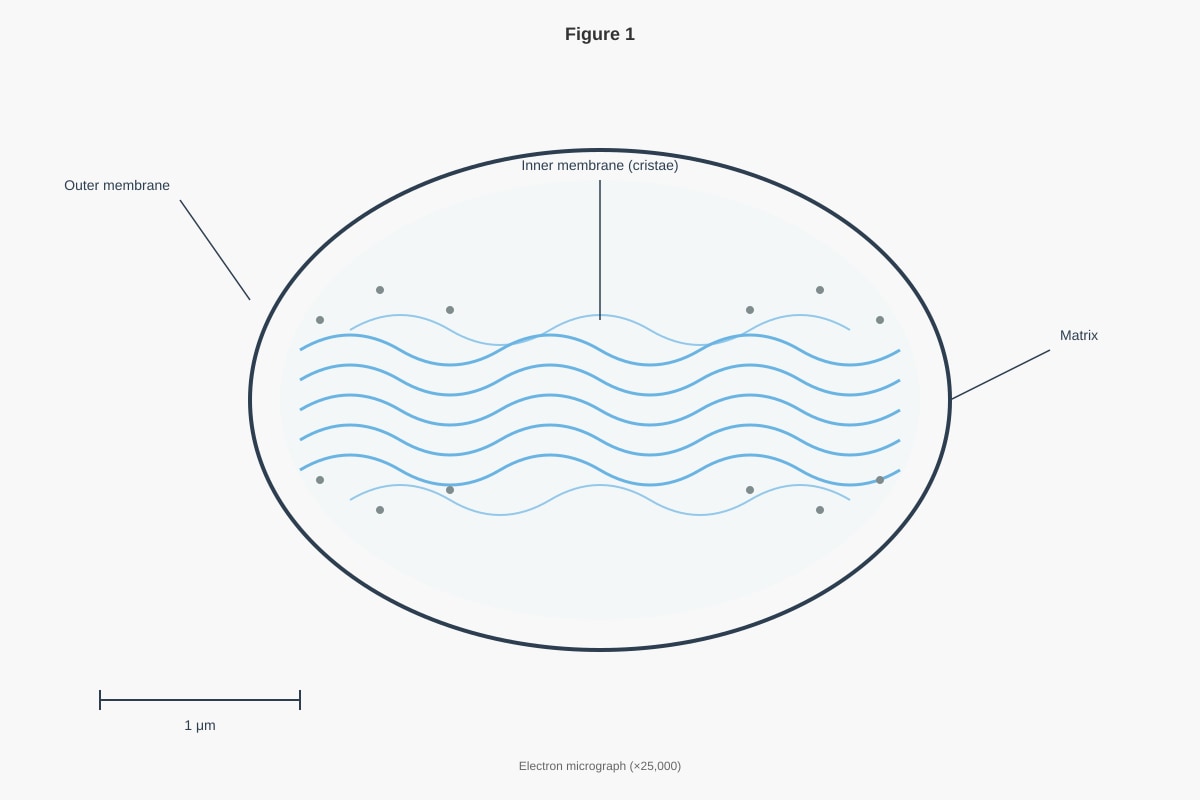
5. Figure 1 below shows an electron micrograph of an organelle found in large numbers in liver cells.

[Image: Figure 1 — Electron micrograph showing an organelle with a double membrane and highly folded inner membrane. For illustrative purposes.]

(a) Name the organelle shown in Figure 1. [1]

Answer space here: .....................................................................................................................

(b) Explain why this organelle is present in large numbers in liver cells. [2]

Answer space here: .....................................................................................................................

.....................................................................................................................

.....................................................................................................................

(c) The organelle in Figure 1 is approximately 2.5 µm in length. Calculate the magnification if the image length of the organelle in the photograph is 52.5 µm. Show your working. [2]

Answer space here: .....................................................................................................................

.....................................................................................................................

.....................................................................................................................


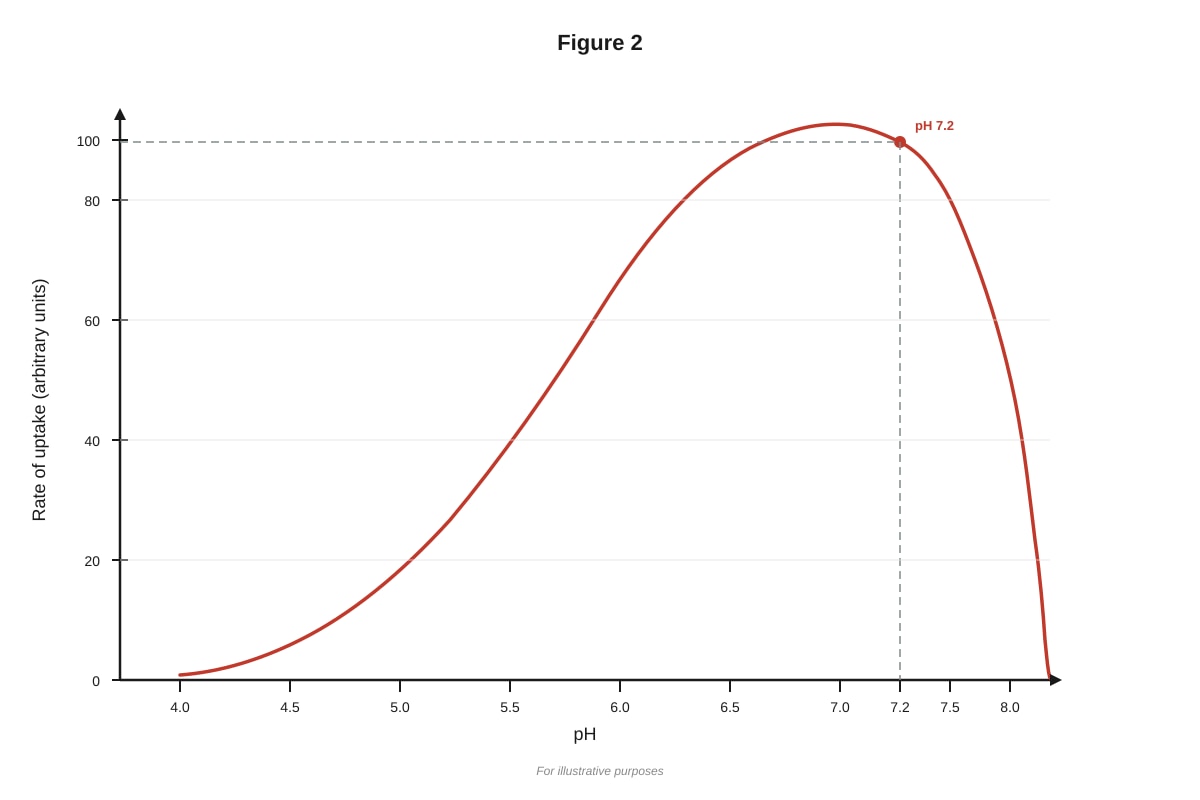
6. An investigation was carried out to study the effect of pH on the rate of uptake of substance X into red blood cells. A radioactive form of substance X was used. The results are shown in Figure 2.

[Image: Figure 2 — Graph showing rate of uptake (arbitrary units) on y-axis against pH on x-axis, with a bell-shaped curve peaking at pH 7.2. For illustrative purposes.]

(a) With reference to Figure 2, describe the effect of pH on the rate of uptake of substance X. [2]

Answer space here: .....................................................................................................................

.....................................................................................................................

.....................................................................................................................

(b) Substance X is known to enter red blood cells via facilitated diffusion through a specific transport protein. Suggest why the rate of uptake decreases sharply at pH values below 6.5. [3]

Answer space here: .....................................................................................................................

.....................................................................................................................

.....................................................................................................................

.....................................................................................................................

.....................................................................................................................


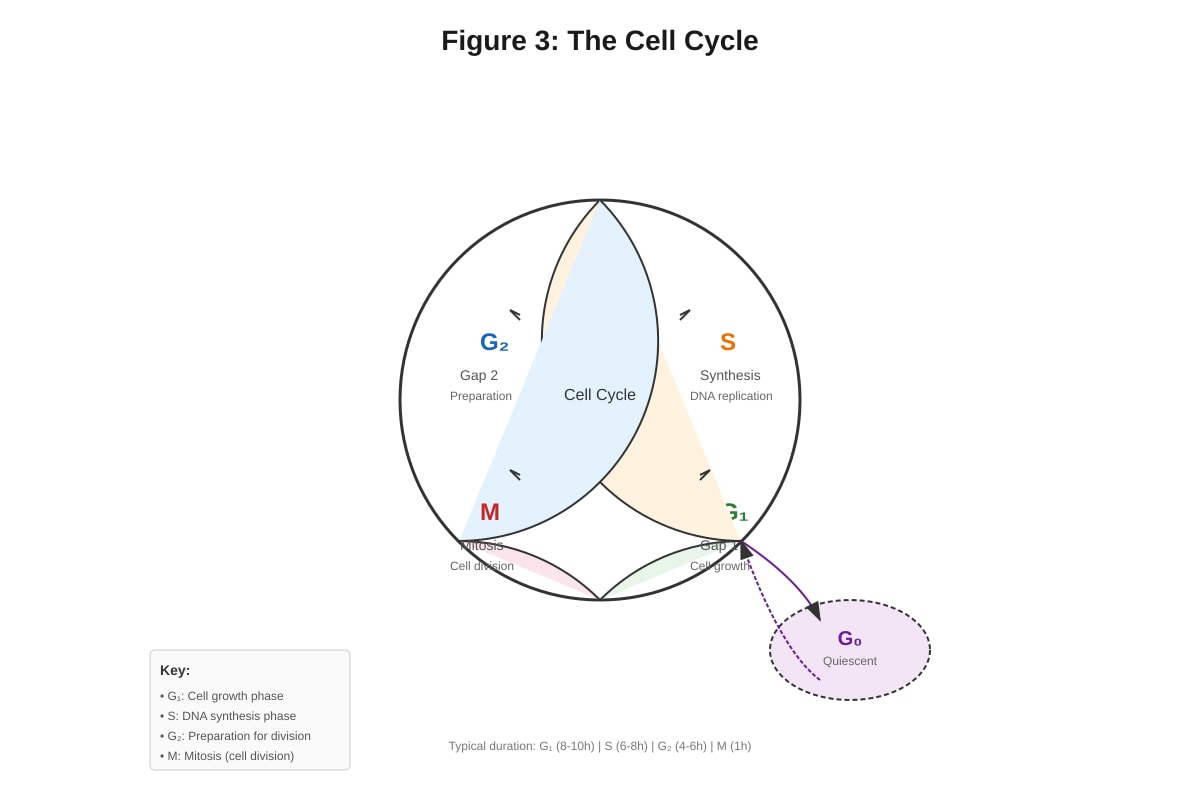
7. Figure 3 represents a section of the cell cycle in an animal cell.

[Image: Figure 3 — Diagram showing the cell cycle with labelled sections: G1, S, G2, M (mitosis), and G0. For illustrative purposes.]

(a) With reference to Figure 3, identify the phase in which DNA replication occurs. [1]

Answer space here: .....................................................................................................................

(b) A researcher adds radioactive thymine to a culture of actively dividing animal cells. With reference to Figure 3, state the phase in which radioactivity in the nucleus would first be detected. Explain your answer. [2]

Answer space here: .....................................................................................................................

.....................................................................................................................

.....................................................................................................................


8. Describe the structure of a water molecule and explain how this structure is related to its role as a universal solvent for polar substances in living organisms. [2]

Answer space here: .....................................................................................................................

.....................................................................................................................

.....................................................................................................................

.....................................................................................................................


Section C: Data-Based and Extended Response (15 marks)

Answer ALL questions in this section.


9. Mitochondria were isolated from rat liver cells and incubated in three separate test tubes, each containing a different respiratory substrate. After incubation at 37 °C for 30 minutes, the production of carbon dioxide in each tube was measured using a carbon dioxide sensor. The results are shown in Table 1.

Table 1: Carbon dioxide production by isolated mitochondria incubated with different substrates.

Test tubeSubstrate addedCarbon dioxide produced (arbitrary units)
1Pyruvate85
2Glucose5
3No substrate (control)0

(a) Explain why carbon dioxide is produced when mitochondria are incubated with pyruvate. [2]

Answer space here: .....................................................................................................................

.....................................................................................................................

.....................................................................................................................

(b) With reference to Table 1, explain why very little carbon dioxide is produced when mitochondria are incubated with glucose. [3]

Answer space here: .....................................................................................................................

.....................................................................................................................

.....................................................................................................................

.....................................................................................................................

.....................................................................................................................


10. Discuss the significance of the movement of substances across cell membranes to the process of photosynthesis in plants. [6]

Answer space here: .....................................................................................................................

.....................................................................................................................

.....................................................................................................................

.....................................................................................................................

.....................................................................................................................

.....................................................................................................................

.....................................................................................................................

.....................................................................................................................

.....................................................................................................................

.....................................................................................................................

.....................................................................................................................

.....................................................................................................................

.....................................................................................................................

.....................................................................................................................

.....................................................................................................................

.....................................................................................................................

.....................................................................................................................


END OF QUIZ

Answers

<!-- TuitionGoWhere generation metadata: stage=3-1; model=deepseek/deepseek-v4-pro; model_label=DeepSeek V4 Pro; generated=2026-05-27; Sources: Stage 2-1 real exam-derived templates and Stage 2-2 exam-enriched syllabus. -->

A-Level Biology H1 Quiz - Cells Biomolecules — Answer Key


Section A: Short Answer


1. (a) Plant cell / Eukaryotic plant cell [1]

(b) Presence of a nucleus / membrane-bound nucleus / double-membrane organelles (e.g., chloroplasts, mitochondria); [1] Accept: true nucleus / nuclear envelope. Do not accept: cell wall alone (some prokaryotes have cell walls).


2. Phospholipids form a bilayer (1); with hydrophilic (phosphate) heads facing outward toward the aqueous environment (on both sides of the membrane) and hydrophobic (fatty acid) tails facing inward, away from water / forming a hydrophobic core (1). Award full marks for a clear description of bilayer arrangement with correct orientation of heads and tails. [2]


3. (a) Na⁺ is most likely to enter by simple diffusion (1). Because Na⁺ has a higher concentration in pond water (40 units) than in the cytoplasm (15 units) / Na⁺ concentration gradient is from outside to inside the cell, allowing passive movement down its concentration gradient (1). [2]

(b) The plant cell uses active transport to move K⁺ ions into the cell against the concentration gradient (1); this requires energy in the form of ATP, provided by respiration / specific carrier proteins (K⁺ pumps) in the membrane use ATP to transport K⁺ into the cell (1). [2]


4. Any two from:

  • Channel proteins — form hydrophilic pores for facilitated diffusion of specific ions/molecules (1).
  • Carrier proteins — bind specific molecules and change shape to transport them across the membrane (1).
  • Receptor proteins — bind signalling molecules (e.g., hormones) to trigger a cellular response (1).
  • Enzymes — catalyse reactions at the membrane surface (1).
  • Cell adhesion molecules / glycoproteins — involved in cell-cell recognition and attachment (1).

Award 1 mark each, maximum 2 marks. [2]


Section B: Structured Response


5. (a) Mitochondrion (accept: mitochondria). [1]

(b) Liver cells have high metabolic activity / high demand for ATP (1); mitochondria are the site of aerobic respiration / oxidative phosphorylation / ATP synthesis, so large numbers are required to meet the energy needs of the liver (1). Accept reference to liver functions e.g., detoxification, protein synthesis, bile production requiring ATP. [2]

(c) Magnification = image length ÷ actual length (1) = 52.5 µm ÷ 2.5 µm = ×21 (1) Award 1 mark for correct formula/substitution and 1 mark for correct answer with appropriate units/expression. [2]


6. (a) Rate of uptake increases as pH rises from (e.g., pH 5.5) to the optimum pH of approximately 7.2 (1); rate then decreases as pH continues to rise above the optimum / above pH 7.2 (1). Accept: description of a bell-shaped relationship / reference to an optimum pH. [2]

(b) Facilitated diffusion of substance X depends on the specific transport protein maintaining its correct three-dimensional shape / conformation (1); at pH below 6.5, the change in hydrogen ion concentration causes the protein to denature / lose its specific tertiary structure (1); this alters the shape of the binding site / transport channel so that substance X can no longer bind or pass through (1). [3]


7. (a) S phase. [1]

(b) Phase: S phase (1). Explanation: Radioactive thymine is a nucleotide / a component of DNA / is incorporated into new DNA strands during DNA replication, and DNA replication occurs during the S phase of the cell cycle (1). Do not accept G1 or G2. [2]


8. A water molecule consists of one oxygen atom covalently bonded to two hydrogen atoms (1) [accept: bent / V-shaped structure]; the oxygen atom is slightly negative (δ⁻) and the hydrogen atoms are slightly positive (δ⁺), making water a polar molecule / a dipole (1). Because water is polar, it can form hydrogen bonds with / surround and separate polar solutes such as ions and polar molecules (e.g., sugars, amino acids), allowing them to dissolve / acting as a solvent (1). Award 1 mark for structure, 1 mark for explanation linking polarity to solvent function. Maximum 2 marks. [2]


Section C: Data-Based and Extended Response


9. (a) Pyruvate enters the mitochondrion and is converted to acetyl-CoA (1); acetyl-CoA then enters the Krebs cycle / citric acid cycle, where decarboxylation reactions occur, releasing carbon dioxide (1). Accept: pyruvate is the substrate for the link reaction and Krebs cycle which produce CO₂. [2]

(b) Very little CO₂ is produced because glucose cannot be metabolised directly by isolated mitochondria — the enzymes for glycolysis are located in the cytoplasm, not in mitochondria (1); glycolysis must first break down glucose to pyruvate in the cytoplasm before pyruvate can enter the mitochondrion (1); since only isolated mitochondria were used in the experiment, glycolysis does not occur and very little pyruvate is available for the Krebs cycle (1). Credit also reference to the trace amount (5 units) possibly due to small amounts of glucose breakdown during isolation or minor contamination. [3]


10. Marking scheme: 6 marks

Award marks for the following points:

MarkContent point
1CO₂ uptake: CO₂ diffuses from the atmosphere into the leaf through open stomata; CO₂ then diffuses across the cell surface membrane and chloroplast membranes into the stroma, where it is fixed in the Calvin cycle.
2Diffusion depends on a concentration gradient; CO₂ concentration is maintained lower inside chloroplasts because it is continuously used in carbon fixation, favouring inward diffusion.
3Water uptake: Water enters root hair cells by osmosis down a water potential gradient across the partially permeable cell membrane. Water is required as an electron donor in the light-dependent reactions (photolysis).
4Ion/mineral transport: Mineral ions such as Mg²⁺ (for chlorophyll synthesis), K⁺, and nitrate ions are taken up into root cells by active transport across membranes, using ATP from respiration; these ions are essential for photosynthetic enzyme activity and pigment production.
5Product export: Triose phosphate / glucose produced in photosynthesis is transported out of the chloroplast across the chloroplast membrane into the cytoplasm and then into phloem for translocation; this prevents end-product inhibition of photosynthesis.
6Conclusion / Integration: The regulated movement of substances across membranes (both uptake of raw materials and removal of products) is essential for maintaining the rate and efficiency of photosynthesis; without effective membrane transport, photosynthesis would slow or cease.

Marks should be awarded holistically for a coherent discussion that links membrane transport mechanisms specifically to photosynthetic processes. A simple list of transport types without reference to photosynthesis should be limited to a maximum of 2 marks.

Accept alternative correct points, such as oxygen diffusion out of chloroplasts, within the marking framework. [6]


END OF ANSWER KEY