From Real Exams Exam Paper
A Level H1 Biology Practice Paper 1
Free A Level H1 Biology Practice Paper 1, HY3 Exam version, with questions, answers, and A Level-style practice for Singapore students.
These static practice materials are generated from the site's syllabus and paper-generation workflow, with source and model context shown so students and parents can evaluate the material before use.
Questions
Free quiz and exam paper access
Enter your details to view this paper
Your access is remembered on this device.
Answers
TuitionGoWhere Exam Practice (AI) — Biology H1 A-Level
Practice Paper: Cells & Biomolecules (Version 1 of 5) — Answer Key
Total Marks: 60
Duration: 60 minutes
Section A: Short Structured Questions (20 marks)
1. [1 mark]
Answer: The nucleolus is the site of ribosome subunit assembly (or rRNA synthesis).
Teaching note: The nucleolus is a region within the nucleus where ribosomal RNA is transcribed and ribosomal subunits are assembled before export to the cytoplasm.
2. [1 mark]
Answer: Glycosidic bond.
Teaching note: α-glucose monomers link via condensation to form glycosidic bonds in starch (amylose/amylopectin).
3. [1 mark]
Answer: Rough ER has ribosomes attached to its surface; smooth ER does not.
Teaching note: The presence of ribosomes gives rough ER a granular appearance and links it to protein synthesis.
4. [2 marks]
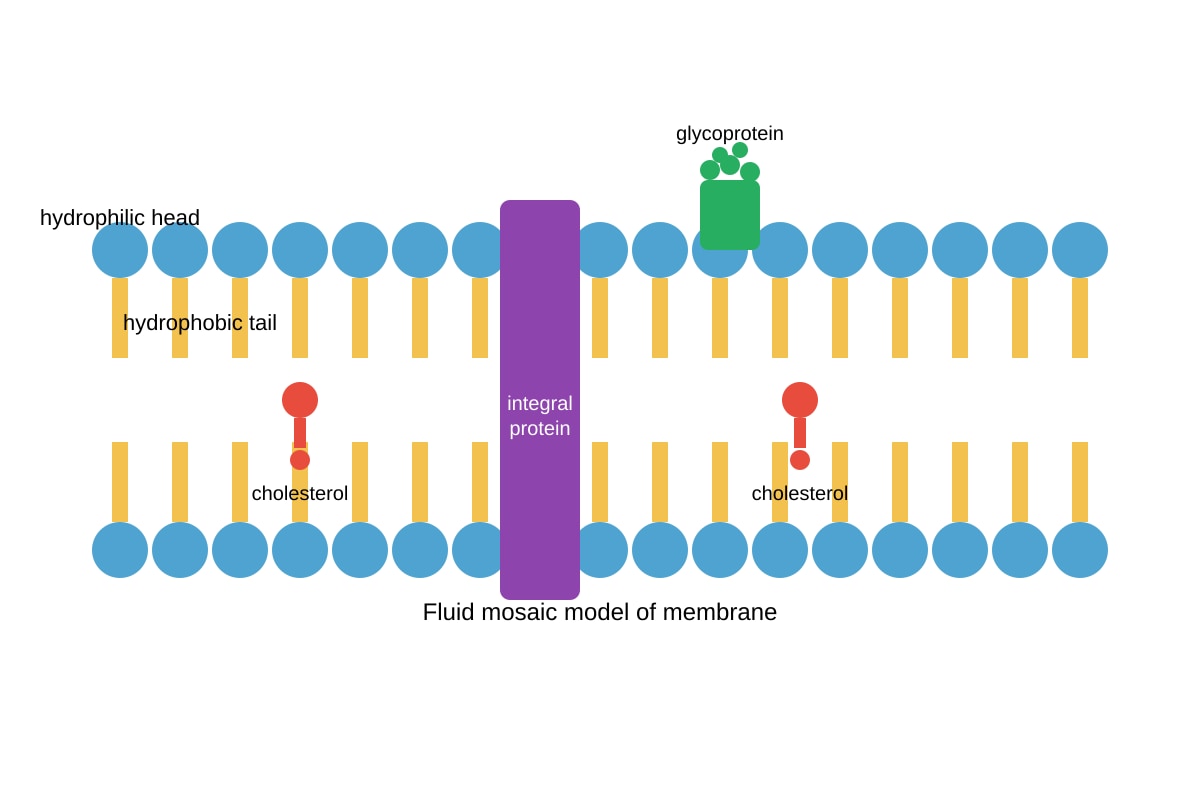
Answer: Phospholipids form a bilayer; hydrophilic heads face outward to aqueous environments, hydrophobic tails face inward away from water. [1+1]
Teaching note: This arrangement creates a stable barrier; the bilayer is central to the fluid mosaic model.
5. [1 mark]
Answer: Totipotent (or zygotic stem cells are totipotent).
Teaching note: Totipotency = can form all cell types including extra-embryonic tissues.
6. [1 mark]
Answer: Endocytosis (or phagocytosis if particle is solid).
Teaching note: Endocytosis invaginates membrane to internalise large materials.
7. [1 mark]
Answer: β-glucose has a straight chain conformation allowing H-bonds between adjacent chains.
Teaching note: The β(1→4) linkage produces linear chains for cellulose microfibrils.
8. [2 marks]
Answer: Facilitated diffusion uses channel/carrier proteins down a concentration gradient; no ATP needed because no energy input against gradient. [1 for gradient, 1 for no ATP]
Teaching note: It is passive, unlike active transport which needs ATP.
9. [1 mark]
Answer: The cytoplasm (or freely in cytosol; bacterial ribosomes are 70S, not in organelle).
Teaching note: Bacteria lack membrane-bound organelles; ribosomes are free in cytoplasm.
10. [1 mark]
Answer: High temperature breaks hydrogen bonds, causing denaturation/unfolding.
Teaching note: Secondary structure (α-helix, β-sheet) relies on H-bonds; heat disrupts them.
Section B: Diagram and Data Interpretation (20 marks)
11. [2 marks]
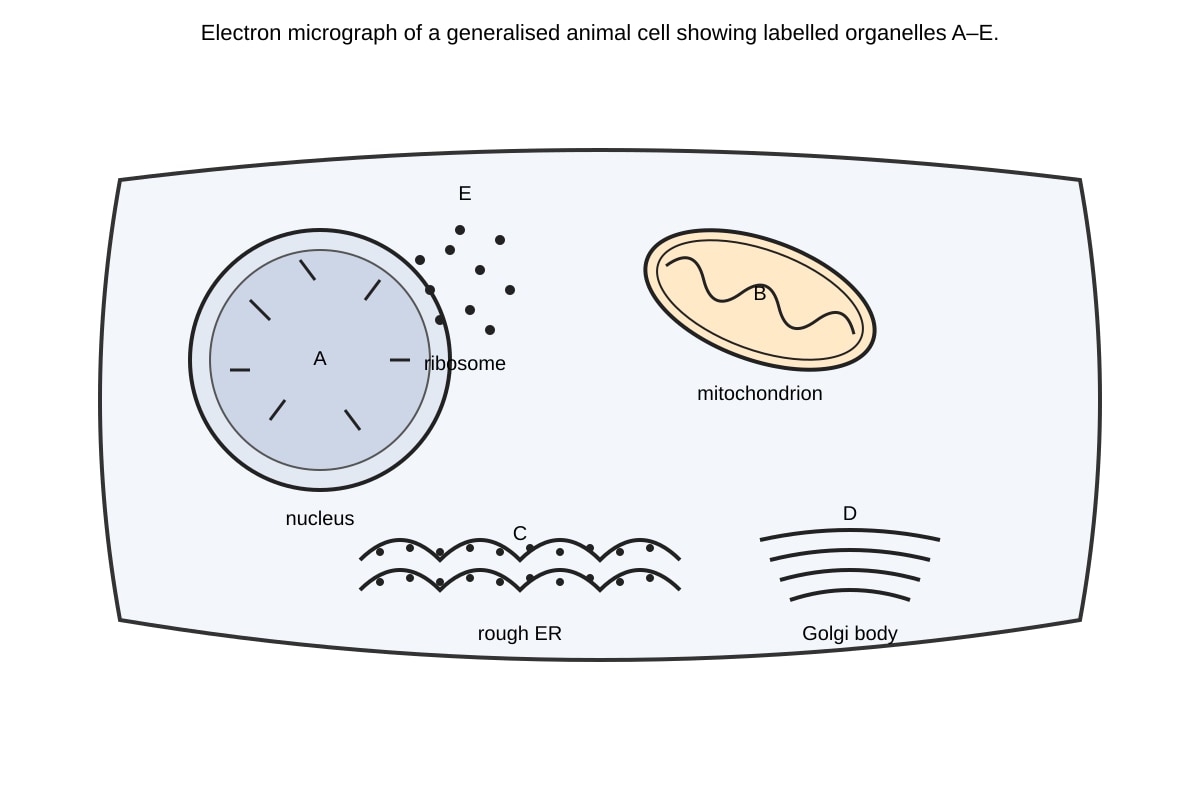
Answer: Structure C = rough endoplasmic reticulum; role = synthesis and transport of proteins for secretion. [1 name, 1 role]
Teaching note: Rough ER is identified by ribosomes; in secretory cells it makes proteins for export.
12. [3 marks]
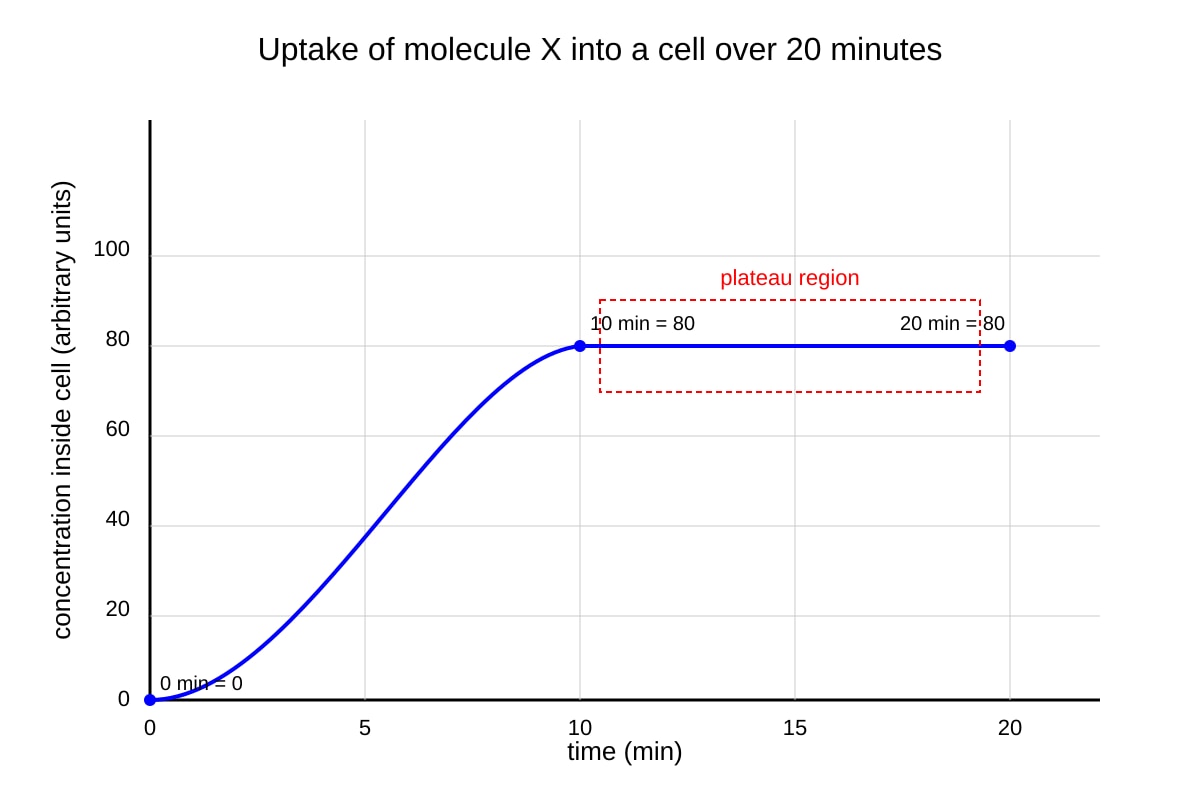
Answer: Molecule X enters via facilitated diffusion (or active transport if against gradient, but plateau suggests carrier saturation) [1]; curve rises as gradient drives entry [1]; plateau occurs when all carriers saturated [1].
Teaching note: Saturation indicates protein-mediated transport, not simple diffusion.
13. [2 marks]
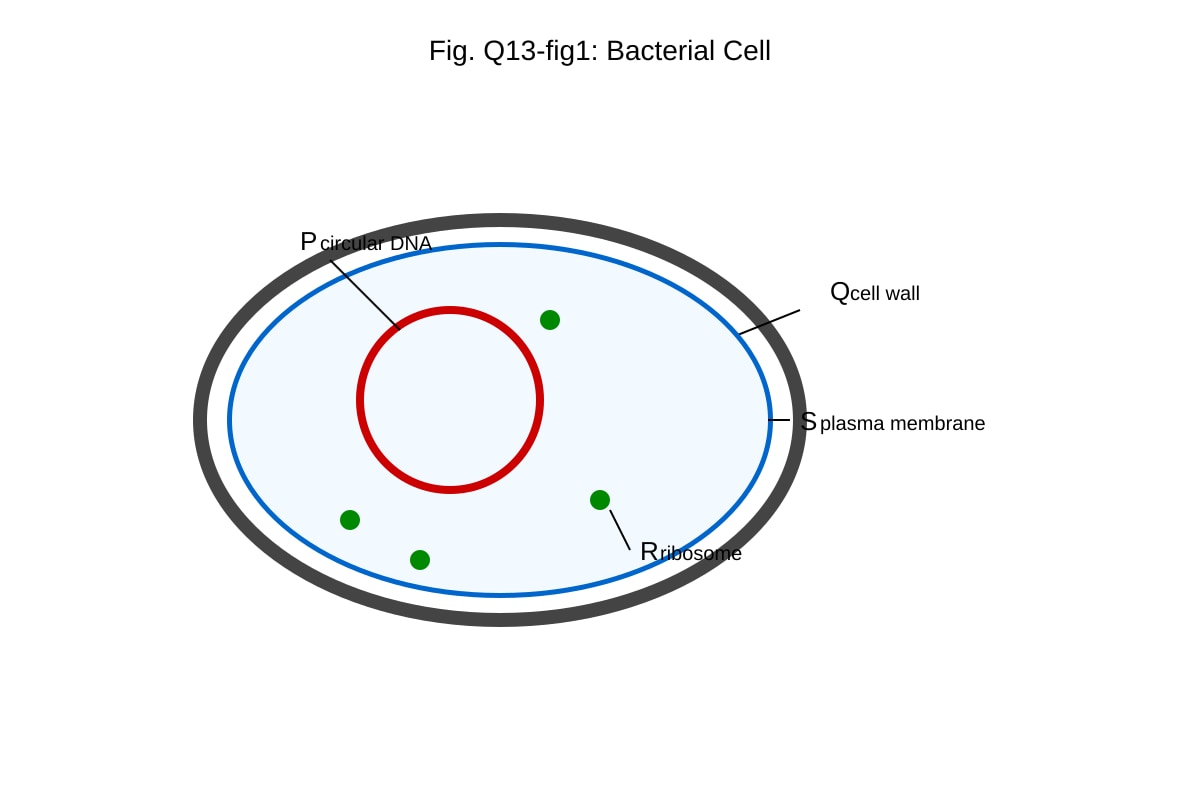
Answer: (i) Lack of membrane-bound organelles; (ii) circular DNA / peptidoglycan wall / 70S ribosomes. [1 each]
Teaching note: Eukaryotic cells have nucleus and organelles; bacteria do not.
14. [3 marks]
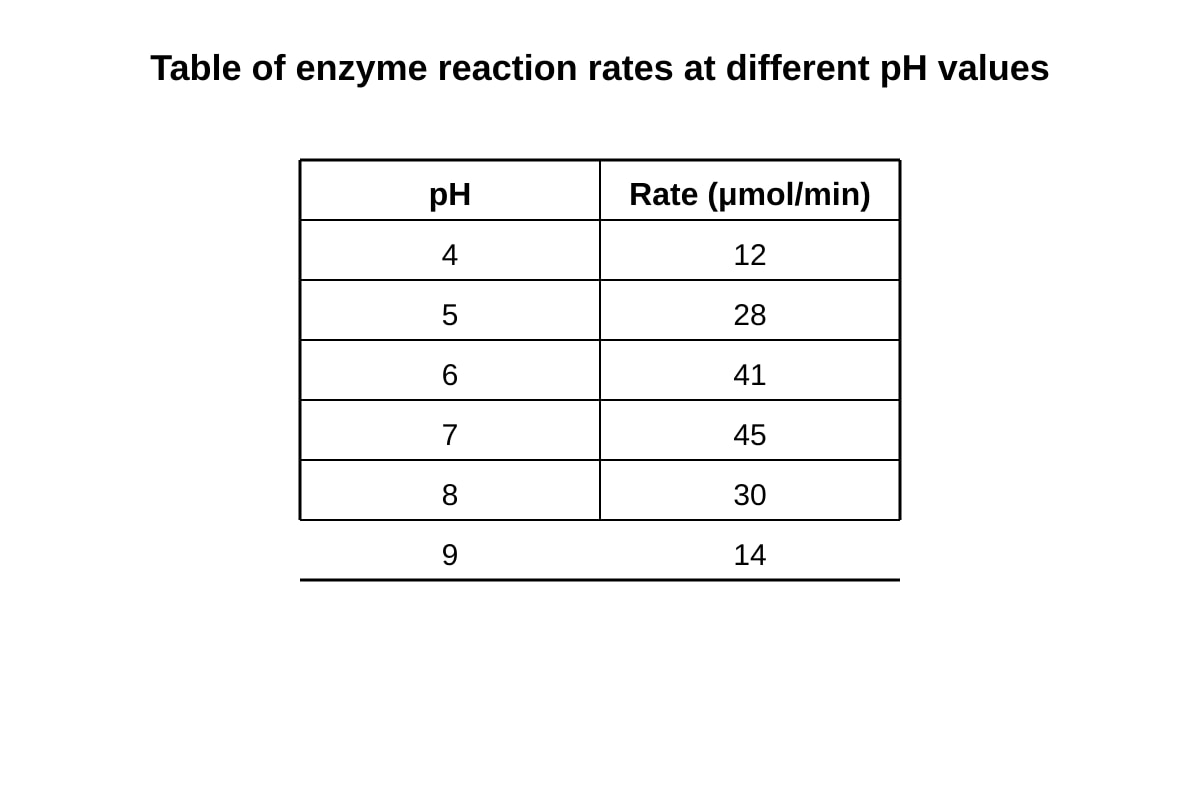
Answer: Optimum pH = 7 (highest rate 45). [1] Percentage decrease = (45−14)/45 × 100 = 68.9% (or 69%). [2 for calculation]
Working: Decrease = 45 − 14 = 31; 31/45 × 100 = 68.9%.
Teaching note: Optimum is peak rate; % decrease from pH 7 to 9 uses pH 7 as base.
15. [2 marks]
Answer: Cholesterol restricts phospholipid movement, reducing fluidity at high temp and preventing solidification at low temp. [1 role, 1 stability]
Teaching note: It modulates membrane fluidity and mechanical stability.
Section C: Extended Structured Responses (20 marks)
16. [4 marks]
Answer:
- Formation: amino acids join by condensation; carboxyl group of one + amino group of next release water, forming peptide bond. [2]
- Breakage: hydrolysis adds water to split peptide bond. [1]
- Reactants: amino acids; product: dipeptide/polypeptide + H₂O. [1]
Teaching note: Peptide bond is –CO–NH–; condensation vs hydrolysis are reverse reactions.
17. [3 marks]
Answer: Pyruvate enters mitochondrial matrix and Krebs cycle → CO₂ released. [1] Glucose needs glycolysis in cytoplasm first; mitochondria alone lack glycolytic enzymes. [1] No glycolysis → no pyruvate → no CO₂ in mitochondria. [1]
Teaching note: Glycolysis occurs in cytosol; mitochondria only process pyruvate onward.
18. [5 marks]
Answer:
- Primary: sequence of amino acids; peptide bonds. [1]
- Secondary: α-helix/β-sheet; H-bonds. [1]
- Tertiary: 3D folding; H-bonds, ionic, disulfide, hydrophobic. [1+1]
- Quaternary: multiple polypeptides; same bonds as tertiary. [1]
Teaching note: Each level adds stabilising interactions; quaternary only in multi-subunit proteins (e.g. haemoglobin).
19. [3 marks]
Answer: Blood stem cells (haematopoietic). [1] They are multipotent [1] – can differentiate into limited range (e.g. RBCs, WBCs) but not all types. [1]
Teaching note: Multipotent = tissue-specific restricted potency; replaces worn cells continuously.
20. [5 marks]
Answer:
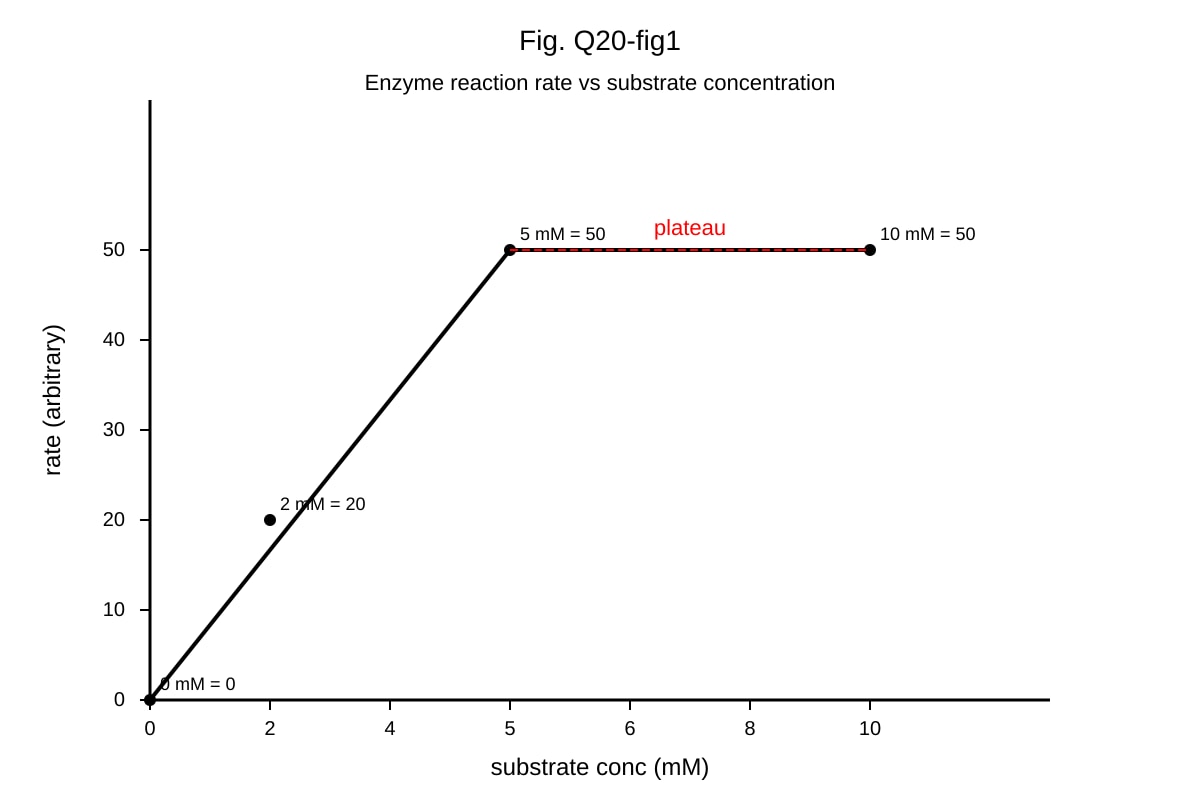
- Plateau: all active sites occupied at saturating substrate; rate independent of [S]. [2]
- More enzyme: more active sites → higher max rate, curve shifts up/plateau higher. [2]
- Reference to graph shape required. [1]
Teaching note: Michaelis-Menten style saturation; enzyme concentration changes Vmax not Km.